Michigan Custody Child With Autism

Description
Get your form ready online
Our built-in tools help you complete, sign, share, and store your documents in one place.
Make edits, fill in missing information, and update formatting in US Legal Forms—just like you would in MS Word.
Download a copy, print it, send it by email, or mail it via USPS—whatever works best for your next step.
Sign and collect signatures with our SignNow integration. Send to multiple recipients, set reminders, and more. Go Premium to unlock E-Sign.
If this form requires notarization, complete it online through a secure video call—no need to meet a notary in person or wait for an appointment.
We protect your documents and personal data by following strict security and privacy standards.

Make edits, fill in missing information, and update formatting in US Legal Forms—just like you would in MS Word.

Download a copy, print it, send it by email, or mail it via USPS—whatever works best for your next step.

Sign and collect signatures with our SignNow integration. Send to multiple recipients, set reminders, and more. Go Premium to unlock E-Sign.

If this form requires notarization, complete it online through a secure video call—no need to meet a notary in person or wait for an appointment.

We protect your documents and personal data by following strict security and privacy standards.
Looking for another form?
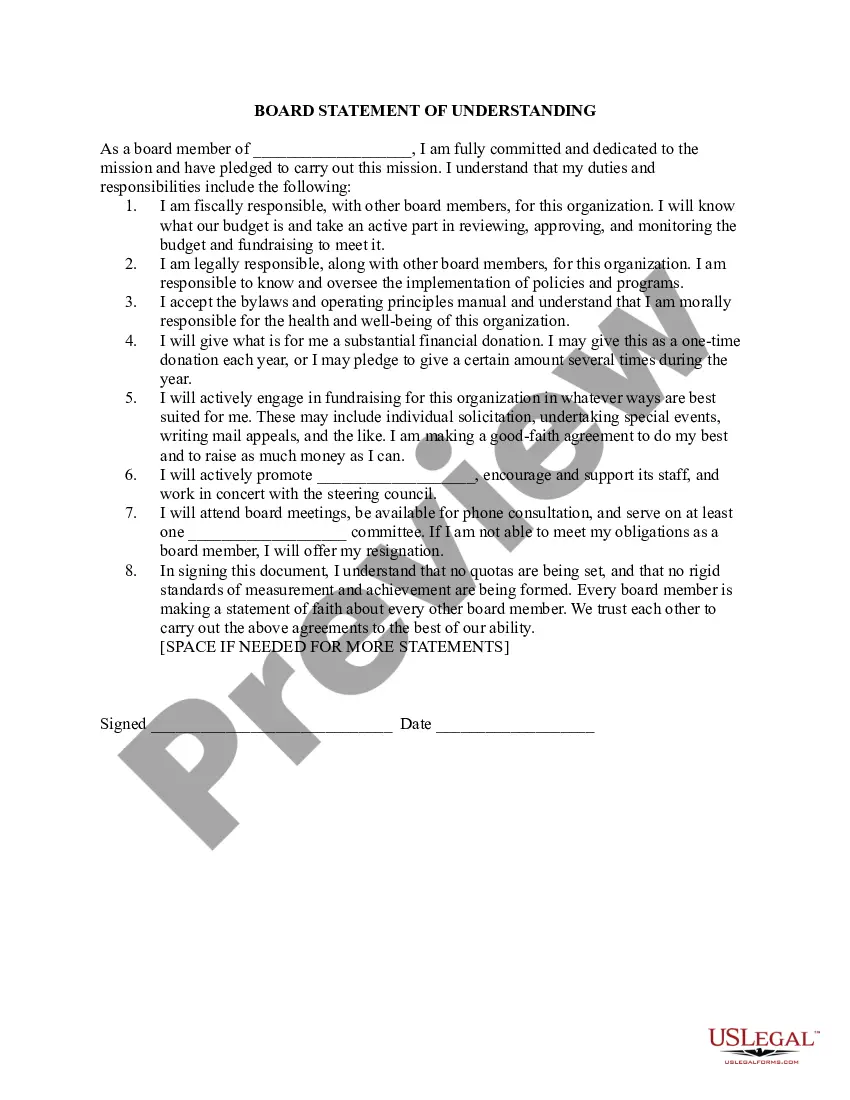


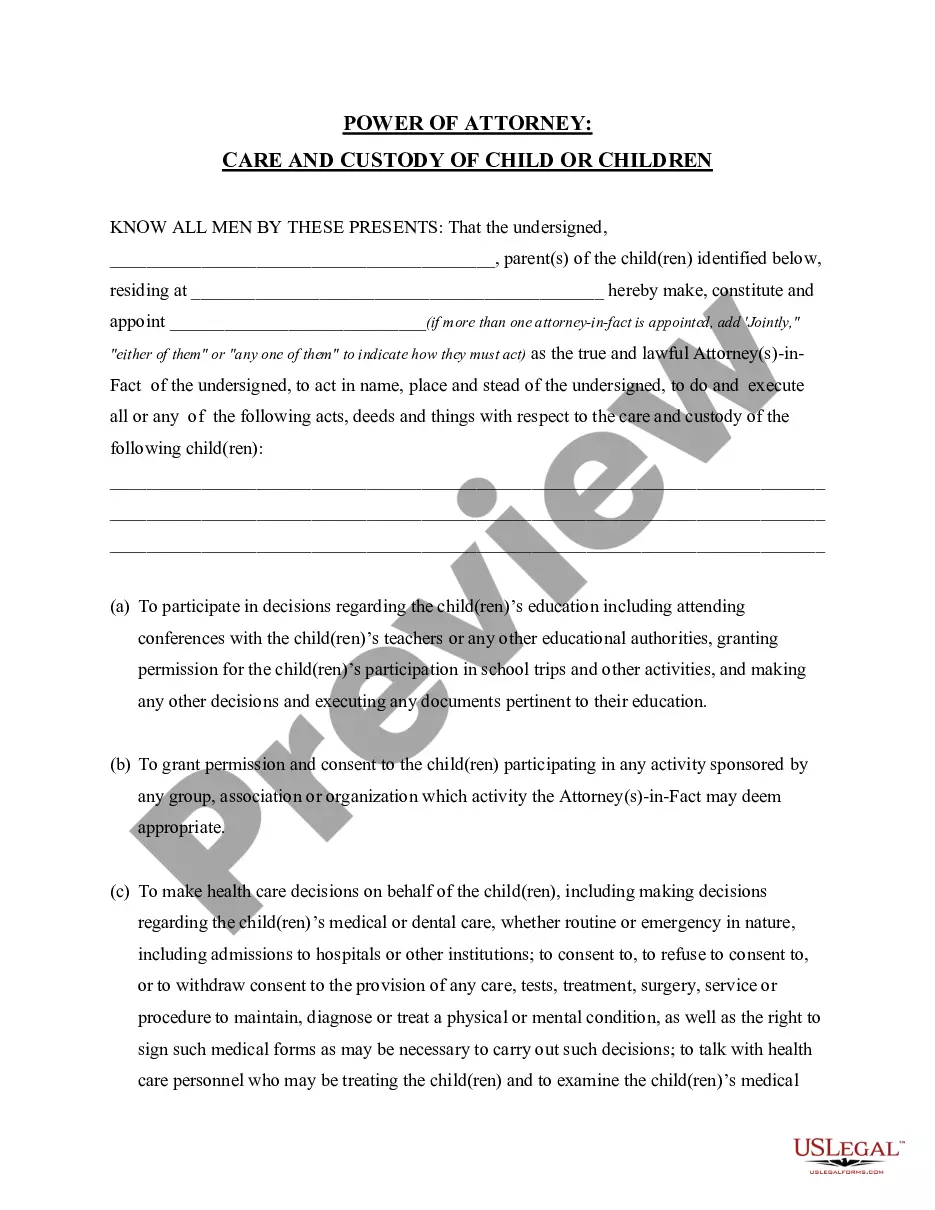
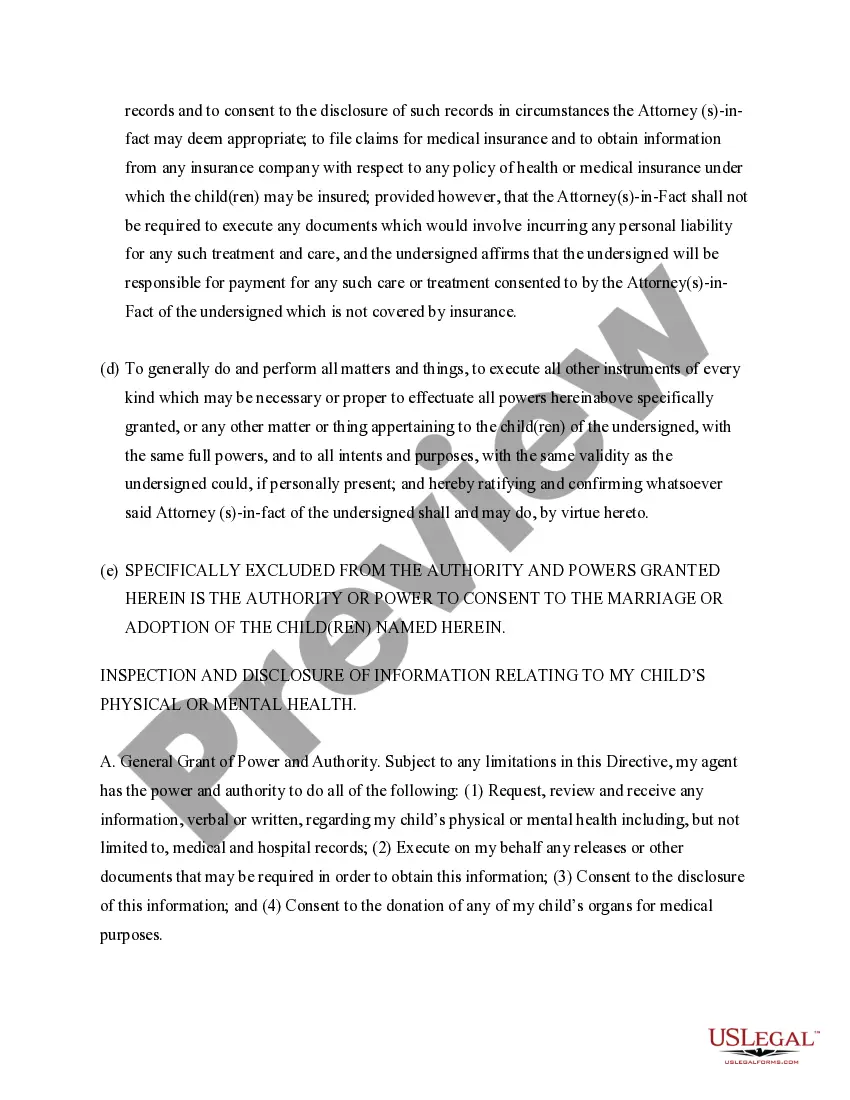
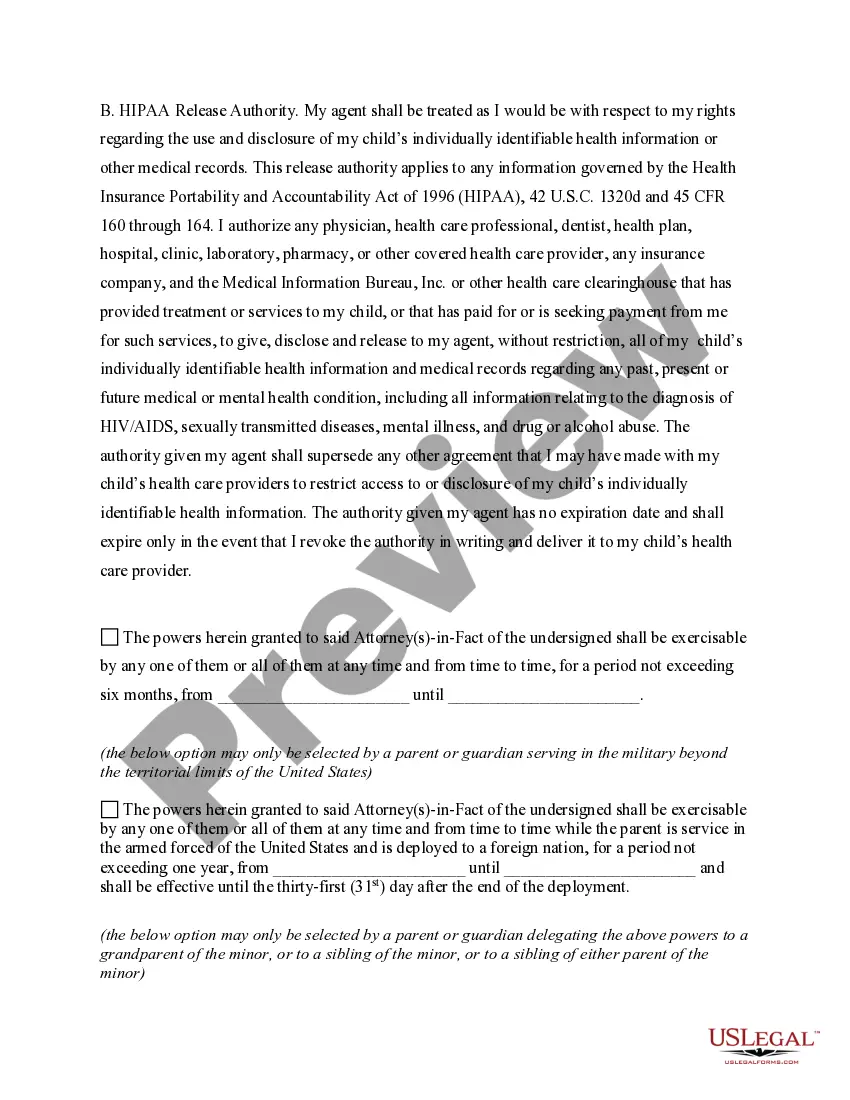
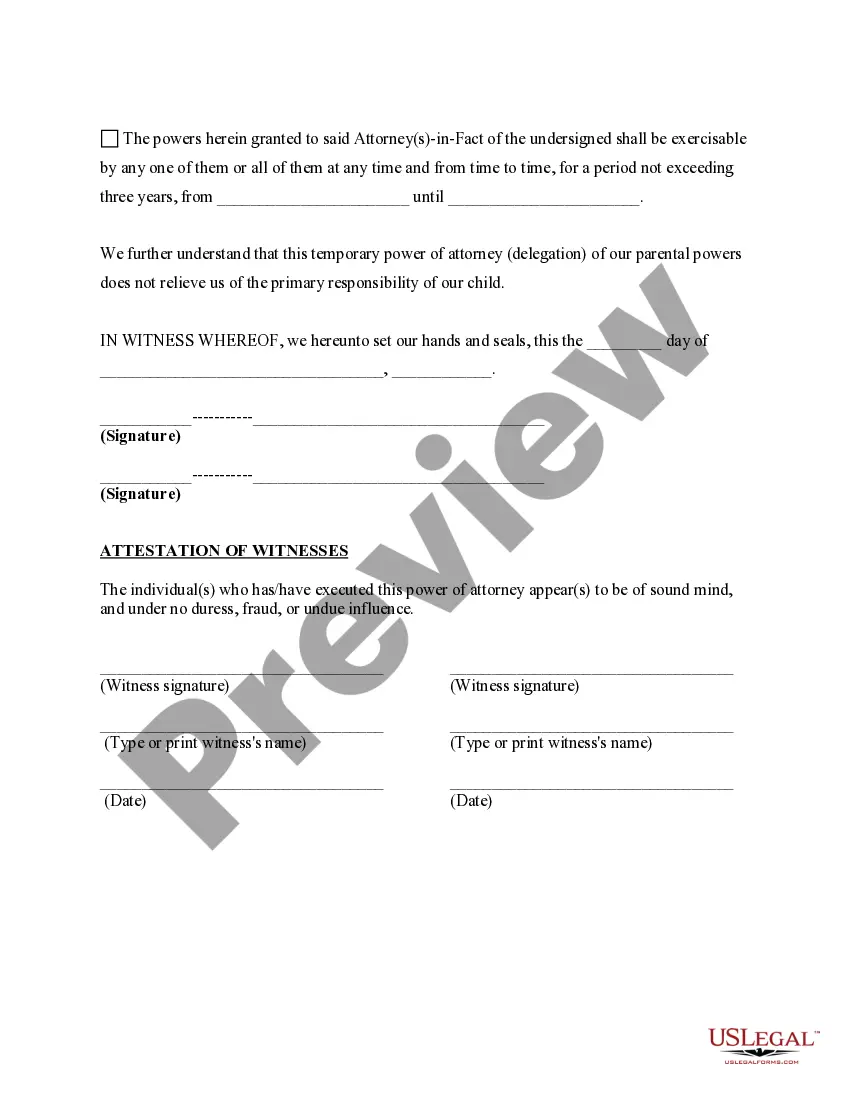
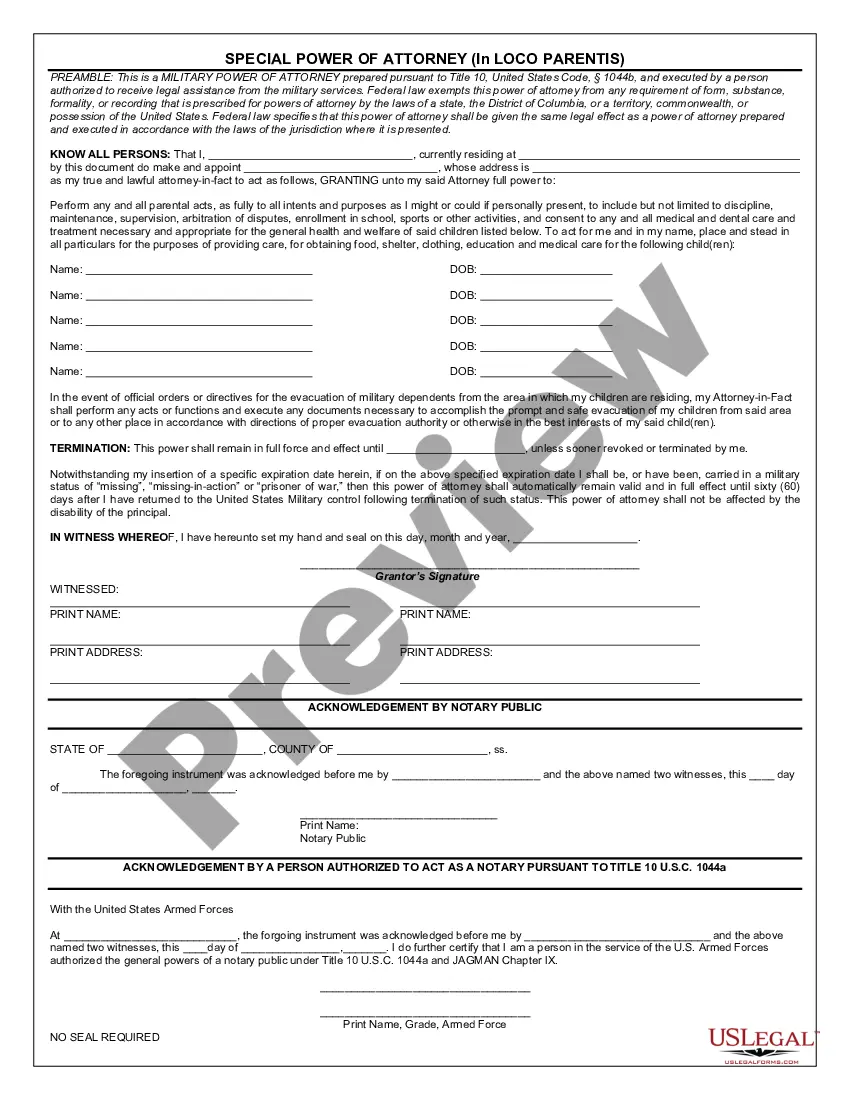
How to fill out Michigan General Power Of Attorney For Care And Custody Of Child Or Children / Temporary Guardian?
Finding a reliable source to obtain the latest and pertinent legal templates is a significant part of navigating bureaucracy.
Selecting the appropriate legal documents requires precision and meticulousness, which highlights the necessity of obtaining Michigan Custody Child With Autism samples solely from trustworthy providers like US Legal Forms. An incorrect template will squander your time and prolong your situation. With US Legal Forms, you can have peace of mind.
After obtaining the form on your device, you can modify it using the editor or print it out to complete it manually. Eliminate the hassle associated with your legal paperwork. Browse the extensive US Legal Forms library to locate legal templates, verify their applicability to your situation, and download them instantly.
- Use the library navigation or search bar to locate your sample.
- Examine the form’s details to verify if it meets the criteria of your state and area.
- Review the form preview, if accessible, to confirm it is indeed the document you need.
- Return to the search and seek the correct document if the Michigan Custody Child With Autism does not fulfill your requirements.
- If you are confident about the form’s applicability, download it.
- As a registered user, click Log in to verify your identity and access your chosen templates in My documents.
- If you do not possess an account yet, click Buy now to acquire the form.
- Choose the pricing option that aligns with your needs.
- Proceed to the registration to complete your transaction.
- Finalize your purchase by selecting a payment method (credit card or PayPal).
- Choose the document format for downloading Michigan Custody Child With Autism.
Form popularity
FAQ
In child support court, especially regarding Michigan custody child with autism, it's important to avoid negative comments about the other parent. Statements that undermine the co-parent’s abilities can backfire and may harm your case. Focus on facts and how your proposals serve the child's needs. Maintaining a respectful tone can foster a more productive dialogue and illustrate your commitment to the child's best interests.
The best custody arrangement for a Michigan custody child with autism often involves a structured schedule that provides consistency and predictability. Many experts recommend a joint custody plan that allows both parents to remain actively involved in the child's life. This type of arrangement can help maintain stability and emotional support for the child. Consider working with a legal expert to create an arrangement that works best for your family.
The 6 second rule for autism suggests providing clear, concise instructions to help an autistic child process information effectively. In the context of Michigan custody child with autism, this means ensuring communication is direct and supportive. This technique can foster better understanding between parents and children during custody discussions. Using simple language can promote a calmer environment for decision-making.
One of the biggest mistakes in a custody battle involving a Michigan custody child with autism is failing to prioritize the child's needs. Parents may focus too much on their desires instead of what is best for the child. This can lead to decisions that negatively impact the child's well-being. It's essential to approach the situation with empathy and a clear understanding of the child's unique challenges.
When dealing with Michigan custody child with autism, the court prioritizes the child's best interests. This means that factors like the child's needs, routine, and support systems are taken into account. Parents should provide clear evidence of their ability to meet the unique requirements of an autistic child. It’s crucial to demonstrate how each parent's involvement can benefit the child’s development and stability.
The Unfit Parent Creates An Unstable Home A parent is seen to be an unsuitable parent by the law when they fail to provide their children with the proper guidance, care, or support through their actions. Additionally, a parent will be ruled unfit if they have a history of abuse, neglect, or substance misuse.
How Old Does a Child Need to Be Before They Can Choose Which Parent They Live With? Ultimately, a child needs to be 18 before they can make any final decisions about where to live. However, Michigan law does allow the preferences of a child to be considered as one factor in custody decisions.
The emotional ties between the child and each parent are one of the biggest factors in child custody cases. A judge will consider which parent the child has bonded with more, how each parent relates to the child, and which parent the child goes to when they have a problem.
What determines an unfit parent in Michigan? An unfit parent is someone who is unable to adequately care for the child or, any parent who could harm the child. The court considers several factors when making this determination.