Michigan Estate Deed Without Powers
Description

Get your form ready online
Our built-in tools help you complete, sign, share, and store your documents in one place.
Make edits, fill in missing information, and update formatting in US Legal Forms—just like you would in MS Word.
Download a copy, print it, send it by email, or mail it via USPS—whatever works best for your next step.
Sign and collect signatures with our SignNow integration. Send to multiple recipients, set reminders, and more. Go Premium to unlock E-Sign.
If this form requires notarization, complete it online through a secure video call—no need to meet a notary in person or wait for an appointment.
We protect your documents and personal data by following strict security and privacy standards.

Make edits, fill in missing information, and update formatting in US Legal Forms—just like you would in MS Word.

Download a copy, print it, send it by email, or mail it via USPS—whatever works best for your next step.

Sign and collect signatures with our SignNow integration. Send to multiple recipients, set reminders, and more. Go Premium to unlock E-Sign.

If this form requires notarization, complete it online through a secure video call—no need to meet a notary in person or wait for an appointment.

We protect your documents and personal data by following strict security and privacy standards.
Looking for another form?






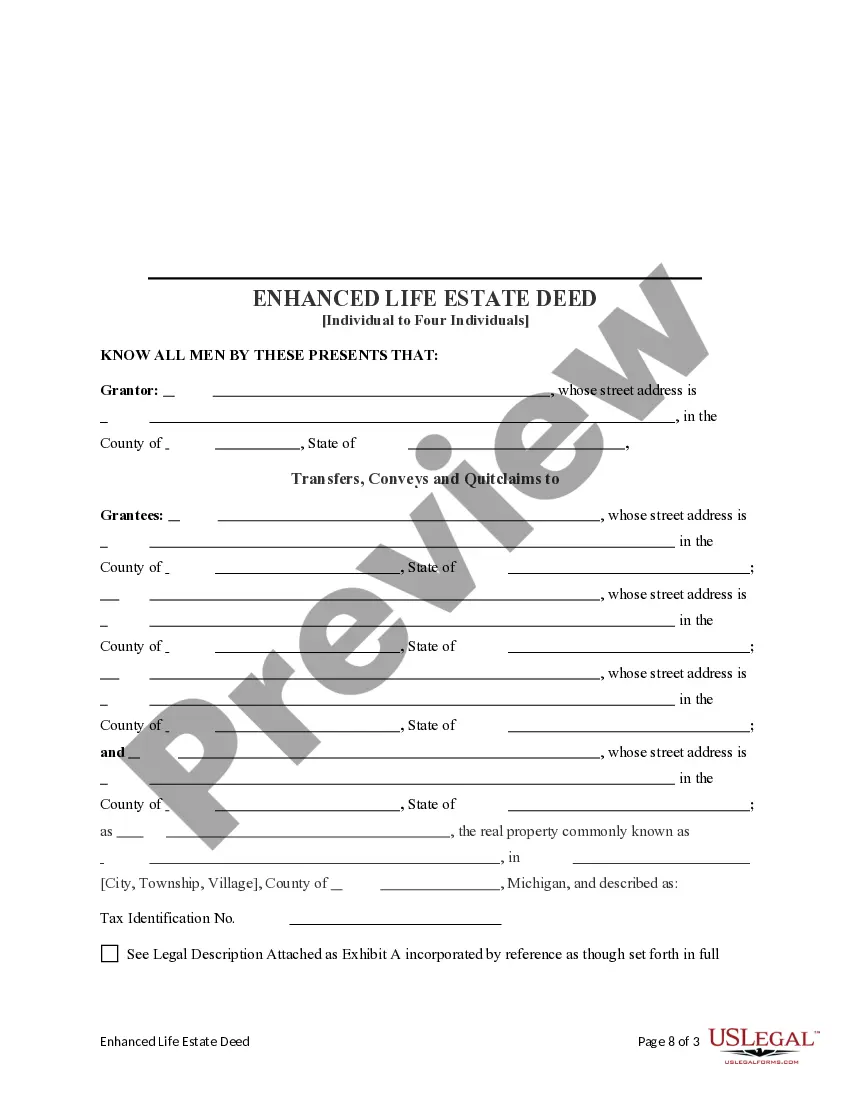
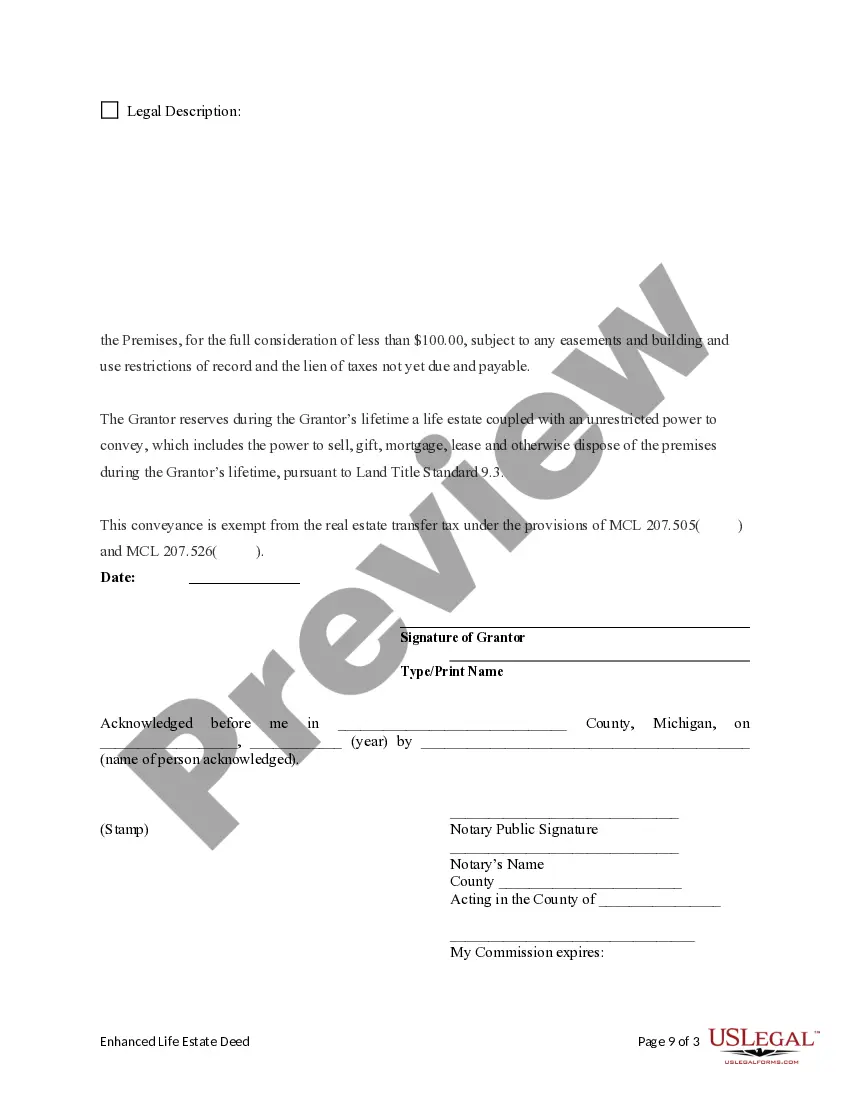
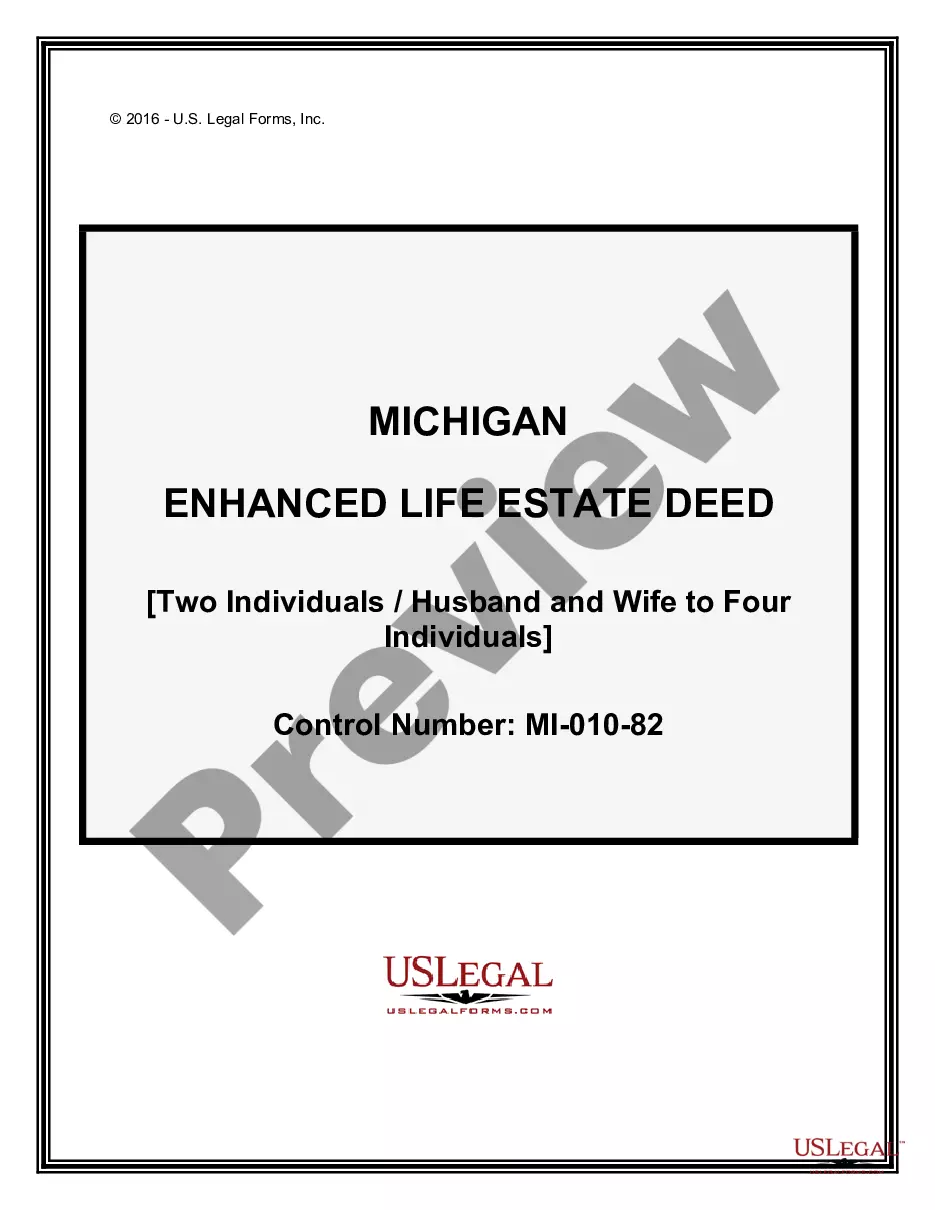
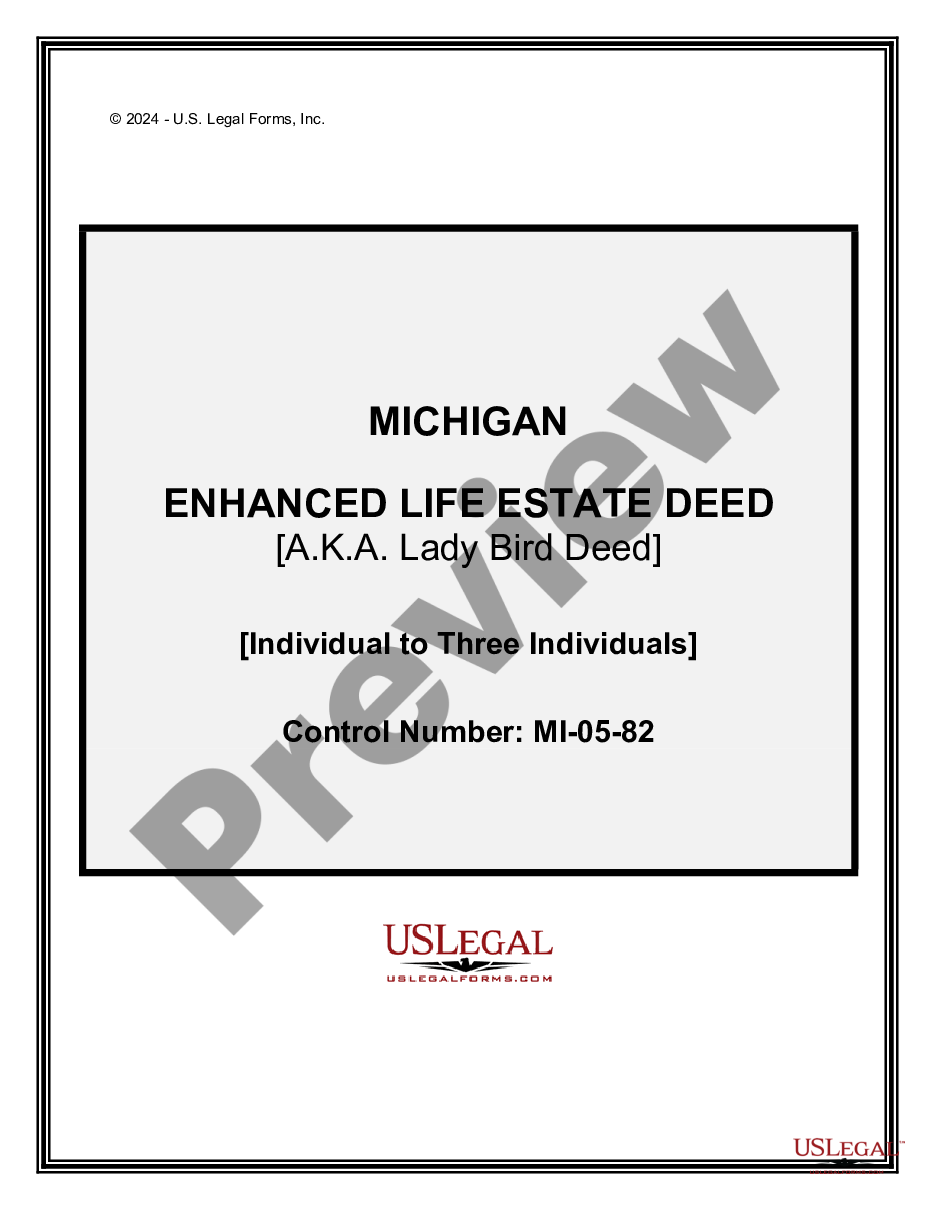
How to fill out Michigan Enhanced Life Estate Or Lady Bird Deed - Individual To Four Individuals?
Managing legal documents can be perplexing, even for seasoned professionals.
If you're seeking a Michigan Estate Deed Without Powers and lack the time to search for the appropriate and updated version, the process can be stressful.
US Legal Forms accommodates any needs you may have, from personal to business paperwork, all in one convenient place.
Utilize advanced features to complete and manage your Michigan Estate Deed Without Powers.
Here are the steps to follow after locating the form you require: Verify that this is the correct form by previewing it and reviewing its description.
- Gain access to a resource library of articles, guides, manuals, and materials pertinent to your circumstances and requirements.
- Save time and energy searching for the necessary documents, and leverage US Legal Forms' advanced search and Review tool to obtain Michigan Estate Deed Without Powers.
- If you have a subscription, Log In to your US Legal Forms account, locate the form, and obtain it.
- Check your My documents tab to see the documents you've previously saved and to organize your folders as needed.
- If you're a new user of US Legal Forms, create an account for unlimited access to all the platform's benefits.
- A comprehensive web form catalog could be transformative for anyone looking to handle these matters efficiently.
- US Legal Forms is a frontrunner in online legal forms, offering over 85,000 state-specific legal documents available to you at any moment.
- With US Legal Forms, you can access legal and business forms specific to your state or county.
Form popularity
FAQ
The 120-hour rule in Michigan states that any beneficiary must survive the decedent by at least 120 hours to inherit under their will or through intestate succession. This rule is particularly important when dealing with estates that might involve a Michigan estate deed without powers, as it affects how property is distributed after death.
Michigan lady bird deeds allow the current owner to name a future owner who will take title when the current owner dies, but the current owner keeps complete control over the property for life.
A life tenant does not have complete control over the property because they do not own the whole bundle of rights. The life tenant cannot sell, mortgage or in any way transfer or encumber the property. If either party wants to sell the property, both the life tenant and remainderman must agree.
An additional potential problem with a Life Estate is that it does not offer creditor protection to the beneficiary, so if the heir has a debt or is sued, the creditor or court can come after the house. As you can see, a traditional Life Estate has the potential to create major conflict within a family.
In Michigan, real estate can be transferred via a TOD deed, also known as a beneficiary deed. This deed allows a property owner to designate a beneficiary who will automatically inherit the property upon the owner's death, avoiding probate.
Sign and date the quitclaim deed in a notary's presence, then file it with the County Register of Deeds Office in the property's county, not the county where you live. Once the deed is filed and recorded, the transfer is deemed legal.