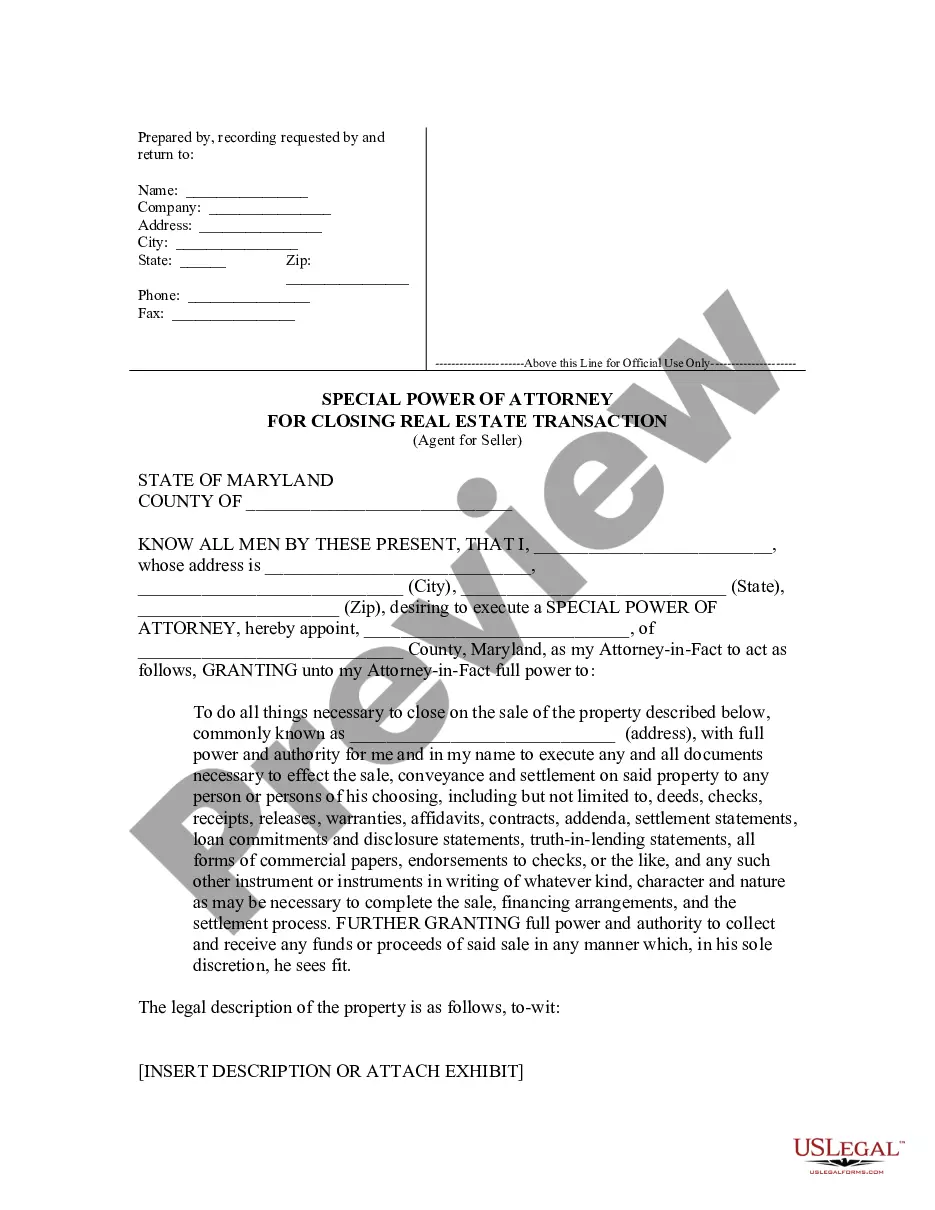
Special Poa For Real Estate
Description


Get your form ready online
Our built-in tools help you complete, sign, share, and store your documents in one place.
Make edits, fill in missing information, and update formatting in US Legal Forms—just like you would in MS Word.
Download a copy, print it, send it by email, or mail it via USPS—whatever works best for your next step.
Sign and collect signatures with our SignNow integration. Send to multiple recipients, set reminders, and more. Go Premium to unlock E-Sign.
If this form requires notarization, complete it online through a secure video call—no need to meet a notary in person or wait for an appointment.
We protect your documents and personal data by following strict security and privacy standards.

Make edits, fill in missing information, and update formatting in US Legal Forms—just like you would in MS Word.

Download a copy, print it, send it by email, or mail it via USPS—whatever works best for your next step.

Sign and collect signatures with our SignNow integration. Send to multiple recipients, set reminders, and more. Go Premium to unlock E-Sign.

If this form requires notarization, complete it online through a secure video call—no need to meet a notary in person or wait for an appointment.

We protect your documents and personal data by following strict security and privacy standards.
Looking for another form?
How to fill out Maryland Special Or Limited Power Of Attorney For Real Estate Sales Transaction By Seller?
- Begin by logging into your US Legal Forms account if you are a returning user. Click the Download button for the desired template, ensuring your subscription remains current. If needed, renew your plan accordingly.
- For new users, initiate your journey by reviewing the Preview mode and description of the special poa form. Confirm that it aligns with your requirements and complies with local jurisdictional standards.
- Should you need an alternative template, utilize the Search tab at the top of the page to locate the appropriate document.
- Once you’ve identified the suitable form, click on the Buy Now button. Select your preferred subscription plan and create an account for full access to the document library.
- Complete your purchase by entering your payment details through a credit card or PayPal account.
- Finally, download your document to your device. You can also access it anytime from the My Forms section in your profile.
US Legal Forms empowers users like you to easily access a wide variety of legal documents tailored to your needs. With over 85,000 editable forms and premium expert support, you can rest assured your documents will be accurately completed.
Take the first step towards organizing your real estate transactions with US Legal Forms. Start your journey today!
Form popularity
FAQ
In New Jersey, to create a valid power of attorney, the principal must sign the document in the presence of a notary or two witnesses. The document should specify whether it is a general or special POA for real estate, clearly detailing the powers granted. It's advisable to consult with a professional to address any specific concerns.
When writing a power of attorney letter for property, begin with a clear title, such as 'Special Power of Attorney for Real Estate.' Define the properties involved, outline the powers you give, and ensure that you include your signature and date. This will enable the agent to act on your behalf for specific property transactions.
The best person to be a power of attorney is someone you trust implicitly, who can act in your best interest. Ideally, this person should be organized, reliable, and have a clear understanding of your values and wishes—especially if the role includes managing a special POA for real estate. Common choices include family members or close friends.
Start by providing the names and addresses of the principal and agent on the power of attorney paperwork. Clearly outline the powers you are granting, specifically mentioning if they relate to real estate as a special POA. Ensure the document is signed in front of a notary to validate it properly.
In Tennessee, the rules for power of attorney include the requirement that the principal must be of sound mind when signing. A special POA for real estate requires specific language to grant authority related to real estate transactions. Always consult state laws or an attorney to ensure compliance with local requirements.
When filling out a POA check, include the name of the agent or power of attorney holder in the 'payee' line. Write a clear amount and provide a memorable description if needed. Ensure that you indicate it is being issued under the special POA for real estate, as this will clarify the transaction's intent.
To fill out a POA form effectively, start by clearly identifying the parties involved, including the principal and the agent. Make sure to specify the powers granted, and if it pertains to real estate, label it as a special POA for real estate. Finally, sign and date the form, ensuring it complies with state regulations.
The four main types of Power of Attorney include general, durable, special, and medical. A special POA for real estate focuses specifically on property matters, making it ideal for real estate transactions. Understanding these types helps you choose the right option for your needs. Each type serves a distinct purpose, ensuring that your affairs are managed according to your wishes.
POA stands for 'Power of Attorney.' It is a legal document that grants someone the authority to act on another person's behalf. In real estate transactions, a special POA for real estate allows designated individuals to make decisions regarding property affairs. Familiarity with this term is essential for anyone involved in real estate dealings.
Yes, you can sell a house with a Power of Attorney. The person granted the special POA for real estate can sign the necessary documents to facilitate the sale. This is particularly useful if the owner is unavailable or unable to manage the sale themselves. Properly executed, this process ensures a smooth transaction without unnecessary delays.