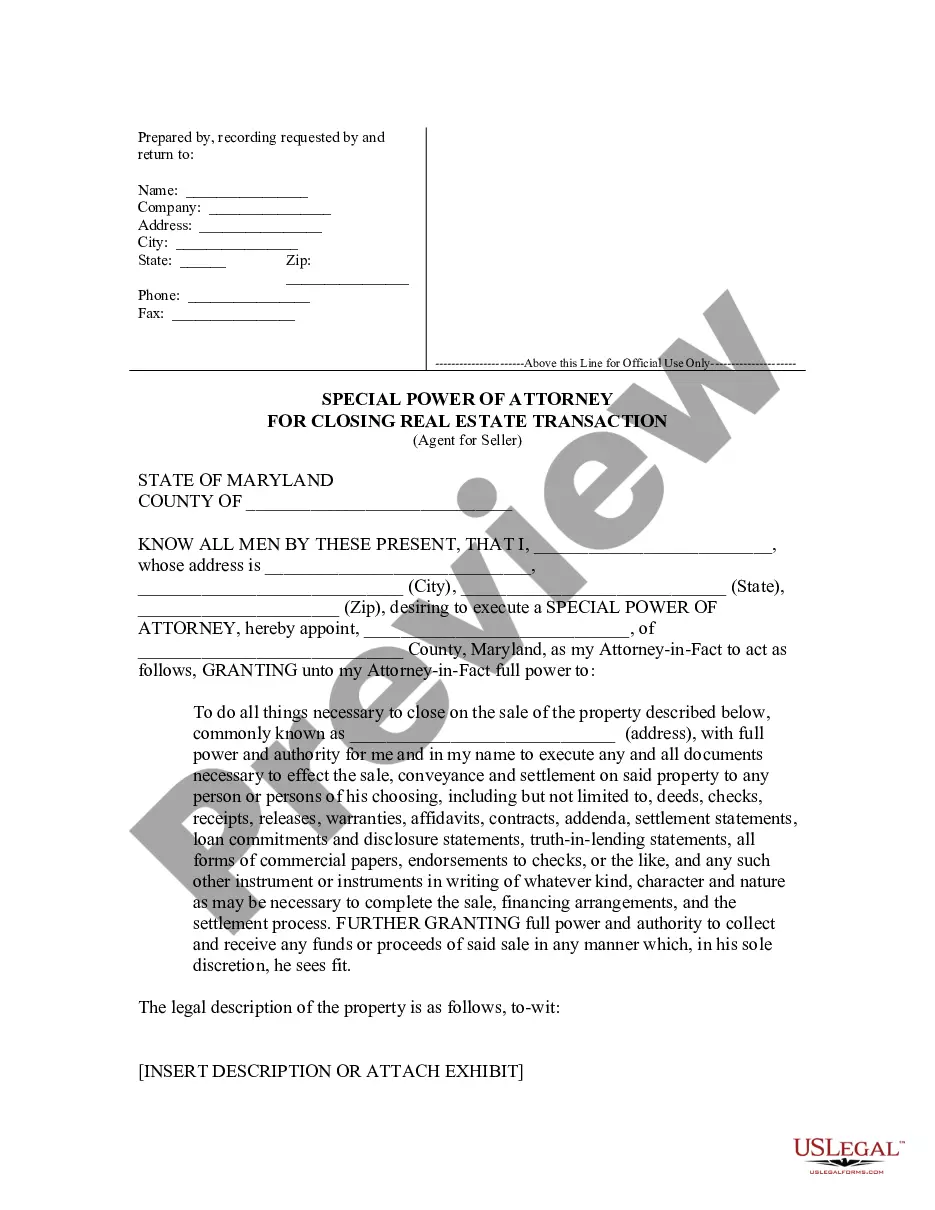
Poa For Real Estate Closing
Description


Get your form ready online
Our built-in tools help you complete, sign, share, and store your documents in one place.
Make edits, fill in missing information, and update formatting in US Legal Forms—just like you would in MS Word.
Download a copy, print it, send it by email, or mail it via USPS—whatever works best for your next step.
Sign and collect signatures with our SignNow integration. Send to multiple recipients, set reminders, and more. Go Premium to unlock E-Sign.
If this form requires notarization, complete it online through a secure video call—no need to meet a notary in person or wait for an appointment.
We protect your documents and personal data by following strict security and privacy standards.

Make edits, fill in missing information, and update formatting in US Legal Forms—just like you would in MS Word.

Download a copy, print it, send it by email, or mail it via USPS—whatever works best for your next step.

Sign and collect signatures with our SignNow integration. Send to multiple recipients, set reminders, and more. Go Premium to unlock E-Sign.

If this form requires notarization, complete it online through a secure video call—no need to meet a notary in person or wait for an appointment.

We protect your documents and personal data by following strict security and privacy standards.
Looking for another form?








How to fill out Maryland Special Or Limited Power Of Attorney For Real Estate Sales Transaction By Seller?
Finding a reliable source to obtain the most up-to-date and pertinent legal templates is a significant part of dealing with bureaucracy. Identifying the appropriate legal documents requires accuracy and meticulousness, which is why it is essential to source samples of Poa For Real Estate Closing exclusively from credible suppliers, such as US Legal Forms. An incorrect template will squander your time and hinder your current situation. With US Legal Forms, you have minimal concerns. You can access and review all the details regarding the document’s applicability and significance for your case and in your state or county.
Consider the subsequent steps to finalize your Poa For Real Estate Closing.
Eliminate the complications that come with your legal documentation. Browse the vast US Legal Forms collection to discover legal templates, assess their relevance to your situation, and download them immediately.
- Use the directory navigation or search bar to locate your template.
- Examine the form’s description to ensure it aligns with the requirements of your state and locality.
- View the form preview, if provided, to confirm that the form is indeed the one you seek.
- Return to the search and look for the appropriate document if the Poa For Real Estate Closing does not meet your specifications.
- If you are confident about the form’s applicability, download it.
- When you are a registered user, click Log in to verify and access your selected templates in My documents.
- If you don’t have an account yet, click Buy now to acquire the form.
- Choose the pricing option that fits your requirements.
- Proceed to the registration to finalize your purchase.
- Complete your purchase by selecting a payment method (credit card or PayPal).
- Select the document format for downloading Poa For Real Estate Closing.
- Once you have the form on your device, you can modify it with the editor or print it and complete it by hand.
Form popularity
FAQ
A power of attorney for the conveyance, mortgage, or lease of an interest in real property must be recorded in the office of the county recorder of the county in which such property is situated, previous to the recording of a deed, mortgage, or lease by virtue of such power of attorney.
In order for this power of attorney to be valid it must be notarized, but it doesn't need to be signed by any witnesses like a will does. You do not need to file a power of attorney at the courthouse unless you want your agent to be able to act on your behalf in regards to a real estate transaction.
If your POA involves real estate transactions, for example, you may need to file a copy with your land records office, which in Texas is part of your county clerk's office. If your agent will conduct financial transactions, you may want to give your banks and other financial institutions a copy as well.
In most cases, you'll meet with your real estate agent and a title company representative ? the seller and their agent don't have to be there. The title company representative will guide you through the process and ensure that all the necessary documents are signed correctly ? they take care of the filing.
A power of attorney (POA) for a real estate closing is permissible if not all parties can make it to the settlement table, but is not to be used as a matter of convenience. A POA is written authorization to act in a legal capacity on another's behalf, in certain circumstances, which are laid out in the document.