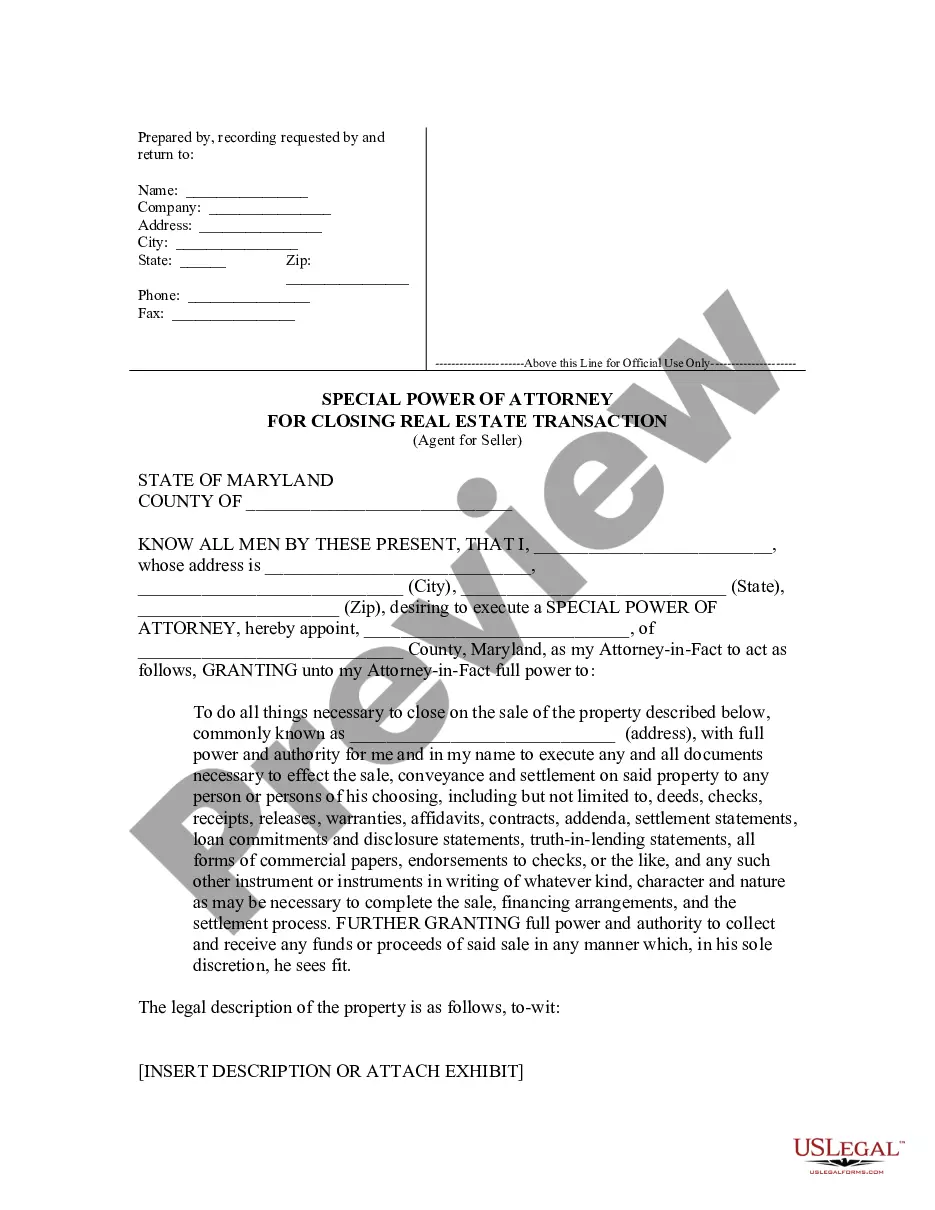
Limited Poa For Real Estate
Description


Get your form ready online
Our built-in tools help you complete, sign, share, and store your documents in one place.
Make edits, fill in missing information, and update formatting in US Legal Forms—just like you would in MS Word.
Download a copy, print it, send it by email, or mail it via USPS—whatever works best for your next step.
Sign and collect signatures with our SignNow integration. Send to multiple recipients, set reminders, and more. Go Premium to unlock E-Sign.
If this form requires notarization, complete it online through a secure video call—no need to meet a notary in person or wait for an appointment.
We protect your documents and personal data by following strict security and privacy standards.

Make edits, fill in missing information, and update formatting in US Legal Forms—just like you would in MS Word.

Download a copy, print it, send it by email, or mail it via USPS—whatever works best for your next step.

Sign and collect signatures with our SignNow integration. Send to multiple recipients, set reminders, and more. Go Premium to unlock E-Sign.

If this form requires notarization, complete it online through a secure video call—no need to meet a notary in person or wait for an appointment.

We protect your documents and personal data by following strict security and privacy standards.
Looking for another form?








How to fill out Maryland Special Or Limited Power Of Attorney For Real Estate Sales Transaction By Seller?
- Begin by visiting the US Legal Forms website. If you are a returning user, simply log in to your account.
- Check for your desired limited POA form in the preview mode, ensuring it meets your legal requirements.
- If necessary, utilize the search function to find alternate templates that suit your needs.
- Once you have your form selected, click on the 'Buy Now' button and choose an appropriate subscription plan.
- Complete your purchase by entering your payment details through credit card or PayPal.
- Finally, download the form to your device and access it again anytime via the 'My Forms' section in your account.
In conclusion, US Legal Forms provides a user-friendly solution for obtaining limited POA documentation for real estate. With an extensive collection of forms and expert assistance, you can ensure that your legal documents are both accurate and compliant.
Start exploring the vast array of forms available today and simplify your real estate paperwork!
Form popularity
FAQ
Filling out a limited power of attorney form requires careful attention to detail. Start by identifying the specific powers you wish to grant regarding real estate transactions. Clearly specify the duration and the particular real estate matters involved. To simplify the process, uslegalforms offers user-friendly templates that guide you step-by-step, ensuring you fill out your limited POA for real estate accurately.
Yes, a bank can refuse a limited power of attorney (POA) for various reasons. If the bank feels that the document does not meet their internal requirements, or if the authority granted is unclear, they may decline to accept it. Therefore, it is vital to ensure that the limited POA for real estate is clearly drafted and conforms to state laws. Consider using a template from uslegalforms to create a compliant and effective limited POA.
The limits of a power of attorney typically involve the scope of authority granted to your agent. For instance, a limited power of attorney may restrict your agent to specific actions, like managing a single property deal. Your agent cannot act beyond the permissions you outline in the document, and they cannot make personal or health-related decisions unless granted that power explicitly. Clarity in your POA ensures that your intentions are respected.
The key difference between durable and limited power of attorney lies in their effect and duration. A durable POA remains in effect even if you become incapacitated, enabling your chosen agent to make decisions when needed. In contrast, limited POA for real estate is time-sensitive and only applies to specific transactions or tasks until those are completed. Understanding these distinctions ensures you select the right type for your circumstances.
A legal power of attorney cannot make decisions about your health care or medical treatments unless specifically outlined in advance. Additionally, the agent cannot alter your will or take action on your behalf after your death. Lastly, a POA cannot make decisions that are illegal or beyond the scope of your agreement, especially when it comes to personal assets, ensuring that the intended directions are respected.
Choosing the best person to be a power of attorney requires careful consideration. Look for someone you trust implicitly, as they will have significant authority over your affairs. This person should have a good understanding of your financial situation and be responsible in handling real estate transactions. Many opt for family members or trusted friends, but professional advisors can also be a solid choice.
When writing a power of attorney letter for property, begin with a clear statement of intent, defining the authority you wish to grant to your agent. Specify the property involved and the actions your agent can take, such as selling or managing the property. Make sure to include your name, the agent's name, and any necessary legal language to ensure clarity. Consider using the US Legal Forms platform for templates that help you create a comprehensive letter.
Limited power of attorney refers to granting authority for specific tasks or decisions, whereas specific power of attorney usually pertains to a very precise issue, such as a single transaction. Both types allow you to designate an agent, but limited POA for real estate often includes multiple transactions related to the property, while specific POA focuses on a narrower scope. Understanding these differences helps in choosing the right document for your needs.
Filling out a power of attorney form involves several steps. Begin by selecting the appropriate type of power of attorney, such as limited POA for real estate, depending on your needs. Fill in the agent's information, specify the powers being granted, and add your details as the principal. Don't forget to sign and, in many cases, notarize the document to ensure its legal validity.
To fill out a limited power of attorney form, start by identifying the specific property or transaction for which you are granting authority. Clearly state the name of the agent you are designating, along with their contact information. After completing the necessary details, ensure you date and sign the form, as well as have it notarized. Utilizing the US Legal Forms platform can simplify this process, providing templates tailored for limited POA for real estate.