Personal Representative Deed Maryland Foreign
Description

Get your form ready online
Our built-in tools help you complete, sign, share, and store your documents in one place.
Make edits, fill in missing information, and update formatting in US Legal Forms—just like you would in MS Word.
Download a copy, print it, send it by email, or mail it via USPS—whatever works best for your next step.
Sign and collect signatures with our SignNow integration. Send to multiple recipients, set reminders, and more. Go Premium to unlock E-Sign.
If this form requires notarization, complete it online through a secure video call—no need to meet a notary in person or wait for an appointment.
We protect your documents and personal data by following strict security and privacy standards.

Make edits, fill in missing information, and update formatting in US Legal Forms—just like you would in MS Word.

Download a copy, print it, send it by email, or mail it via USPS—whatever works best for your next step.

Sign and collect signatures with our SignNow integration. Send to multiple recipients, set reminders, and more. Go Premium to unlock E-Sign.

If this form requires notarization, complete it online through a secure video call—no need to meet a notary in person or wait for an appointment.

We protect your documents and personal data by following strict security and privacy standards.
Looking for another form?


How to fill out Maryland Warranty Deed Of Sale - Personal Representative To An Individual?
Locating a trusted source to obtain the latest and pertinent legal templates is a significant portion of managing bureaucracy. Identifying the correct legal documents necessitates precision and meticulousness, which is why it is vital to acquire samples of Personal Representative Deed Maryland Foreign exclusively from credible providers, such as US Legal Forms. An incorrect template will squander your time and postpone your current situation. With US Legal Forms, you have minimal concerns. You can access and verify all the details regarding the document’s applicability and significance for your circumstances and in your locality.
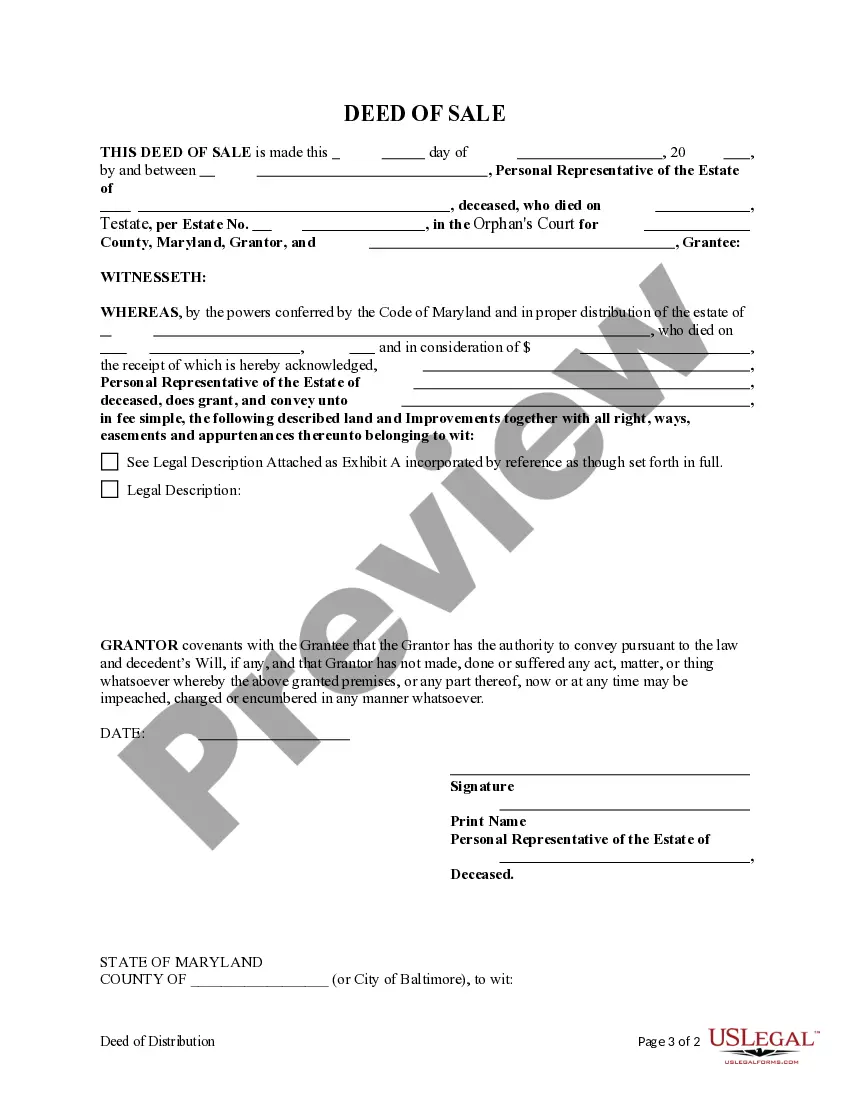
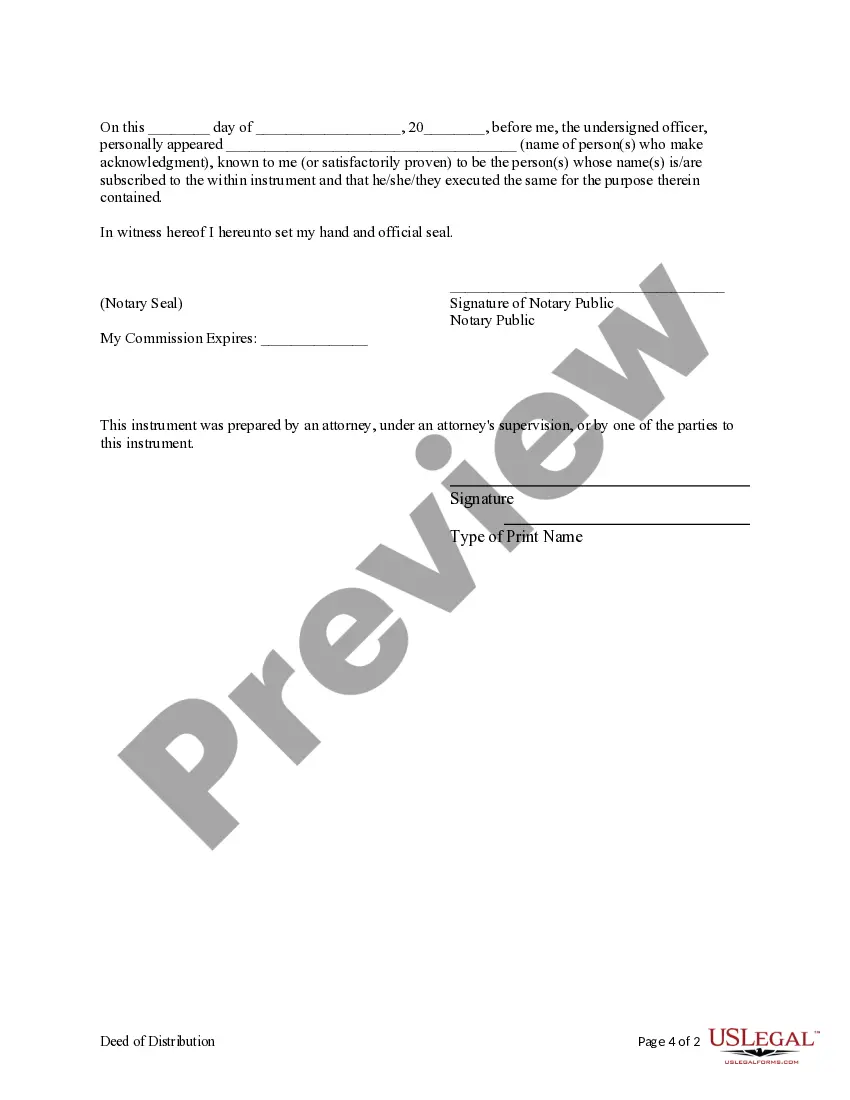
Consider the outlined steps to finalize your Personal Representative Deed Maryland Foreign: Use the library navigation or search option to find your sample. Review the form’s information to ensure it meets the criteria of your state and region. Check the form preview, if available, to confirm the template is what you need. Return to the search and locate the appropriate document if the Personal Representative Deed Maryland Foreign does not meet your requirements. Once you are confident about the form’s applicability, download it. If you are an authorized user, click Log in to verify and access your chosen templates in My documents. If you do not have an account yet, click Buy now to acquire the form. Choose the pricing plan that suits your needs. Move on to the registration to finalize your purchase. Complete your transaction by selecting a payment method (credit card or PayPal). Choose the document format for downloading Personal Representative Deed Maryland Foreign. Once you have the form on your device, you can modify it using the editor or print it out and complete it manually. Eliminate the stress associated with your legal documentation. Explore the extensive US Legal Forms library where you can discover legal templates, assess their relevance to your situation, and download them instantly.
Remove the hassle of your legal documents. Explore the all-encompassing US Legal Forms library to find legal templates, evaluate their relevance to your situation, and download them promptly.
- Locate your sample using the library navigation or search field.
- Review the form’s information for state and area requirements.
- Check the form preview to ensure it meets your needs.
- Search again if the document does not fit your requirements.
- Download the form when you are confident in its relevance.
- Log in if you are an authorized user to access templates.
- Purchase the form if you do not have an account.
- Select an appropriate pricing plan.
- Register to complete your purchase.
- Choose a payment method to finalize your transaction.
- Select the document format for the download.
Form popularity
FAQ
In a personal representative's deed, the owner of the property is typically the estate of the deceased, as the personal representative acts on behalf of the estate. The personal representative transfers the property to the designated beneficiaries according to the will or state law. Understanding this dynamic is crucial, especially when dealing with a personal representative deed Maryland foreign, to ensure compliant and effective property transfers.
Yes, you can write your own will in Maryland, and having it notarized can add an extra layer of credibility. However, ensure that your will adheres to Maryland's legal requirements to avoid potential issues later. If you are also dealing with a personal representative deed Maryland foreign, it might be beneficial to consult a legal expert or use a resource like USLegalForms for guidance.
Filling out a personal representative deed involves several key steps. First, you need to gather important information such as the property description and the personal representative's details. Then, use a reliable platform like USLegalForms to access templates specifically designed for a personal representative deed Maryland foreign. This can streamline the process and provide guidance to ensure accuracy.
In Maryland, a deed can be prepared by various individuals, including attorneys and qualified real estate professionals. However, if you're dealing with a personal representative deed Maryland foreign, it is advisable to consult with a lawyer who understands the specific requirements. This ensures that the deed complies with all legal standards and accurately reflects the intentions of the personal representative.
A personal representative's deed is used to transfer ownership of real property from a deceased person's estate to the beneficiaries or heirs. This deed is essential for ensuring that the property is legally and formally transferred, allowing the new owners to claim their rights. If you're navigating this process in Maryland, US Legal Forms can provide the necessary tools to create a compliant personal representative deed.
In Maryland, anyone who is at least 18 years old and of sound mind can serve as a personal representative of an estate. This may include family members, friends, or even professionals such as attorneys. It is crucial to ensure that the appointed individual understands their responsibilities, particularly when dealing with the execution of a personal representative deed in Maryland.
An executor and a personal representative essentially serve the same function, but terminology can vary by state. An executor is typically named in a will, while a personal representative can be appointed by the court if no will exists. In Maryland, a personal representative deed is often utilized to transfer property on behalf of the estate, regardless of how the personal representative was appointed.
In California, certain types of property can be transferred without going through probate. For instance, if the property is held in a living trust, it can be transferred directly to the beneficiaries. However, for other properties, you may need to consult a legal expert to explore options that could involve a personal representative deed, especially if the property is located in Maryland or involves a foreign element.
A deed transfer in Maryland must include essential details such as the names of the grantor and grantee, a legal description of the property, and the signature of the grantor. Additionally, you may need to include a notary acknowledgment to validate the deed. Utilizing resources like US Legal Forms can simplify the process and help ensure all necessary components are present for a valid deed transfer.
To obtain a personal representative deed in Maryland, you must first be appointed as the personal representative of an estate by the probate court. After receiving this appointment, you will need to prepare the deed, including all required information about the property and the estate. You may find it helpful to use platforms like US Legal Forms, which provide templates and guidance to ensure your deed complies with Maryland laws.