Local Attorney For Living Trust
Description
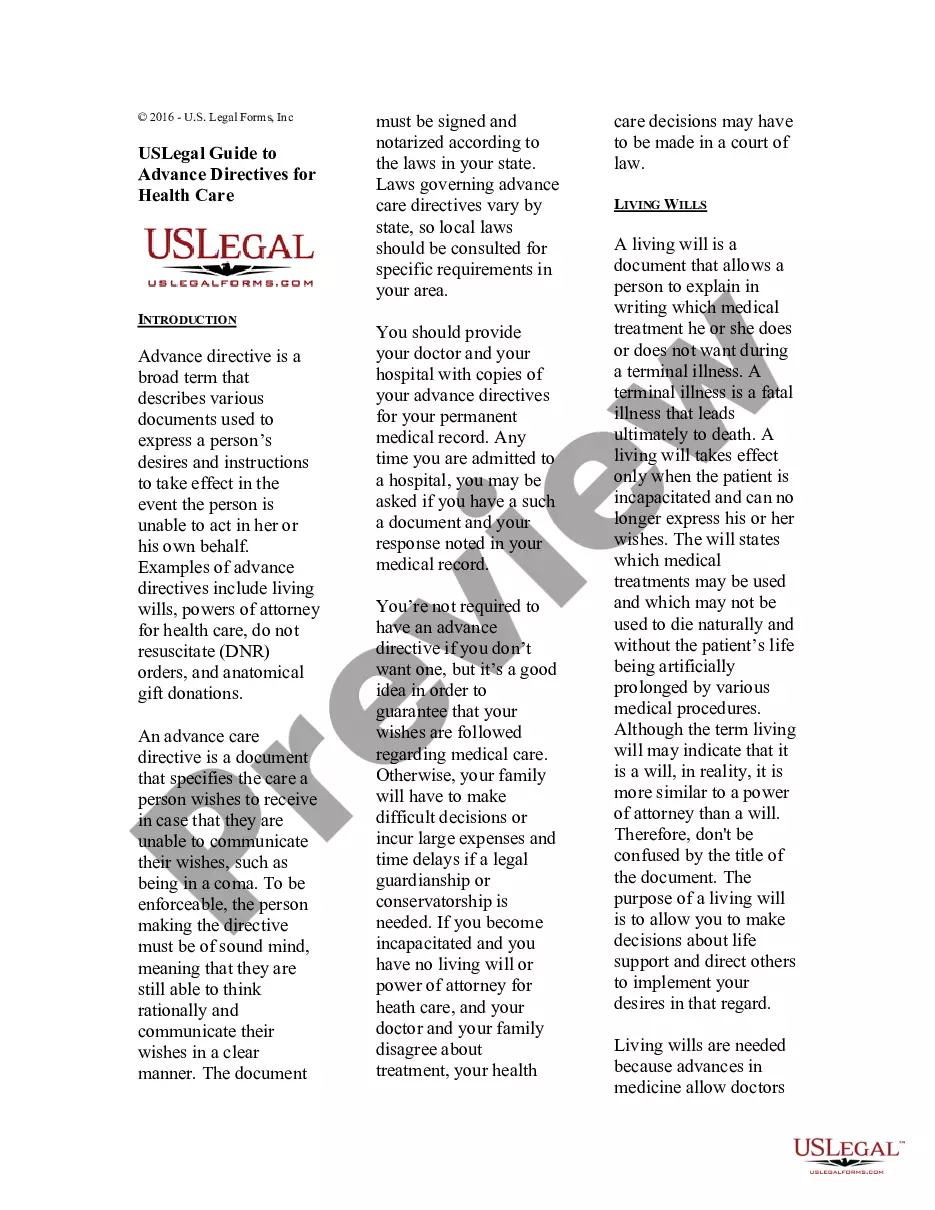
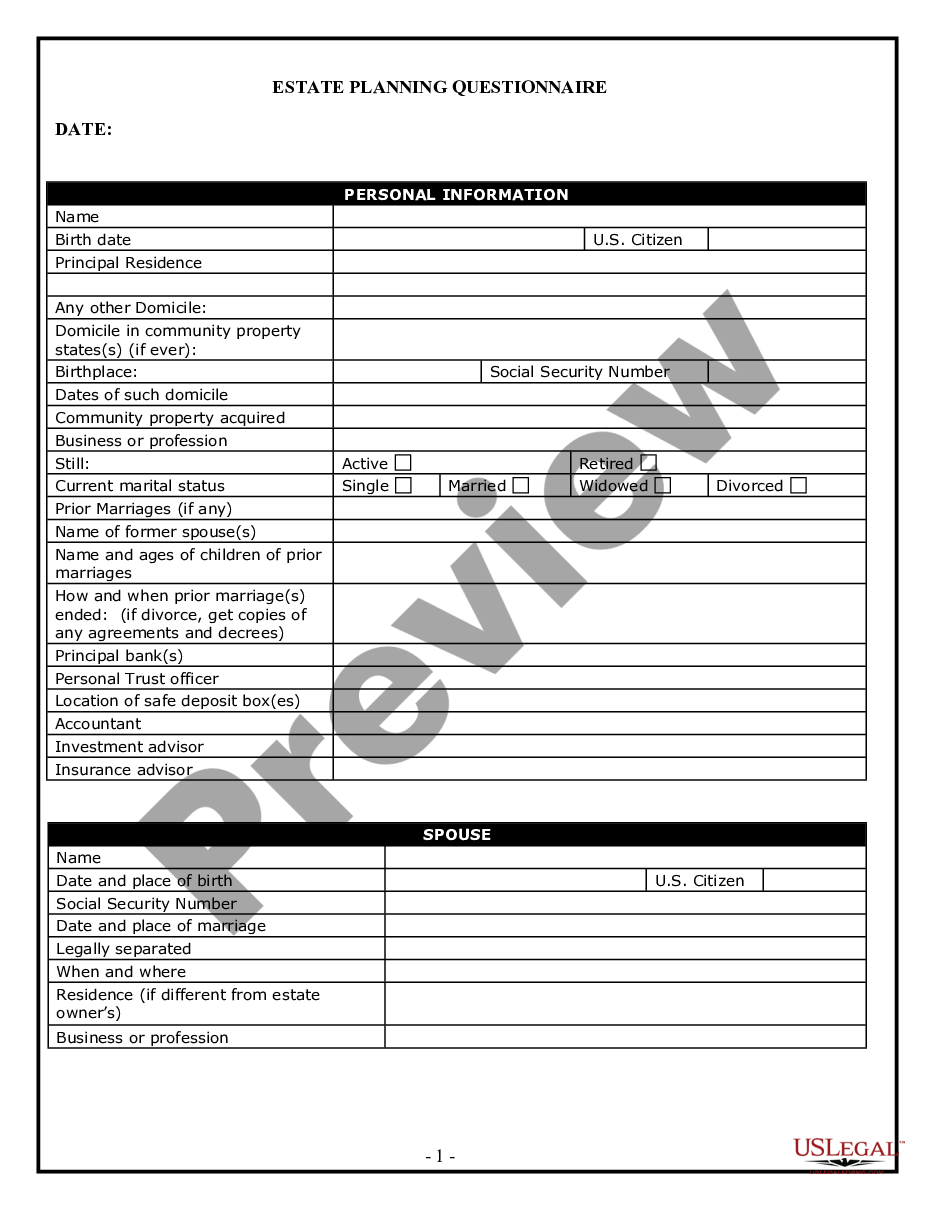
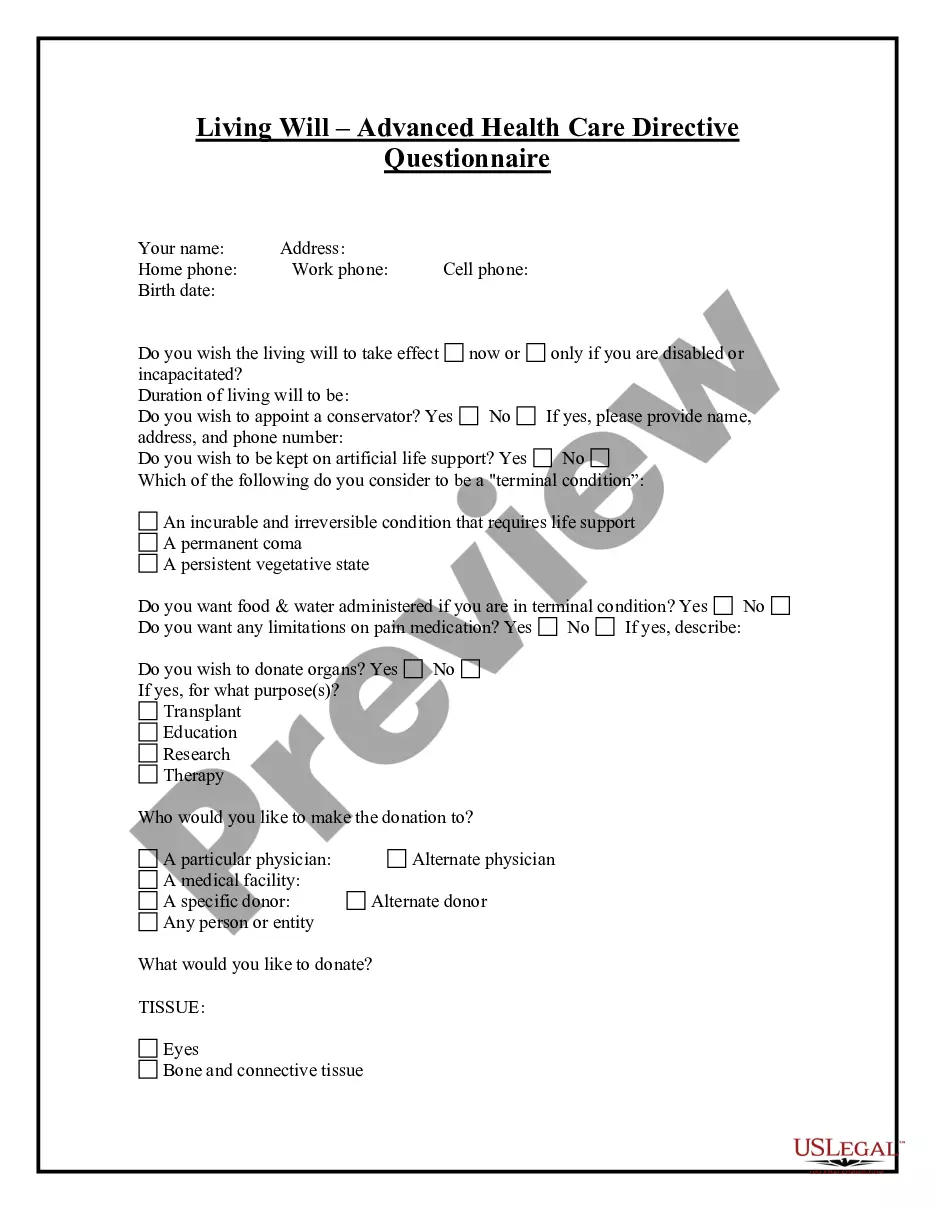
Get your form ready online
Our built-in tools help you complete, sign, share, and store your documents in one place.
Make edits, fill in missing information, and update formatting in US Legal Forms—just like you would in MS Word.
Download a copy, print it, send it by email, or mail it via USPS—whatever works best for your next step.
Sign and collect signatures with our SignNow integration. Send to multiple recipients, set reminders, and more. Go Premium to unlock E-Sign.
If this form requires notarization, complete it online through a secure video call—no need to meet a notary in person or wait for an appointment.
We protect your documents and personal data by following strict security and privacy standards.

Make edits, fill in missing information, and update formatting in US Legal Forms—just like you would in MS Word.

Download a copy, print it, send it by email, or mail it via USPS—whatever works best for your next step.

Sign and collect signatures with our SignNow integration. Send to multiple recipients, set reminders, and more. Go Premium to unlock E-Sign.

If this form requires notarization, complete it online through a secure video call—no need to meet a notary in person or wait for an appointment.

We protect your documents and personal data by following strict security and privacy standards.
Looking for another form?
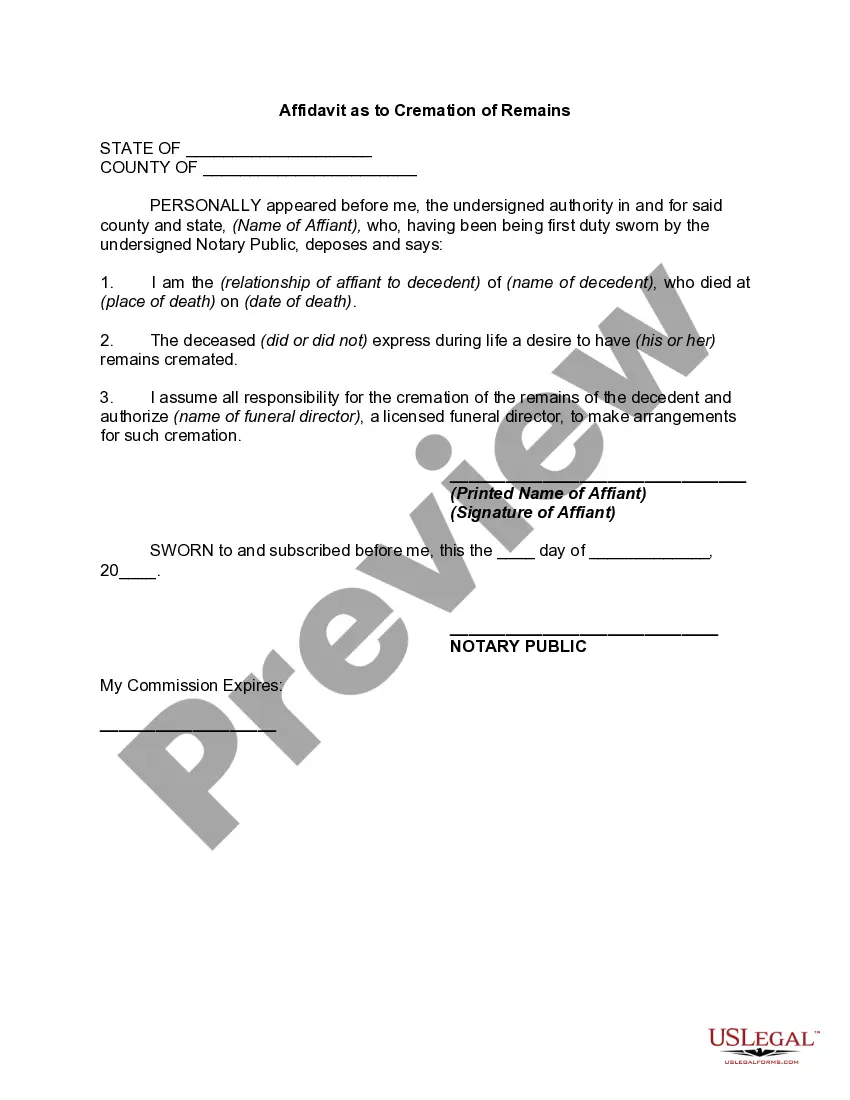







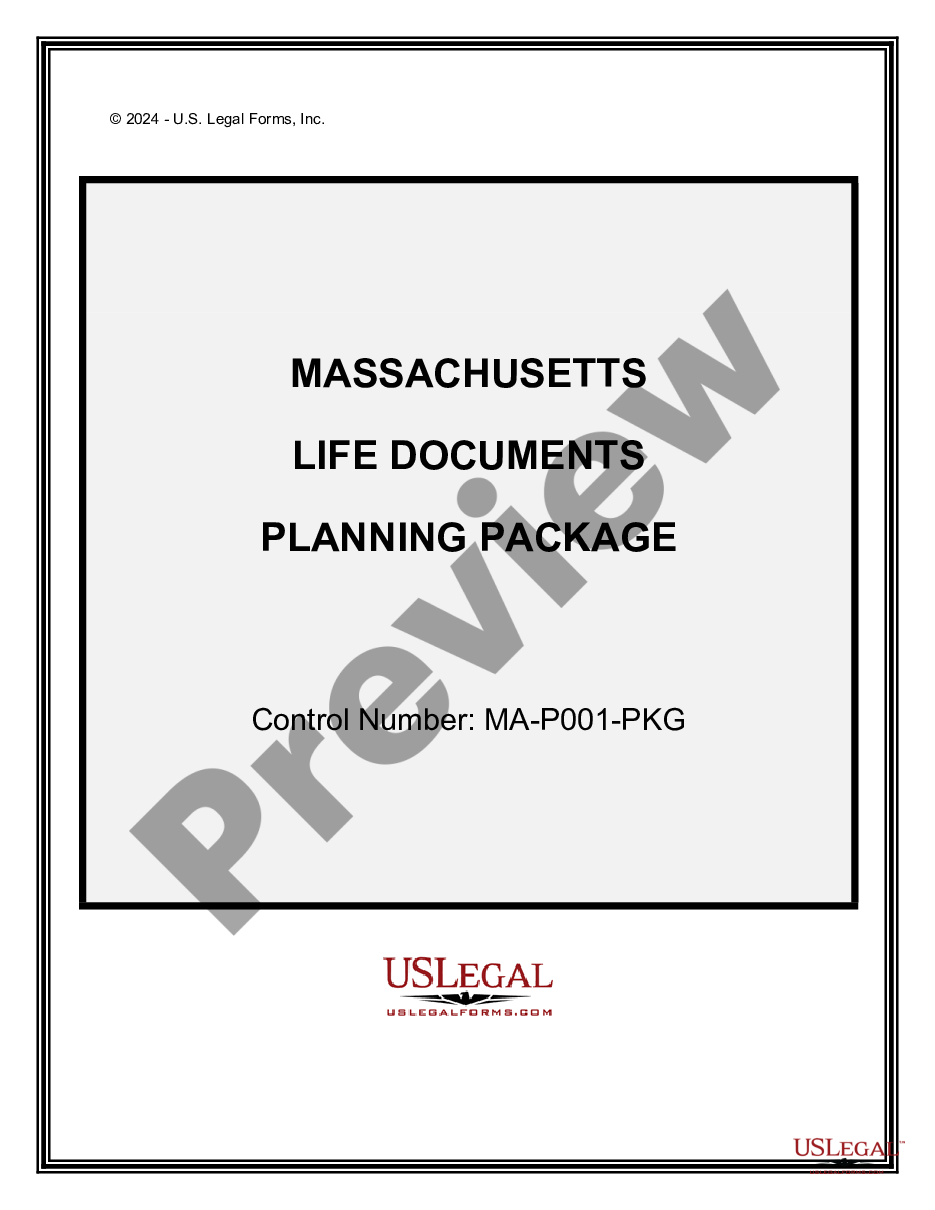
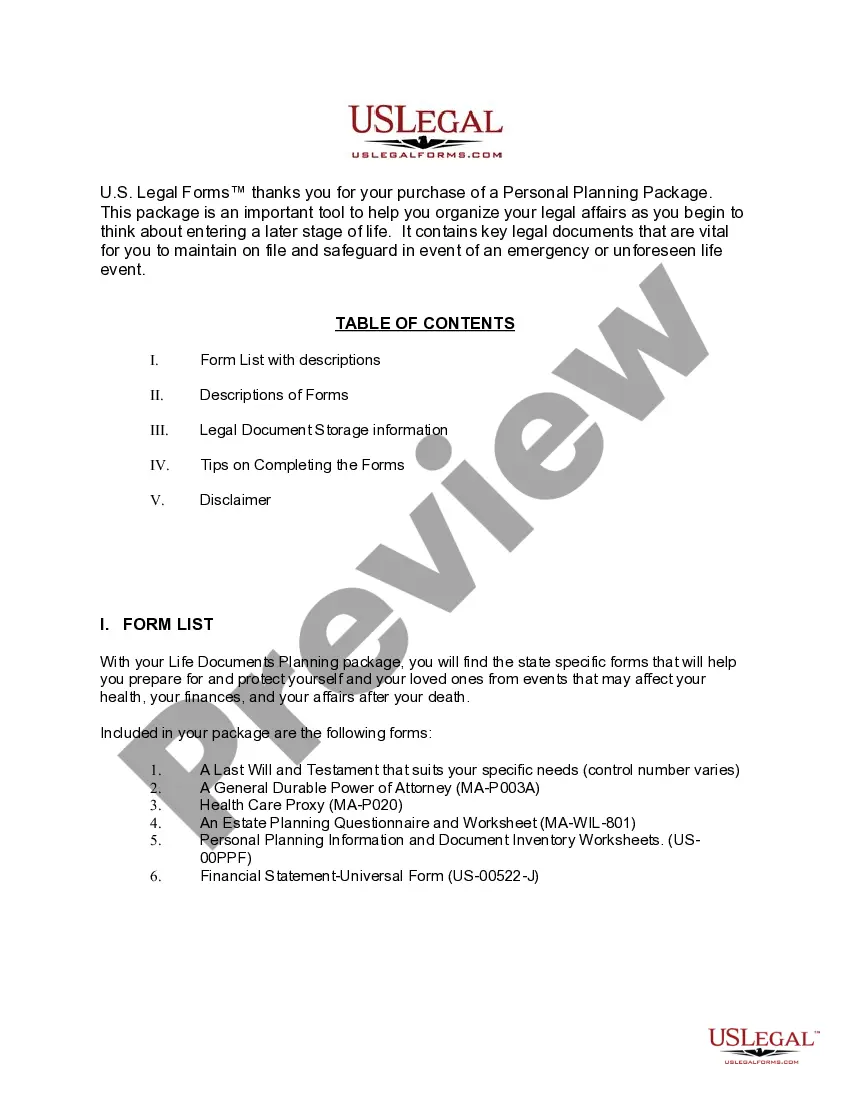
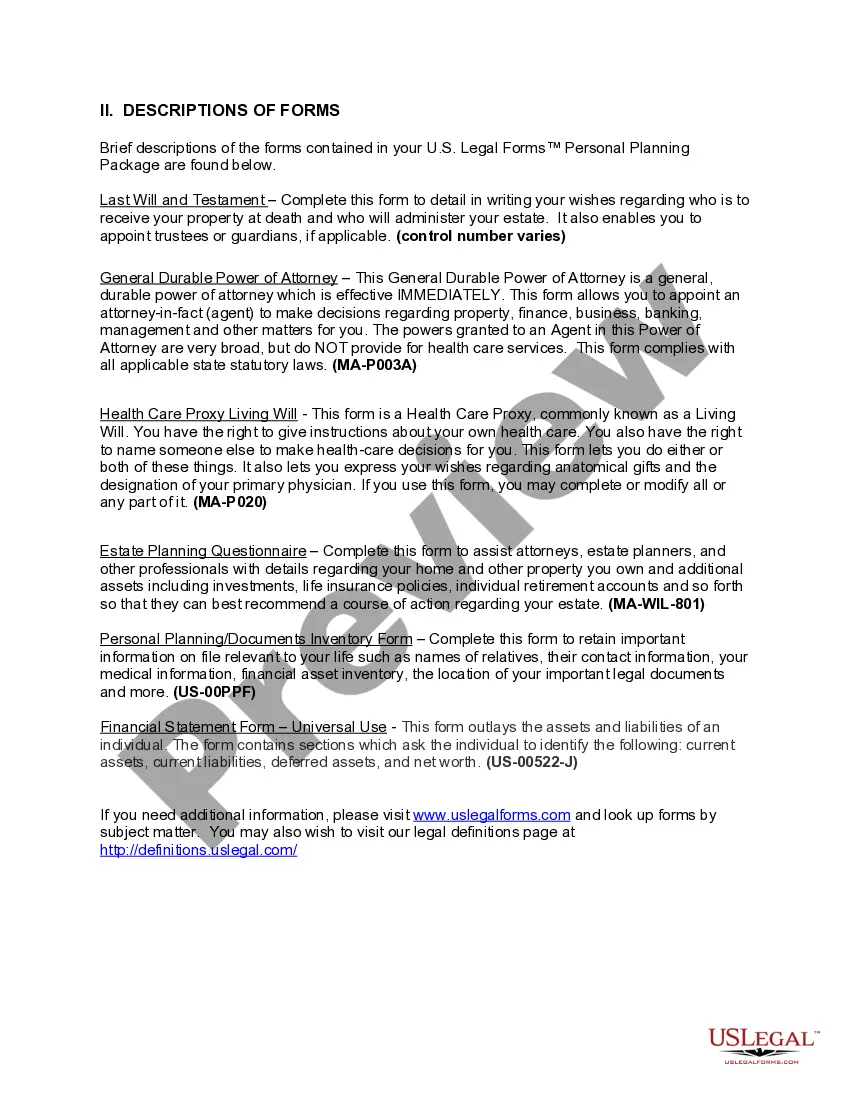
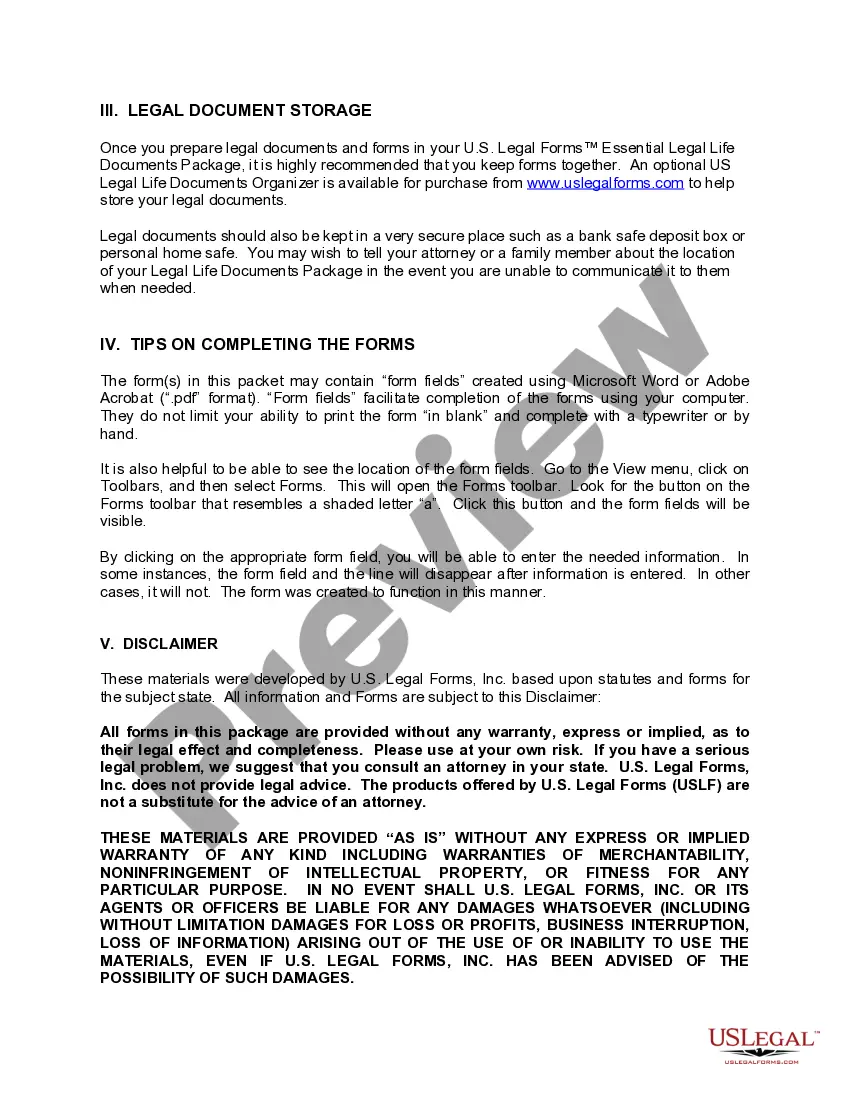
How to fill out Massachusetts Life Documents Planning Package, Including Will, Power Of Attorney And Living Will?
- If you're already an existing user, log into your account and select the desired form template. Ensure your subscription is current; renew if necessary.
- Explore the Preview mode and read the form description carefully to confirm it meets your needs and complies with local jurisdiction standards.
- If the document doesn't fit your requirements, use the Search feature to locate a suitable alternative. Once found, proceed to the next step.
- Click on the Buy Now button to select a subscription plan that works for you. You'll need to create an account to access the full range of forms.
- Complete your purchase by entering your payment information or using your PayPal account.
- Finally, download your living trust form and save it on your device. You can also access it later in the My Forms section of your profile.
In conclusion, US Legal Forms is designed to empower both individuals and attorneys by simplifying the process of preparing legal documents. With a vast selection of over 85,000 forms, users can easily find the right documents to suit their specific needs.
Don’t hesitate—get started today and ensure your living trust is set up correctly!
Form popularity
FAQ
A living trust can have some drawbacks. One notable disadvantage is that it does not provide tax benefits like some other estate planning tools. Furthermore, setting up a living trust often involves costs, including the fees for hiring a local attorney for living trust formation. Finally, while a living trust can help avoid probate, it does not protect assets from creditors.
Certain assets cannot be placed in a trust, such as retirement accounts, life insurance policies, and vehicles if they are meant for private use. However, you can often name the trust as a beneficiary for these assets instead. It's essential to work with a local attorney for living trust to understand how to properly handle these assets to ensure they align with your overall estate plan. By seeking expert advice, you can minimize complications and maximize benefits.
Some common pitfalls include overlooking the funding of the trust. If you don't transfer your assets into the trust, it won't provide the intended benefits. Additionally, some people mistakenly believe a living trust handles all estate planning needs, which it does not. Consulting a local attorney for living trust can help you navigate these issues and ensure your trust is correctly established.
One downside of a living trust is that it does not offer the same level of asset protection as some other estate planning tools. For example, if you face lawsuits or creditor claims, your assets in the trust may still be vulnerable. Moreover, setting up a living trust typically involves upfront costs for legal help, especially if you choose a local attorney for living trust services. Overall, while there are drawbacks, many people find the benefits outweigh these concerns.
Typically, a lawyer sets up a trust, as it involves legal documents and adherence to state laws. A local attorney for living trust will guide you through the entire process, ensuring that all legal requirements are met. While accountants can provide valuable insights into the tax implications of your trust, they generally do not draft the legal documents needed for its establishment.
The best type of lawyer for trusts is a specialized estate planning attorney who focuses on trusts and estates. A local attorney for living trust can provide tailored advice based on your specific needs, ensuring that your estate plan aligns with your goals. Look for someone with experience, good reviews, and a solid understanding of your state’s laws around trusts.
The best person to manage a trust is typically someone who understands the responsibilities involved and can act impartially, such as a trusted friend, family member, or an experienced local attorney for living trust. The trustee must have the capacity to manage assets, communicate effectively with beneficiaries, and uphold fiduciary duties. Before making a choice, consider their financial acumen and willingness to serve in this critical role.
One of the biggest mistakes parents make when setting up a trust fund is failing to communicate their intentions to their children. A local attorney for living trust can help you design a trust that aligns with your family’s values and goals. Additionally, neglecting to update the trust as family circumstances change, such as births or deaths, can lead to complications down the road.
While it is not legally required to have a lawyer for a living trust, working with a local attorney for living trust can simplify the process significantly. Trust laws can vary by state, which makes navigating the legal requirements easier with expert guidance. A lawyer will ensure your trust document reflects your intentions clearly and meets all legal obligations, providing you with peace of mind.