Louisiana Inter Vivos Trust With Us
Description



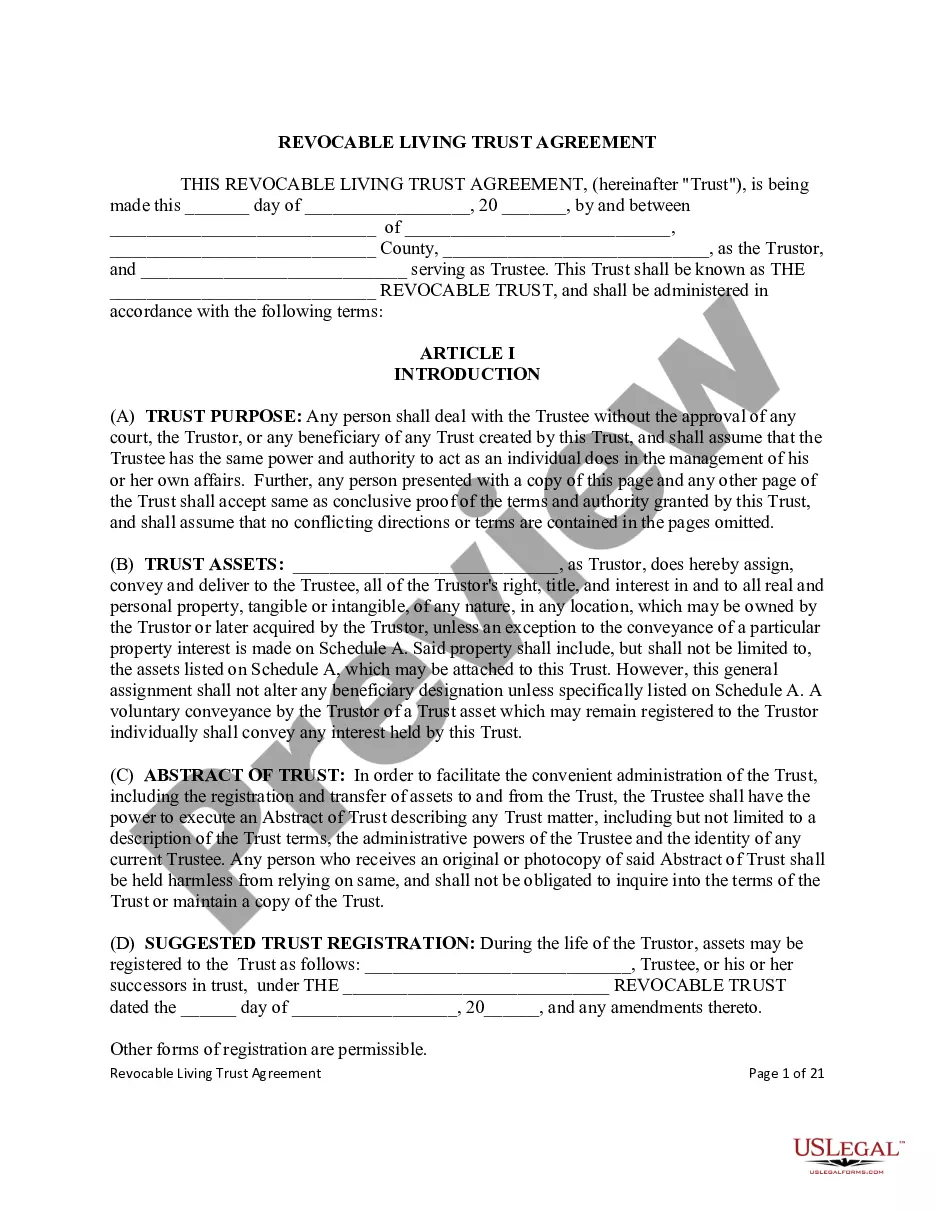
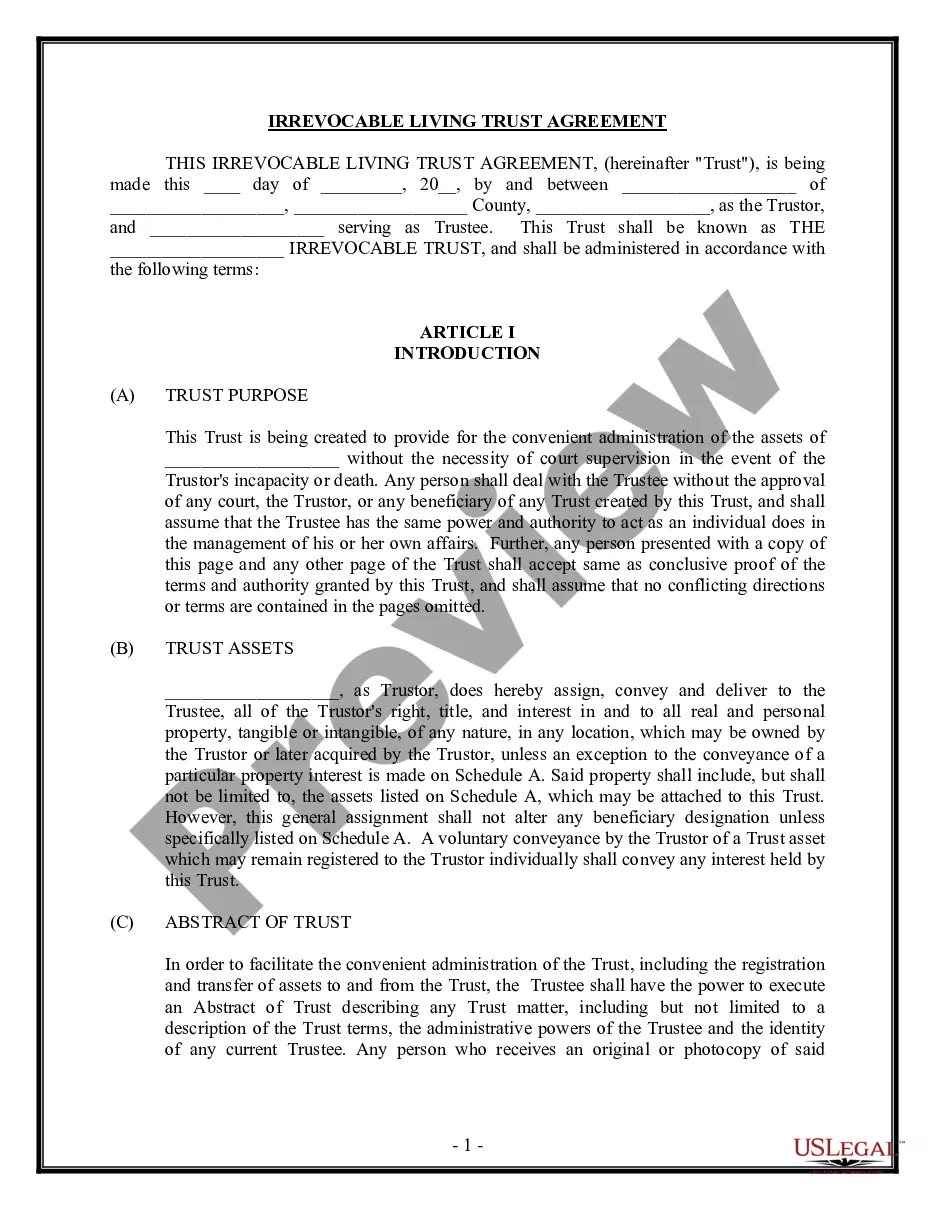
Get your form ready online
Our built-in tools help you complete, sign, share, and store your documents in one place.
Make edits, fill in missing information, and update formatting in US Legal Forms—just like you would in MS Word.
Download a copy, print it, send it by email, or mail it via USPS—whatever works best for your next step.
Sign and collect signatures with our SignNow integration. Send to multiple recipients, set reminders, and more. Go Premium to unlock E-Sign.
If this form requires notarization, complete it online through a secure video call—no need to meet a notary in person or wait for an appointment.
We protect your documents and personal data by following strict security and privacy standards.

Make edits, fill in missing information, and update formatting in US Legal Forms—just like you would in MS Word.

Download a copy, print it, send it by email, or mail it via USPS—whatever works best for your next step.

Sign and collect signatures with our SignNow integration. Send to multiple recipients, set reminders, and more. Go Premium to unlock E-Sign.

If this form requires notarization, complete it online through a secure video call—no need to meet a notary in person or wait for an appointment.

We protect your documents and personal data by following strict security and privacy standards.
Looking for another form?








How to fill out Louisiana Revocable Inter Vivos Trust?
- If you're a returning user, simply log in to your account and download the appropriate form template. Please verify your subscription status; if it has lapsed, renew as per your payment plan.
- If you're new to our service, start by exploring the Preview mode and reviewing the form descriptions to ensure you select the correct Louisiana inter vivos trust that aligns with your specific requirements.
- If you encounter any discrepancies, use the Search tab to find alternative templates that meet your needs. Once you find the right one, proceed to the next step.
- To acquire the document, click on the Buy Now button, choose your favorite subscription plan, and register an account for complete access.
- Complete your purchase by entering your payment information through credit card or PayPal for convenient subscription access.
- Finally, download your form and save it on your device. You can also revisit and manage your documents in the My Forms section of your account.
In conclusion, US Legal Forms provides a comprehensive solution for creating a Louisiana inter vivos trust, empowering both individuals and attorneys to execute legal documents with ease.
Don't wait! Get started with US Legal Forms today for a seamless legal experience.
Form popularity
FAQ
Filing a trust in Louisiana requires careful attention to detail and compliance with state laws. To create a Louisiana inter vivos trust with us, you can start by drafting a trust document that clearly outlines its terms. Once drafted, executing the document properly, and possibly recording it with the appropriate authorities, will help you secure your trust’s validity for estate planning.
Your trust may need to file a tax return depending on its income. If your Louisiana inter vivos trust with us generates income that exceeds the relevant limits, it's crucial to file the appropriate forms. This ensures that you avoid any penalties and maintain good standing with tax authorities.
An inter vivos trust usually files a tax return only if it earns income that surpasses a specific threshold. When setting up a Louisiana inter vivos trust with us, it's important to understand your tax obligations. Your trust may need to file Form 1041 if it meets these criteria, helping you to stay compliant with tax laws.
Revocable trusts typically do not file separate tax returns. Instead, the income generated by the trust is usually reported on the grantor's personal tax return. When you establish a Louisiana inter vivos trust with us, it allows for smoother tax handling since the trust's income stays with you for tax purposes.
Absolutely, inter vivos trusts are designed to circumvent the probate process. By transferring your assets into a Louisiana inter vivos trust with us, you ensure that your property is distributed according to your wishes without involving the court. This allows your beneficiaries to access the assets quickly and minimizes unnecessary delays.
Yes, a trust can avoid probate in Louisiana, which makes the process of asset transfer more straightforward and less time-consuming for your beneficiaries. When you set up a Louisiana inter vivos trust with us, your assets bypass the probate court, allowing for immediate access by your heirs. This not only streamlines the transfer process but also keeps your financial matters private.
The three common types of trust include revocable trusts, irrevocable trusts, and testamentary trusts. A revocable trust allows you to change or dissolve it at any point during your life, while an irrevocable trust cannot be altered once established. Testamentary trusts, on the other hand, come into effect only after your death and are often outlined within your will.
The primary difference between a general trust and a Louisiana inter vivos trust with us lies in the timing of their establishment. An inter vivos trust is created during your lifetime, allowing for immediate control and management of the assets included in it. In contrast, a will-based trust takes effect only after your death, which can lead to delays and complications in asset distribution.
The purpose of a Louisiana inter vivos trust with us is to manage your assets during your lifetime and to provide clear instructions on how those assets should be handled after your passing. This type of trust allows you to retain control over your property while ensuring it is distributed according to your wishes. Additionally, it can help reduce estate taxes and simplify the transfer process for your loved ones.
Whether your parents should put their assets in a trust, such as a Louisiana inter vivos trust with us, depends on their financial situation and goals. A trust can provide benefits like avoiding probate and protecting assets from creditors. However, it’s important for them to weigh these benefits against possible downsides like management complexity and costs. Encouraging your parents to consult with an expert can clarify the best course for their specific needs.