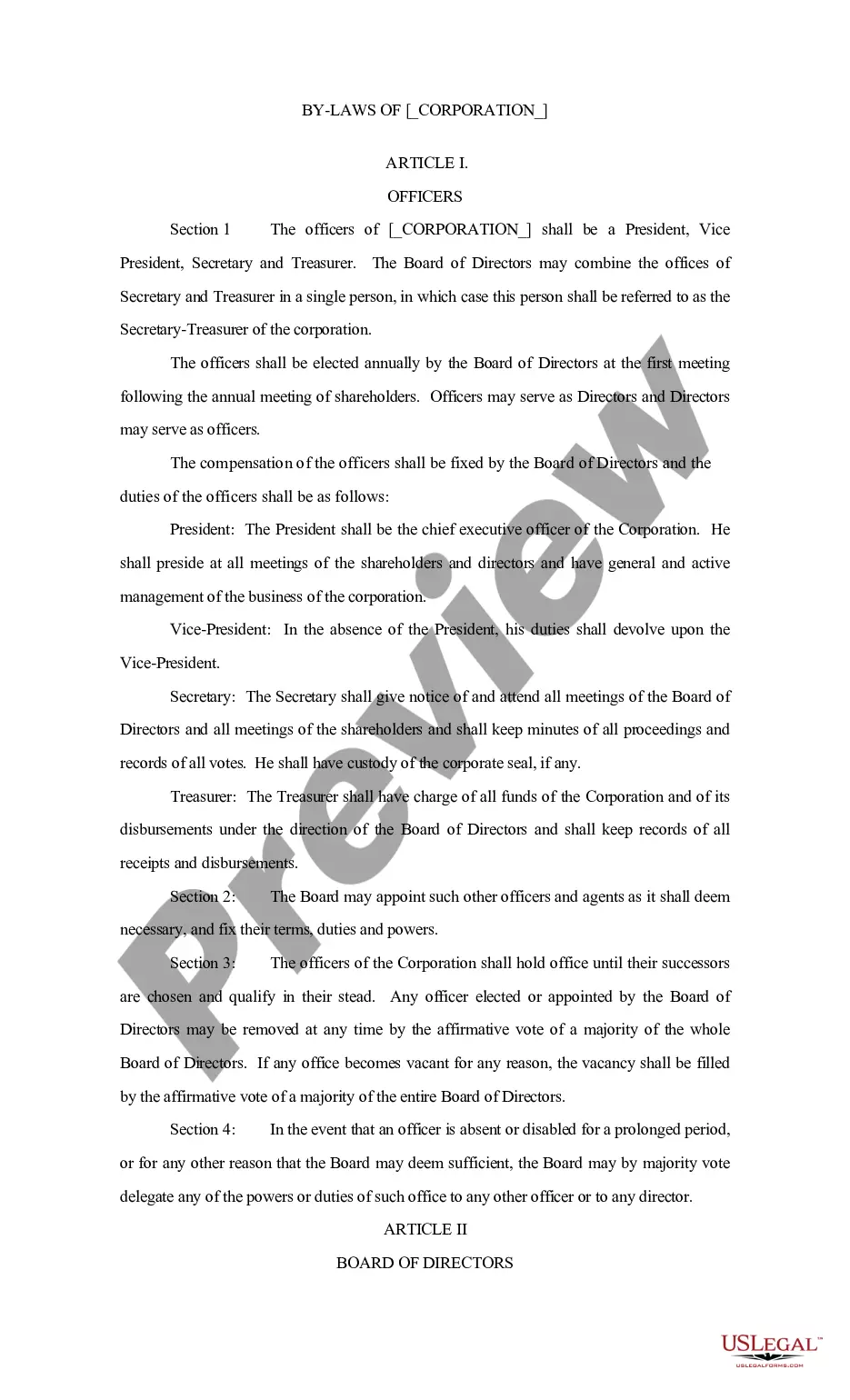
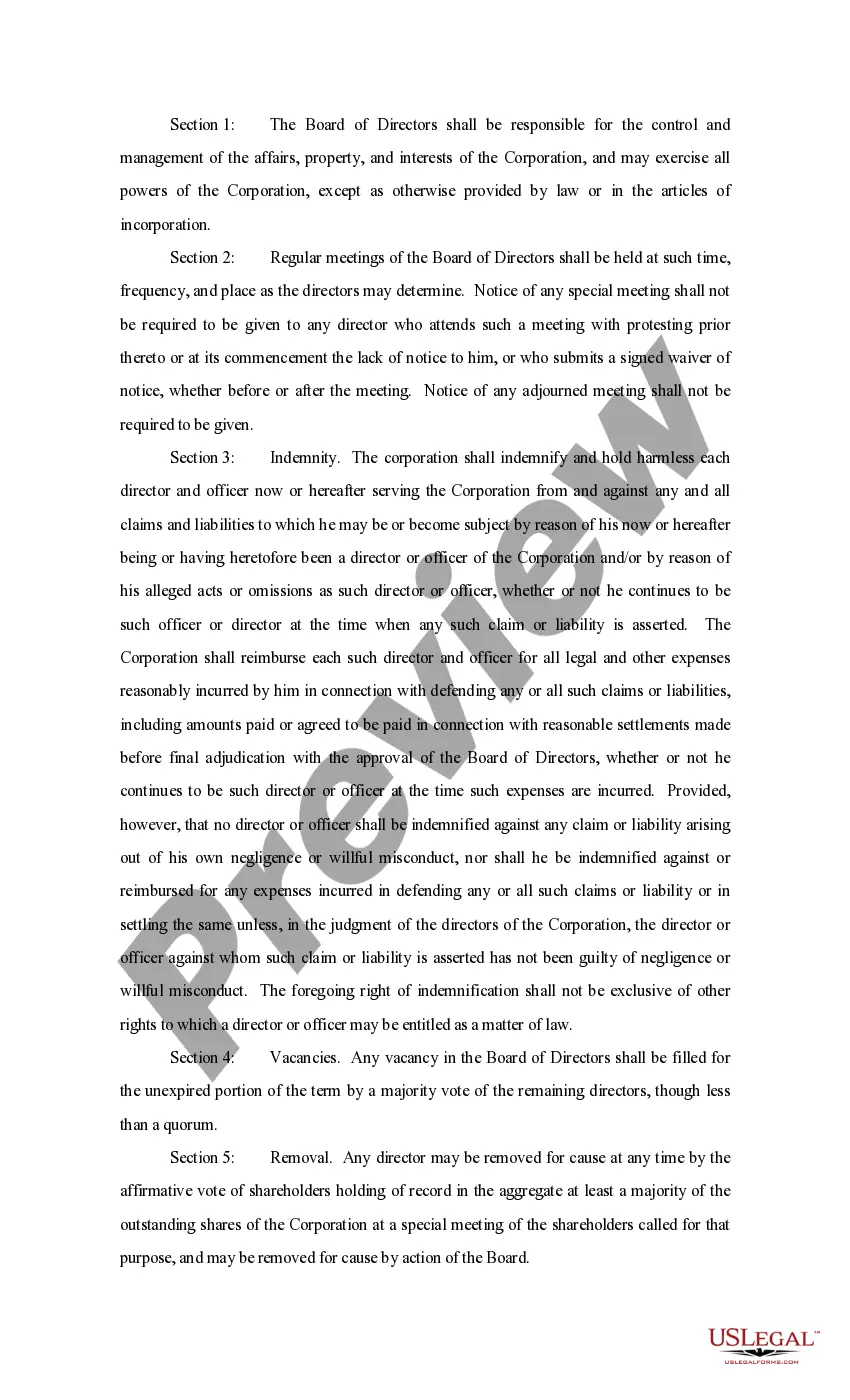
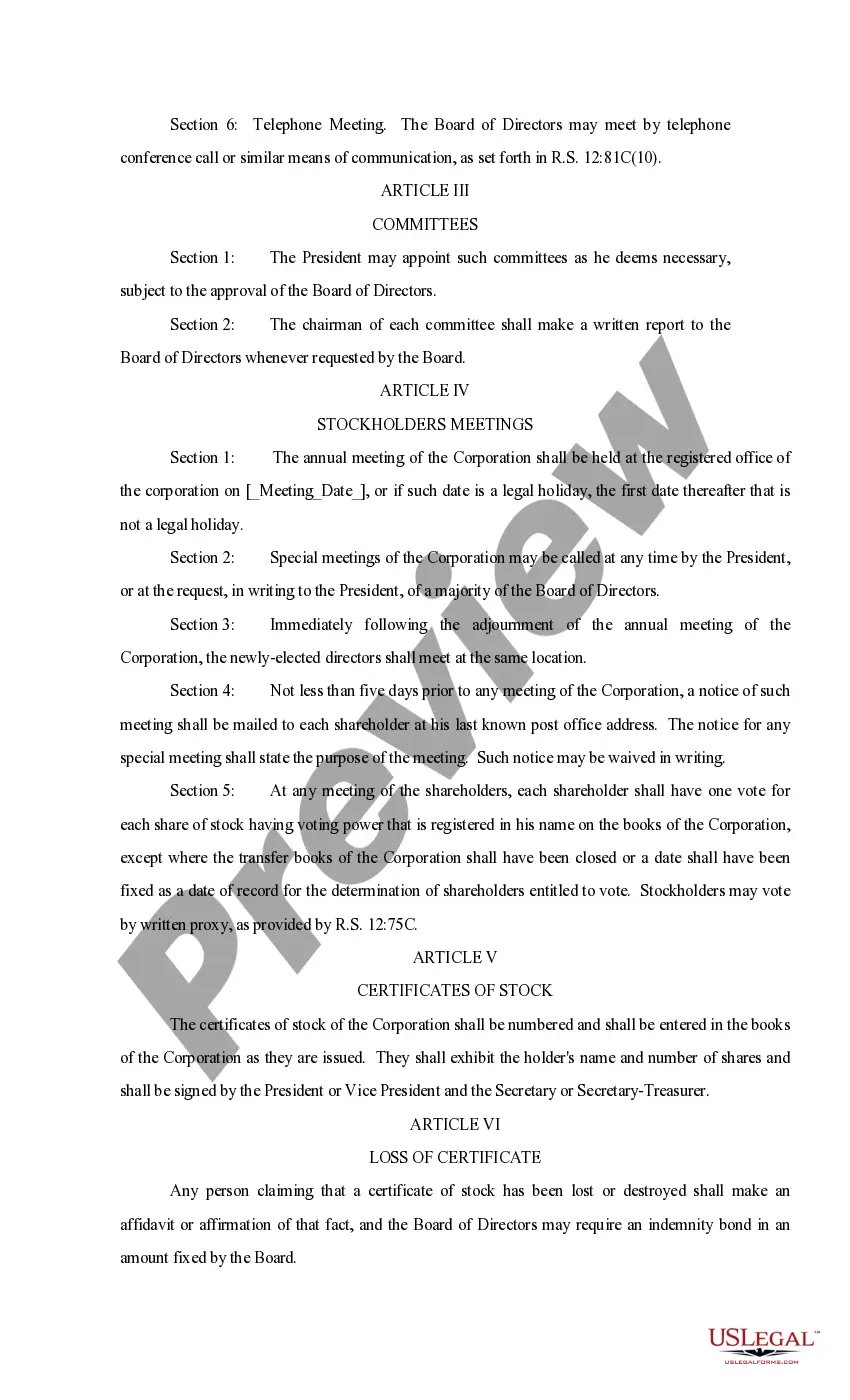
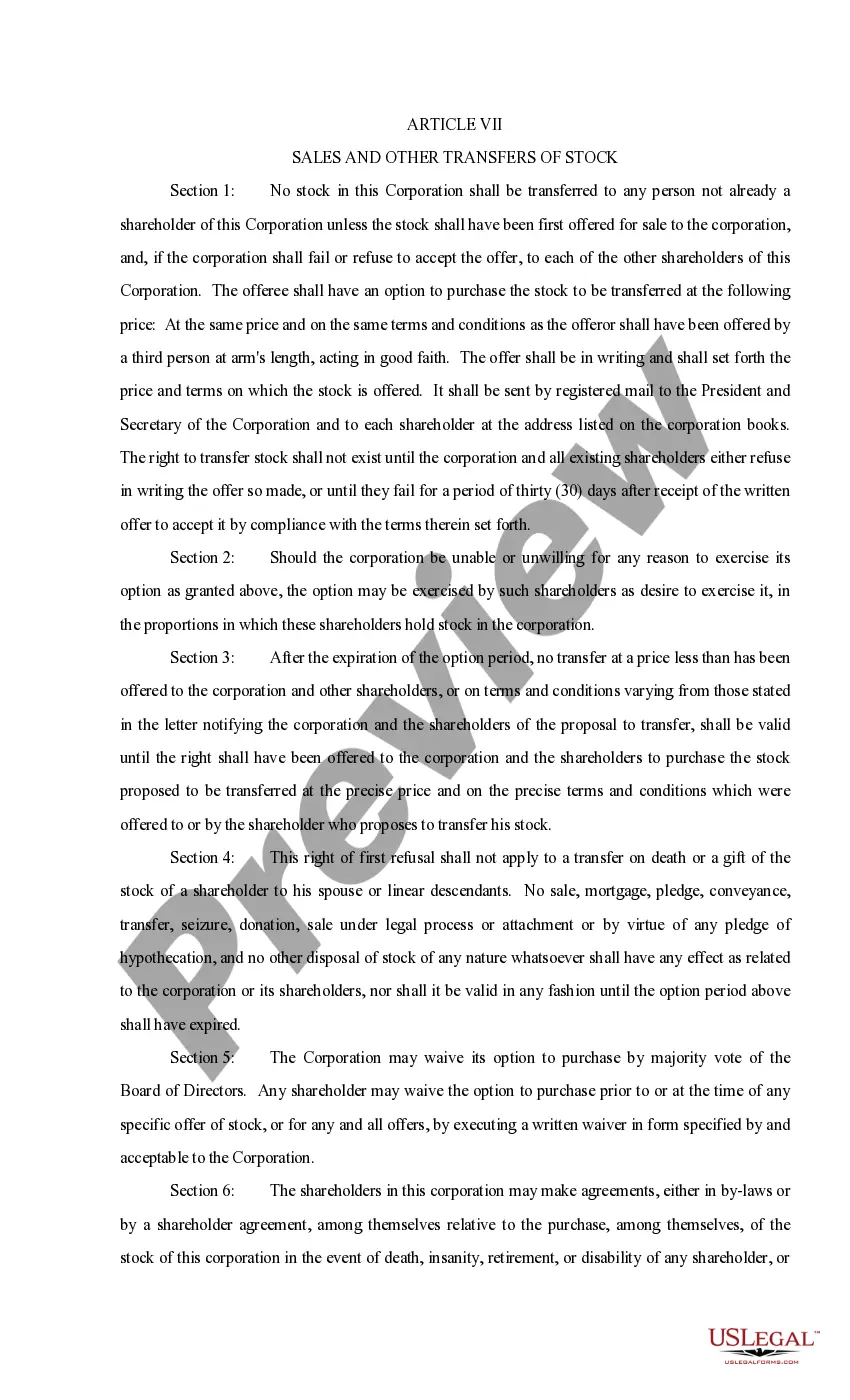
Bylaws
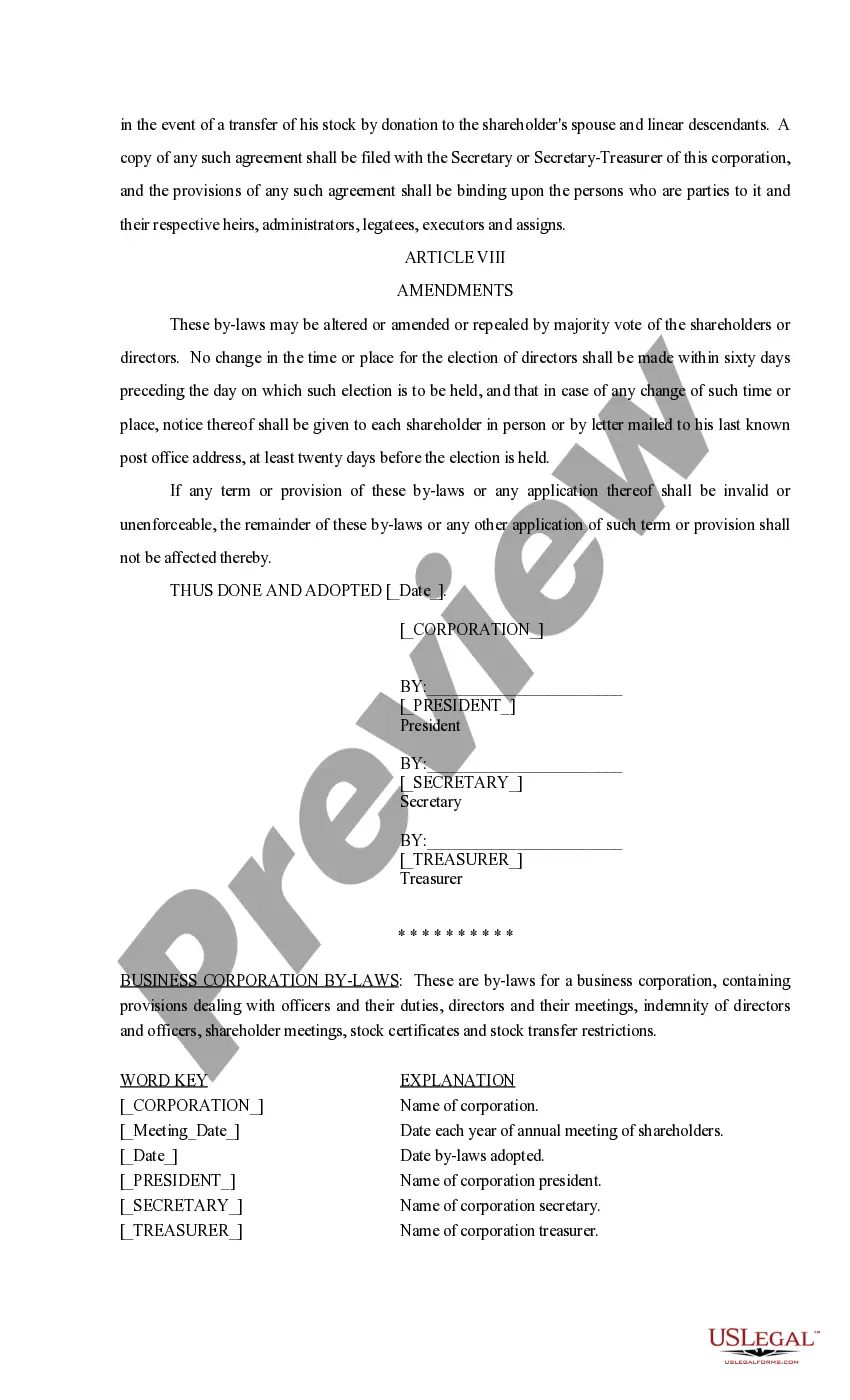
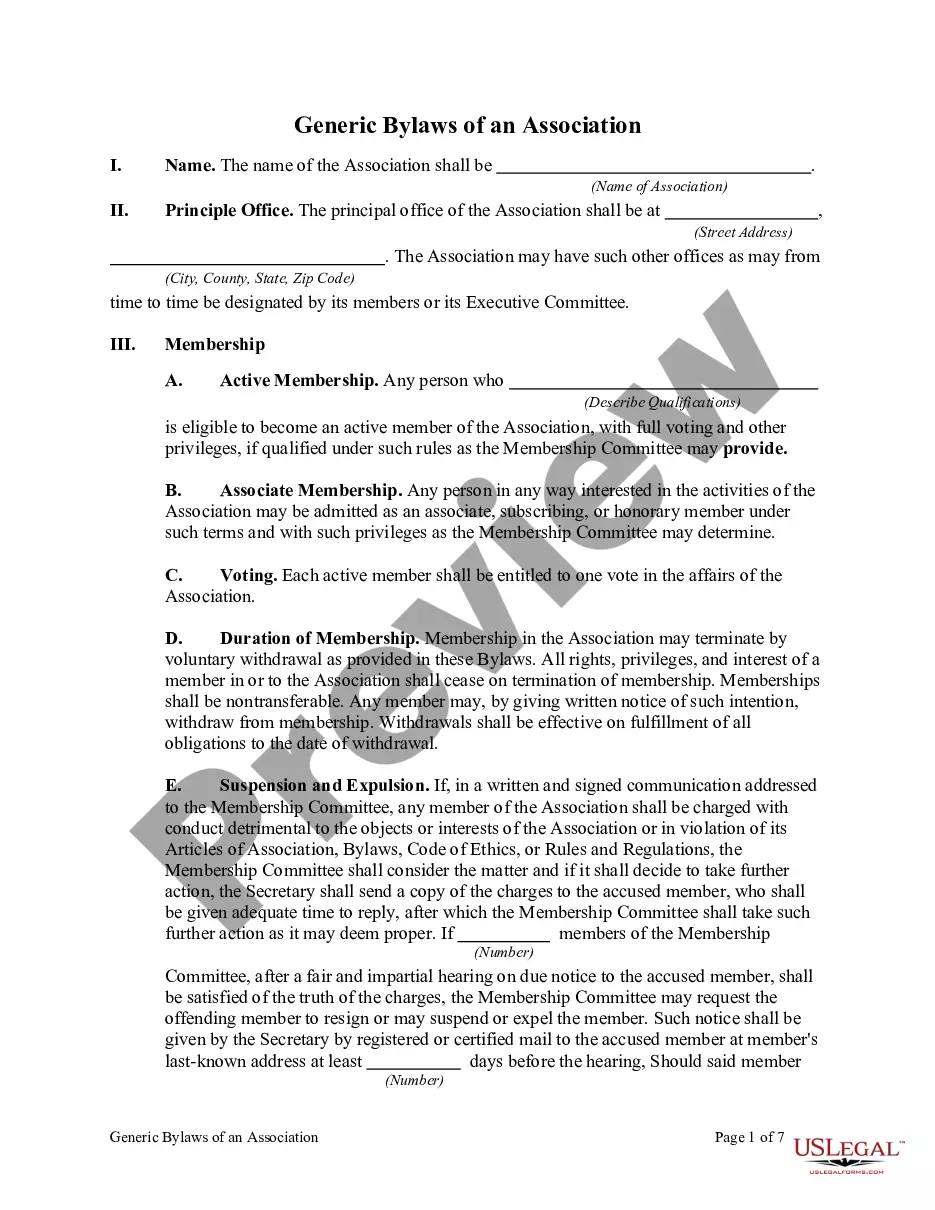
Description

Get your form ready online
Our built-in tools help you complete, sign, share, and store your documents in one place.
Make edits, fill in missing information, and update formatting in US Legal Forms—just like you would in MS Word.
Download a copy, print it, send it by email, or mail it via USPS—whatever works best for your next step.
Sign and collect signatures with our SignNow integration. Send to multiple recipients, set reminders, and more. Go Premium to unlock E-Sign.
If this form requires notarization, complete it online through a secure video call—no need to meet a notary in person or wait for an appointment.
We protect your documents and personal data by following strict security and privacy standards.

Make edits, fill in missing information, and update formatting in US Legal Forms—just like you would in MS Word.

Download a copy, print it, send it by email, or mail it via USPS—whatever works best for your next step.

Sign and collect signatures with our SignNow integration. Send to multiple recipients, set reminders, and more. Go Premium to unlock E-Sign.

If this form requires notarization, complete it online through a secure video call—no need to meet a notary in person or wait for an appointment.

We protect your documents and personal data by following strict security and privacy standards.
Looking for another form?

How to fill out Louisiana Bylaws Of Corporation?
- For returning users, ensure your subscription is active. If it’s valid, log in to your account and select the form template you need. Click on the Download button to save it to your device.
- If you're a new user, start by reviewing the Preview mode and form description. Confirm that you've selected the appropriate document for your jurisdiction.
- If necessary, search for alternative templates using the Search tab at the top of the page to find the correct form.
- Purchase the document by clicking on the 'Buy Now' button and choose your preferred subscription plan. An account registration is needed to access the library.
- Complete your purchase by entering your payment information via credit card or PayPal.
- Download your chosen form, saving it to your device. Access it anytime from the 'My Forms' section in your profile.
With US Legal Forms, you can easily secure well-organized Bylaws and an array of legal forms. Each document is designed to ensure accuracy and compliance, empowering individuals and attorneys alike.
Don't hesitate! Start your journey towards hassle-free legal documentation today by signing up with US Legal Forms and unlock the benefits of a robust library tailored to your needs.
Form popularity
FAQ
Bylaws are not usually classified as public records, but certain organizations may be legally required to share them. The rules vary by state and organization type, so it is essential to verify local laws or requirements. You can always check with the organization or access legal resources for more clarification regarding the status of their bylaws.
Nonprofits typically must disclose their bylaws to members and may need to provide them upon request. Transparency is vital in ensuring that the organization operates with integrity and accountability. If nonprofits want to simplify this process, they can utilize resources like the US Legal Forms platform to create clear and comprehensive bylaws.
Bylaws are determined by the organization's founders or board of directors during the formation of the entity. They create bylaws to outline how the organization will operate and make decisions. As needs change, amendments to the bylaws can be adopted, usually requiring a vote from the board or members.
Bylaws are typically not public records, but they can be made available through the organization for members or interested parties. Depending on state regulations, some organizations may be required to disclose their bylaws to the public. It’s best to check with the organization directly or consult state guidelines for specific regulations regarding bylaws.
You can find the bylaws of an organization by requesting them directly from the organization itself, especially if you are a member. Many organizations also make their bylaws available on their websites for public access. If you're looking for a specific template or example, US Legal Forms offers a variety of bylaws samples that cater to different types of organizations.
Generally, company bylaws are not considered confidential documents. While the internal workings may remain private, the bylaws themselves often need to be accessible to members or stakeholders. This transparency can help build trust within the organization and clarify operational procedures.
Bylaws can be written by anyone involved in the organization, such as founders, board members, or legal professionals. It is essential for the person drafting the bylaws to understand the specific needs and operations of the organization. If you need assistance, the US Legal Forms platform provides templates and resources that help ensure your bylaws meet all necessary legal standards.
The primary purpose of bylaws is to establish clear rules for how an organization operates. They provide transparency and consistency for members by outlining roles, responsibilities, and procedures. Bylaws serve to protect the rights of members and ensure fair treatment. By creating and following effective bylaws, organizations can promote good governance and accountability.
If an organization fails to follow its bylaws, it may face internal conflicts and potential legal challenges. Members can raise disputes and seek remedies through established processes. Without adherence to bylaws, an organization can struggle with governance and decision-making. Therefore, maintaining compliance with bylaws is essential for avoiding chaos and ensuring operational success.
Bylaws are formal rules established to govern an organization, while policies are guidelines created to facilitate the operations within that framework. Bylaws focus on the organization's structure and crucial processes, such as elections and meetings. In contrast, policies might cover day-to-day procedures and conduct, providing more detailed direction for members.