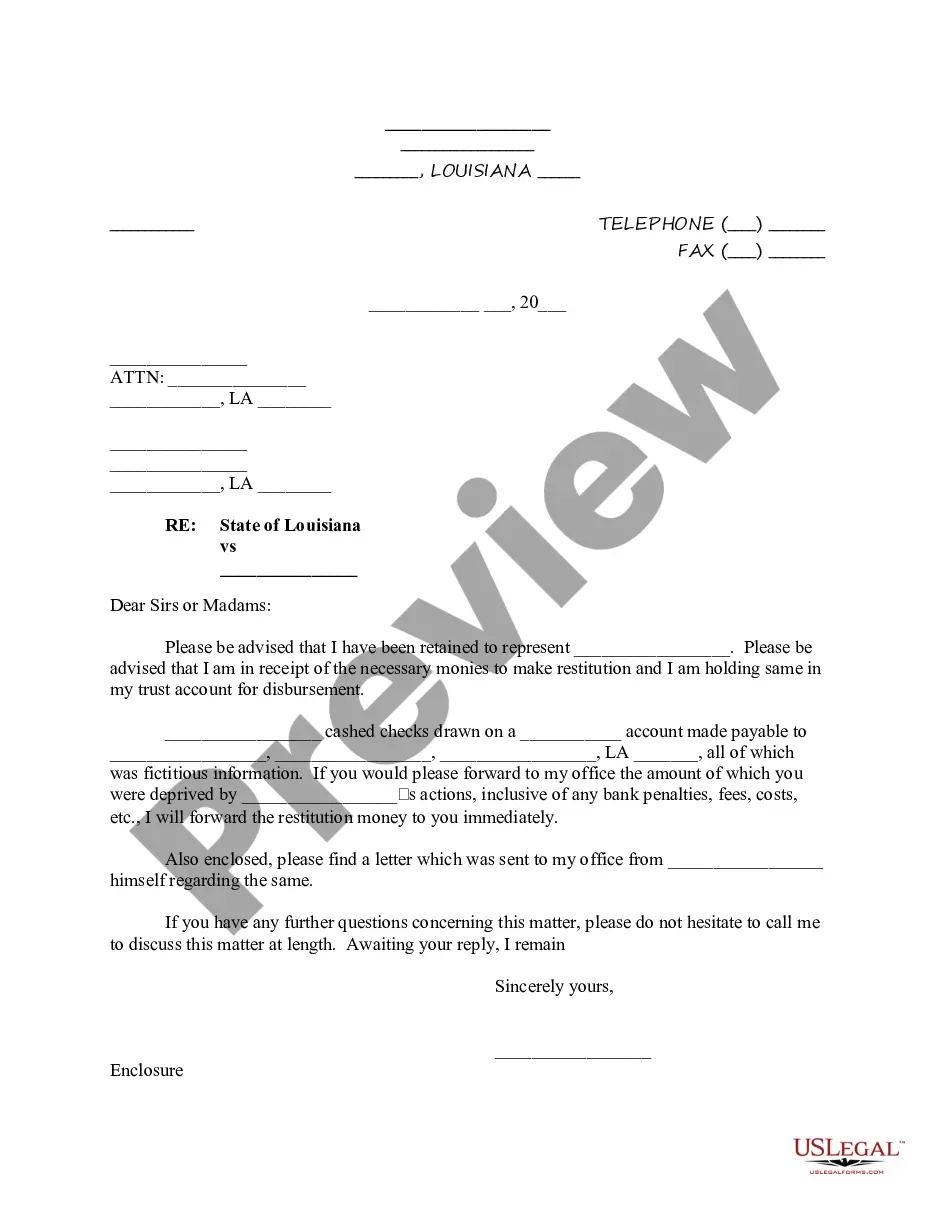
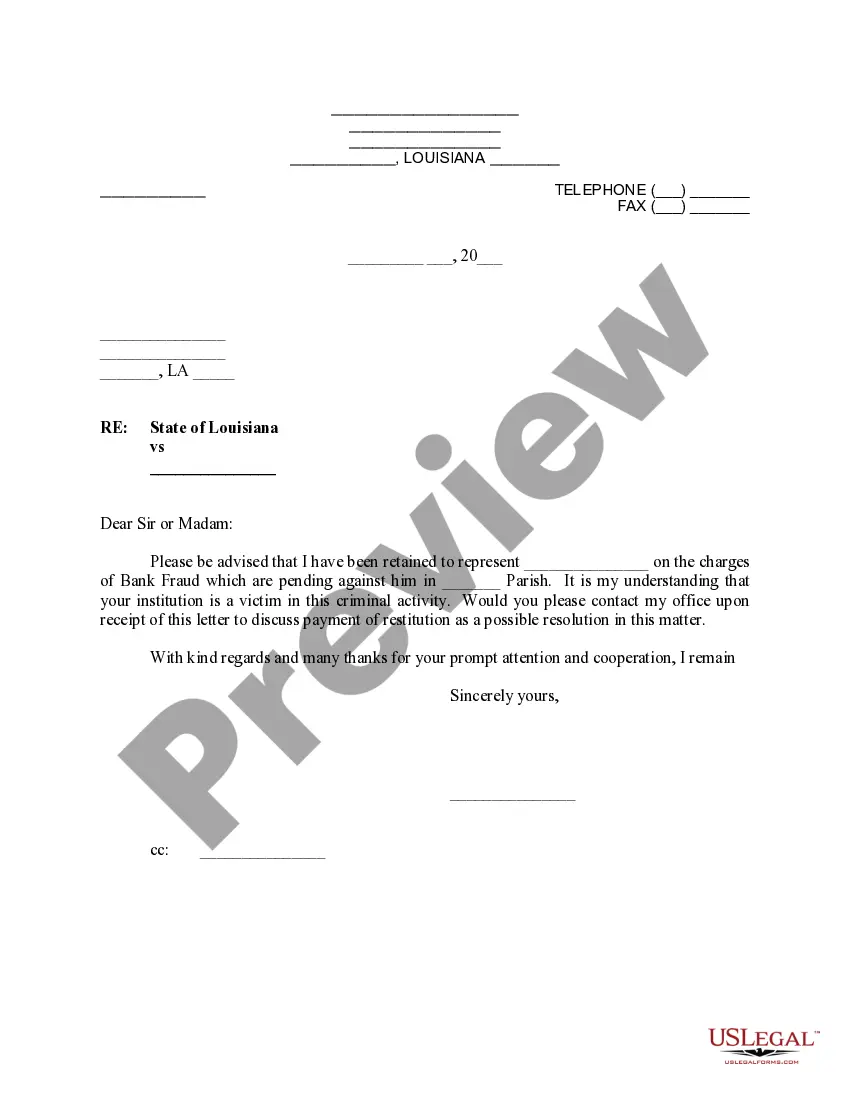
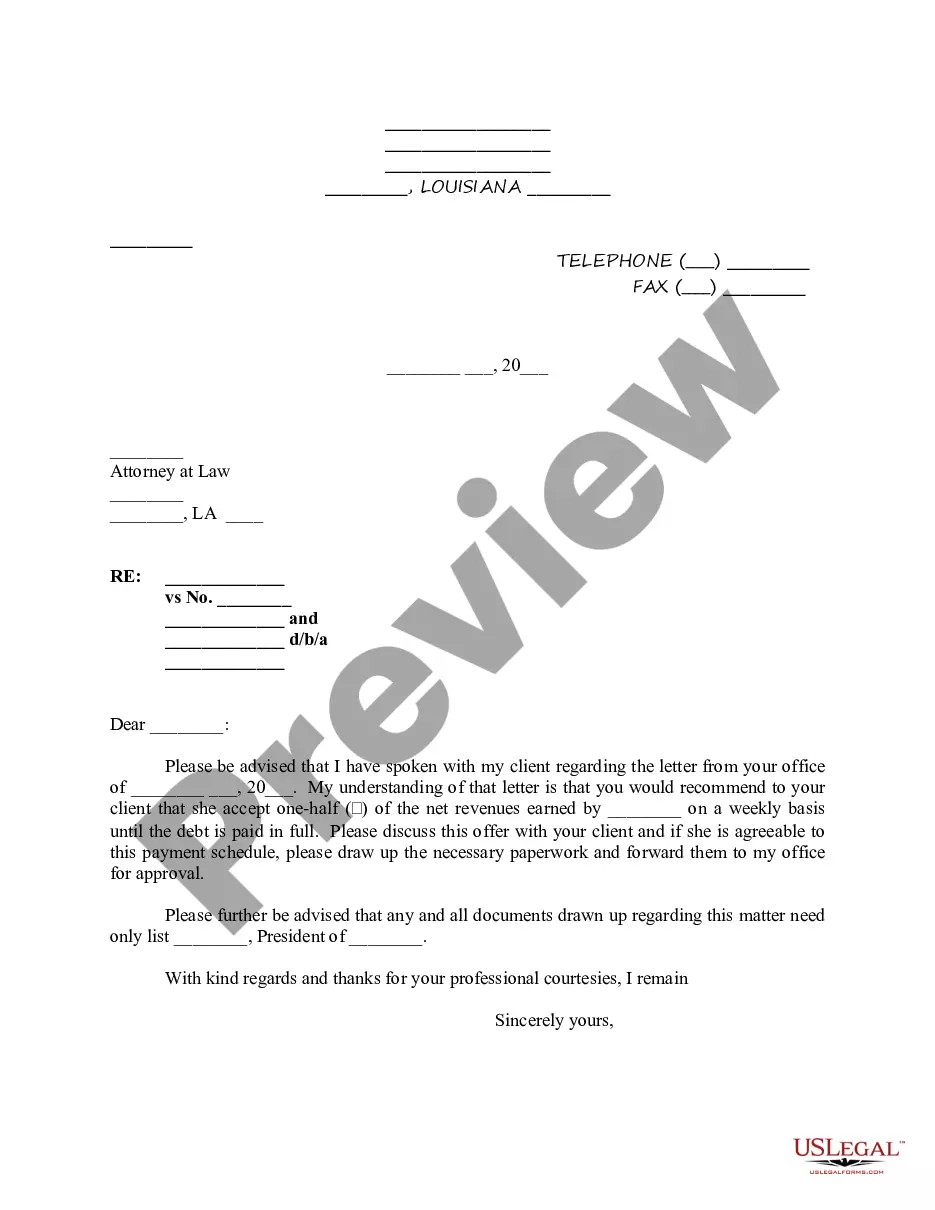
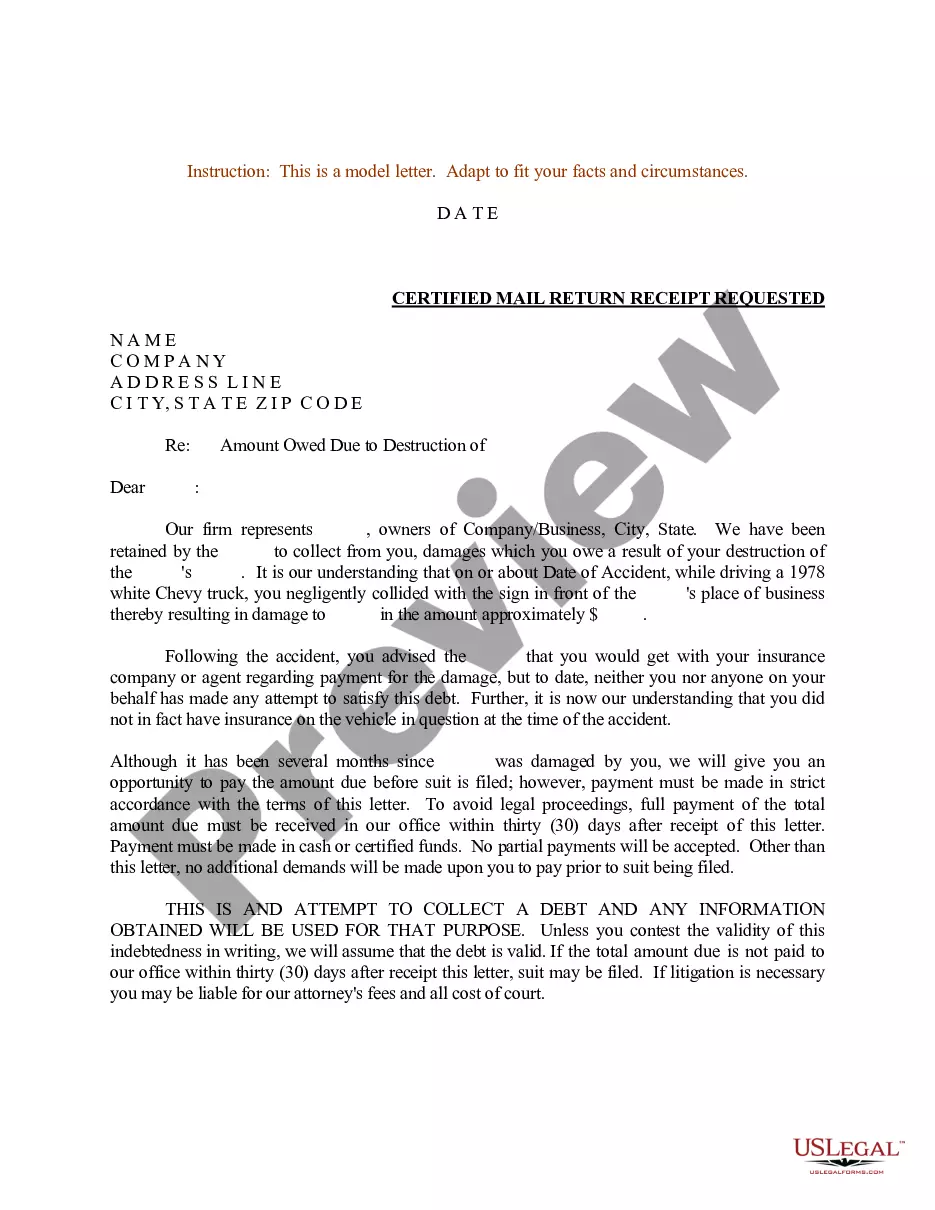
Restitution Letter To Court
Description
Get your form ready online
Our built-in tools help you complete, sign, share, and store your documents in one place.
Make edits, fill in missing information, and update formatting in US Legal Forms—just like you would in MS Word.
Download a copy, print it, send it by email, or mail it via USPS—whatever works best for your next step.
Sign and collect signatures with our SignNow integration. Send to multiple recipients, set reminders, and more. Go Premium to unlock E-Sign.
If this form requires notarization, complete it online through a secure video call—no need to meet a notary in person or wait for an appointment.
We protect your documents and personal data by following strict security and privacy standards.

Make edits, fill in missing information, and update formatting in US Legal Forms—just like you would in MS Word.

Download a copy, print it, send it by email, or mail it via USPS—whatever works best for your next step.

Sign and collect signatures with our SignNow integration. Send to multiple recipients, set reminders, and more. Go Premium to unlock E-Sign.

If this form requires notarization, complete it online through a secure video call—no need to meet a notary in person or wait for an appointment.

We protect your documents and personal data by following strict security and privacy standards.
Looking for another form?


How to fill out Louisiana Follow-up Letter To Bank Regarding Restitution Offer In Bank Fraud Case?
Whether for corporate endeavors or for personal matters, everyone must navigate legal circumstances at some point in their life.
Filling out legal documents necessitates meticulous care, starting from selecting the right template.
Once saved, you can complete the form using editing software or print it out and fill it in manually. With a comprehensive US Legal Forms library at your disposal, you will never need to waste time searching for the right template online. Use the straightforward navigation of the library to find the correct form for any circumstance.
- For instance, if you choose an incorrect version of a Restitution Letter To Court, it will be rejected upon submission.
- Thus, it is essential to have a trustworthy source of legal documents like US Legal Forms.
- If you need to acquire a Restitution Letter To Court template, follow these simple steps.
- Utilize the search box or browse the catalog to find the sample you require.
- Review the description of the form to confirm it is suitable for your case, state, and locality.
- Click on the preview of the form to scrutinize it.
- If it turns out to be the incorrect form, return to the search feature to find the Restitution Letter To Court template you need.
- Once it aligns with your requirements, download the file.
- If you have a US Legal Forms account, click Log in to retrieve previously saved documents in My documents.
- If you do not have an account yet, you can get the form by clicking Buy now.
- Select the relevant pricing option.
- Fill out the account registration form.
- Choose your payment method: utilize a credit card or PayPal account.
- Choose the desired document format and download the Restitution Letter To Court.
Form popularity
FAQ
Restitution is usually disbursed once the court sets an order based on the restitution letter to court submitted by the victim or prosecutor. Payments can come directly from the offender or through the court's administration system. It’s essential to keep updated on any court schedules or hearings related to your restitution to ensure timely receipt. Understanding this process allows you to take proactive steps in pursuing the restitution owed to you.
The rule of restitution is a legal principle that requires offenders to compensate victims for their losses. This rule aims to restore victims to their previous financial state, emphasizing accountability and justice. A restitution letter to court often serves as a vital document in this process, formally requesting the court to enforce restitution. Familiarizing yourself with this rule can provide clarity on your rights as a victim or obligations as an offender.
Victims will typically receive restitution payments through the court system, which oversees the implementation of restitution orders. Once a restitution letter to court is filed, the court coordinates payments from the offender to ensure victims receive their owed amounts. The method of payment can vary, including direct payments or payments processed through a court-managed account. Staying informed throughout the process enhances your ability to manage expectations and receive your restitution smoothly.
In Alabama, restitution law mandates that a victim of a crime is entitled to full restitution for their losses. This means offenders are required to repay victims for damages caused by criminal acts. To initiate this process, a restitution letter to court is often submitted, detailing the amount owed and the reasons for repayment. Understanding this law is crucial for both victims seeking justice and offenders aiming to fulfill their obligations.
One common problem with restitution is that victims often struggle to collect awarded funds. Courts may order restitution, but individuals may encounter challenges when trying to recover payments from the offenders. Unfortunately, many offenders lack the financial resources to fulfill restitution orders. Hence, understanding how to compose an effective restitution letter to court can be essential for advocating for your rights and seeking accountability.
Writing a letter asking for restitution involves several key steps. Start by clearly identifying the case details, including the case number and the parties involved. Next, outline the losses or damages you have experienced and justify your request for compensation. Conclude with a respectful request for the court to consider your claim, and remember to sign the letter. Crafting a strong restitution letter to court can improve your chances of receiving the financial relief you deserve.
The three types of restitution include compensatory, punitive, and statutory restitution. Compensatory restitution helps victims recover losses incurred due to crimes. Punitive restitution aims to punish offenders and deter future crimes. Lastly, statutory restitution involves payments mandated by law, often outlined in a sentencing order. If you need to submit your claims, a well-drafted restitution letter to court can clarify your expectations.
The procedure of restitution typically starts with a court finding the offender liable for damages caused. Following this, the court will either decide on the amount owed or may request details from victims. It's beneficial to write a clear restitution letter to court, summarizing your claims, as this can significantly influence the outcome and ensure that victims receive what they deserve.
Filling out a restitution form involves providing accurate information about the crime, the victim, and the compensation requested. You should state the specific damages incurred and any supporting documents that substantiate your claims. If you need guidance, using templates or resources from platforms like US Legal Forms can simplify this process, making sure your information is presented effectively in your restitution letter to court.
When formatting a letter to the court, start with your address at the top, followed by the date, then the court's address. Use a respectful salutation, such as 'Dear Honorable Judge.' Ensure the body of the letter is concise, states your purpose clearly, and uses paragraphs to separate different ideas, especially when discussing restitution amounts or personal statements related to your case.