Fraud For Food Stamps
Description
Get your form ready online
Our built-in tools help you complete, sign, share, and store your documents in one place.
Make edits, fill in missing information, and update formatting in US Legal Forms—just like you would in MS Word.
Download a copy, print it, send it by email, or mail it via USPS—whatever works best for your next step.
Sign and collect signatures with our SignNow integration. Send to multiple recipients, set reminders, and more. Go Premium to unlock E-Sign.
If this form requires notarization, complete it online through a secure video call—no need to meet a notary in person or wait for an appointment.
We protect your documents and personal data by following strict security and privacy standards.

Make edits, fill in missing information, and update formatting in US Legal Forms—just like you would in MS Word.

Download a copy, print it, send it by email, or mail it via USPS—whatever works best for your next step.

Sign and collect signatures with our SignNow integration. Send to multiple recipients, set reminders, and more. Go Premium to unlock E-Sign.

If this form requires notarization, complete it online through a secure video call—no need to meet a notary in person or wait for an appointment.

We protect your documents and personal data by following strict security and privacy standards.
Looking for another form?
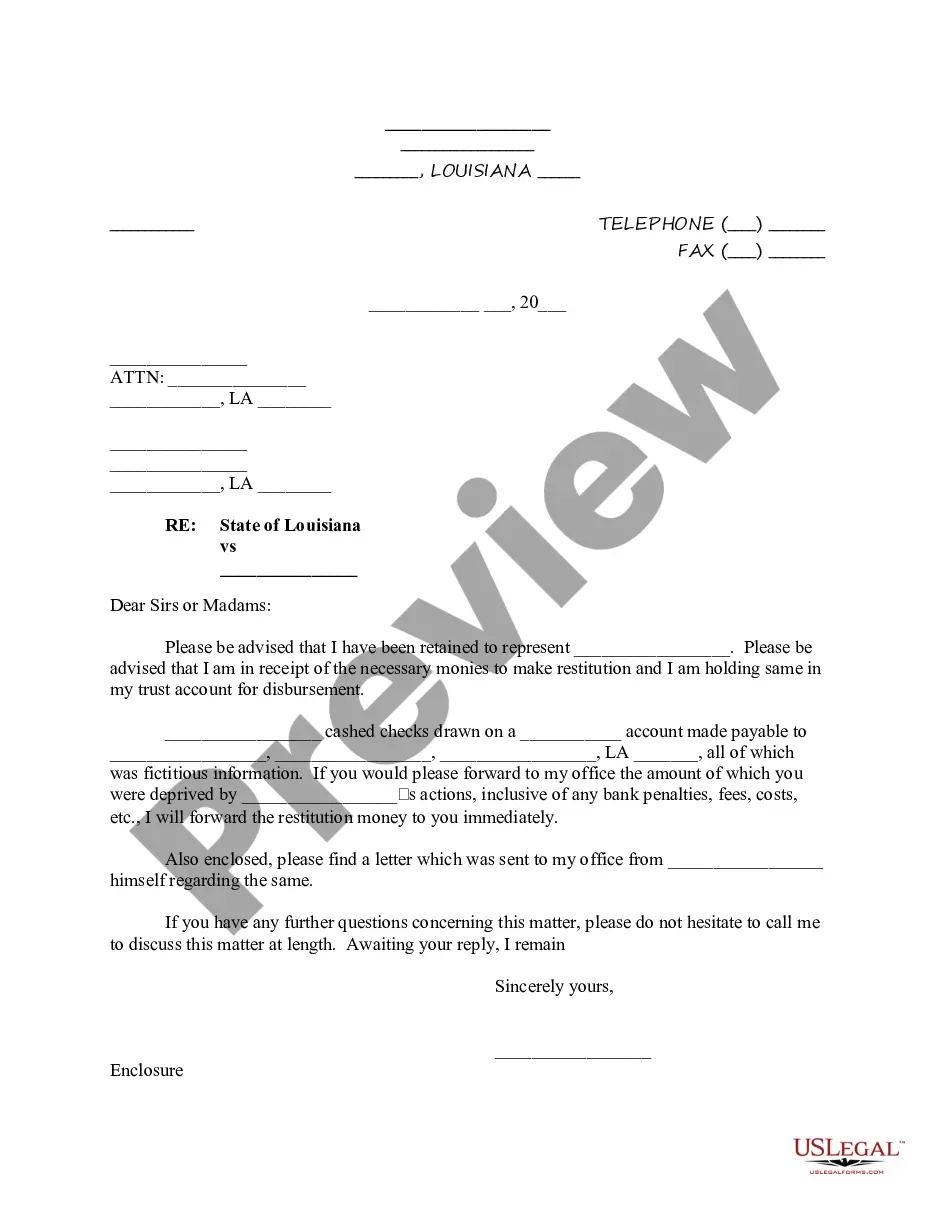
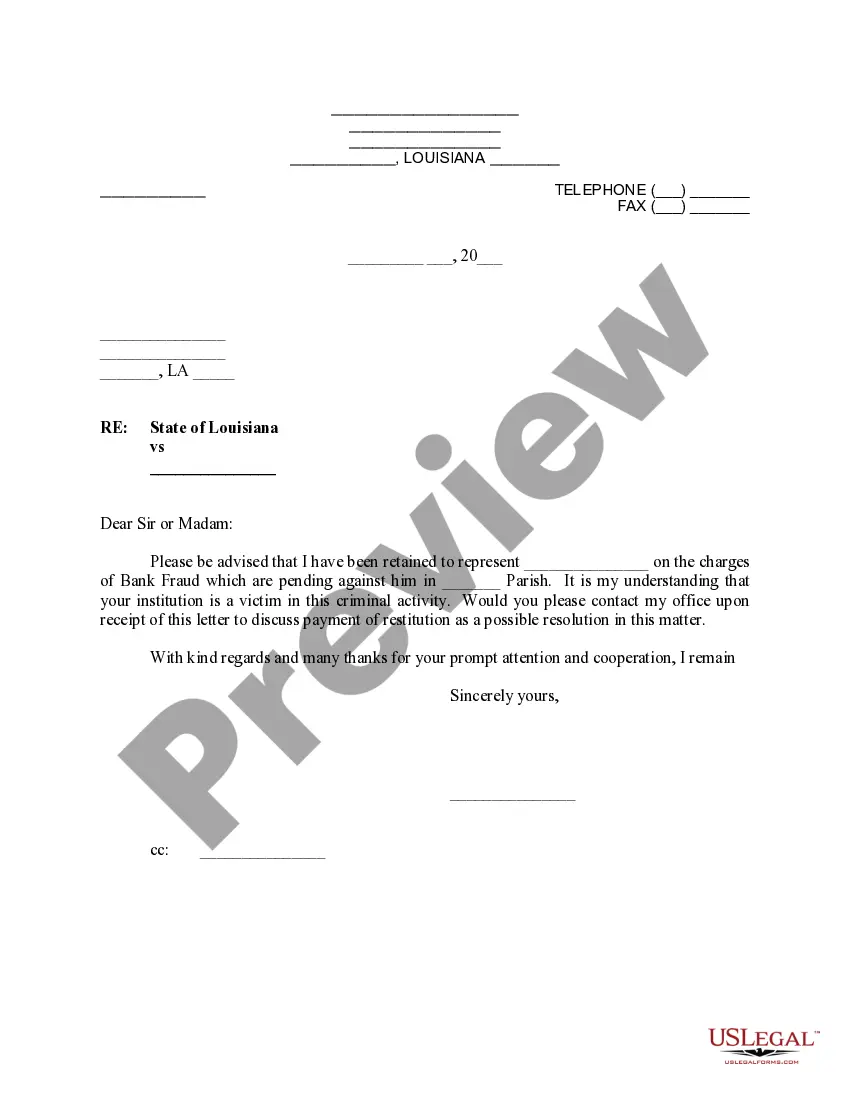
How to fill out Louisiana Follow-up Letter To Bank Regarding Restitution Offer In Bank Fraud Case?
- If you are an existing user, simply log in to your account and download the required template by clicking the Download button. Confirm that your subscription is active; if not, renew it within your payment plan.
- For first-time users, start by examining the Preview mode and form description. Verify that you've selected the appropriate form that complies with your local jurisdiction's requirements.
- If you need another template, utilize the Search tab above to find the correct form. Once you find a suitable option, proceed to the following step.
- Purchase the document by clicking the Buy Now button and opting for your preferred subscription plan. You’ll need to register for an account to access the extensive library of resources.
- Complete your purchase by entering your credit card information or using your PayPal account to finalize the subscription.
- Download your chosen form and save it on your device. You can also access it anytime via the My documents section of your profile.
US Legal Forms empowers individuals and attorneys to swiftly complete legal documents through a vast and user-friendly library. With over 85,000 forms available, users can easily navigate their legal needs.
In conclusion, accessing legal forms for issues like fraud for food stamps is simplified with US Legal Forms. Ensure your documents are prepared accurately and in compliance with the law. Start your journey to legal confidence today!
Form popularity
FAQ
In a fraud case related to food stamps, strong evidence is key. Collect documentation such as application forms, financial records, or witness statements that support your claims. Providing clear and organized evidence can significantly strengthen the case and help authorities take appropriate action against fraudulent activities.
Turning someone in for EDD fraud involves collecting pertinent information such as the fraudster's name, claim number, and the nature of the fraudulent activities. Once you have the necessary details, you can file a report through the EDD's official website or via their dedicated fraud hotline. Reporting fraud for food stamps helps protect the integrity of the program and ensures that assistance goes to those who truly need it.
To report a benefit cheat anonymously, you can typically contact your state's fraud hotline or complete an online form. Look for services that specifically mention anonymity to ensure your information remains confidential. This method guarantees that action can still be taken against the individual engaging in food stamp fraud.
Yes, you can report benefit fraud anonymously when it involves food stamps. Many state agencies allow for anonymous submissions, so you can share your concerns without revealing your identity. This encourages individuals to step forward and report fraudulent behavior without fear of retaliation.
To effectively report fraud for food stamps, gather specific information such as the person's name, address, and the nature of the fraudulent activity. Additionally, document any supporting details, like dates of incidents and potential witnesses, as this information can significantly aid in investigations. The more comprehensive your report, the better authorities can respond.
When discussing fraud for food stamps, the most common types include application fraud, which involves providing false information during the application process, trafficking, or selling benefits illegally, and income fraud, where applicants fail to report their full income. Each type has its own implications, making it crucial for users to be aware and report suspicious activities.
Welfare fraud for food stamps can be committed by individuals who may feel desperate or misinformed about the consequences. These can include those who intentionally misreport their income or household size. Understanding who might commit this fraud helps agencies create better prevention strategies.
Yes, in California, food stamp overpayment can lead to serious consequences, including potential jail time. If you are found guilty of intentionally defrauding the system, the penalties can be severe. It's essential to manage your benefits correctly and report any income changes to avoid legal issues.
Food stamp offices monitor social media and other online platforms for signs of fraud for food stamps. If someone reports suspicious claims or if there's evidence of inconsistent statements online, this can trigger an investigation. Be cautious about sharing sensitive information online, as it may attract unwanted attention from authorities.
In general, food stamp eligibility and participation records are confidential. However, you may be able to find information through public records or by contacting local agencies. Keep in mind that inquiries should respect privacy laws, and misuse of this information could lead to legal repercussions.