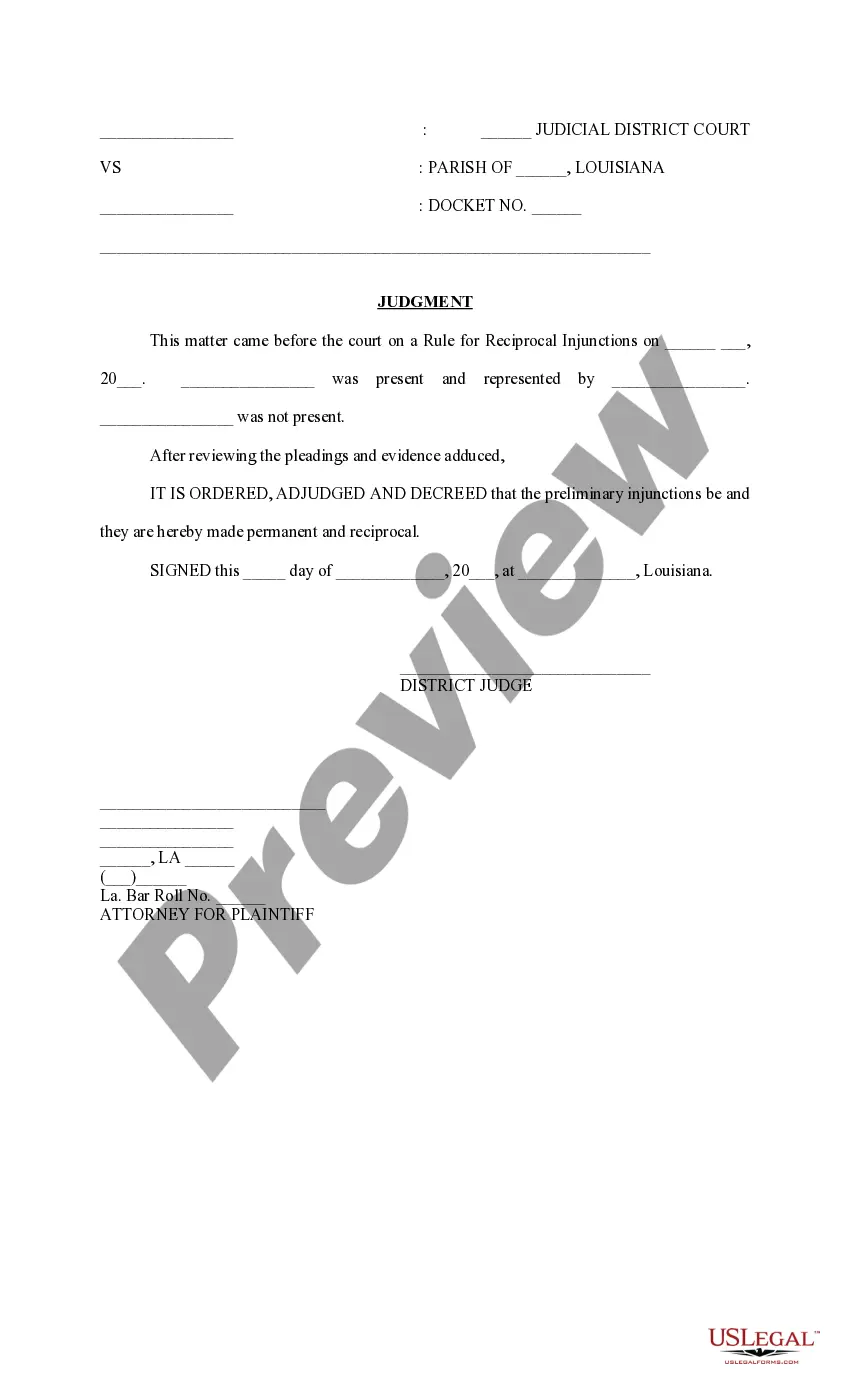
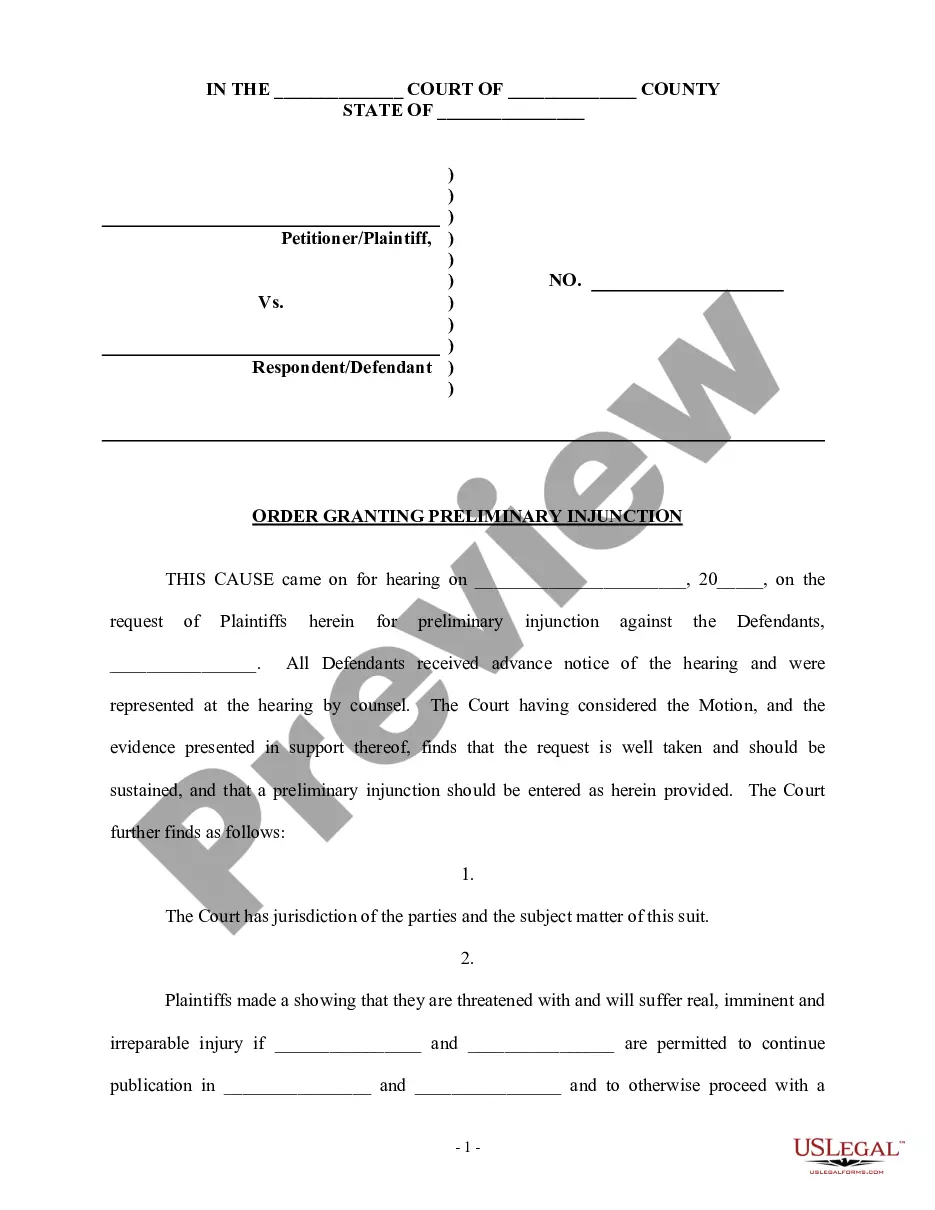
Injunction Format
Description
Get your form ready online
Our built-in tools help you complete, sign, share, and store your documents in one place.
Make edits, fill in missing information, and update formatting in US Legal Forms—just like you would in MS Word.
Download a copy, print it, send it by email, or mail it via USPS—whatever works best for your next step.
Sign and collect signatures with our SignNow integration. Send to multiple recipients, set reminders, and more. Go Premium to unlock E-Sign.
If this form requires notarization, complete it online through a secure video call—no need to meet a notary in person or wait for an appointment.
We protect your documents and personal data by following strict security and privacy standards.

Make edits, fill in missing information, and update formatting in US Legal Forms—just like you would in MS Word.

Download a copy, print it, send it by email, or mail it via USPS—whatever works best for your next step.

Sign and collect signatures with our SignNow integration. Send to multiple recipients, set reminders, and more. Go Premium to unlock E-Sign.

If this form requires notarization, complete it online through a secure video call—no need to meet a notary in person or wait for an appointment.

We protect your documents and personal data by following strict security and privacy standards.
Looking for another form?

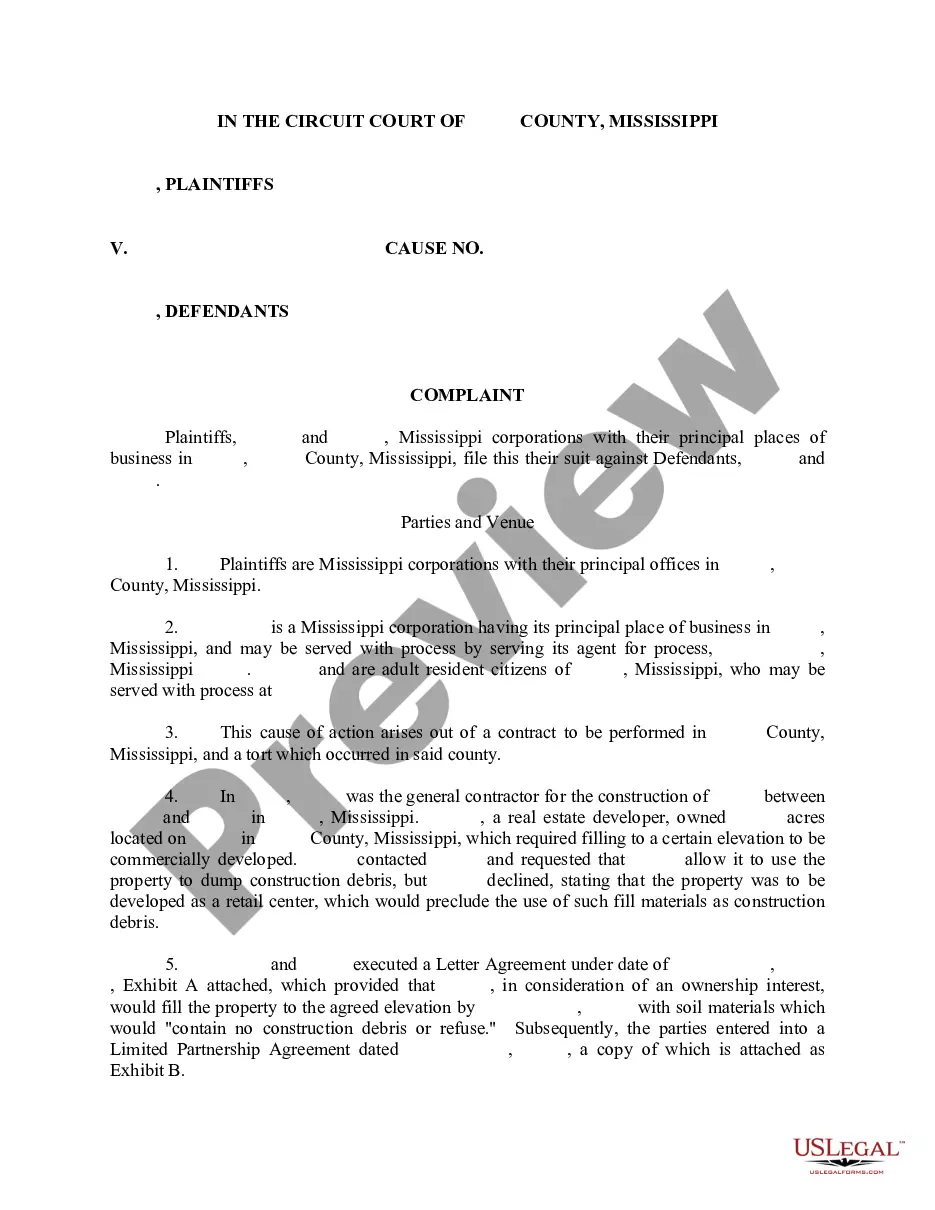
How to fill out Louisiana Judgment On Rule For Reciprocal Injunctions?
Regardless of whether it's for corporate reasons or personal issues, everyone encounters legal matters at some time in their life.
Filling out legal documents requires meticulous attention, starting from choosing the correct form template. For instance, if you select an incorrect version of the Injunction Template, it will be rejected once submitted.
Once it is downloaded, you can complete the form using editing software or print it and finish it by hand. With a comprehensive US Legal Forms catalog available, you don’t have to waste time searching for the correct template online. Utilize the library’s user-friendly navigation to find the suitable template for any event.
- Thus, it is important to obtain a trustworthy source of legal documents like US Legal Forms.
- If you need to acquire an Injunction Template sample, follow these straightforward steps.
- Retrieve the template you require using the search field or catalog browsing.
- Review the form’s details to confirm it aligns with your circumstance, state, and area.
- Click on the form’s preview to examine it.
- If it is the incorrect form, return to the search function to find the Injunction Template sample you need.
- Download the template when it satisfies your requirements.
- If you possess a US Legal Forms profile, simply click Log in to access previously saved documents in My documents.
- If you don’t have an account yet, you can download the form by clicking Buy now.
- Choose the appropriate pricing option.
- Fill out the profile registration form.
- Select your payment method: use a credit card or PayPal account.
- Choose the file format you prefer and download the Injunction Template.
Form popularity
FAQ
A simple sentence for injunction could be: 'The court issued an injunction to prevent the construction of the new building.' This sentence clearly conveys the concept of an injunction in a straightforward manner. When using the injunction format, such clarity is crucial for effective communication. Remember, simplicity in language helps everyone understand the legal implications.
To write a statement for an injunction, start by outlining the facts surrounding your case. Clearly describe the actions that necessitate the injunction and provide evidence to support your claims. Be sure to follow the injunction format, which typically includes your name, the respondent's name, and a detailed explanation of why the injunction is needed. This structured approach will enhance the clarity and effectiveness of your statement.
An example of an injunction is a court order that prevents a company from using a patented technology without permission. This type of injunction protects the patent holder’s rights and stops any unauthorized use that could harm their business. In your case, using the correct injunction format will help you effectively present your situation to the court. Always consult a legal expert to ensure your example aligns with your specific needs.
To write an injunction letter, start by clearly stating your intent to seek an injunction. Include essential details such as the parties involved, the specific actions you want to prevent, and the legal basis for your request. Use the appropriate injunction format to ensure that your letter is structured correctly and meets legal standards. Finally, sign the letter and consider sending it through a method that provides proof of delivery.
The difficulty of obtaining an injunction varies based on the specifics of your case. Courts generally require strong evidence and a compelling argument to grant an injunction. If you understand the legal requirements and follow the injunction format closely, you can improve your chances of success. Seeking assistance from legal professionals or using platforms like uslegalforms can also ease this process.
You can obtain an injunction by filing a request with your local court, usually where the incident occurred or where the parties reside. It's important to consult with a legal professional to understand the specifics of your situation. Additionally, uslegalforms offers resources and templates that guide you through the process of applying for an injunction.
To obtain an injunction, you must file a request with the appropriate court, providing all necessary documentation and evidence. The court will review your request and may schedule a hearing where both parties can present their arguments. Following the correct injunction format will help ensure that your application is complete and persuasive.
Writing a request for an injunction requires clarity and precision. Start by outlining the facts of your case, then specify the action you want the court to take. Make sure to include any relevant evidence and follow a proper injunction format to enhance the likelihood of approval. Platforms like uslegalforms can provide templates to simplify this process.
To support your request for an injunction, you need relevant evidence that illustrates your case. This can include documentation, witness statements, or any records that show the potential harm you face. The stronger your evidence, the more likely the court will grant your request. Familiarizing yourself with the injunction format will help you organize this evidence effectively.
An injunction statement typically includes a clear request for the court to order a specific action or refrain from certain conduct. For example, you might state, 'I request that the defendant be prohibited from contacting me until further notice.' Using a proper injunction format can ensure your statement meets legal standards and clearly conveys your intentions.