Louisiana 1927
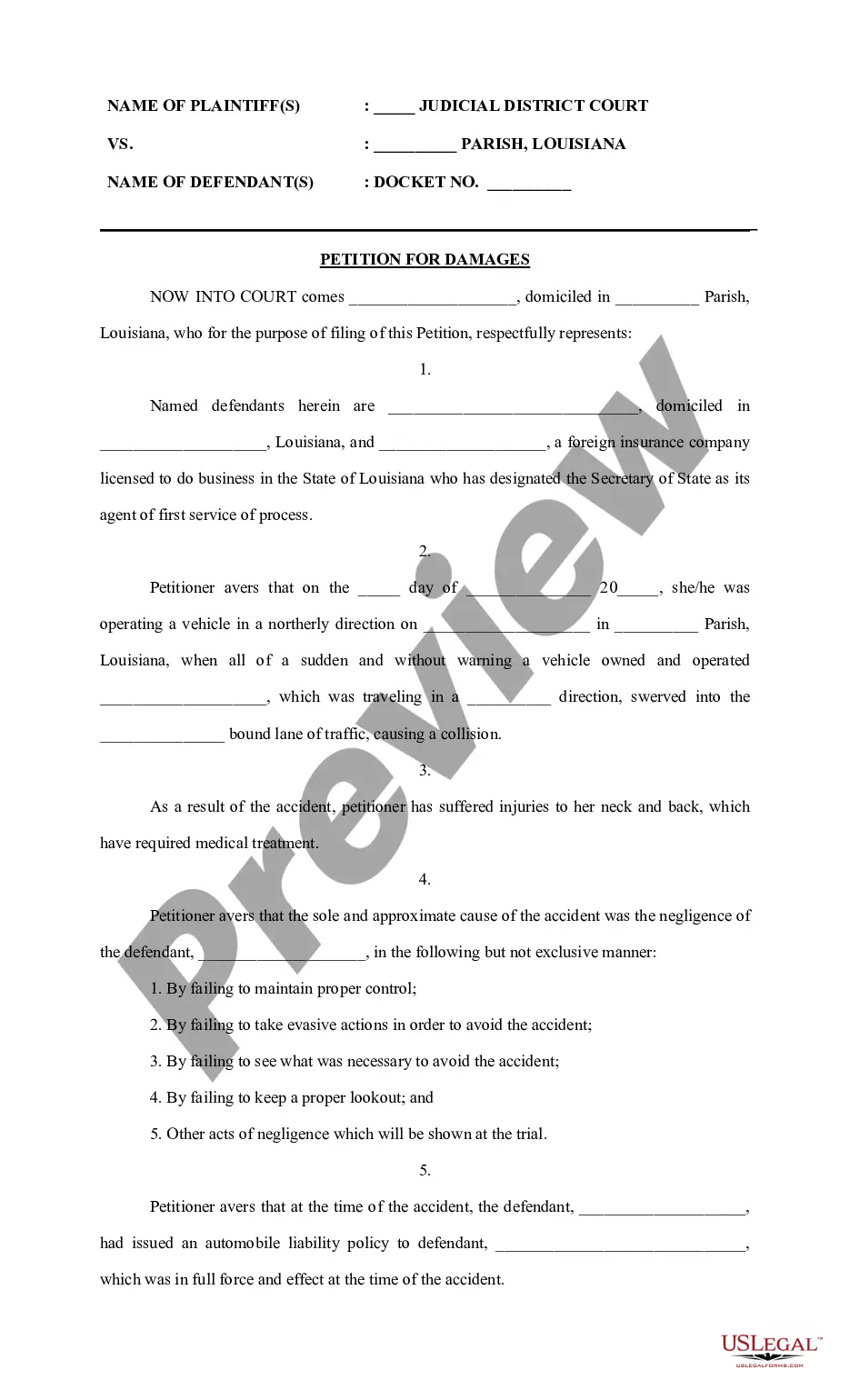
Description
Get your form ready online
Our built-in tools help you complete, sign, share, and store your documents in one place.
Make edits, fill in missing information, and update formatting in US Legal Forms—just like you would in MS Word.
Download a copy, print it, send it by email, or mail it via USPS—whatever works best for your next step.
Sign and collect signatures with our SignNow integration. Send to multiple recipients, set reminders, and more. Go Premium to unlock E-Sign.
If this form requires notarization, complete it online through a secure video call—no need to meet a notary in person or wait for an appointment.
We protect your documents and personal data by following strict security and privacy standards.

Make edits, fill in missing information, and update formatting in US Legal Forms—just like you would in MS Word.

Download a copy, print it, send it by email, or mail it via USPS—whatever works best for your next step.

Sign and collect signatures with our SignNow integration. Send to multiple recipients, set reminders, and more. Go Premium to unlock E-Sign.

If this form requires notarization, complete it online through a secure video call—no need to meet a notary in person or wait for an appointment.

We protect your documents and personal data by following strict security and privacy standards.
Looking for another form?








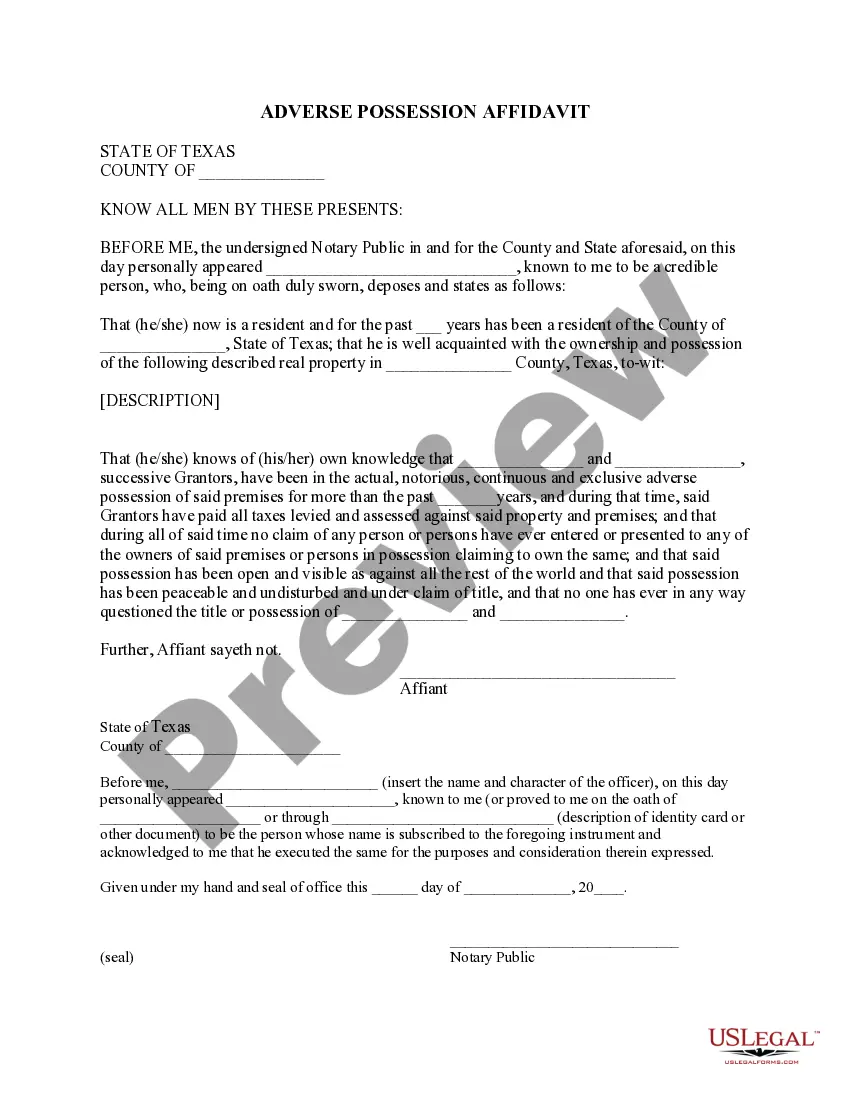

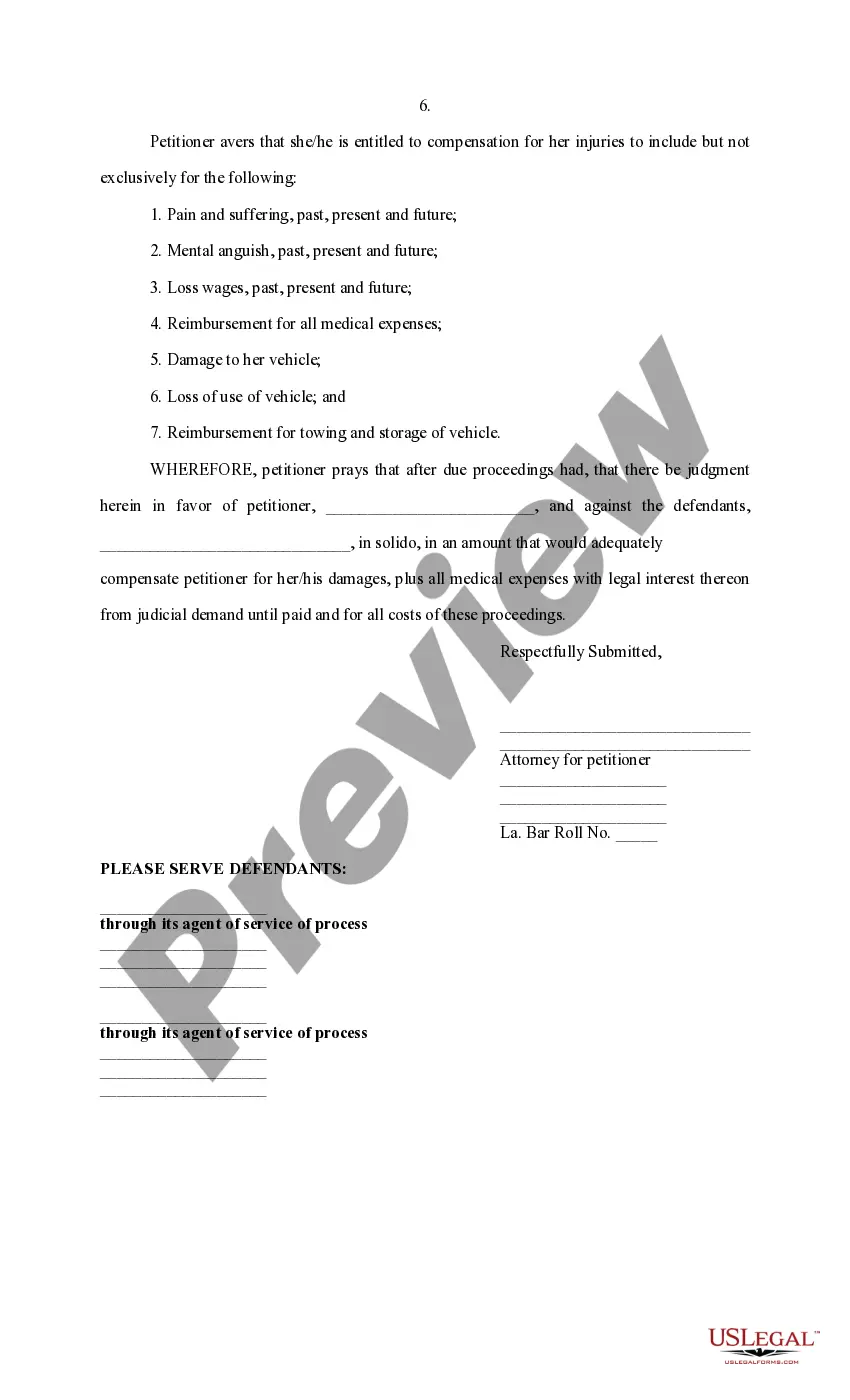
How to fill out Louisiana Petition For Damages?
- Log in to your US Legal Forms account if you're a returning user. Make sure your subscription is valid or renew it if necessary.
- For first-time users, start by checking the Preview mode and ensure you select a form that meets your specific needs and adheres to Louisiana's legal standards.
- If you need a different template, utilize the Search tab to find the right document that fully meets your requirements.
- Click on the 'Buy Now' button and select your preferred subscription plan. Register for an account to gain full access to the extensive library.
- Complete your purchase by entering your payment details using a credit card or your PayPal account.
- Finally, download your form directly to your device. You can also find it in the 'My Forms' section of your profile for easy access.
Utilizing US Legal Forms ensures you have access to a robust collection of over 85,000 legal documents. This extensive library is user-friendly and designed to make the form completion process swift and efficient.
Don’t miss out on this opportunity to simplify your legal document needs. Start using US Legal Forms today to empower your legal processes effectively!
Form popularity
FAQ
The tragedy that occurred in 1927 was the Great Mississippi Flood, which heavily affected Louisiana. This devastating flood caused extensive damage and displacement for thousands of residents, significantly impacting the state's history. The 1927 disaster led to significant changes in flood management and policies in Louisiana. Understanding this context can provide insight into current legal frameworks and resource availability, including those related to Louisiana 1927.
Filling out the Louisiana vehicle application is straightforward. Start by gathering all necessary documents, including proof of identity and vehicle details. Next, visit the official Louisiana Department of Motor Vehicles website, where you can access the application form. Completing this application accurately is vital, and you can find assistance and templates through USLegalForms to ensure you have everything in place, especially if you're referencing historical context from Louisiana 1927.
Following the flood of 1927, approximately 600,000 Louisianans were left homeless due to the extensive damage. Entire neighborhoods were submerged, leading to a dramatic humanitarian crisis. The experiences from the Louisiana 1927 flood underscore the importance of preparedness and community support systems, such as those offered by uslegalforms, to help impacted residents navigate legal and recovery processes.
The flood of 1927 had a lasting impact on Louisiana, altering both the landscape and the lives of its citizens. It prompted significant changes in flood management policies and the establishment of the U.S. Army Corps of Engineers as a pivotal player in flood control. The historical context surrounding the Louisiana 1927 flood remains crucial for understanding contemporary water management challenges in the region.
The Louisiana flood of 1927 resulted in the tragic loss of over 300 lives. This catastrophe not only caused a profound personal impact but also led to a reevaluation of flood control measures in the state. The toll of the Louisiana 1927 flood serves as a reminder of the necessity of reliable emergency plans and informed responses.
The flooding in Louisiana during 1927 forced around 700,000 people to leave their homes. This significant migration reshaped entire communities, as families sought safety from rising waters. Understanding the scope of displacement during the Louisiana 1927 flood helps us appreciate the ongoing efforts needed to mitigate flood risks today.
After the Katrina storm surge flood, thousands of residents faced homelessness. The devastation from the storm dislocated communities and forced many to seek shelter elsewhere. While the Katrina disaster occurred in 2005, the lessons learned from floods in Louisiana, including the impactful Louisiana 1927 flood, highlight the importance of emergency preparedness and response.
The amount of time a state can go back on taxes depends on various factors, but generally, states like Louisiana can go three to five years back for income tax audits. If there are indications of fraud, this timeframe can be significantly extended. Understanding these periods is essential for managing your tax obligations effectively. USLegalForms can provide clarity and tools to help manage these issues efficiently.
In Louisiana, you typically have one year to file a claim against an estate after the decedent's death. This timeframe allows creditors to assert their claims and helps facilitate the orderly settlement of the estate. Being proactive in filing your claim can secure your interests. For assistance with estate matters, USLegalForms provides valuable resources and templates.
The IRS generally has ten years to collect unpaid federal taxes, which is known as the statute of limitations on tax collections. After this decade, the IRS cannot legally enforce collection, unless there are specific conditions that would extend this period. Staying informed about these limits is important for any taxpayer. To assist with your tax preparation and understanding, you can explore resources from USLegalForms.