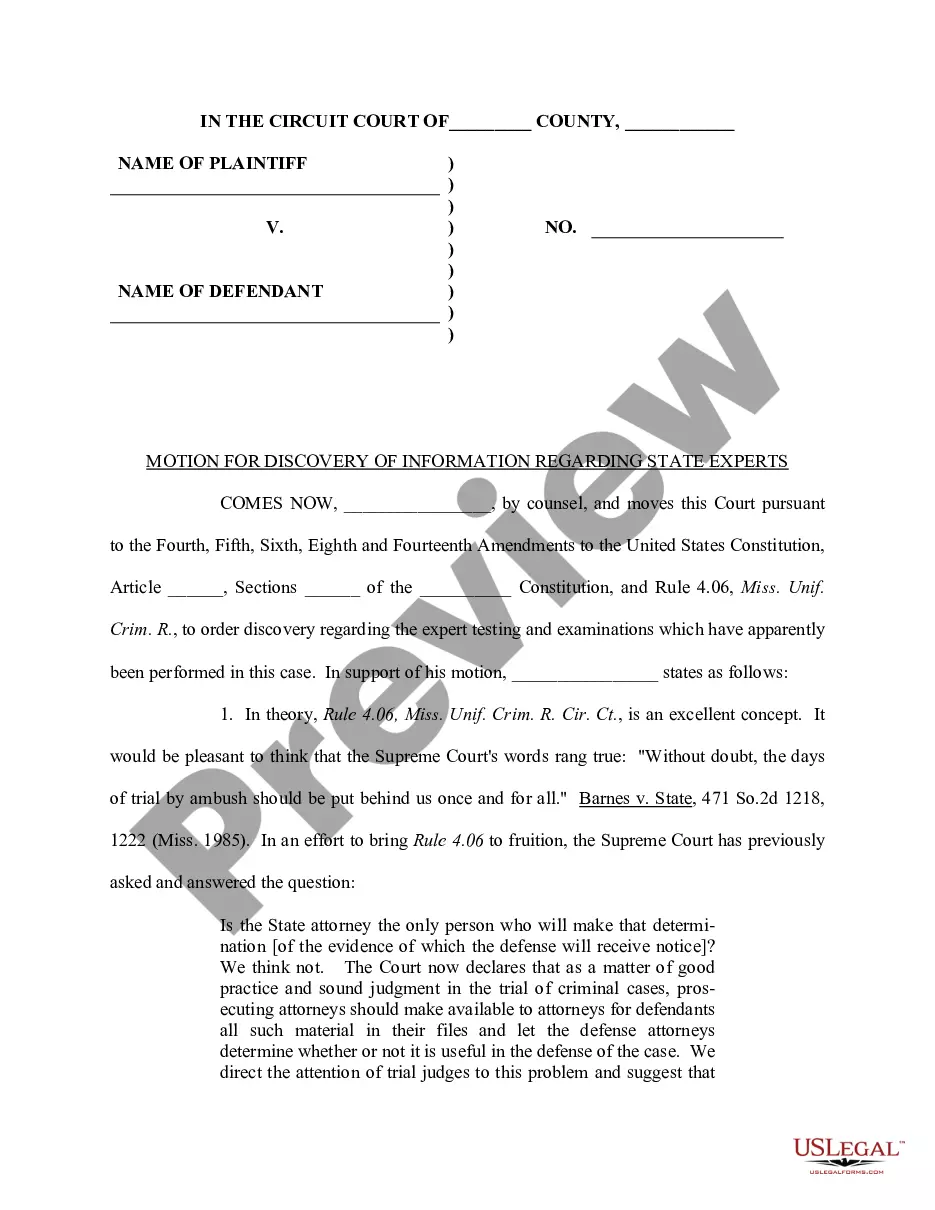
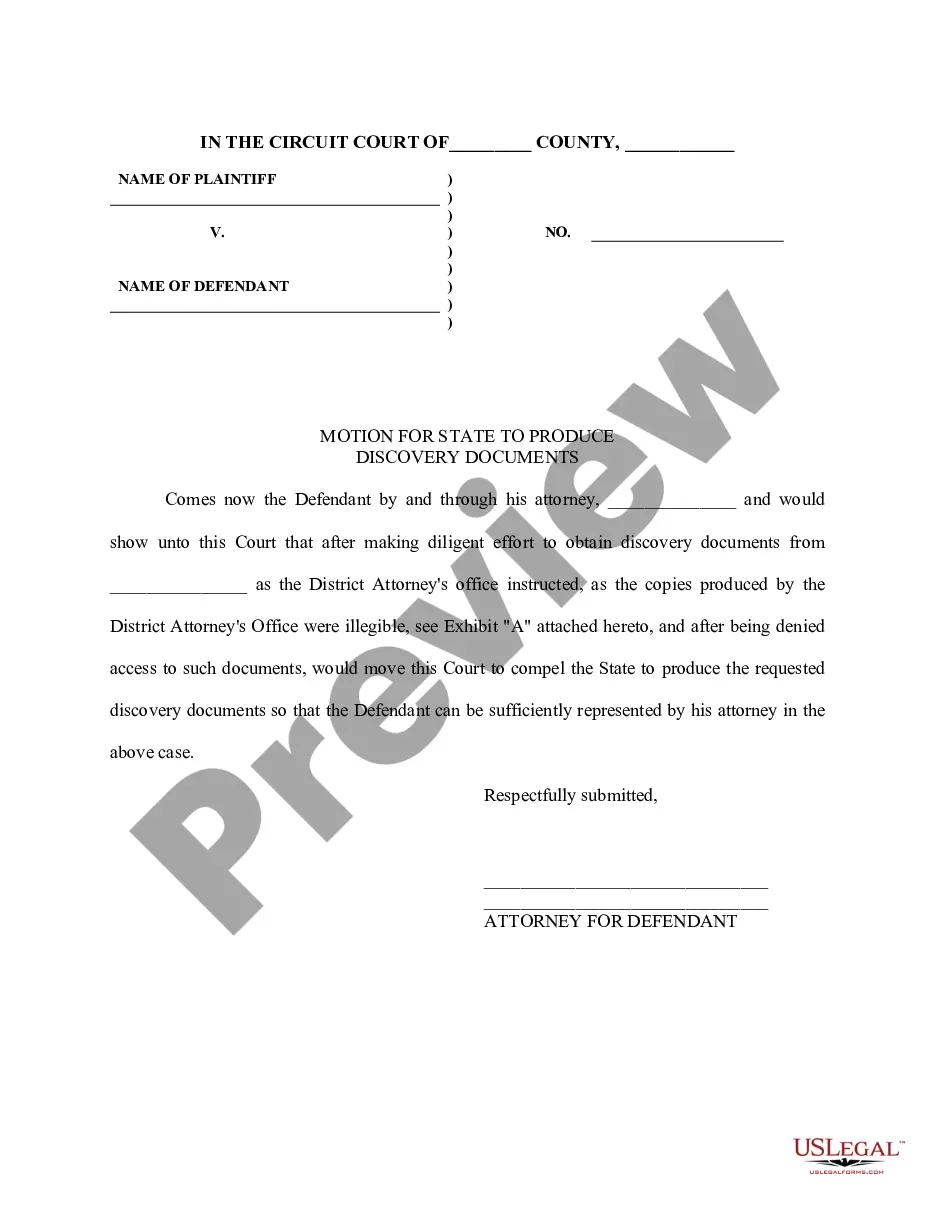
Motion For Discovery With Motion To Dismiss
Description
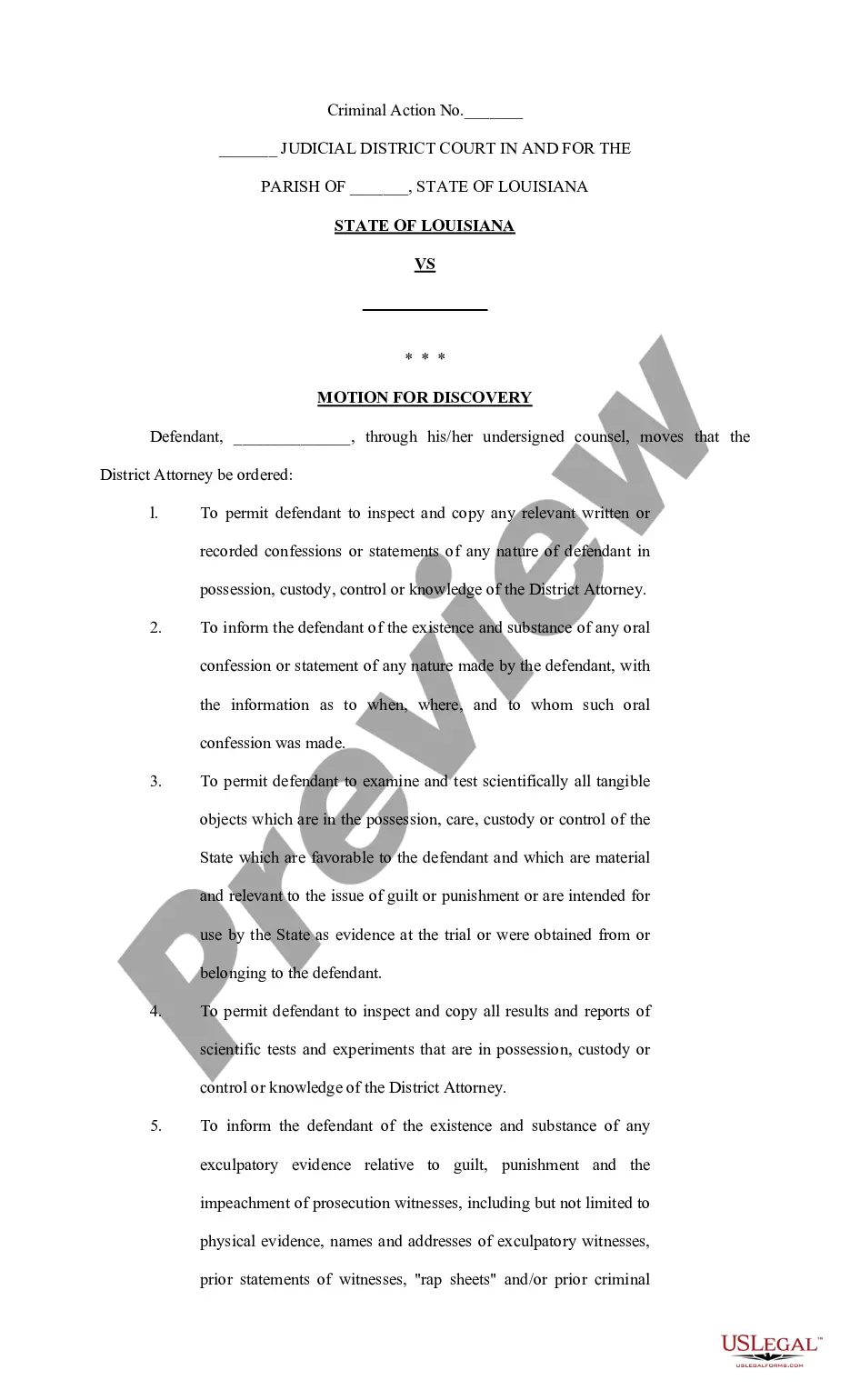
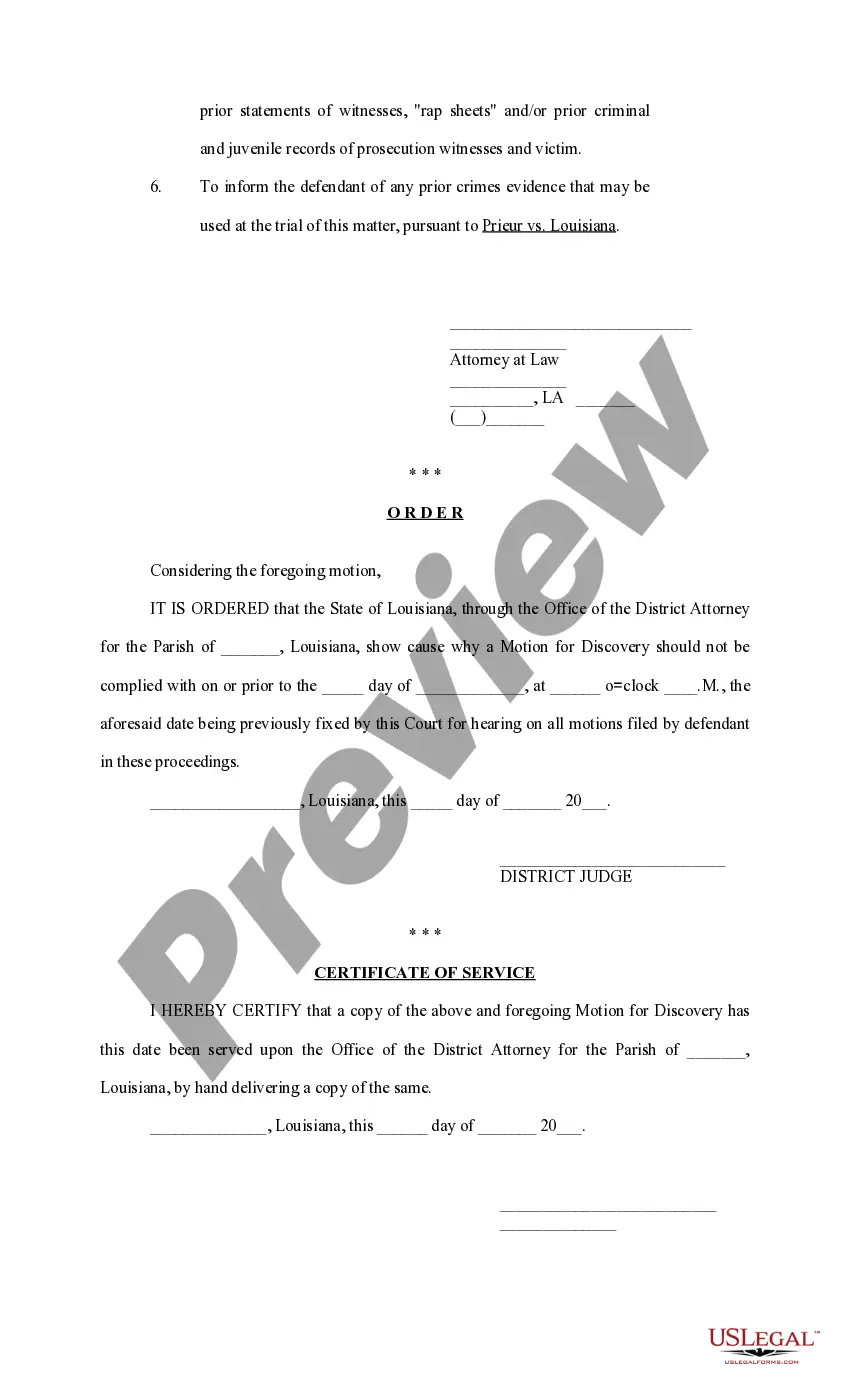
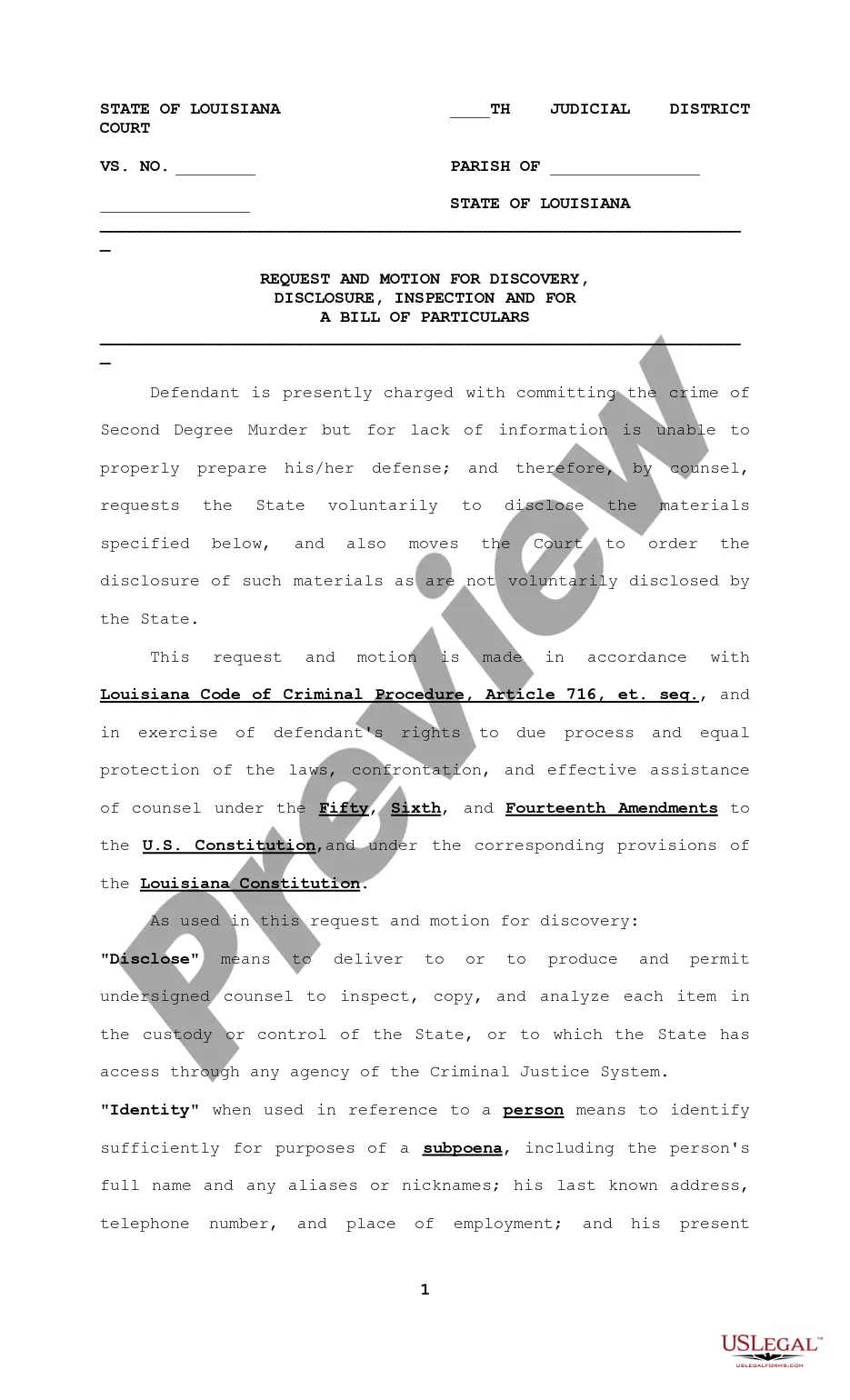
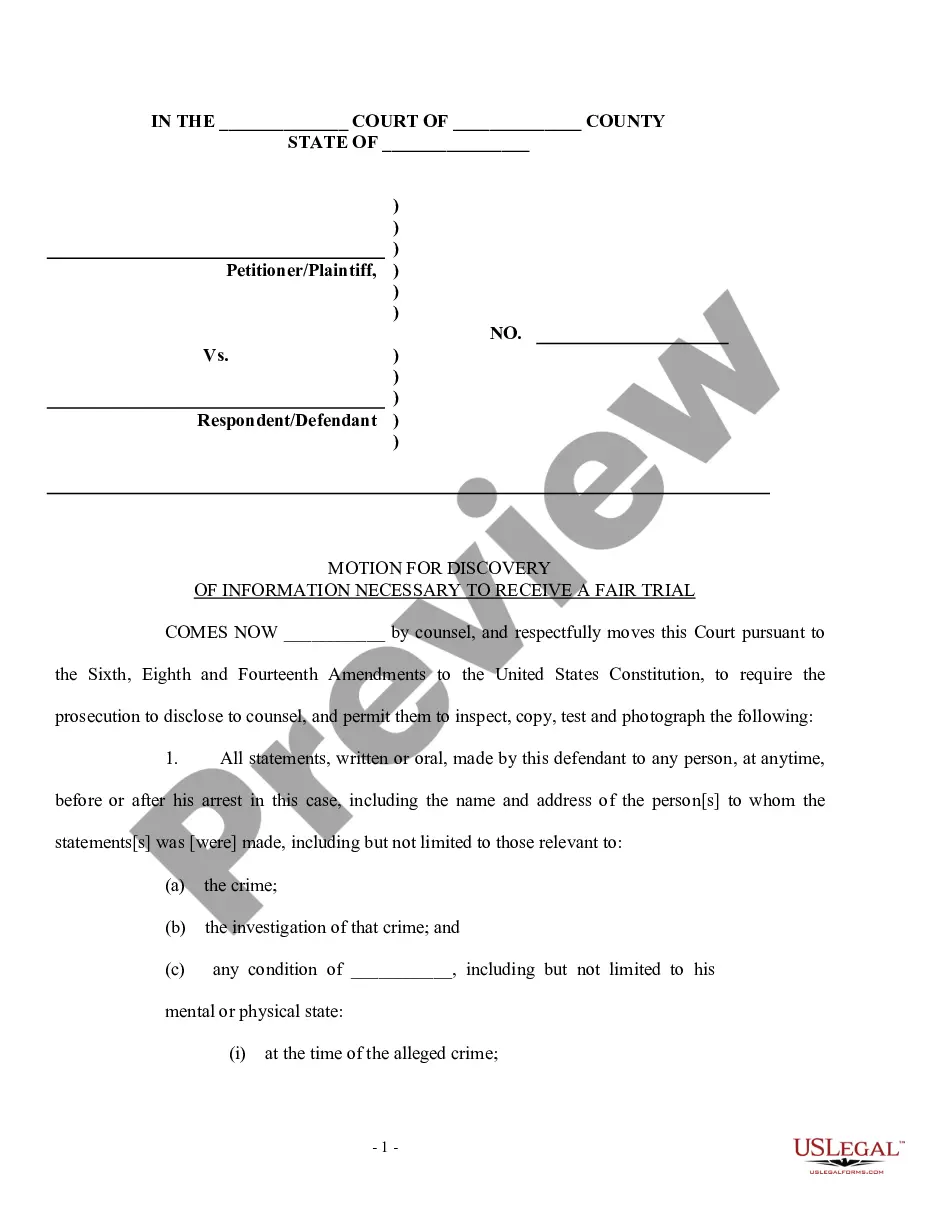
Get your form ready online
Our built-in tools help you complete, sign, share, and store your documents in one place.
Make edits, fill in missing information, and update formatting in US Legal Forms—just like you would in MS Word.
Download a copy, print it, send it by email, or mail it via USPS—whatever works best for your next step.
Sign and collect signatures with our SignNow integration. Send to multiple recipients, set reminders, and more. Go Premium to unlock E-Sign.
If this form requires notarization, complete it online through a secure video call—no need to meet a notary in person or wait for an appointment.
We protect your documents and personal data by following strict security and privacy standards.

Make edits, fill in missing information, and update formatting in US Legal Forms—just like you would in MS Word.

Download a copy, print it, send it by email, or mail it via USPS—whatever works best for your next step.

Sign and collect signatures with our SignNow integration. Send to multiple recipients, set reminders, and more. Go Premium to unlock E-Sign.

If this form requires notarization, complete it online through a secure video call—no need to meet a notary in person or wait for an appointment.

We protect your documents and personal data by following strict security and privacy standards.
Looking for another form?







How to fill out Louisiana Motion For Discovery?
Utilizing legal document examples that adhere to federal and state regulations is vital, and the internet presents numerous choices.
However, what’s the advantage of spending time searching for the accurately prepared Motion For Discovery With Motion To Dismiss template online if the US Legal Forms digital library already contains such documents compiled in one location.
US Legal Forms is the largest online legal repository with more than 85,000 editable templates created by lawyers for various business and personal circumstances.
Review the template using the Preview feature or through the text description to confirm it satisfies your requirements.
- They are straightforward to navigate with all documents categorized by state and intended purpose.
- Our experts keep abreast of legal updates, ensuring your paperwork is current and compliant when acquiring a Motion For Discovery With Motion To Dismiss from our site.
- Receiving a Motion For Discovery With Motion To Dismiss is simple and swift for both existing and new users.
- If you already possess an account with an active subscription, Log In and store the document template you require in the appropriate format.
- If you are unfamiliar with our site, follow the instructions below.
Form popularity
FAQ
A motion to dismiss can be beneficial, depending on your position in the case. For defendants, it offers a chance to resolve the matter early without engaging in costly discovery. For plaintiffs, however, it may pose challenges if the motion is granted. We recommend utilizing resources like USLegalForms to understand how to use a motion for discovery with motion to dismiss effectively in your legal strategy.
Yes, discovery is typically stayed while a motion to dismiss is pending. This means that the process of gathering evidence and documents pauses until the court decides on the motion. The rationale is to avoid unnecessary expenses and efforts if the case may be dismissed. It is important to navigate the complexities of a motion for discovery with motion to dismiss to ensure your rights are protected during this waiting period.
Many cases do reach a settlement after the discovery phase. This phase often uncovers key information that helps both parties evaluate their positions. Once parties have a clearer understanding of the evidence, they may find it beneficial to negotiate a resolution rather than proceed to trial. Leveraging a motion for discovery with motion to dismiss can lead to more informed discussions during this critical time.
A motion to dismiss can significantly impact the discovery process. When a party files this motion, it argues that the case should not proceed based on legal grounds. If the court grants the motion, it may completely halt the need for discovery, as there won’t be a case to explore. Understanding the relationship between a motion for discovery with motion to dismiss is essential for effective legal strategy.
A motion to dismiss is not a discovery motion; rather, it is a legal request to terminate a case before it goes to trial. This motion argues that even if all allegations are true, there is no basis for a legal claim. However, combining a motion for discovery with a motion to dismiss can be strategic, allowing you to gather information that may support your dismissal argument. Understanding the distinctions can help you navigate the legal process more effectively.
Filling out a motion to dismiss form requires attention to detail. Begin by accurately identifying the case number and parties involved. Provide a concise statement of the reasons for your motion, ensuring that you reference any supporting laws or precedents. If you need assistance, consider utilizing USLegalForms, which offers templates and guidance to help you navigate the process effectively with a motion for discovery with motion to dismiss.
To write a successful motion to dismiss, start by clearly stating the legal grounds for your request. Include relevant facts and evidence that support your argument. Focus on demonstrating why the case should not proceed, such as lack of jurisdiction or failure to state a claim. Using a motion for discovery with motion to dismiss can enhance your chances by allowing you to gather essential information to strengthen your case.