Restraining Orders For Emotional Abuse
Description
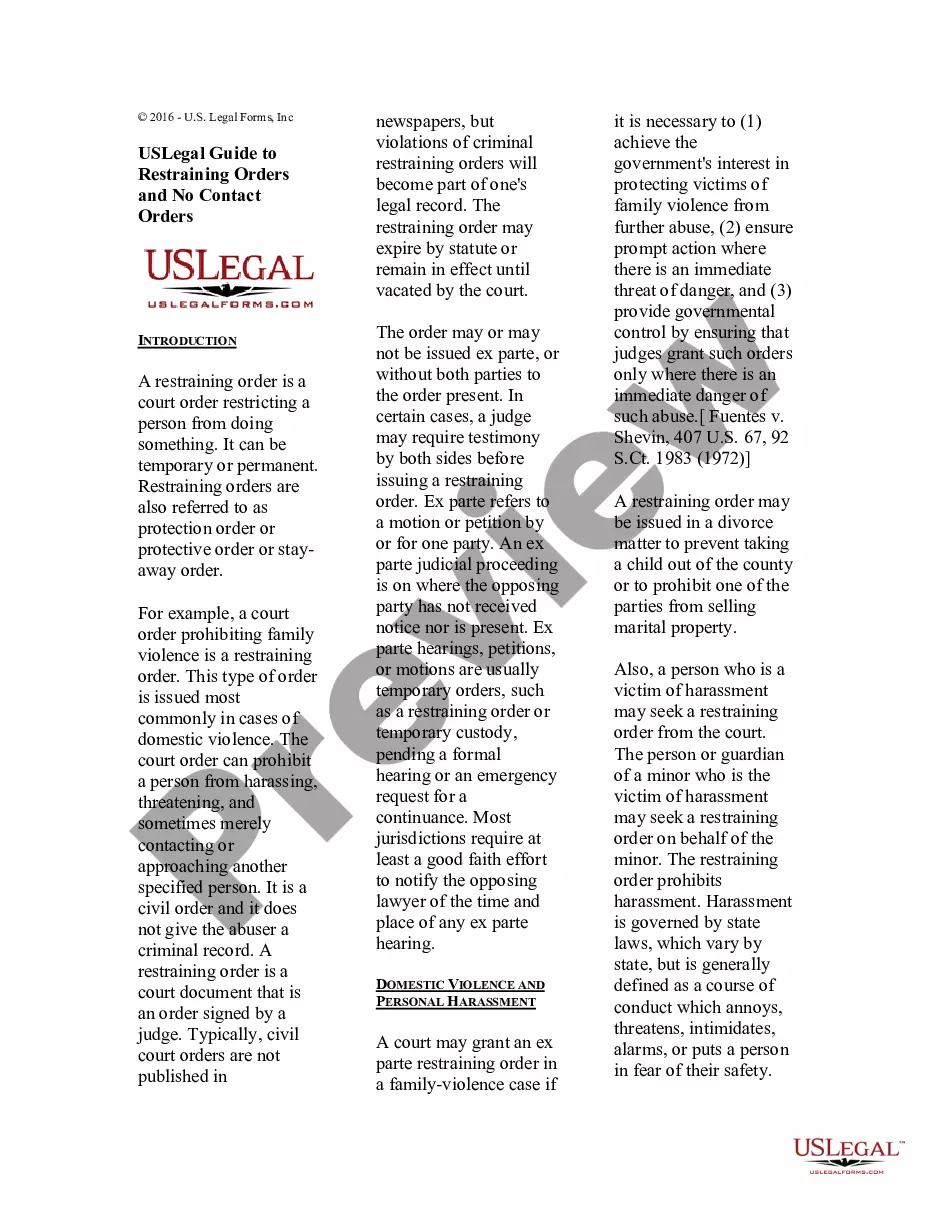
Get your form ready online
Our built-in tools help you complete, sign, share, and store your documents in one place.
Make edits, fill in missing information, and update formatting in US Legal Forms—just like you would in MS Word.
Download a copy, print it, send it by email, or mail it via USPS—whatever works best for your next step.
Sign and collect signatures with our SignNow integration. Send to multiple recipients, set reminders, and more. Go Premium to unlock E-Sign.
If this form requires notarization, complete it online through a secure video call—no need to meet a notary in person or wait for an appointment.
We protect your documents and personal data by following strict security and privacy standards.

Make edits, fill in missing information, and update formatting in US Legal Forms—just like you would in MS Word.

Download a copy, print it, send it by email, or mail it via USPS—whatever works best for your next step.

Sign and collect signatures with our SignNow integration. Send to multiple recipients, set reminders, and more. Go Premium to unlock E-Sign.

If this form requires notarization, complete it online through a secure video call—no need to meet a notary in person or wait for an appointment.

We protect your documents and personal data by following strict security and privacy standards.
Looking for another form?







Form popularity
FAQ
To establish emotional distress in a legal context, evidence may include medical records, personal journals, and third-party witness testimonies. It is important to document the impact of the abuse on your mental health. When pursuing restraining orders for emotional abuse, presenting clear evidence of emotional distress can significantly bolster your claims and help secure protective measures.
If you are experiencing emotional abuse, it is crucial to seek help immediately. Speak to trusted friends or family and consider consulting with a mental health professional for support. Additionally, exploring restraining orders for emotional abuse can help provide the legal protection you need to reclaim your safety and peace of mind.
The most common restraining order is the domestic violence restraining order. It typically offers protection to individuals experiencing physical or emotional harm in a domestic context. If you are facing emotional abuse, this type of order can facilitate your safety and well-being, emphasizing a legal acknowledgement of your situation.
Examples of evidence of abuse may include recordings of verbal confrontations, screenshots of harmful text messages, and testimonies from those who witnessed the abuse. Anything that showcases the patterns of emotional manipulation or control is useful. Collecting this evidence can be integral when pursuing restraining orders for emotional abuse.
To demonstrate emotional abuse, it is important to compile various types of evidence such as journal entries, text messages, and any communication that illustrates manipulative behavior. Documenting incidents in detail, including dates and reactions, can also strengthen your case. Utilizing restraining orders for emotional abuse can be effective if you present a compelling collection of proof.
Defending against emotional abuse starts with recognizing that it is occurring. Support from friends, family, or a mental health professional can help you understand your experience better. Developing a safety plan is vital, and considering restraining orders for emotional abuse may provide legal protection against further harm.
Proof of emotional abuse includes documented incidents that demonstrate a pattern of manipulative, threatening, or controlling behavior. This can take the form of text messages, emails, or witness statements that illustrate the psychological harm inflicted. When seeking restraining orders for emotional abuse, it is essential to gather clear evidence that highlights the impact this behavior has had on your mental well-being.
Confronting an emotional abuser requires careful thought and planning. Choose a safe space and a moment when you feel empowered to express your feelings. Clearly articulate how their actions affect you, but also understand that they may not react positively. If you feel unsafe, consider legal options such as restraining orders for emotional abuse to help limit their access to you while you process your feelings.
Reporting an emotional abuser is an important step toward regaining control over your life. You can start by documenting any incidents and gathering evidence that supports your claims. When ready, reach out to local authorities or a hotline that handles such cases. Additionally, if you seek legal protection, look into obtaining restraining orders for emotional abuse to further safeguard yourself.
If you are facing emotional abuse, it is crucial to prioritize your safety and mental health. You can seek help by talking to someone you trust or contacting a professional counselor. Consider exploring restraining orders for emotional abuse, as they can offer legal protection and a clear boundary against the abuser. Platforms like US Legal can guide you through the process of obtaining the necessary legal documents.