Cash For Deed Transaction
Description
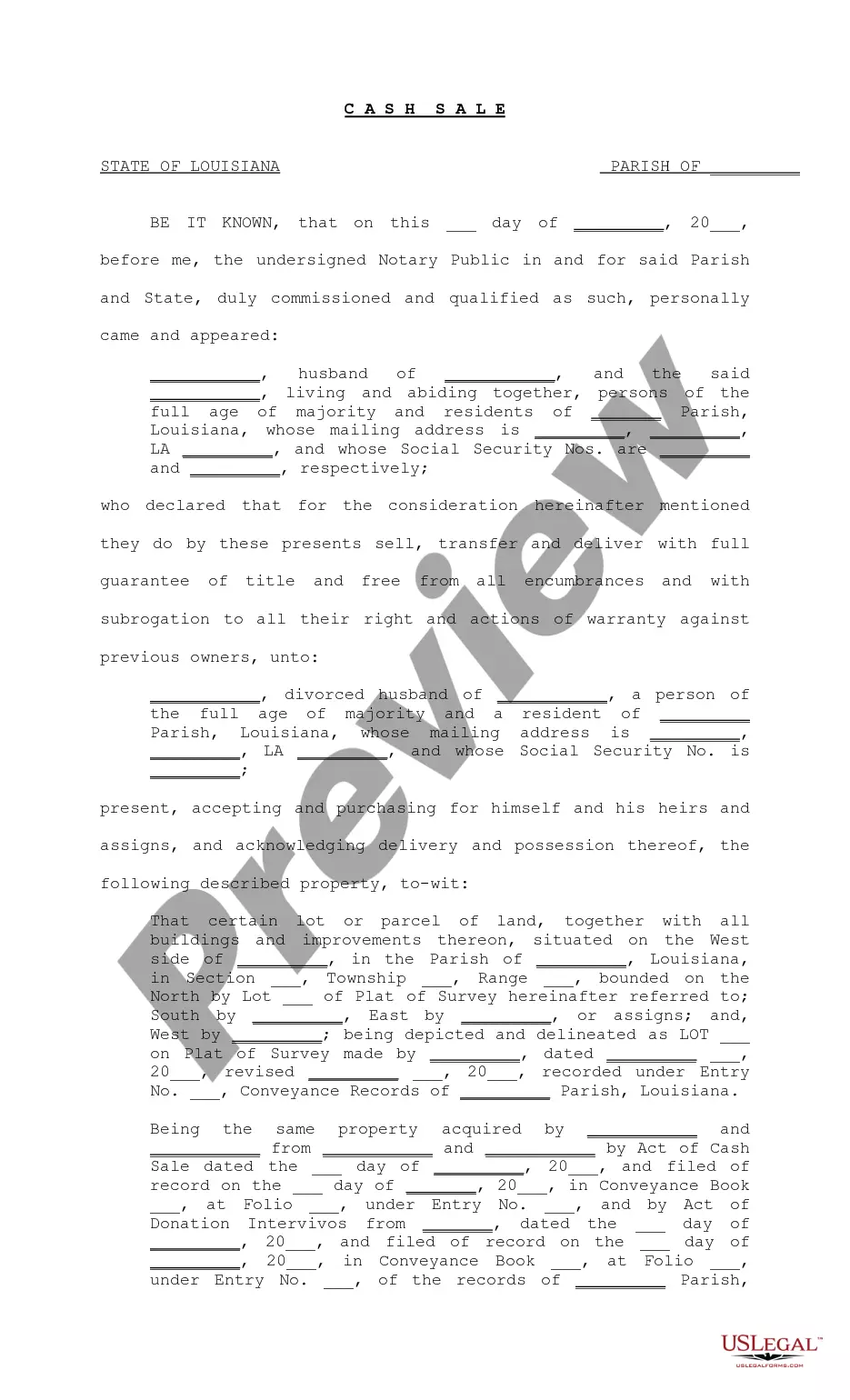
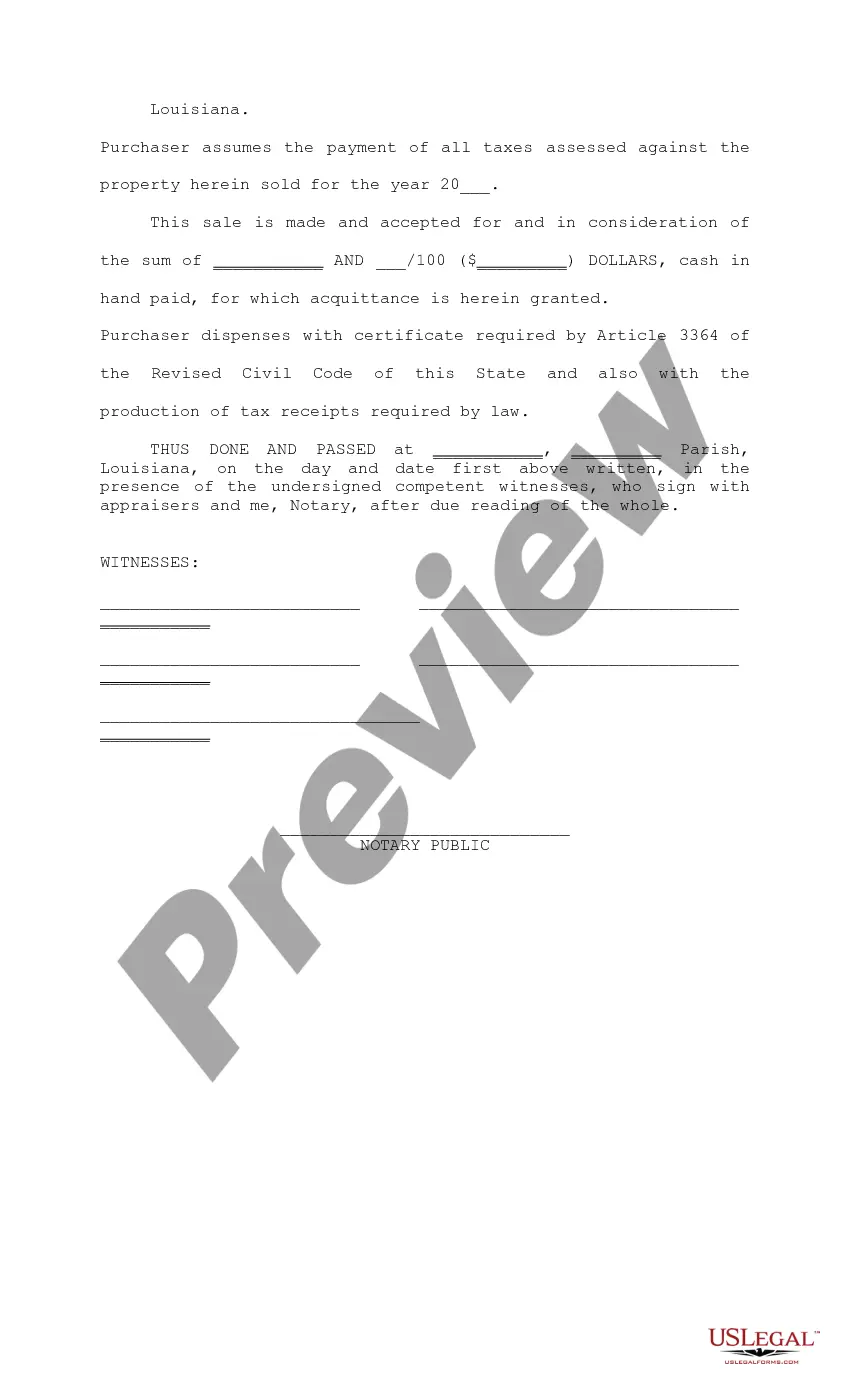
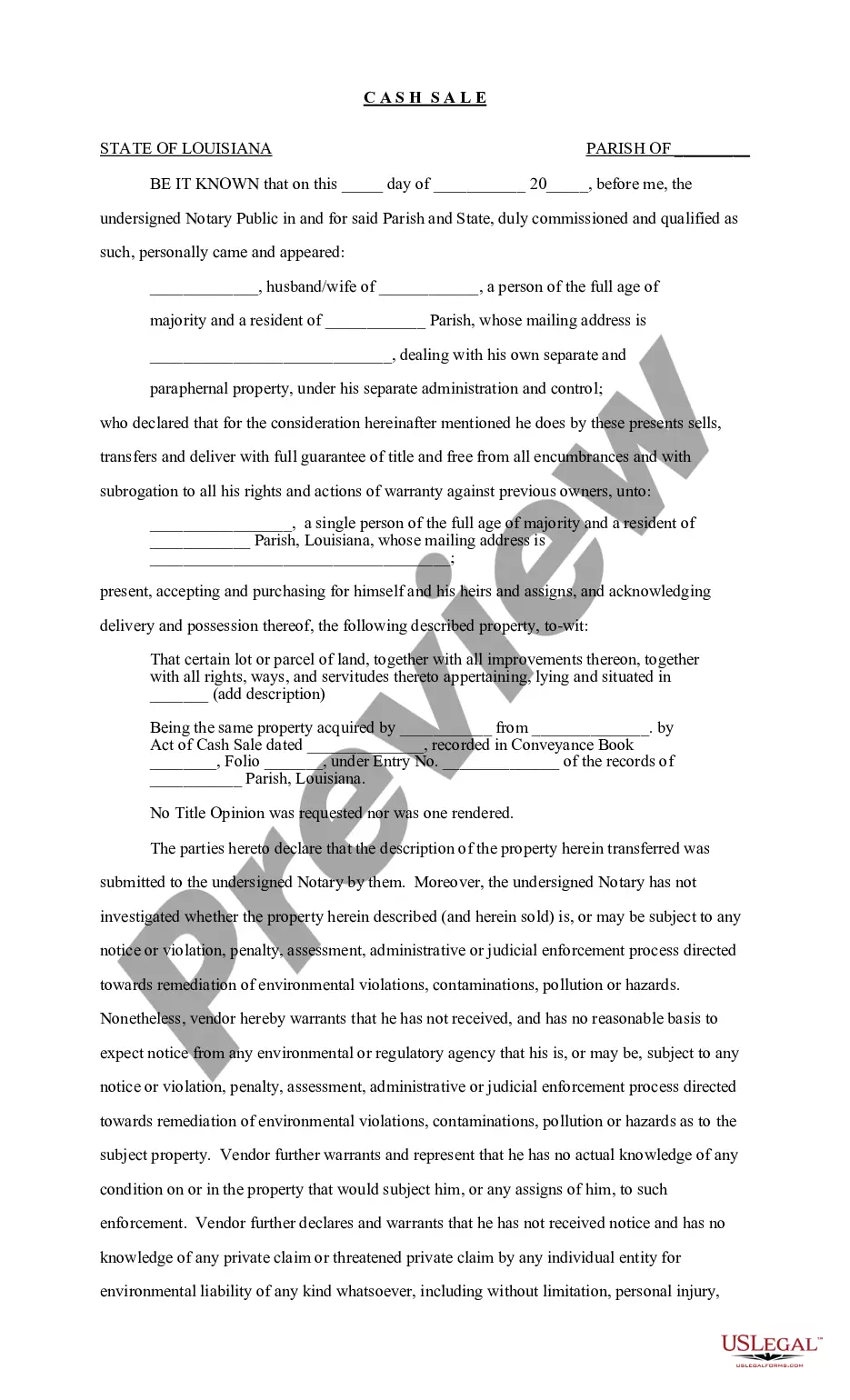
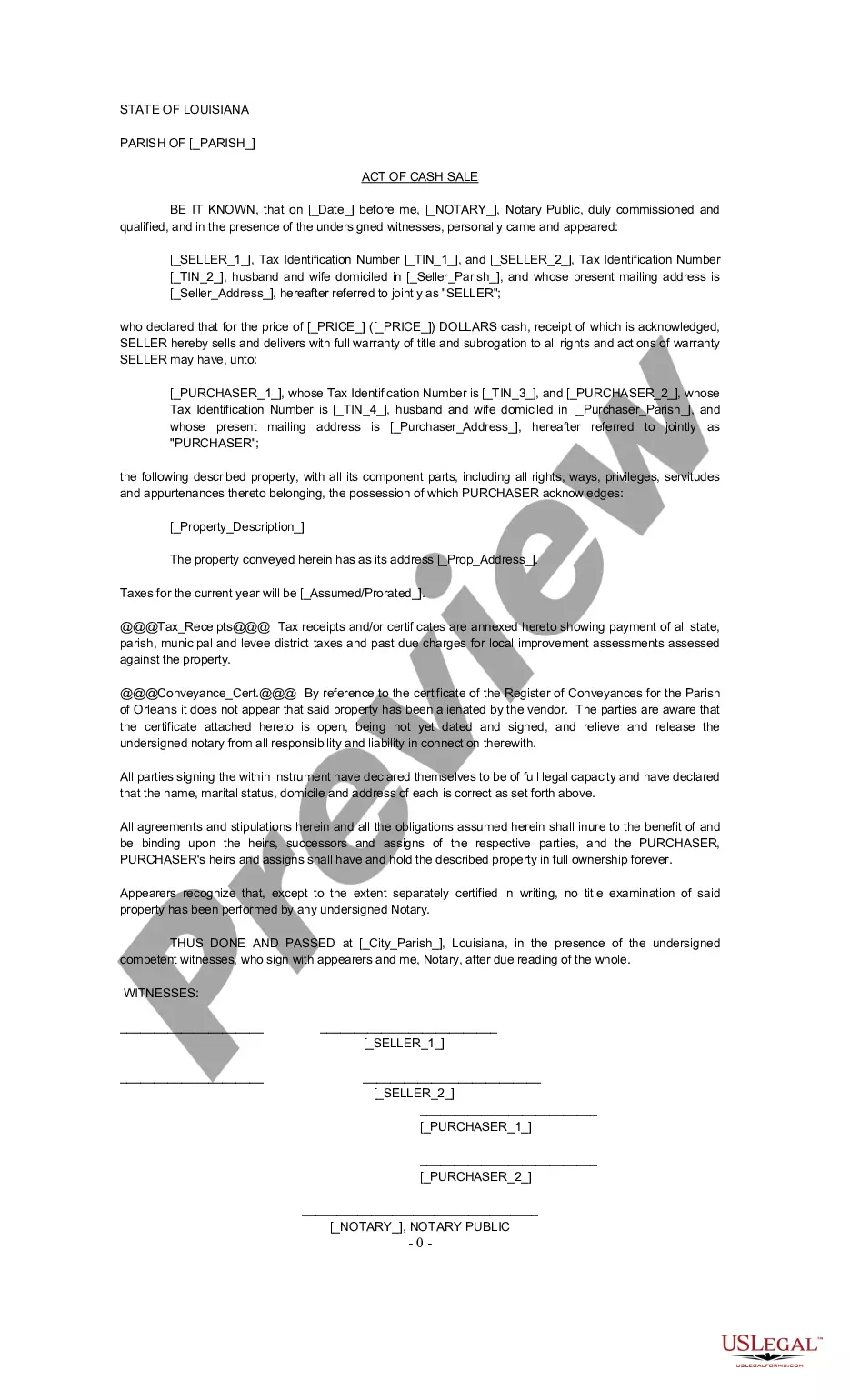
Get your form ready online
Our built-in tools help you complete, sign, share, and store your documents in one place.
Make edits, fill in missing information, and update formatting in US Legal Forms—just like you would in MS Word.
Download a copy, print it, send it by email, or mail it via USPS—whatever works best for your next step.
Sign and collect signatures with our SignNow integration. Send to multiple recipients, set reminders, and more. Go Premium to unlock E-Sign.
If this form requires notarization, complete it online through a secure video call—no need to meet a notary in person or wait for an appointment.
We protect your documents and personal data by following strict security and privacy standards.

Make edits, fill in missing information, and update formatting in US Legal Forms—just like you would in MS Word.

Download a copy, print it, send it by email, or mail it via USPS—whatever works best for your next step.

Sign and collect signatures with our SignNow integration. Send to multiple recipients, set reminders, and more. Go Premium to unlock E-Sign.

If this form requires notarization, complete it online through a secure video call—no need to meet a notary in person or wait for an appointment.

We protect your documents and personal data by following strict security and privacy standards.
Looking for another form?

How to fill out Louisiana Cash Sale?
Creating legal papers from the ground up can frequently be intimidating.
Certain situations may require extensive investigation and significant financial expenditure.
If you’re seeking a more straightforward and economical method of generating Cash For Deed Transaction or any other forms without enduring unnecessary challenges, US Legal Forms is readily available to you.
Our digital repository of over 85,000 current legal documents covers nearly all facets of your financial, legal, and personal affairs.
However, before proceeding to download Cash For Deed Transaction, adhere to these guidelines: Review the document preview and descriptions to ensure you are on the correct form you are seeking. Confirm that the form you select complies with the rules and regulations of your state and county. Choose the appropriate subscription plan to acquire the Cash For Deed Transaction. Download the form, then complete, validate, and print it. US Legal Forms boasts a solid reputation and over 25 years of expertise. Join us now and make document execution a simple and efficient process!
- With just a few clicks, you can promptly obtain state- and county-compliant forms carefully assembled for you by our legal professionals.
- Utilize our platform whenever you seek dependable and trustworthy services through which you can conveniently find and download the Cash For Deed Transaction.
- If you’re a returning user and have already registered with us, simply Log In to your account, find the template, and download it or re-download it later at the My documents section.
- Not signed up yet? No problem. It only requires a few minutes to register and browse the catalog.
Form popularity
FAQ
To file proceeds from real estate transactions, you need to gather all necessary documents, including Form 1099-S for any cash for deed transaction. Report your earnings on Schedule D and any capital gains or losses on Form 8949. Keeping thorough records will simplify the process and ensure compliance with the IRS.
To avoid 1099 penalties, ensure that you accurately report all cash for deed transactions and other relevant income to the IRS. Double-check your records for accuracy and submit all required forms on time. Using platforms like US Legal Forms can help you prepare necessary documentation and stay compliant with tax laws.
A cash sale deed is a legal document that transfers ownership of property from seller to buyer when payment is made entirely in cash. In a cash for deed transaction, this deed serves as proof of ownership transfer without involving financing. This type of transaction is often quicker and involves fewer complications than traditional sales.
You typically report the proceeds from the sale of a house on Schedule D of your tax return. If the sale involves a cash for deed transaction, track your profit accurately, and report it as a capital gain. Make sure to consult IRS guidelines regarding any exclusions that may apply to your specific situation.
Profits from real estate transactions are generally reported using Schedule D and Form 8949 on your tax return. These forms outline your gains or losses from capital assets, including any cash for deed transaction. It is crucial to document your basis in the property to determine your exact profit.
Yes, real estate transactions do indeed get reported to the IRS. When a cash for deed transaction occurs, parties involved may receive a Form 1099-S, which details the sale. This form is essential for ensuring the IRS has accurate records of your income generated from these transactions.
You will report proceeds from real estate transactions on your federal income tax return. Typically, this information goes on Schedule D, which details capital gains and losses. Remember, if your transaction involves a cash for deed transaction, you must accurately account for all income received. Failing to report these proceeds may lead to penalties.
A cash for deed transaction involves the buyer paying the seller directly with cash in exchange for the property deed. This method eliminates the need for bank involvement, making the process simpler and more straightforward. It allows both parties to negotiate terms directly, leading to potentially faster sales and fewer hurdles. If you seek to navigate this process, US Legal Forms provides valuable resources to help guide you.
The duration of a cash for deed transaction can vary, but it typically progresses faster than traditional sales. Since there is no need for financing approval, the process can take as little as a few days to a couple of weeks. However, it's important to account for necessary inspections and title checks. Overall, if both parties agree, this type of transaction can close quickly and efficiently.
To enter cash sales, start by recording the transaction in your accounting system or journal immediately after it occurs. Ensure you categorize it properly, marking it as a cash for deed transaction for clarity. This process aids in maintaining precise financial records, making tax preparation and financial assessments easier.