Civil Courts In Law
Description
Get your form ready online
Our built-in tools help you complete, sign, share, and store your documents in one place.
Make edits, fill in missing information, and update formatting in US Legal Forms—just like you would in MS Word.
Download a copy, print it, send it by email, or mail it via USPS—whatever works best for your next step.
Sign and collect signatures with our SignNow integration. Send to multiple recipients, set reminders, and more. Go Premium to unlock E-Sign.
If this form requires notarization, complete it online through a secure video call—no need to meet a notary in person or wait for an appointment.
We protect your documents and personal data by following strict security and privacy standards.

Make edits, fill in missing information, and update formatting in US Legal Forms—just like you would in MS Word.

Download a copy, print it, send it by email, or mail it via USPS—whatever works best for your next step.

Sign and collect signatures with our SignNow integration. Send to multiple recipients, set reminders, and more. Go Premium to unlock E-Sign.

If this form requires notarization, complete it online through a secure video call—no need to meet a notary in person or wait for an appointment.

We protect your documents and personal data by following strict security and privacy standards.
Looking for another form?






How to fill out Louisiana Answer To Petition?
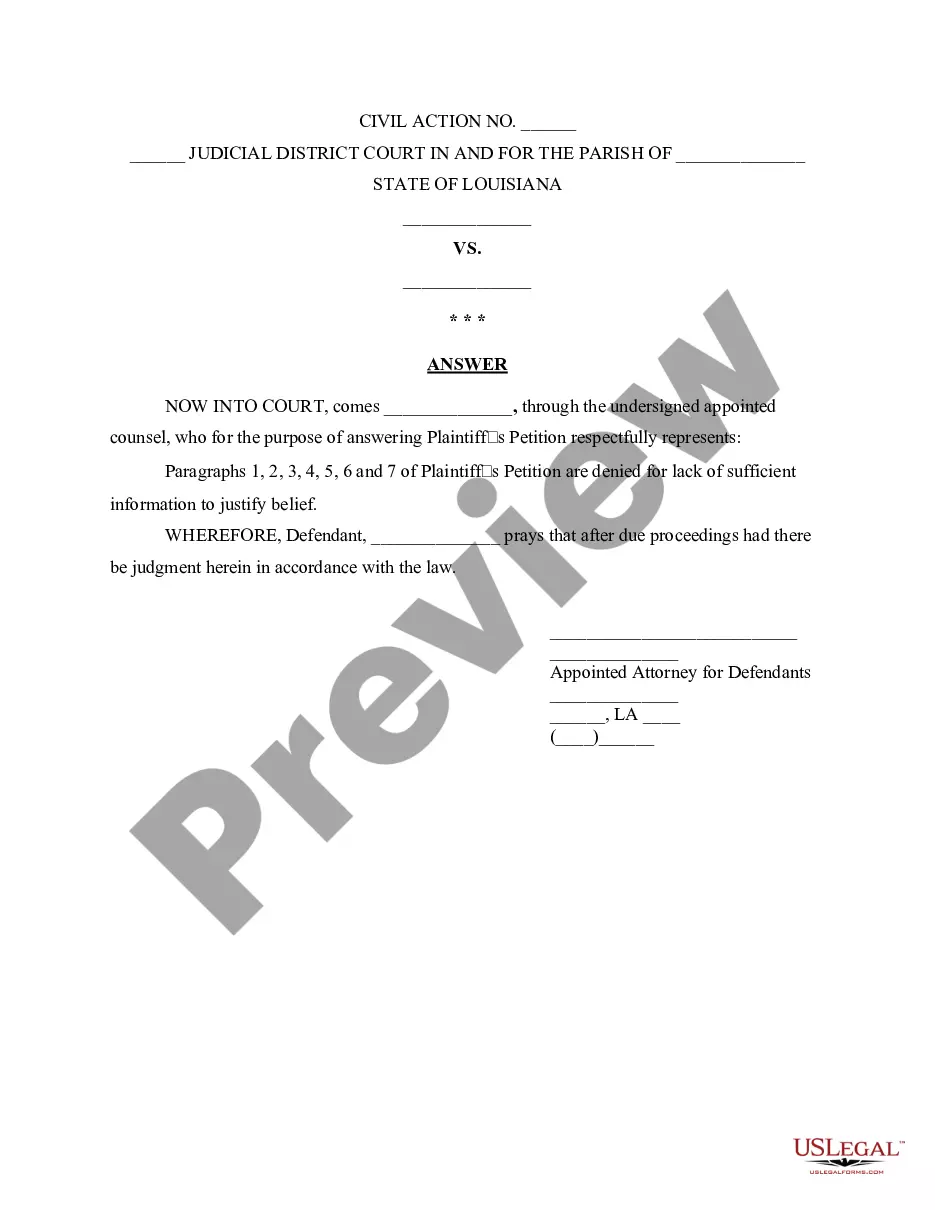
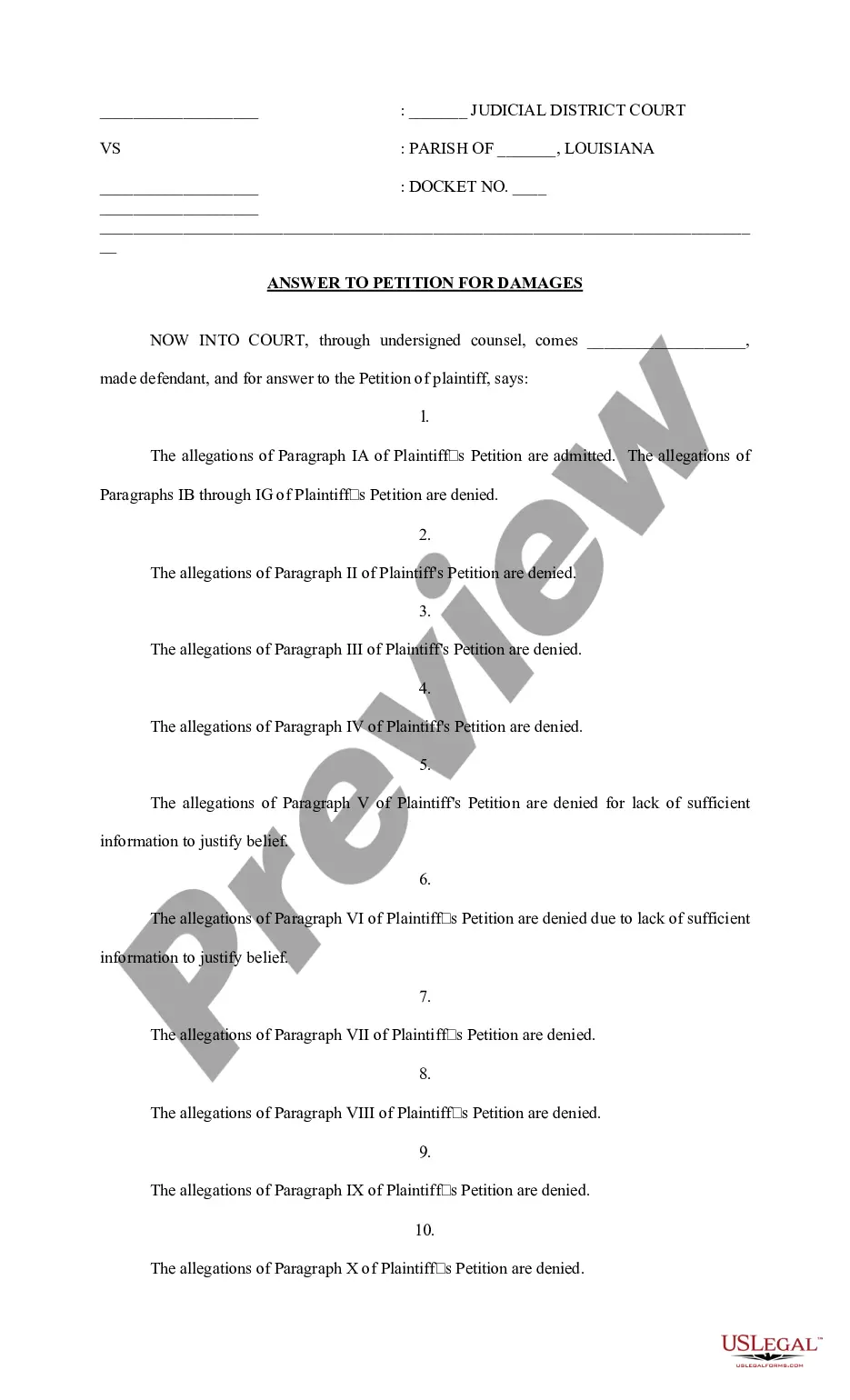
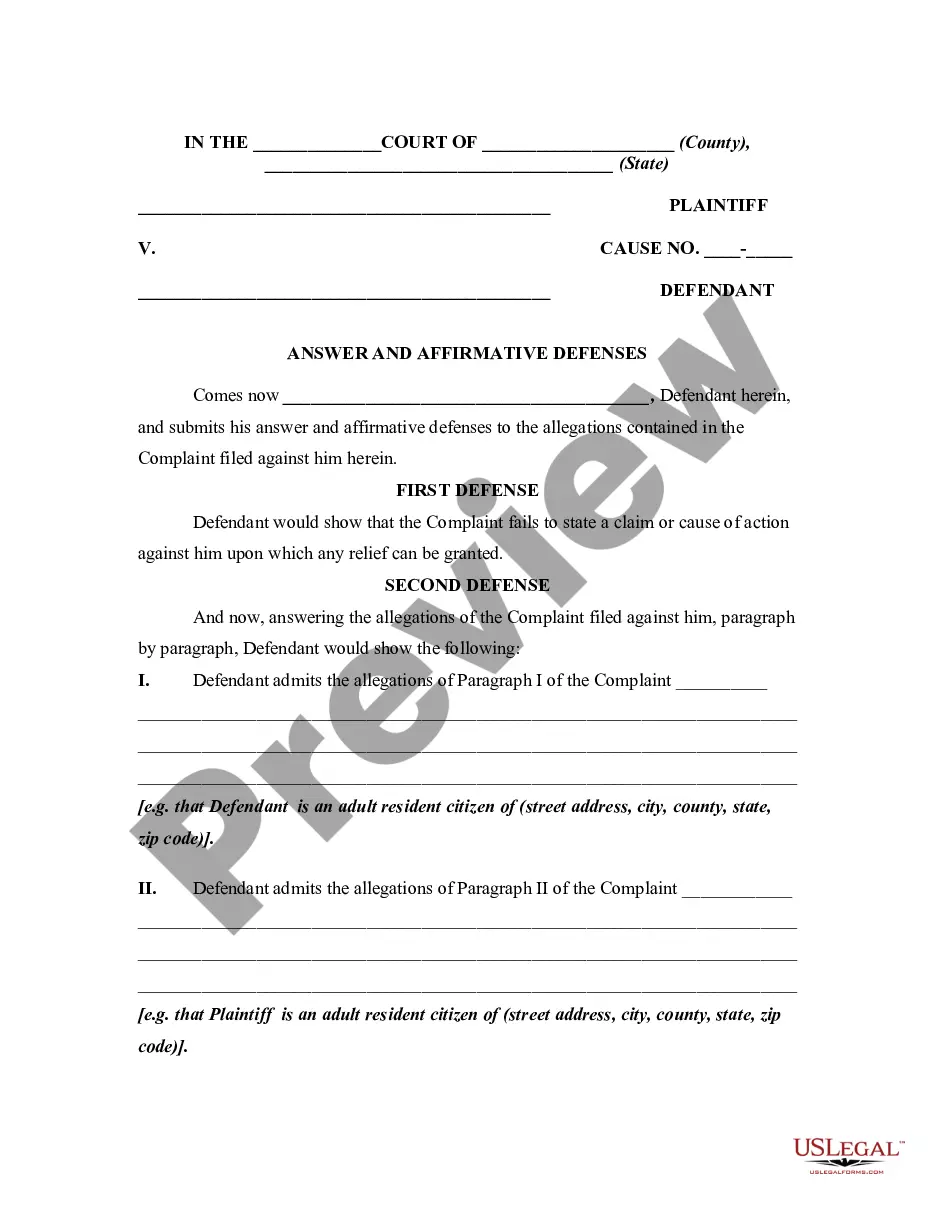
The Civil Courts In Law displayed on this page is a reusable formal template crafted by expert attorneys in compliance with federal and state regulations.
For over 25 years, US Legal Forms has supplied individuals, organizations, and lawyers with more than 85,000 authenticated, state-specific documents for various business and personal needs. It’s the fastest, most direct, and most dependable method to acquire the forms you require, as the service guarantees bank-grade data protection and anti-malware safeguards.
Select the format you desire for your Civil Courts In Law (PDF, DOCX, RTF) and save the document on your device. Complete and sign the document. Print the template to fill it out manually. Alternatively, use an online multi-functional PDF editor to efficiently and accurately complete and sign your form validly. Download your paperwork once again. Use the same document whenever necessary. Access the My documents tab in your profile to redownload any previously saved forms. Subscribe to US Legal Forms to have authenticated legal templates for every situation in life easily accessible.
- Search for the document you require and examine it.
- Examine the file you sought and preview it or assess the form description to verify it meets your requirements. If it doesn’t, utilize the search bar to locate the appropriate one. Click Buy Now when you have identified the template you need.
- Register and Log In.
- Select the pricing plan that fits you and create an account. Use PayPal or a credit card to make a swift payment. If you already possess an account, Log In and check your subscription to proceed.
- Acquire the fillable template.
Form popularity
FAQ
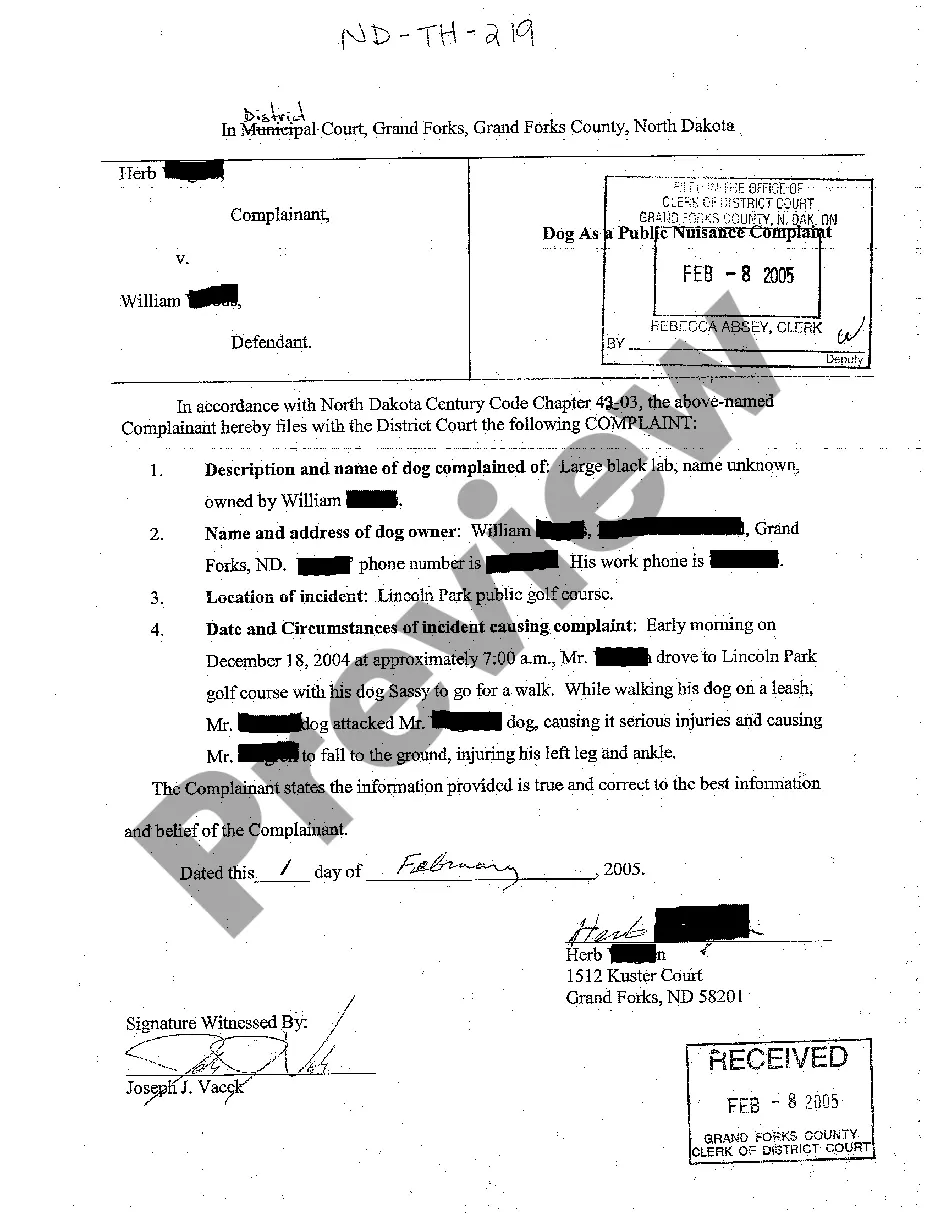
The three most common civil cases are tort claims, contract breaches and landlord/tenant issues. Tort Claim - An act committed by one person that causes harm to another. Tort cases can take many different forms, and can relate to a person's personal safety, safety of their property, and financial security.
Timeline of How to File a Lawsuit Step 1: File a Complaint. Plaintiff files a complaint and summons with the local county court. ... Step 2: Answer Complaint. ... Step 3: Discovery. ... Step 4: Failing to Respond to Discovery. ... Step 5: Conclusion of Lawsuit.
The person who commences a civil lawsuit is called the plaintiff. The person against whom the suit is brought is the defendant. In some cases, there may be more than one plaintiff or defendant.
Write and file an answer. The ?answer? is your written response to the claims made against you. You must file an answer with the court that issued the summons or citation. If you fail to answer, you could lose the case without ever having the opportunity to tell your side of the story.
In the case of a Civil law, a petition has to be filed by the affected persons only. Q. LEGAL PRINCIPE: No person shall be deprived of his life or personal liberty except ing to procedure established by law and Civil Courts have coercive powers to compel attendance of witness only within its local territory.