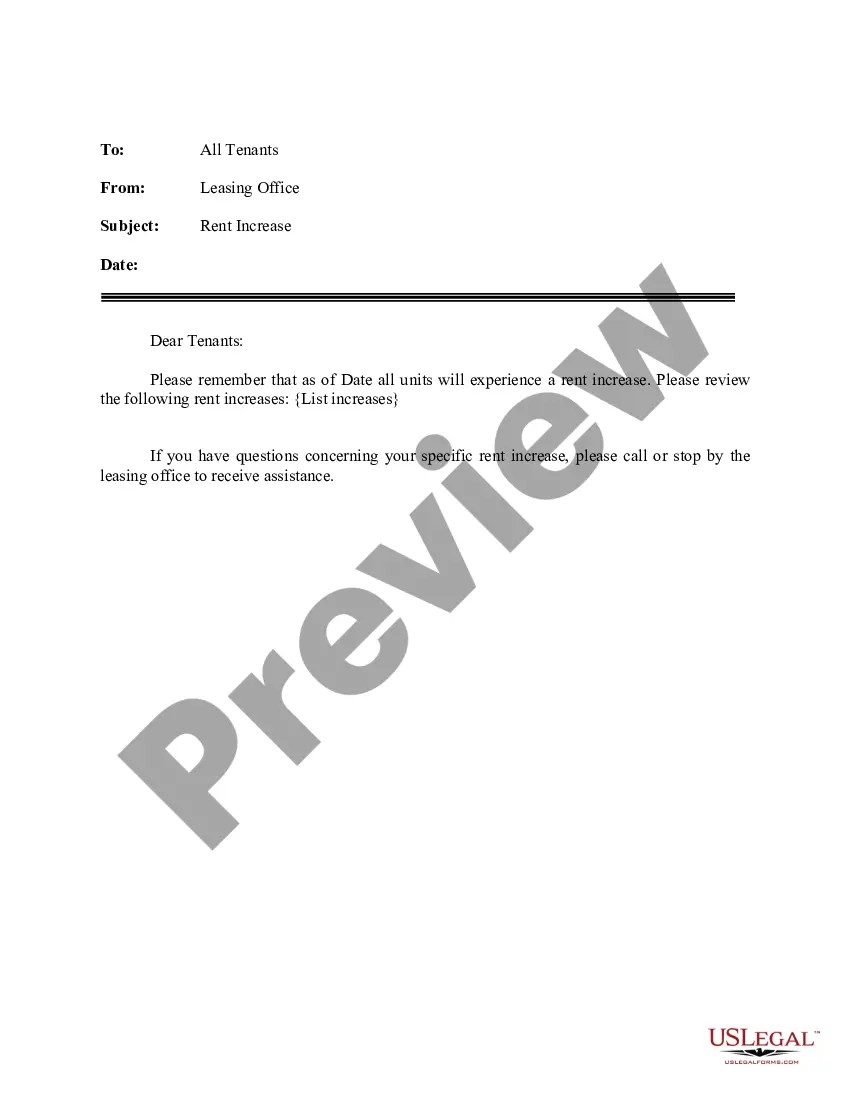
Rent Increase Letter For Commercial Property
Description

Get your form ready online
Our built-in tools help you complete, sign, share, and store your documents in one place.
Make edits, fill in missing information, and update formatting in US Legal Forms—just like you would in MS Word.
Download a copy, print it, send it by email, or mail it via USPS—whatever works best for your next step.
Sign and collect signatures with our SignNow integration. Send to multiple recipients, set reminders, and more. Go Premium to unlock E-Sign.
If this form requires notarization, complete it online through a secure video call—no need to meet a notary in person or wait for an appointment.
We protect your documents and personal data by following strict security and privacy standards.

Make edits, fill in missing information, and update formatting in US Legal Forms—just like you would in MS Word.

Download a copy, print it, send it by email, or mail it via USPS—whatever works best for your next step.

Sign and collect signatures with our SignNow integration. Send to multiple recipients, set reminders, and more. Go Premium to unlock E-Sign.

If this form requires notarization, complete it online through a secure video call—no need to meet a notary in person or wait for an appointment.

We protect your documents and personal data by following strict security and privacy standards.
Looking for another form?








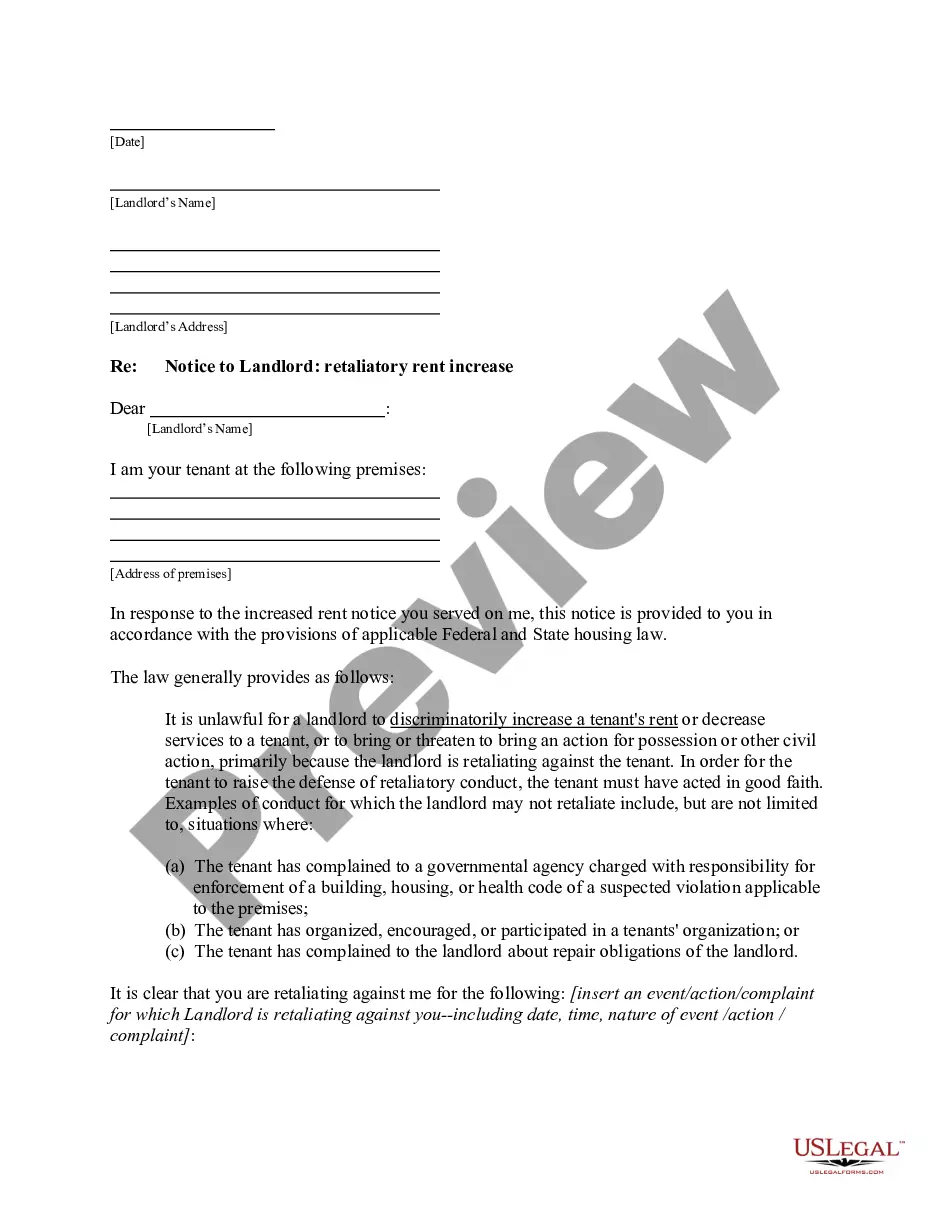
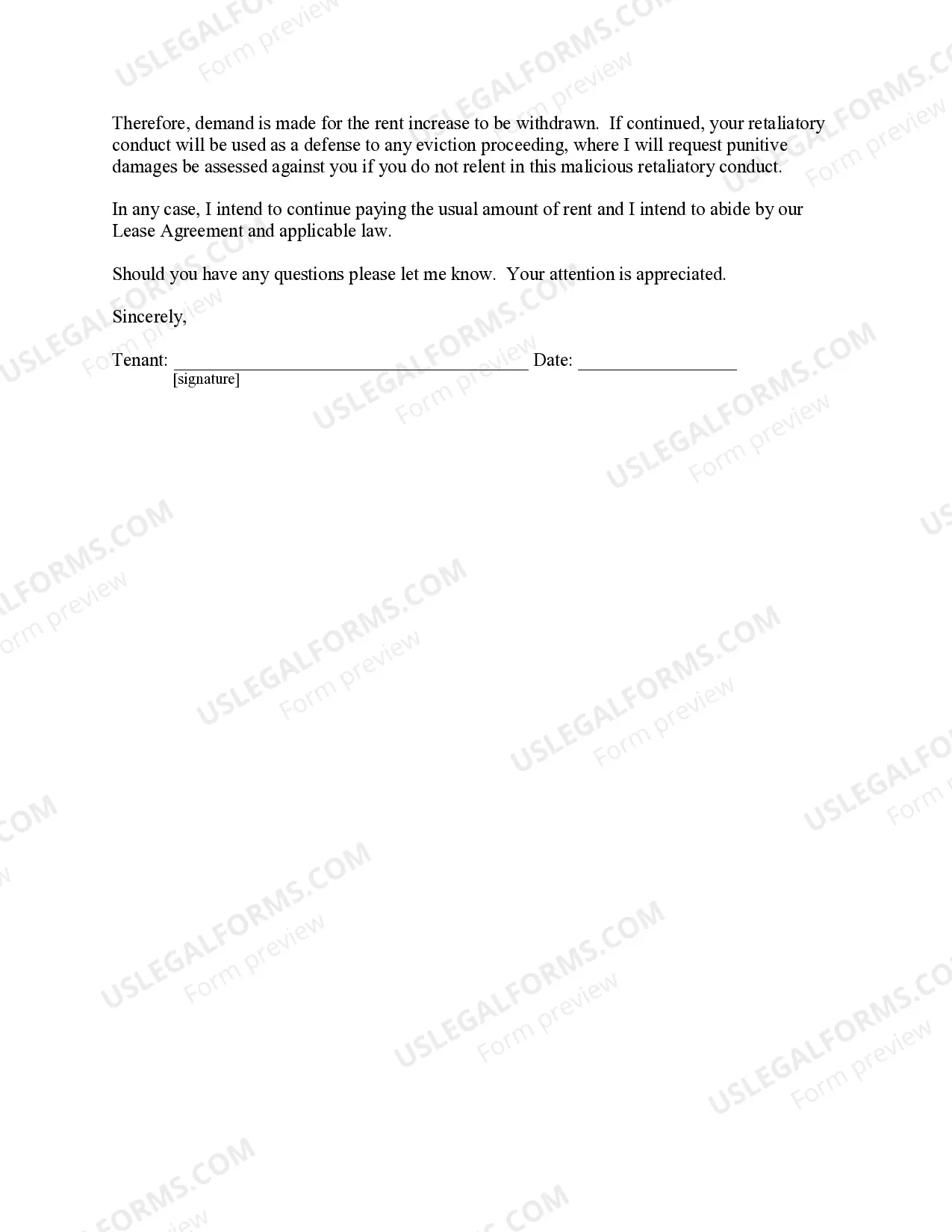
How to fill out Louisiana Letter From Tenant To Landlord Containing Notice To Landlord To Withdraw Retaliatory Rent Increase?
- If you are a returning user, log into your account and download the template that best suits your needs by clicking the Download button. Confirm that your subscription is active; if it's not, renew it according to your chosen plan.
- For new users, start by checking the Preview mode and the form description. This ensures you have selected the correct template that aligns with your needs and meets local legal requirements.
- If necessary, utilize the Search tab to find an alternate template if the one you initially chose doesn't match your specifications.
- Purchase the document by clicking the Buy Now button and select your preferred subscription plan. You will need to create an account to access their extensive library.
- Complete your purchase securely using your credit card or PayPal account to finalize your subscription.
- Once your template is downloaded, save it on your device for editing and completion. You can also access it later from the My Forms section of your profile.
In conclusion, US Legal Forms empowers you to efficiently create legal documents with ease. By following these steps, you can ensure your rent increase letter for commercial property is professional and compliant. Explore their comprehensive library today!
Start drafting your legal documents by visiting US Legal Forms now!
Form popularity
FAQ
An example of a letter of intent to rent includes an introduction that identifies your business and your interest in the property. After a brief description of your operations, you would specify your proposed lease terms, such as monthly rent, duration, and any special requests. You may also express your willingness to negotiate terms, ensuring both parties have a clear understanding. This approach can also be related to the need for a rent increase letter for commercial property later on.
When writing a letter of intent for a commercial lease, start by addressing it to the landlord or property manager. Clearly state your interest in leasing the property and provide details about your business. Outline the key terms you propose, such as rental amount, lease term, and any other incentives you might want to negotiate. This letter sets the stage for future discussions, including any concerns related to a rent increase letter for commercial property.
To write a letter of intent to lease a commercial property, begin with your contact information and the recipient’s details. Briefly outline your business information and why you are interested in the property. Clearly state your proposed terms, such as rent and lease duration, to establish a foundation for negotiation. This letter often precedes a formal lease and helps facilitate discussions about potential changes in future rent, including a rent increase letter for commercial property.
Writing a letter to get out of a commercial lease requires clarity and respect. Start by referencing your lease agreement, and clearly state your intent to terminate the lease. Provide a valid reason for your request and mention the desired termination date, ensuring you allow enough time for the landlord to respond. A well-articulated letter can smooth the process, especially if you may need a rent increase letter for commercial property in the future.
To write a letter of interest for a commercial property, begin by addressing the property owner or manager directly. Clearly express your interest in the property and state any specific requirements or preferences you have. Also, include your background or qualifications as a potential tenant, as this may strengthen your position. Remember, a well-crafted letter can serve as a vital step towards your goal, making it a valuable asset when considering a rent increase letter for commercial property.
The average commercial lease increase can fluctuate based on various factors, including location and property type. Typically, increases are around 3% annually, aligning with inflation rates and local market trends. Using a comprehensive rent increase letter for commercial property can help convey the rationale behind these increments, ensuring all parties are fully informed.
A fair annual rent increase often ranges between 2% to 5%, but this can vary depending on market conditions and location. When considering an increase, it is important to evaluate local market rates and your property's condition. Providing a well-structured rent increase letter for commercial property can help justify the increase and maintain a positive landlord-tenant relationship.
To calculate annual commercial rent, start with the agreed monthly rent amount and multiply it by 12 months. Factor in any additional expenses such as property taxes, insurance, and maintenance costs that are typically passed to tenants. A detailed rent increase letter for commercial property should outline any changes in these figures, ensuring transparency and clarity for both parties.
In California, there is no statewide limit on how much a landlord can raise rent for commercial properties. However, many lease agreements include specific terms that may restrict increases. When drafting a rent increase letter for commercial property, consider local ordinances and your lease agreement to ensure compliance and fair practices.
The maximum rent increase per year often depends on state laws and lease agreements. In general, landlords can raise rent based on market trends and property value. It is crucial to draft a rent increase letter for commercial property that complies with local regulations to avoid disputes. Always check your specific state’s guidelines before implementing an increase.