Life Estate Deed In Kentucky

Description

Get your form ready online
Our built-in tools help you complete, sign, share, and store your documents in one place.
Make edits, fill in missing information, and update formatting in US Legal Forms—just like you would in MS Word.
Download a copy, print it, send it by email, or mail it via USPS—whatever works best for your next step.
Sign and collect signatures with our SignNow integration. Send to multiple recipients, set reminders, and more. Go Premium to unlock E-Sign.
If this form requires notarization, complete it online through a secure video call—no need to meet a notary in person or wait for an appointment.
We protect your documents and personal data by following strict security and privacy standards.

Make edits, fill in missing information, and update formatting in US Legal Forms—just like you would in MS Word.

Download a copy, print it, send it by email, or mail it via USPS—whatever works best for your next step.

Sign and collect signatures with our SignNow integration. Send to multiple recipients, set reminders, and more. Go Premium to unlock E-Sign.

If this form requires notarization, complete it online through a secure video call—no need to meet a notary in person or wait for an appointment.

We protect your documents and personal data by following strict security and privacy standards.
Looking for another form?
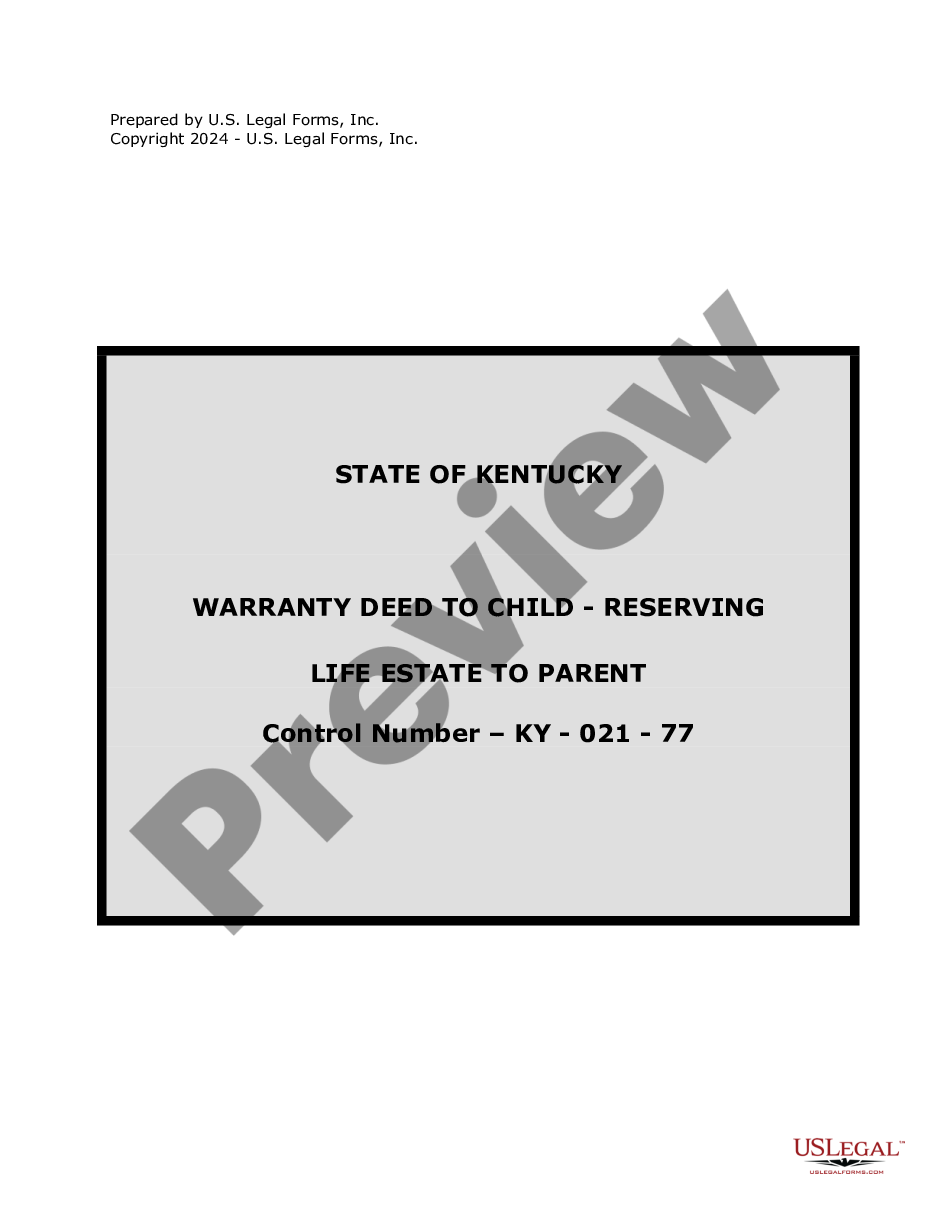
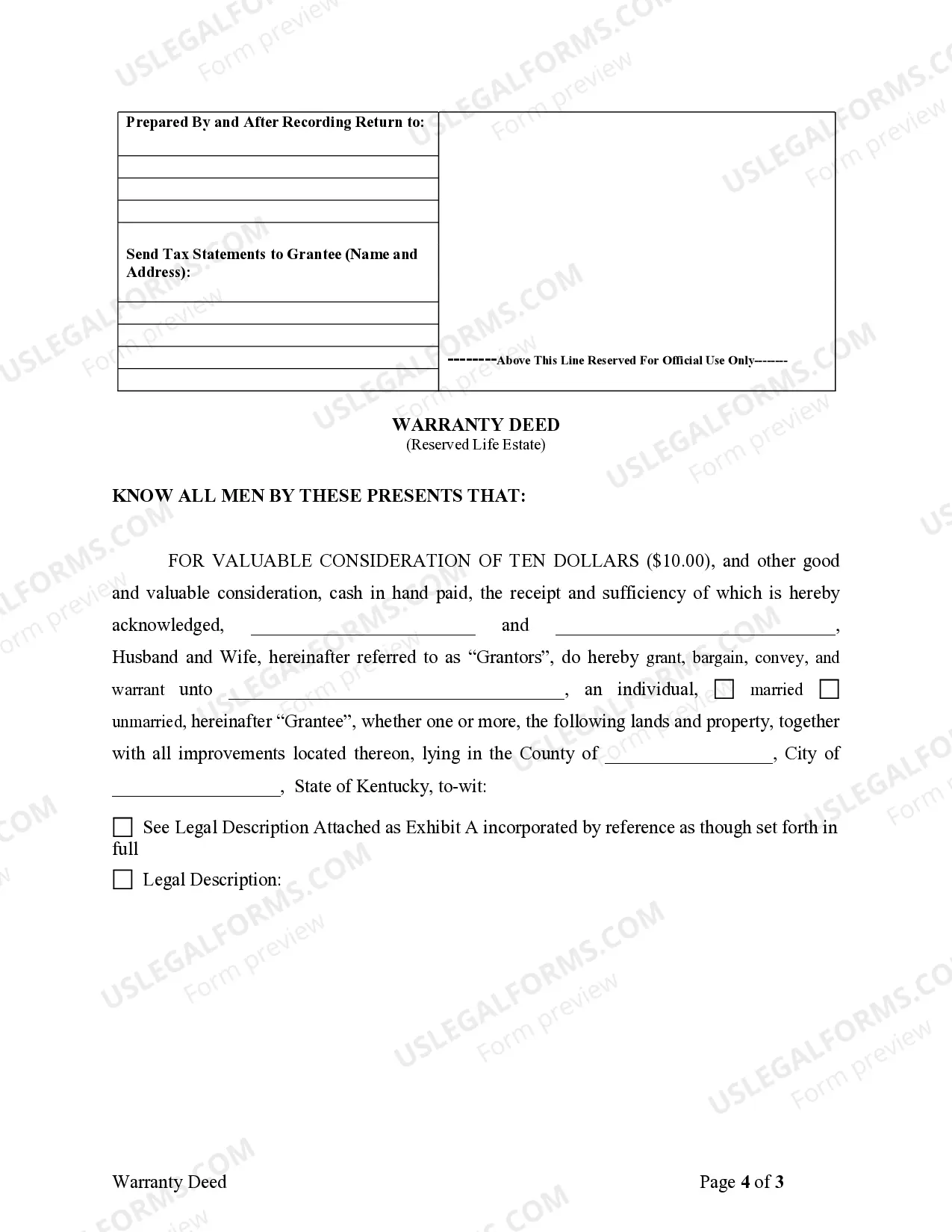
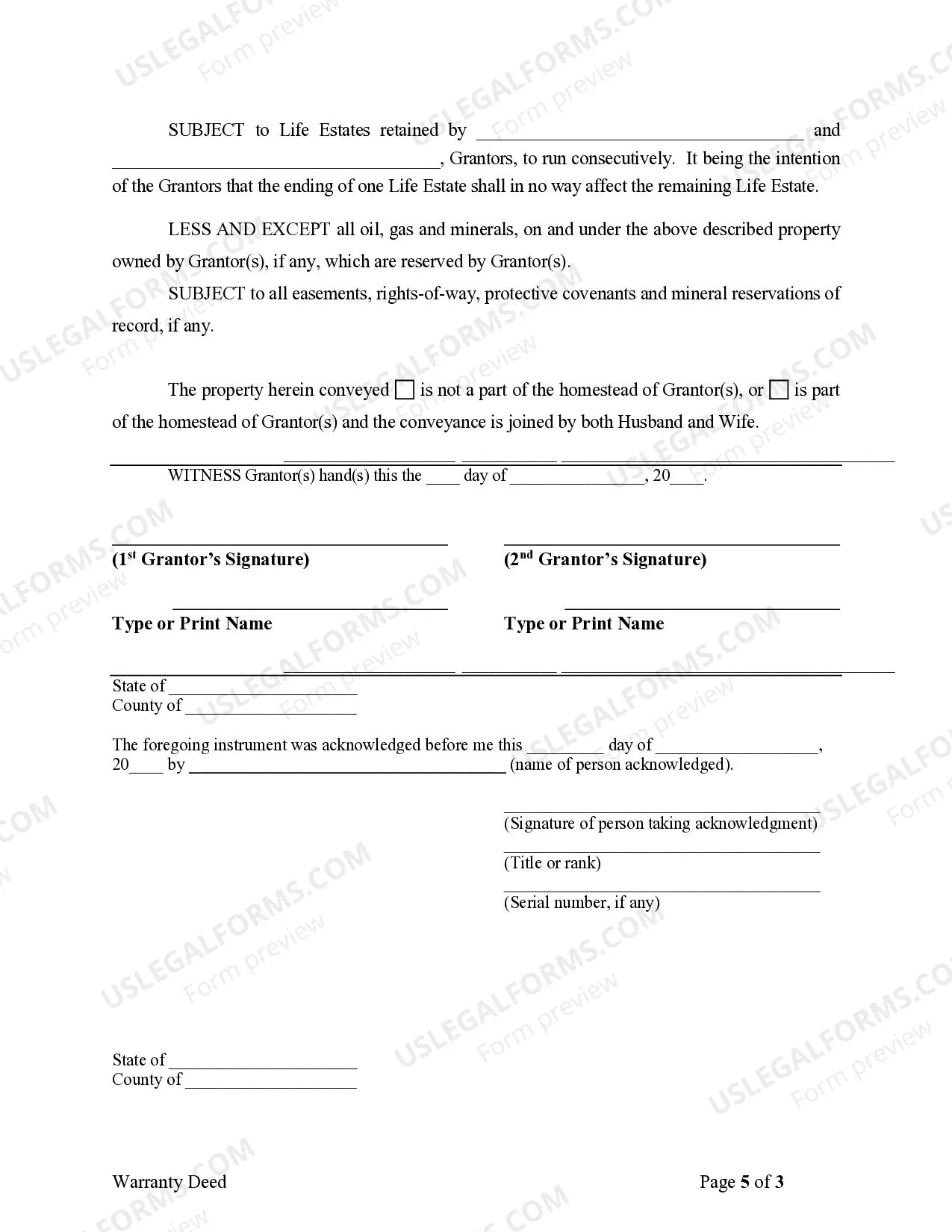
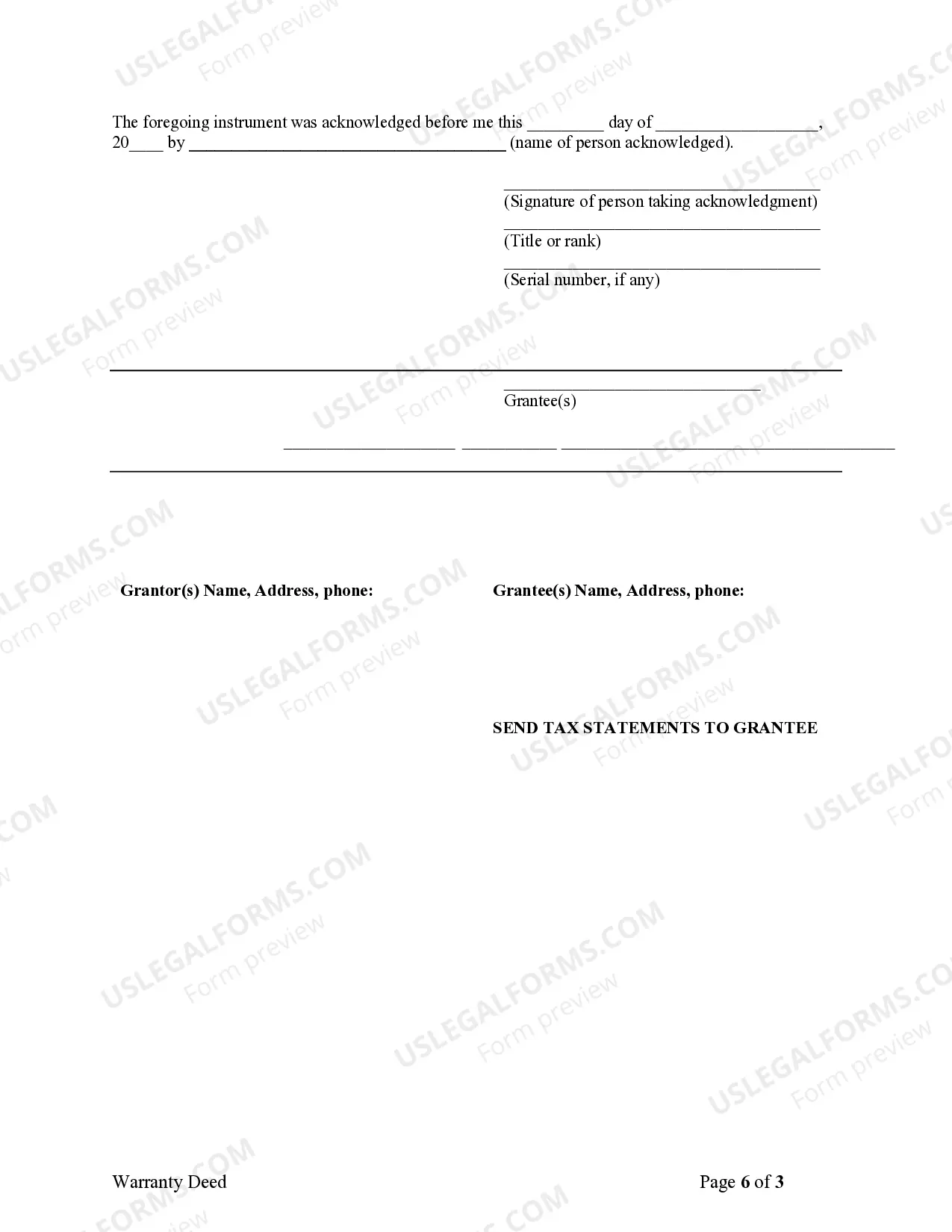
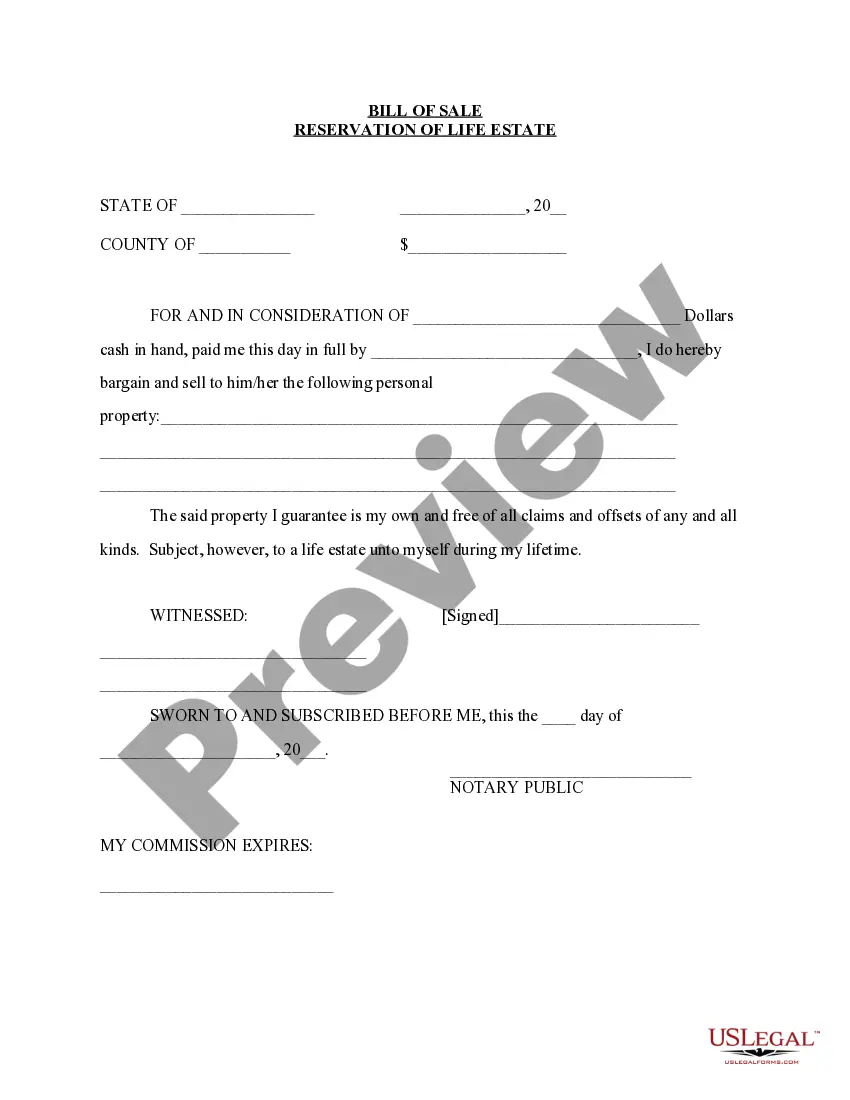
How to fill out Kentucky Warranty Deed To Child Reserving A Life Estate In The Parents?
There's no longer a necessity to invest time locating legal documents to meet your regional state obligations.
US Legal Forms has compiled all of them in a single location and enhanced their accessibility.
Our site provides over 85k templates for various business and personal legal matters organized by state and application area.
Quickly and easily prepare legal documents under federal and state regulations with our platform. Try US Legal Forms today to maintain your documentation organized!
- All forms are expertly drafted and verified for legitimacy, so you can be confident in acquiring an updated Life Estate Deed In Kentucky.
- If you are acquainted with our service and already possess an account, ensure your subscription is active prior to obtaining any templates.
- Log In to your account, choose the document, and click Download.
- You can also revisit all acquired documents whenever necessary by accessing the My documents tab in your profile.
- If you've never utilized our service before, the process will demand a few additional steps to finalize.
- Here's how new users can locate the Life Estate Deed In Kentucky in our directory.
- Examine the page content closely to confirm it contains the sample you need.
- To do so, use the form description and preview options if available.
Form popularity
FAQ
A deed in lieu of foreclosure in Kentucky allows a homeowner to transfer property title back to the lender to avoid foreclosure. This process can be beneficial in reducing stress and financial burden from the foreclosure process. While it does not directly relate to a life estate deed in Kentucky, it is essential to understand your options to manage property ownership responsibly. Consult with a legal expert to explore the best solution for your situation.
To file a quit claim deed in Kentucky, you need to complete the deed form accurately. Include details such as the names of the parties, property description, and the execution date. Once completed, you should sign the deed before a notary public and then file the quit claim deed with the county clerk in your area. Using platforms like US Legal Forms simplifies this process, providing you with the necessary forms and guidance.
Yes, in Kentucky, a deed must be recorded to protect the interests of the parties involved. Recording a life estate deed in Kentucky is essential as it provides public notice and establishes ownership rights. If you fail to record your deed, you risk potential disputes regarding property ownership. To ensure your rights are protected, consider utilizing reliable services like US Legal Forms.
A right of survivorship deed in Kentucky ensures that if one owner passes away, the remaining owners automatically inherit the deceased owner's share. This process simplifies property transfer and helps avoid probate. When you consider a life estate deed in Kentucky, you may want to explore how it interacts with rights of survivorship to optimize your estate planning.
Kentucky does indeed have transfer on death deeds available. This feature allows property owners to specify beneficiaries who will inherit their property upon death, bypassing the lengthy probate process. By structuring your property transfers with a life estate deed in Kentucky, you can achieve similar benefits while maintaining control over your property during your lifetime.
Kentucky operates under a deed system for property transfers. This means that various types of deeds, such as a life estate deed in Kentucky, serve as formal documents to transfer ownership. Understanding the nuances of these deeds can significantly impact estate planning and property management within the state.
Yes, Kentucky permits transfer on death deeds. This allows property owners to designate a beneficiary who will automatically receive the property upon their death, simplifying the probate process. Utilizing a life estate deed in Kentucky can similarly help to facilitate a smooth transfer of property to your chosen heirs, minimizing complications.
A will can be deemed invalid in Kentucky for several reasons, such as lack of proper signing or witnessing. If there are any signs of undue influence or if the individual who created the will did not have the mental capacity at the time, this can also lead to invalidation. Understanding these factors is crucial because a life estate deed in Kentucky may provide a more straightforward way to designate property transfer.
Yes, in Kentucky, a deed typically overrides a will. This means that if you have a life estate deed in Kentucky naming a specific person as a beneficiary, that designation will be honored over any instructions in your will. Therefore, it is essential to clearly understand how these documents work together to ensure that your intentions are realized.
In Kentucky, a will does not generally override a deed. When you create a life estate deed in Kentucky, it effectively transfers property during your lifetime and designates a beneficiary for the future. Thus, any terms specified in the deed will take precedence. It's crucial to understand how these legal documents interact to ensure your wishes are fulfilled.
