Affidavit Of Survivorship Form
Description
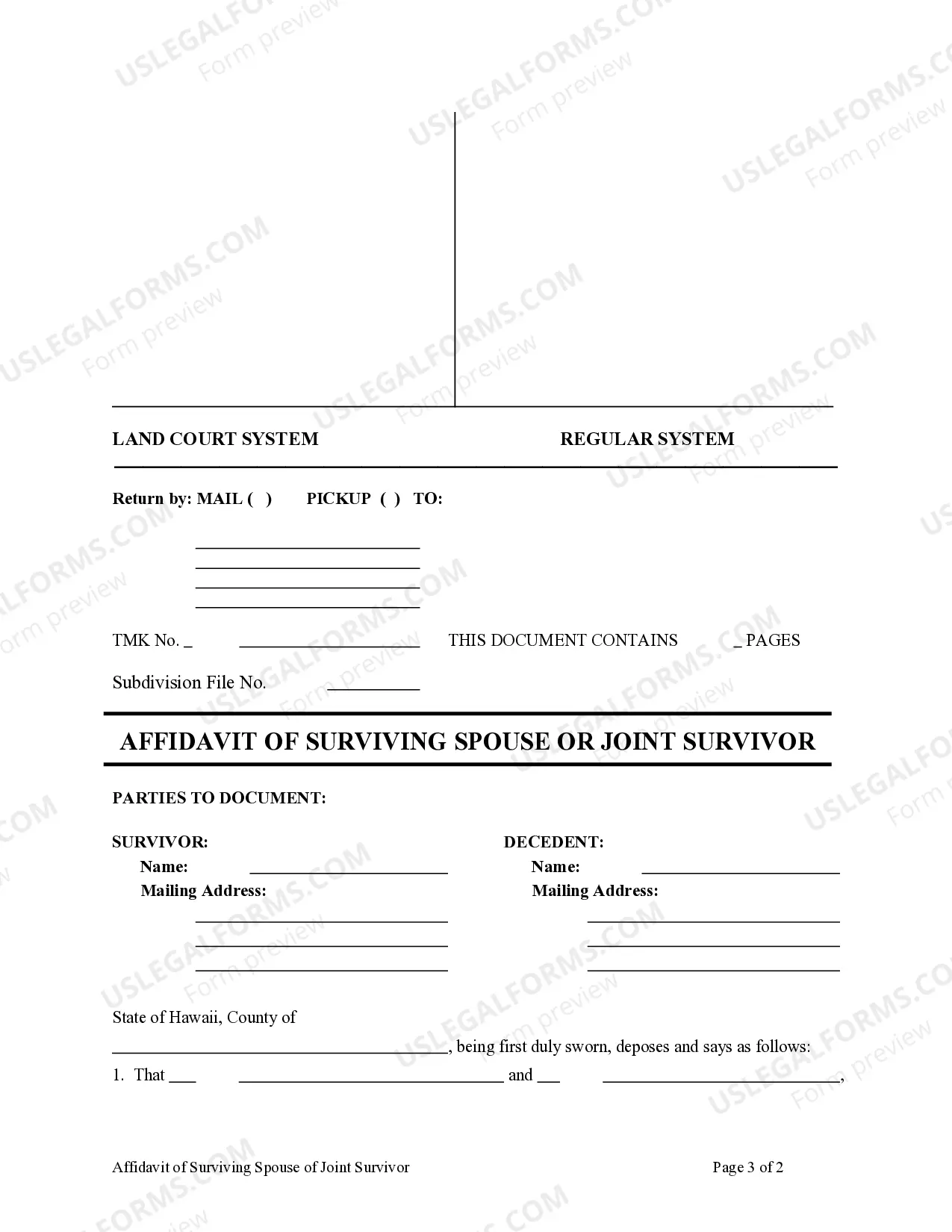
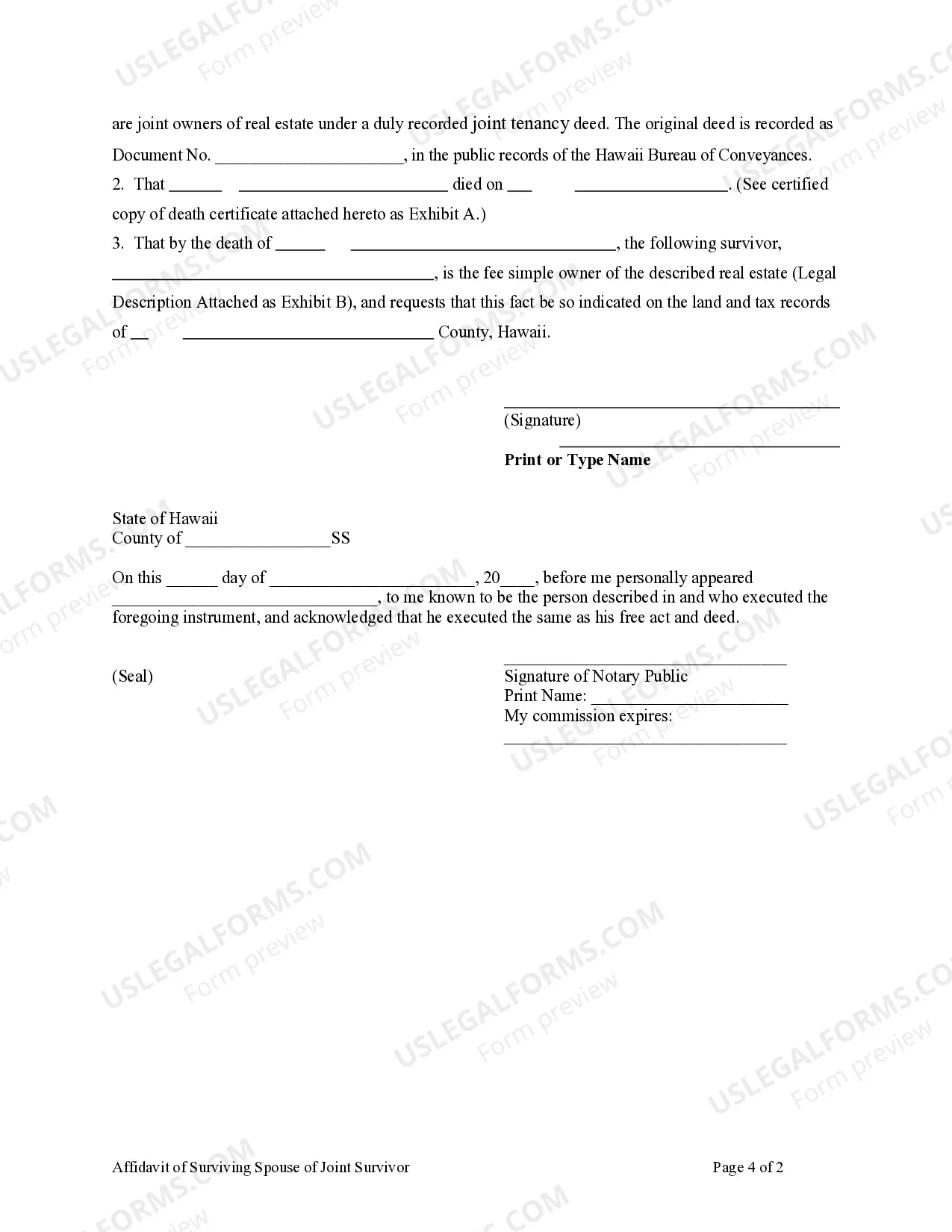


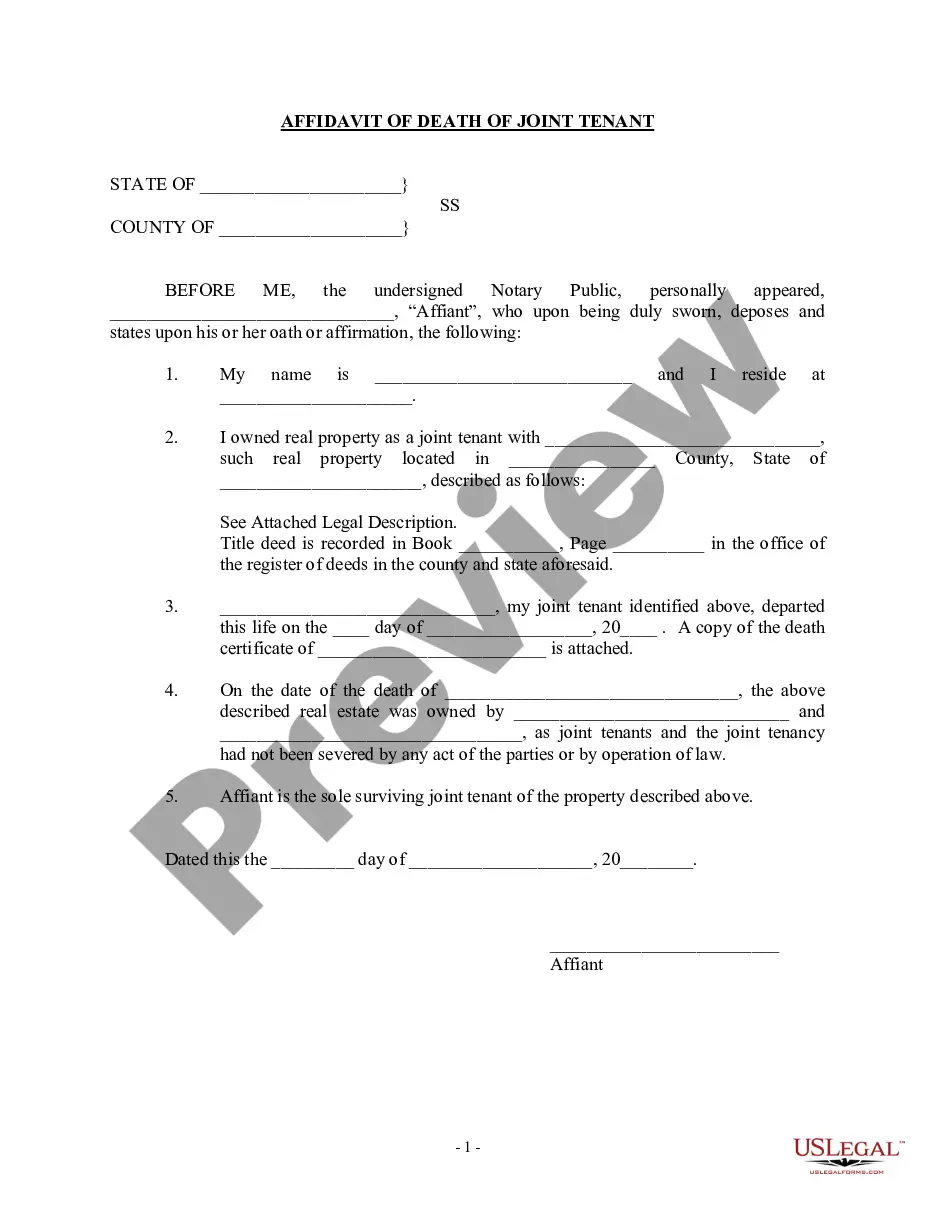
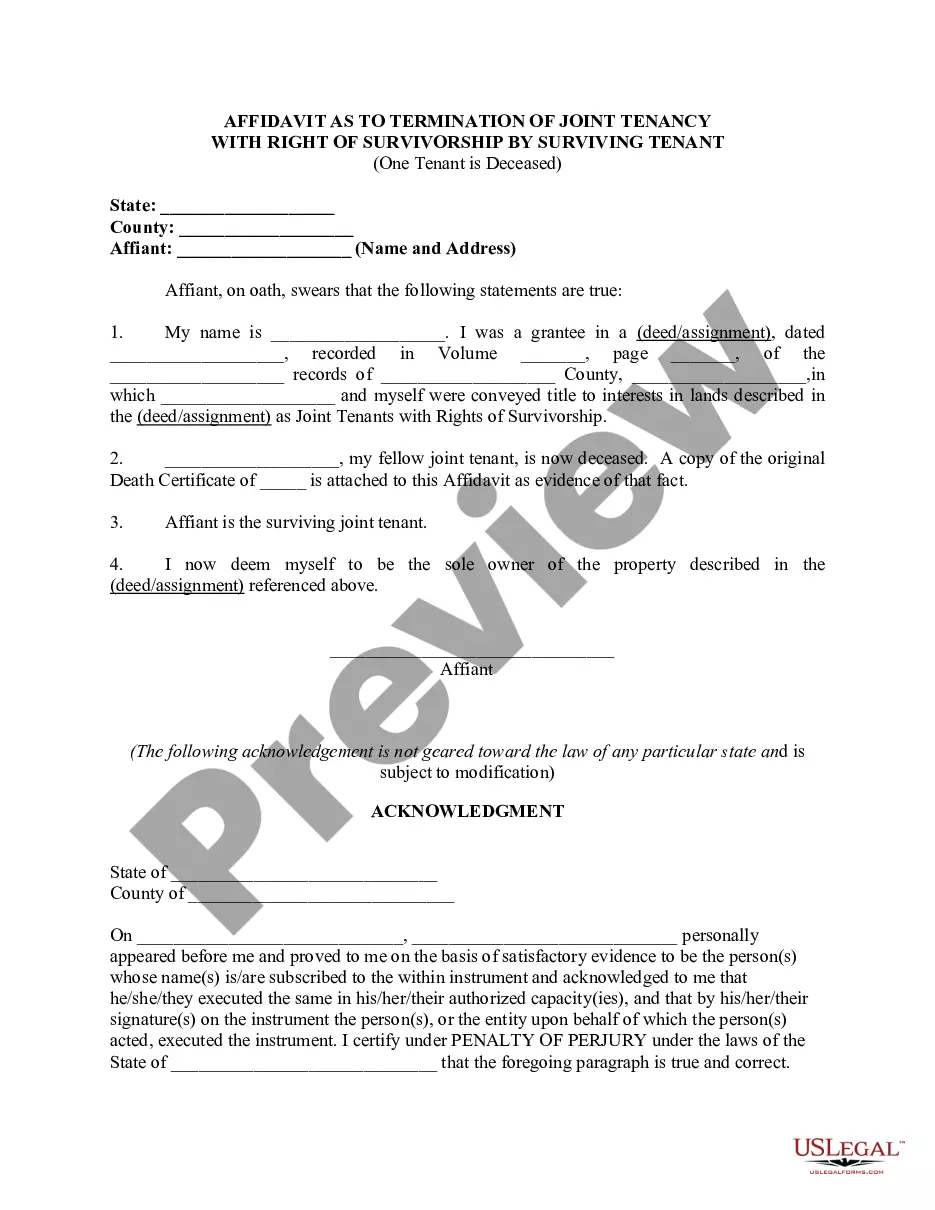
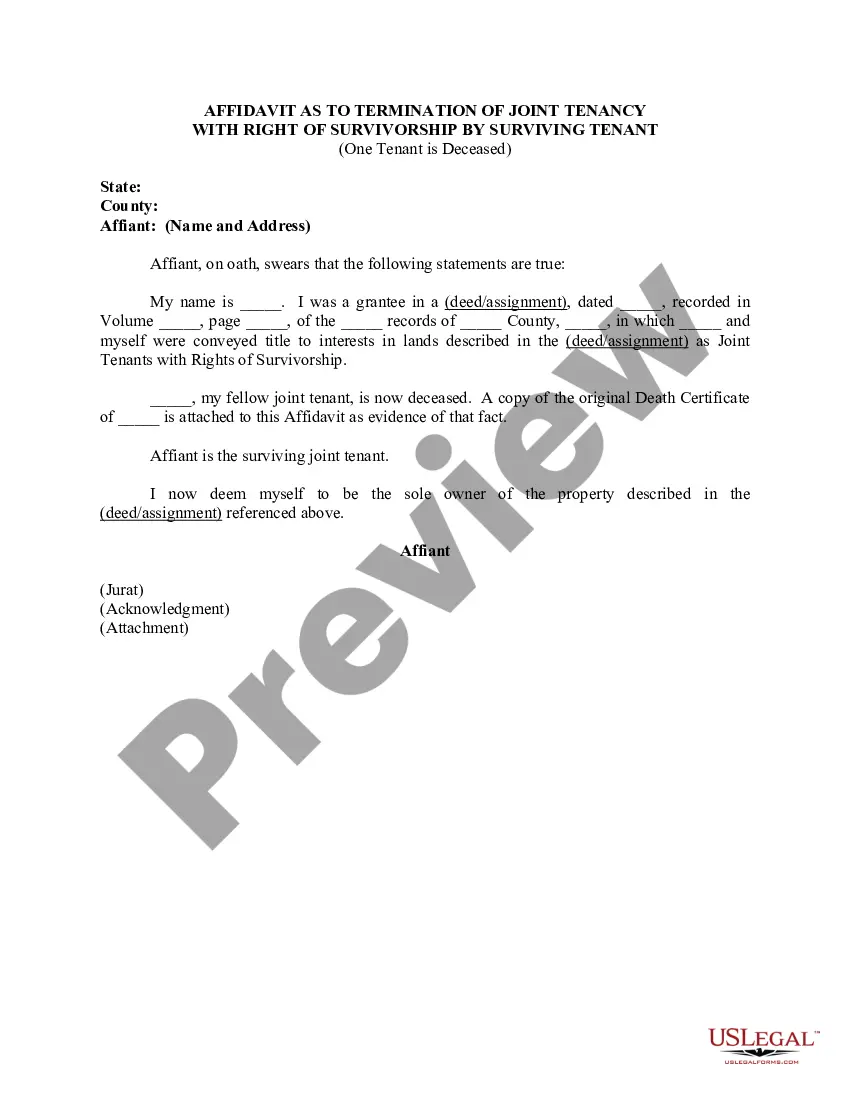
How to fill out Hawaii Affidavit Of Surviving Spouse Or Joint Survivor?
There's no longer a necessity to squander hours hunting for legal documents to comply with your local state laws.
US Legal Forms has gathered all of them in a single location and enhanced their availability.
Our site offers over 85k templates for any business and individual legal scenarios organized by state and purpose.
Complete the official documentation under federal and state regulations quickly and easily with our platform. Experience US Legal Forms today to keep your records organized!
- All forms are correctly drafted and verified for authenticity, so you can trust in receiving a current Affidavit Of Survivorship Form.
- If you are acquainted with our service and already possess an account, ensure your subscription is active before acquiring any templates.
- Log In to your account, choose the document, and click Download.
- You can also access all saved documents whenever necessary by opening the My documents tab in your profile.
- If you've never utilized our service before, the procedure will require a few more steps to finish.
- Here's how new users can acquire the Affidavit Of Survivorship Form in our catalog.
- Examine the page content attentively to confirm it contains the example you need.
- To do this, use the form description and preview options if available.
Form popularity
FAQ
If the property owner is deceased, he or she can no longer sign the deed. In that case, you need something different such as an Affidavit of Heirship, a probated Will or a court order determining heirship. First the deceased owner's name must be removed from the record ownership of the house (the title).
Now, people can convey clear title to their property by completing a transfer on death deed form, signing it in front of a notary, and filing it in the deed records office in the county where the property is located before they die at a cost of less than fifty dollars.
Fill out the affidavit completely. Sign the document in front of a notary. Attach a "certified" copy of the death certificate. Also attach a "legal description" of the property to be transferred (a copy of the survivorship deed or transfer on death designation or deed will suffice).
Now, people can convey clear title to their property by completing a transfer on death deed form, signing it in front of a notary, and filing it in the deed records office in the county where the property is located before they die at a cost of less than fifty dollars.
A survivorship affidavit (sometimes called an affidavit of death or affidavit of continuous marriage) is a legal document used to remove a deceased owner from title to property by recording evidence of the deceased owner's death in the land records.
