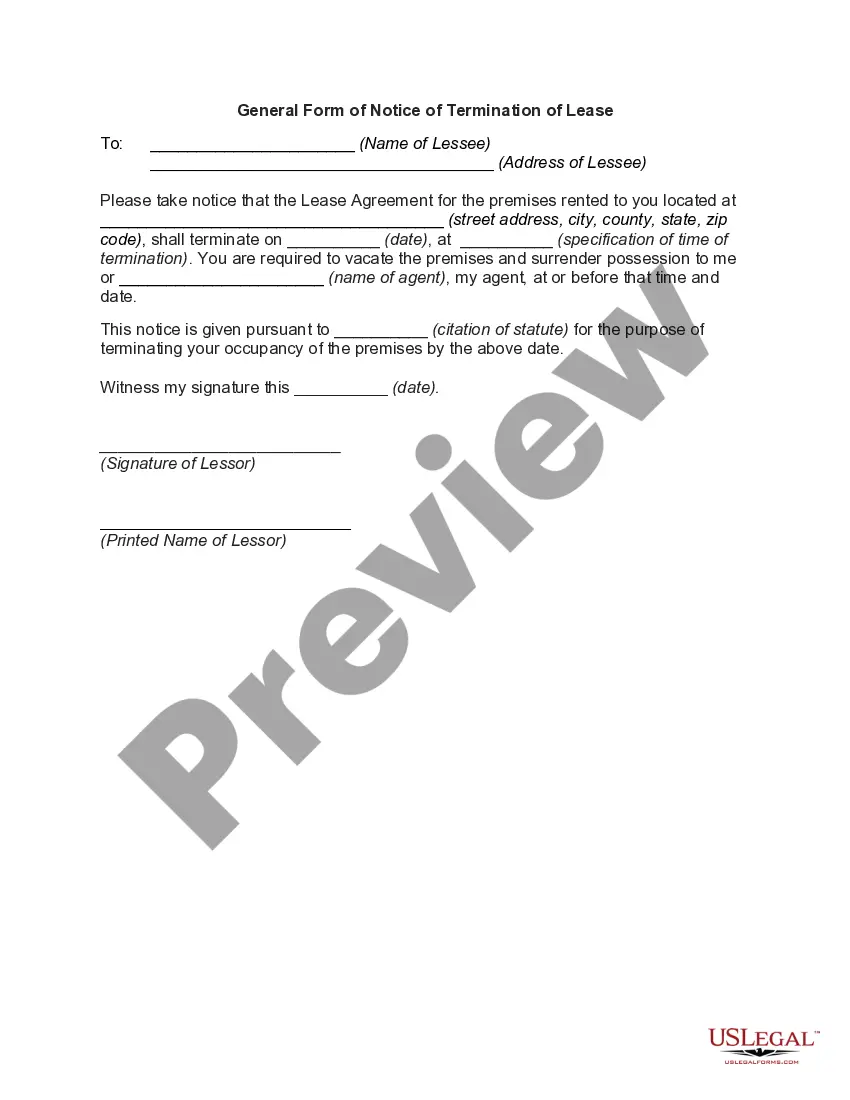
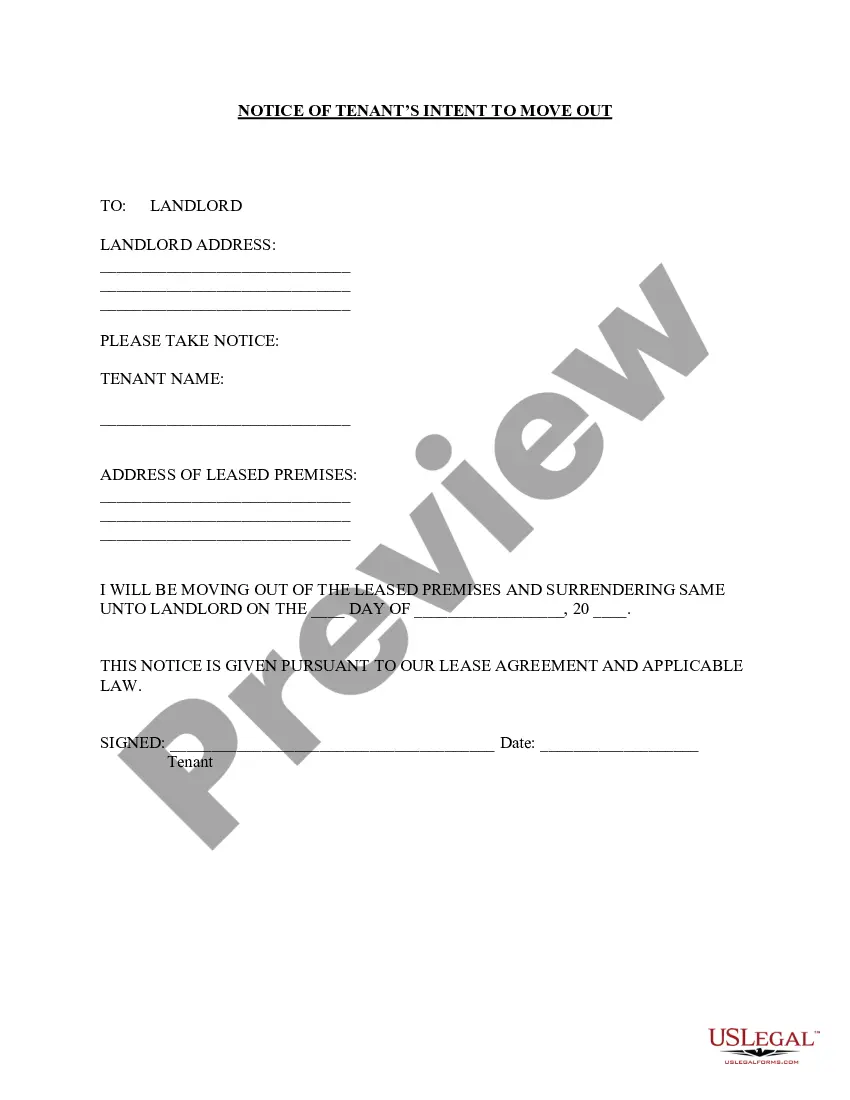
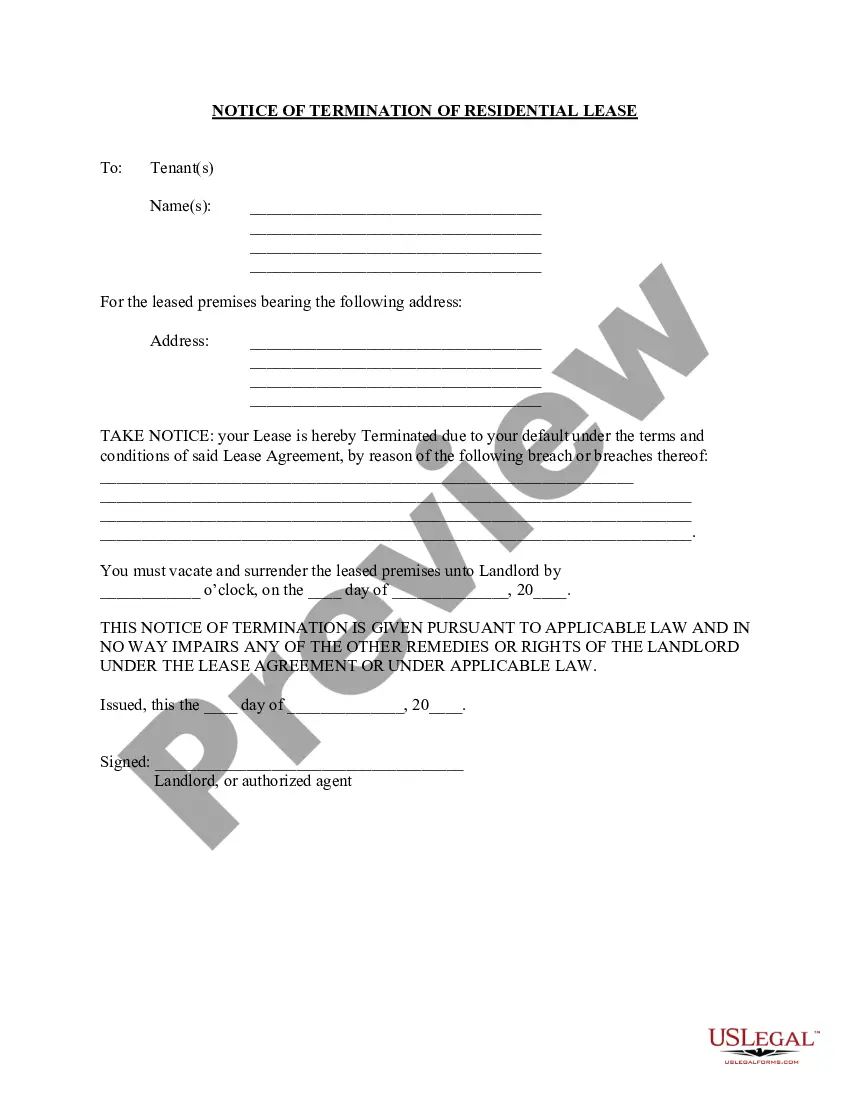
30 Day Notice For Rental Agreement
Description
Get your form ready online
Our built-in tools help you complete, sign, share, and store your documents in one place.
Make edits, fill in missing information, and update formatting in US Legal Forms—just like you would in MS Word.
Download a copy, print it, send it by email, or mail it via USPS—whatever works best for your next step.
Sign and collect signatures with our SignNow integration. Send to multiple recipients, set reminders, and more. Go Premium to unlock E-Sign.
If this form requires notarization, complete it online through a secure video call—no need to meet a notary in person or wait for an appointment.
We protect your documents and personal data by following strict security and privacy standards.

Make edits, fill in missing information, and update formatting in US Legal Forms—just like you would in MS Word.

Download a copy, print it, send it by email, or mail it via USPS—whatever works best for your next step.

Sign and collect signatures with our SignNow integration. Send to multiple recipients, set reminders, and more. Go Premium to unlock E-Sign.

If this form requires notarization, complete it online through a secure video call—no need to meet a notary in person or wait for an appointment.

We protect your documents and personal data by following strict security and privacy standards.
Looking for another form?
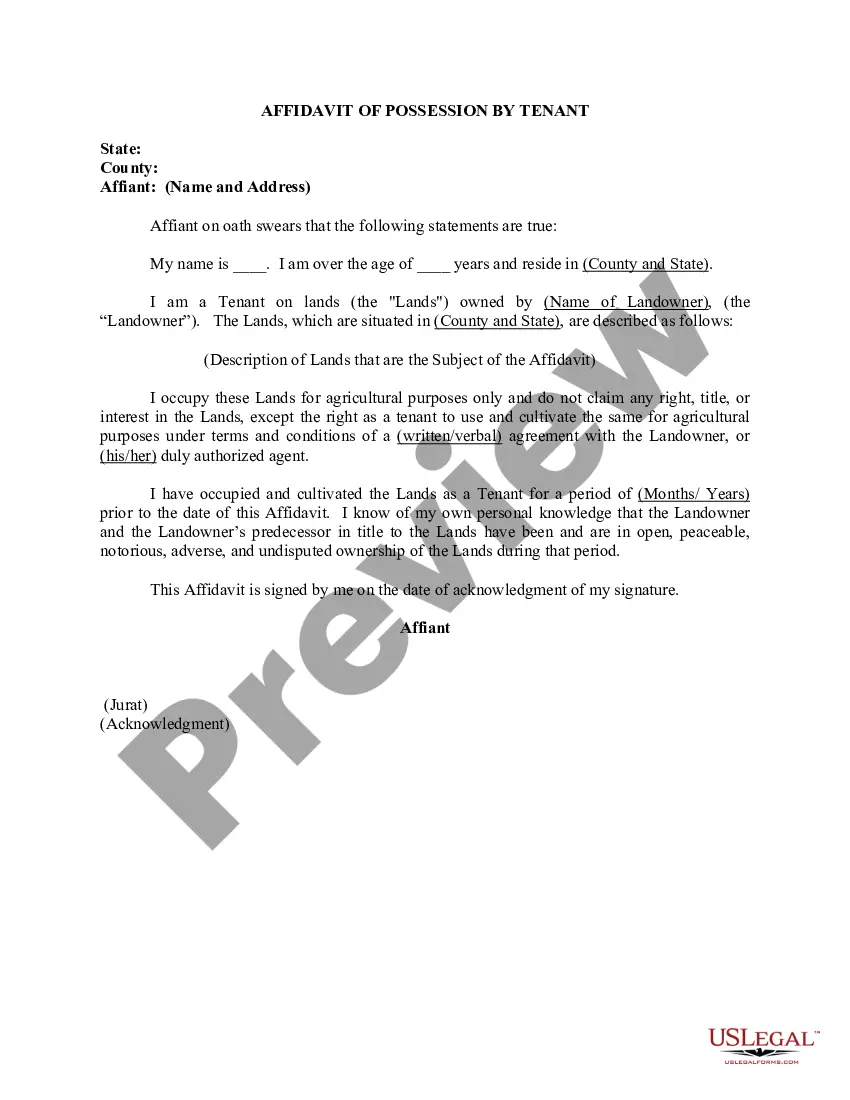

How to fill out Hawaii Letter From Tenant To Landlord For 30 Day Notice To Landlord That Tenant Will Vacate Premises On Or Prior To Expiration Of Lease?
There’s no longer a need to invest time searching for legal documents to comply with your local state laws.
US Legal Forms has gathered all of them in one location and made them readily available.
Our platform provides over 85,000 templates for various business and personal legal circumstances categorized by state and usage area.
Preparing legal documents in compliance with federal and state regulations is quick and straightforward with our collection. Experience US Legal Forms today to stay organized with your documentation!
- All forms are correctly drafted and validated for accuracy, ensuring you can trust in acquiring an up-to-date 30 Day Notice For Rental Agreement.
- If you are acquainted with our platform and already possess an account, ensure your subscription is active before retrieving any templates.
- Log In to your profile, select the document, and click Download.
- You can also access all obtained documents at any time by navigating to the My documents section in your profile.
- If you have never utilized our platform before, the process will involve a few additional steps to finalize.
- Here’s how new users can find the 30 Day Notice For Rental Agreement in our repository.
- Examine the page content thoroughly to ensure it includes the sample you require.
- To aid in this, use the form description and preview options if available.
Form popularity
FAQ
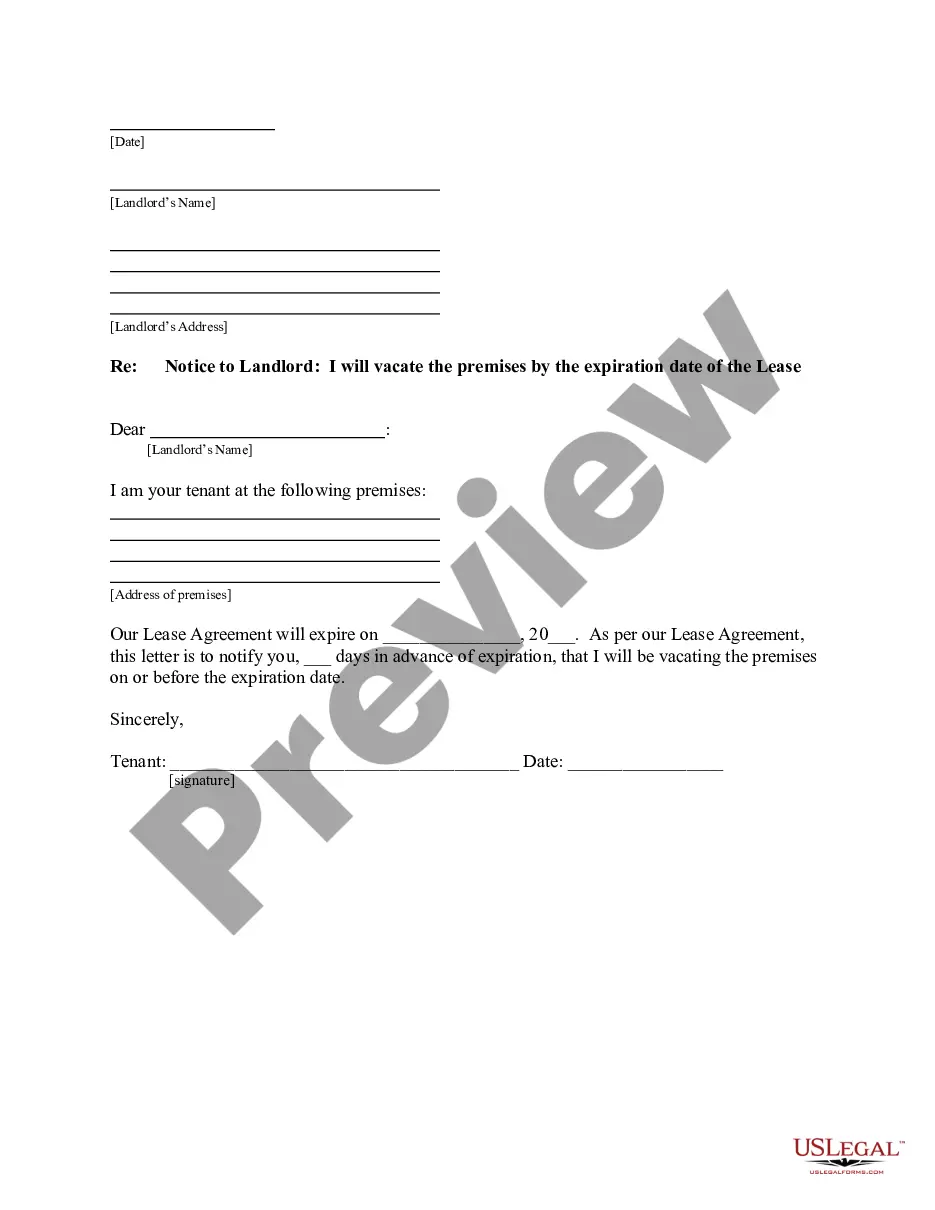
Here's what you should include:The date you're submitting your notice.The date you're moving.Information on your current home the address and the landlord's name.A statement declaring that you intend to leave the home.A straightforward statement that you're providing this letter, 30 days out, per your lease agreement.More items...?
In California, landlords must file a 60 or 30-day notice to vacate letter before moving forward with an eviction. The notice of termination gives their tenant time to move out or deal with a dispute. If the tenant doesn't vacate the property after this time, landlords may start the eviction process.
Unlike many states, tenants in California can give notice in the middle of a month and move out in the middle of the following month. In that case, they pay prorated rent for that month.
Here's what you should include:The date you're submitting your notice.The date you're moving.Information on your current home the address and the landlord's name.A statement declaring that you intend to leave the home.A straightforward statement that you're providing this letter, 30 days out, per your lease agreement.More items...?
Q: Can you give a 30-day notice in the middle of the month? You can give a 30-day notice in the middle of the month, but generally the 30 days don't begin counting until the next rental due date. That means that if you give the 30-day notice on April 15th, the tenant will have until the end of May to move out.