Georgia Power Forestry
Description
Get your form ready online
Our built-in tools help you complete, sign, share, and store your documents in one place.
Make edits, fill in missing information, and update formatting in US Legal Forms—just like you would in MS Word.
Download a copy, print it, send it by email, or mail it via USPS—whatever works best for your next step.
Sign and collect signatures with our SignNow integration. Send to multiple recipients, set reminders, and more. Go Premium to unlock E-Sign.
If this form requires notarization, complete it online through a secure video call—no need to meet a notary in person or wait for an appointment.
We protect your documents and personal data by following strict security and privacy standards.

Make edits, fill in missing information, and update formatting in US Legal Forms—just like you would in MS Word.

Download a copy, print it, send it by email, or mail it via USPS—whatever works best for your next step.

Sign and collect signatures with our SignNow integration. Send to multiple recipients, set reminders, and more. Go Premium to unlock E-Sign.

If this form requires notarization, complete it online through a secure video call—no need to meet a notary in person or wait for an appointment.

We protect your documents and personal data by following strict security and privacy standards.
Looking for another form?

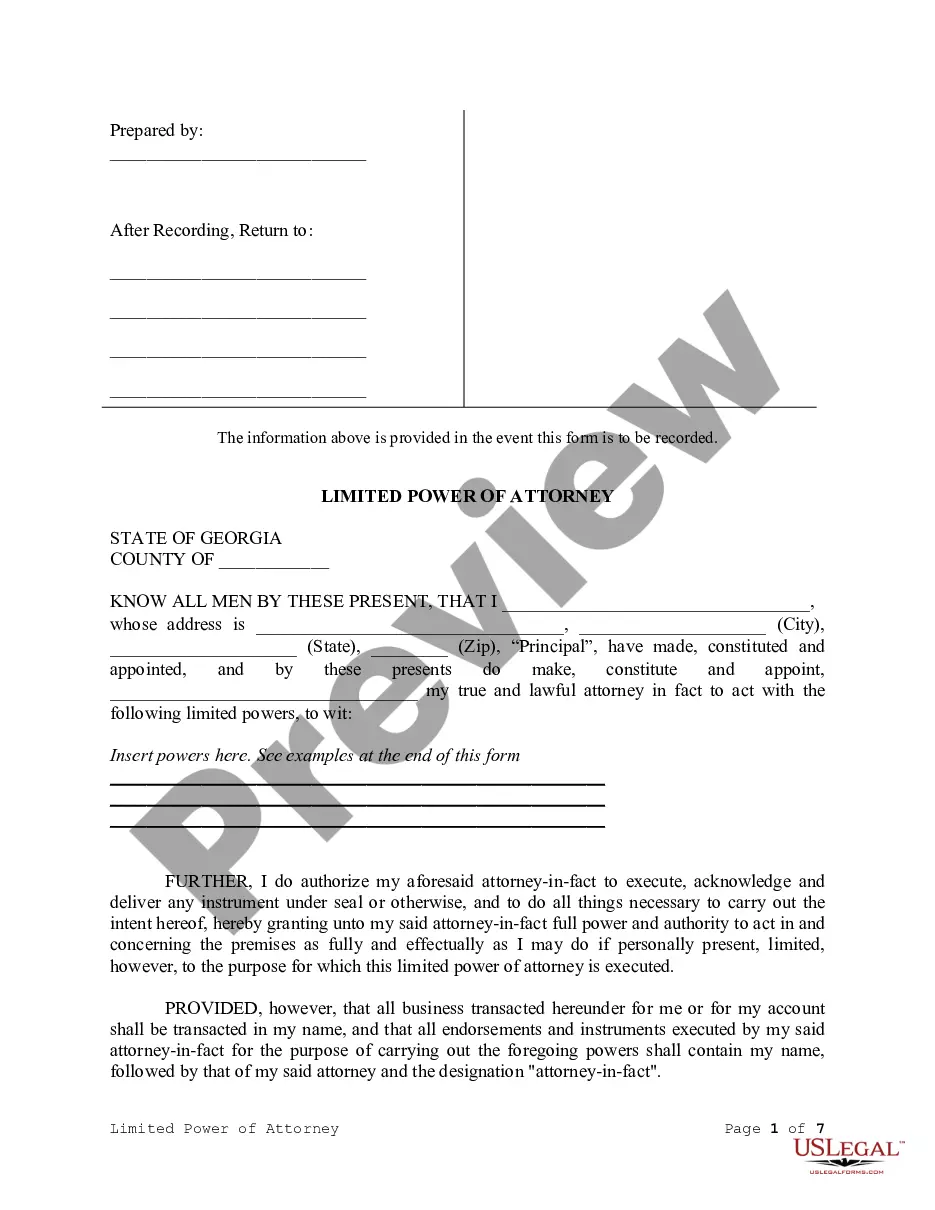
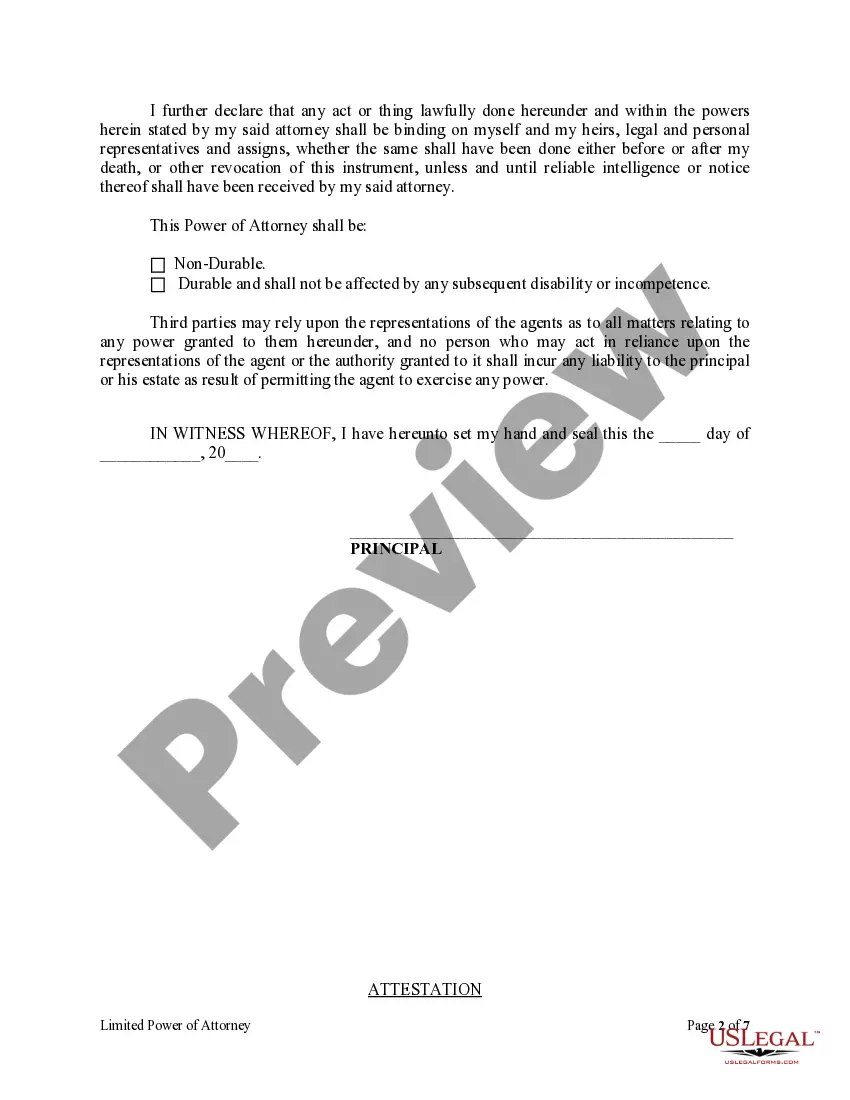
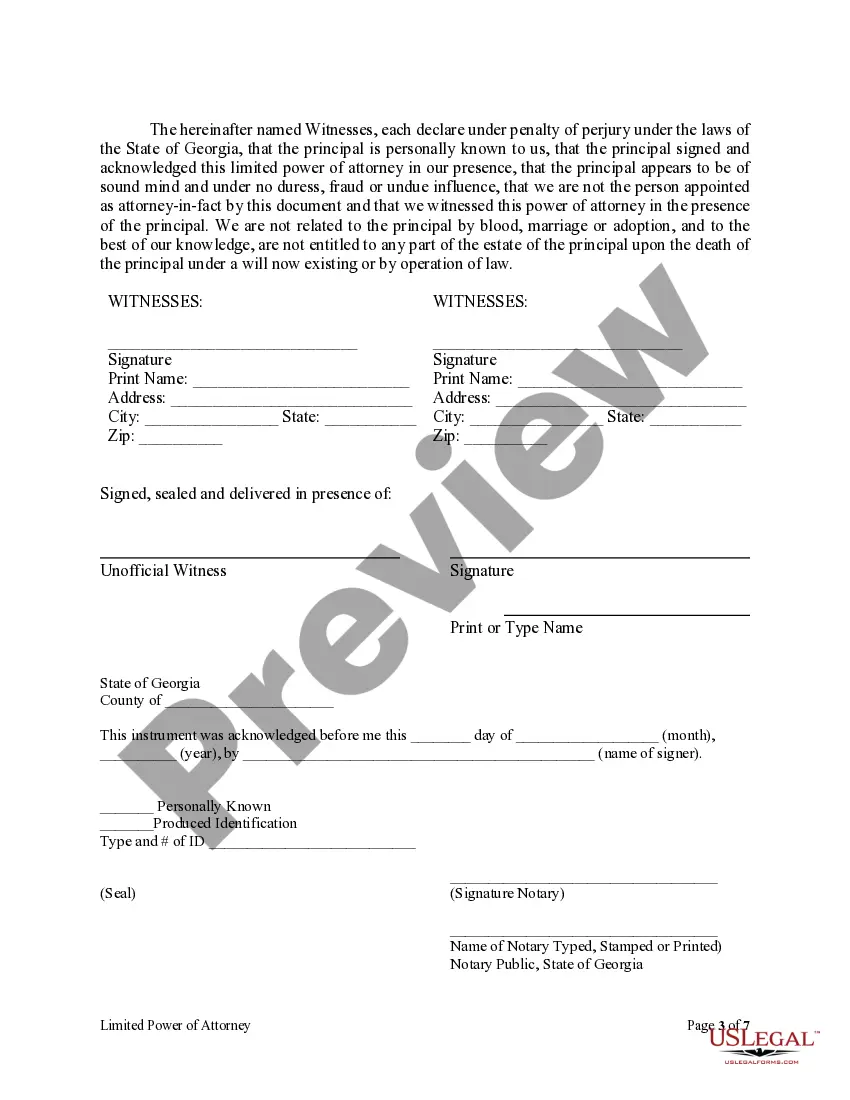
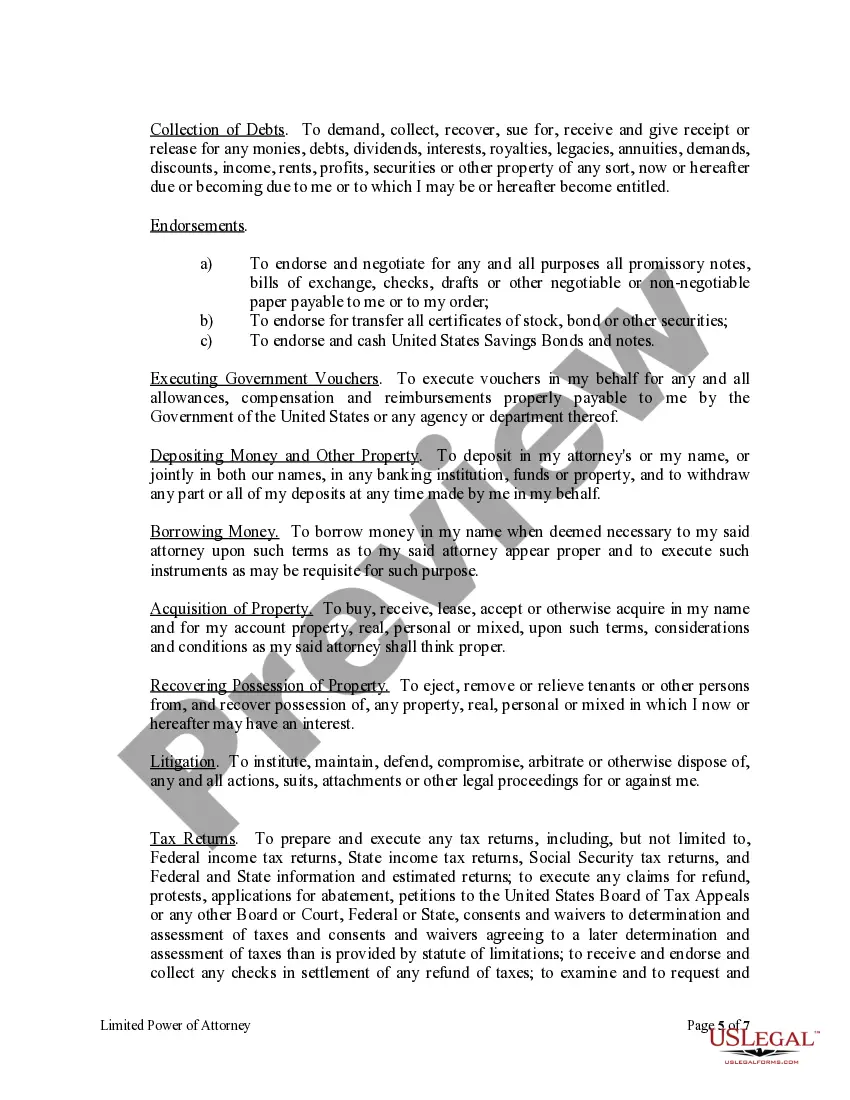
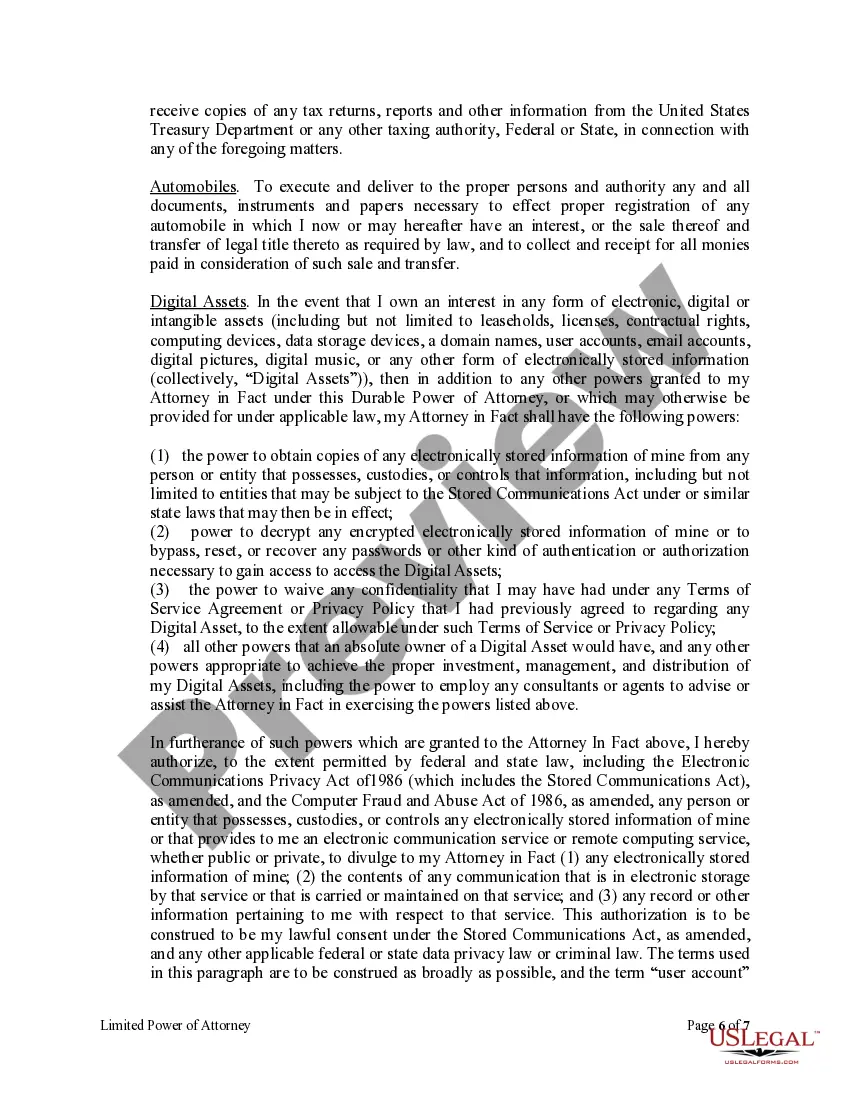
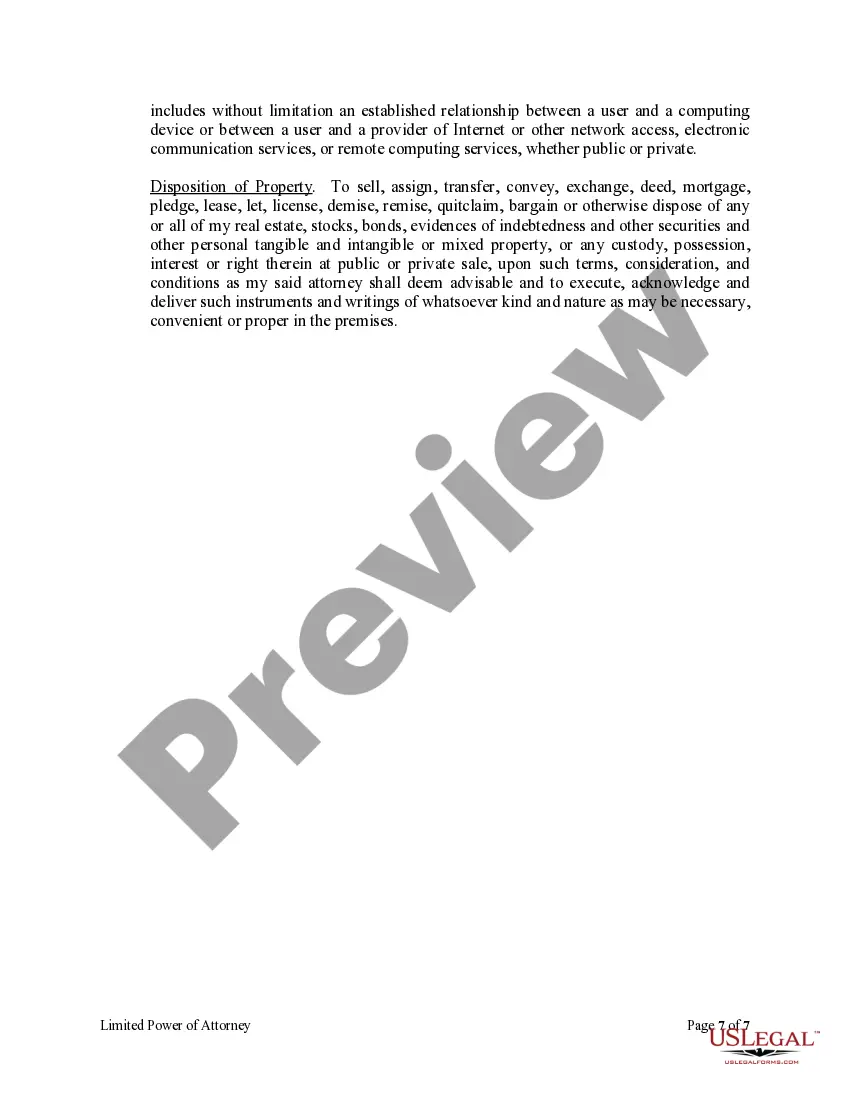
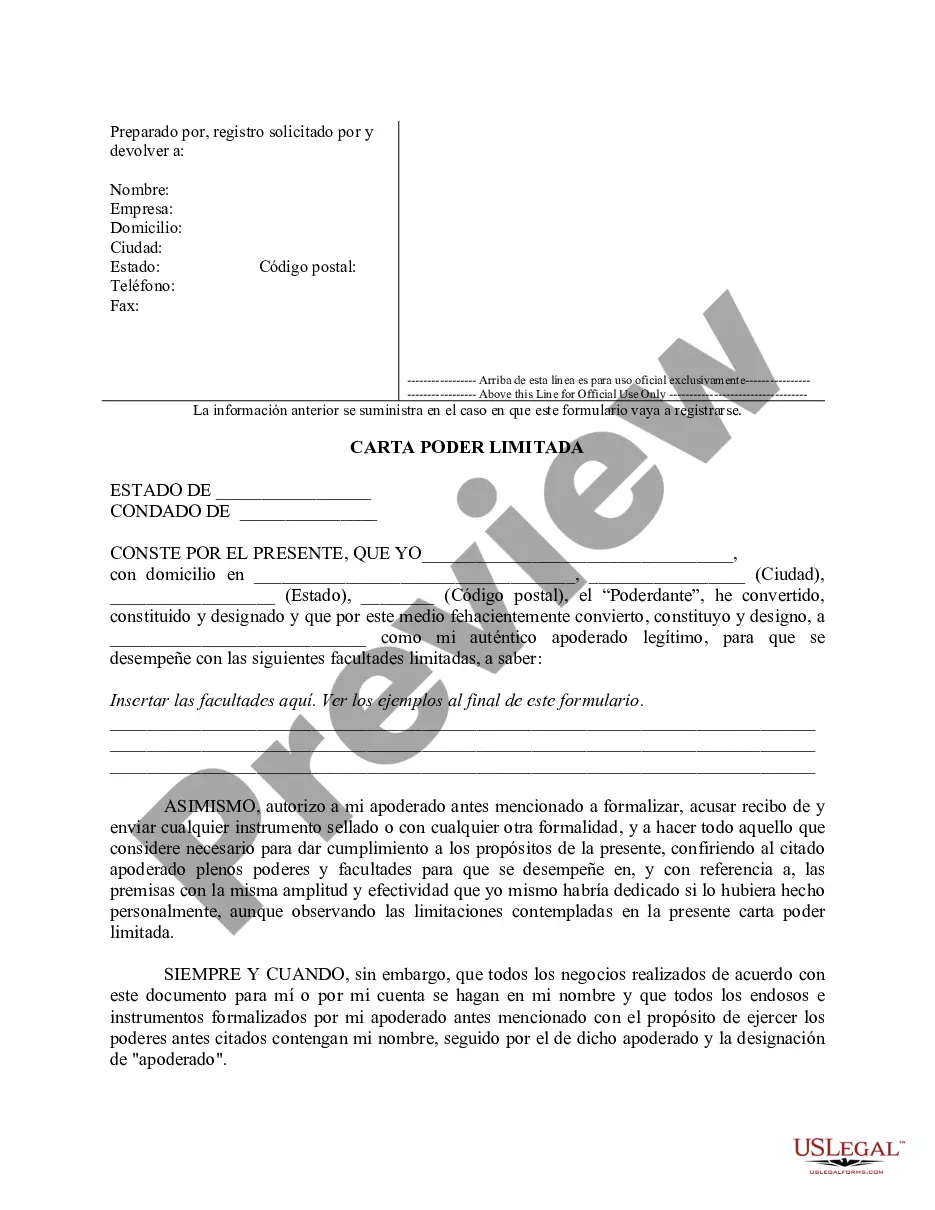
How to fill out Georgia Limited Power Of Attorney Where You Specify Powers With Sample Powers Included?
Regardless of whether it pertains to professional endeavors or personal affairs, everyone must confront legal issues at some stage of their existence.
Completing legal paperwork requires meticulous care, starting from selecting the right form template.
After it has been downloaded, you can either fill out the form using editing software or print it and complete it by hand. With a comprehensive library of US Legal Forms, you no longer need to waste time searching for the right template online. Take advantage of the library's easy navigation to find the suitable template for any situation.
- Identify the template you need using the search box or catalog browsing.
- Review the form's details to confirm it aligns with your situation, jurisdiction, and area.
- Select the form's preview to examine it.
- If it’s the incorrect document, return to the search feature to find the Georgia Power Forestry template you seek.
- Download the file if it fulfills your criteria.
- If you hold a US Legal Forms account, click Log in to access previously saved documents in My documents.
- If you do not have an account yet, you can download the form by clicking Buy now.
- Select the appropriate pricing option.
- Complete the account registration form.
- Choose your payment method: either use a credit card or a PayPal account.
- Choose the file format you prefer and download the Georgia Power Forestry.
Form popularity
FAQ
In Georgia, property owners are generally responsible for cutting overhanging tree branches that may threaten power lines. However, Georgia Power manages the trees and branches near their lines to ensure safe operation. Keeping your trees maintained is critical, and it complements Georgia power forestry efforts for better community safety.
To report a tree on a power line in Georgia, contact Georgia Power directly through their customer service number or visit their website. Prompt reporting is crucial, as it allows Georgia Power’s forestry team to assess the situation and take necessary actions quickly. This ensures the safety of everyone and the continuity of power services.
Yes, as a property owner, you are typically responsible if your tree falls on power lines, causing damages or outages. Georgia Power may take action to restore service, but costs can fall to you if your tree was not adequately maintained. Familiarizing yourself with your responsibilities in Georgia power forestry can prevent unexpected liabilities.
Georgia's tree and limb laws outline the responsibilities of property owners regarding tree maintenance and their impact on nearby utility lines. Under these laws, property owners must prune or remove trees that may pose risks to power lines. Being aware of these regulations helps you stay compliant while benefiting from Georgia power forestry services that enhance safety.
In Georgia, Georgia Power typically takes responsibility for trimming branches around power lines to ensure safe operation. However, property owners must maintain trees in their yards to prevent interference with power lines. Understanding your responsibilities is essential, and Georgia power forestry practices aim to keep everyone safe while providing reliable service.
If you notice a tree close to power lines, it is important to report it to Georgia Power for safety reasons. You can do this by calling their customer service or using their online reporting system. By addressing this issue promptly, you can prevent potential power outages and hazards related to the Georgia power forestry management.
Georgia Power's forestry program focuses on maintaining safe and reliable service for its customers. If trees on your property pose a threat to power lines or infrastructure, they may need to be trimmed or removed. It's important to note that Georgia Power prioritizes customer safety and aims to keep power outages to a minimum. If you have specific concerns about trees near power lines, consider reaching out to Georgia Power for guidance.
The Georgia Power scandal revolves around significant issues related to the construction and financing of the Plant Vogtle nuclear expansion project. This situation raised questions about transparency, regulatory compliance, and the management of public resources in Georgia. Furthermore, the scandal highlighted the implications for Georgia Power's customers, as increased costs and delays were passed on to them. Understanding these issues is crucial for anyone interested in how Georgia power forestry practices and corporate responsibility intersect.
The responsibility for trimming trees around power lines generally lies with the utility companies in Georgia. They conduct regular maintenance as part of their Georgia power forestry strategy. This proactive approach prevents branches from growing too close to lines, which can lead to power interruptions. Residents should report overgrown trees to their utility provider to maintain safety and service reliability.
Utility companies in Georgia employ professional crews to manage tree cutting around power lines. These crews are trained in Georgia power forestry practices and work to clear vegetation that can interfere with utility operations. Proper tree maintenance helps ensure a steady power supply and minimizes the risk of outages. You can contact your local utility to request assistance with tree removal near power lines.