Ga Attorney Real Estate Forum
Description
Get your form ready online
Our built-in tools help you complete, sign, share, and store your documents in one place.
Make edits, fill in missing information, and update formatting in US Legal Forms—just like you would in MS Word.
Download a copy, print it, send it by email, or mail it via USPS—whatever works best for your next step.
Sign and collect signatures with our SignNow integration. Send to multiple recipients, set reminders, and more. Go Premium to unlock E-Sign.
If this form requires notarization, complete it online through a secure video call—no need to meet a notary in person or wait for an appointment.
We protect your documents and personal data by following strict security and privacy standards.

Make edits, fill in missing information, and update formatting in US Legal Forms—just like you would in MS Word.

Download a copy, print it, send it by email, or mail it via USPS—whatever works best for your next step.

Sign and collect signatures with our SignNow integration. Send to multiple recipients, set reminders, and more. Go Premium to unlock E-Sign.

If this form requires notarization, complete it online through a secure video call—no need to meet a notary in person or wait for an appointment.

We protect your documents and personal data by following strict security and privacy standards.
Looking for another form?





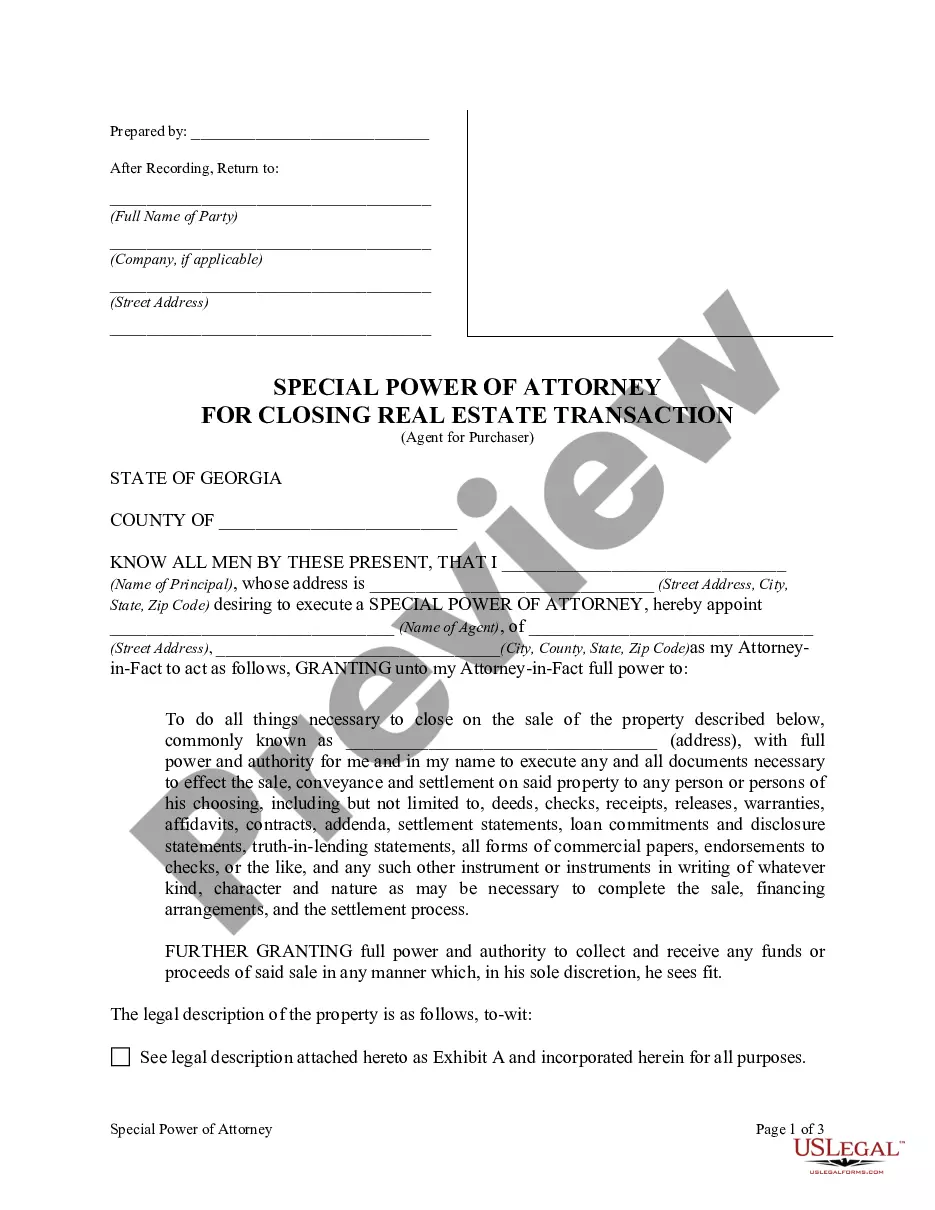
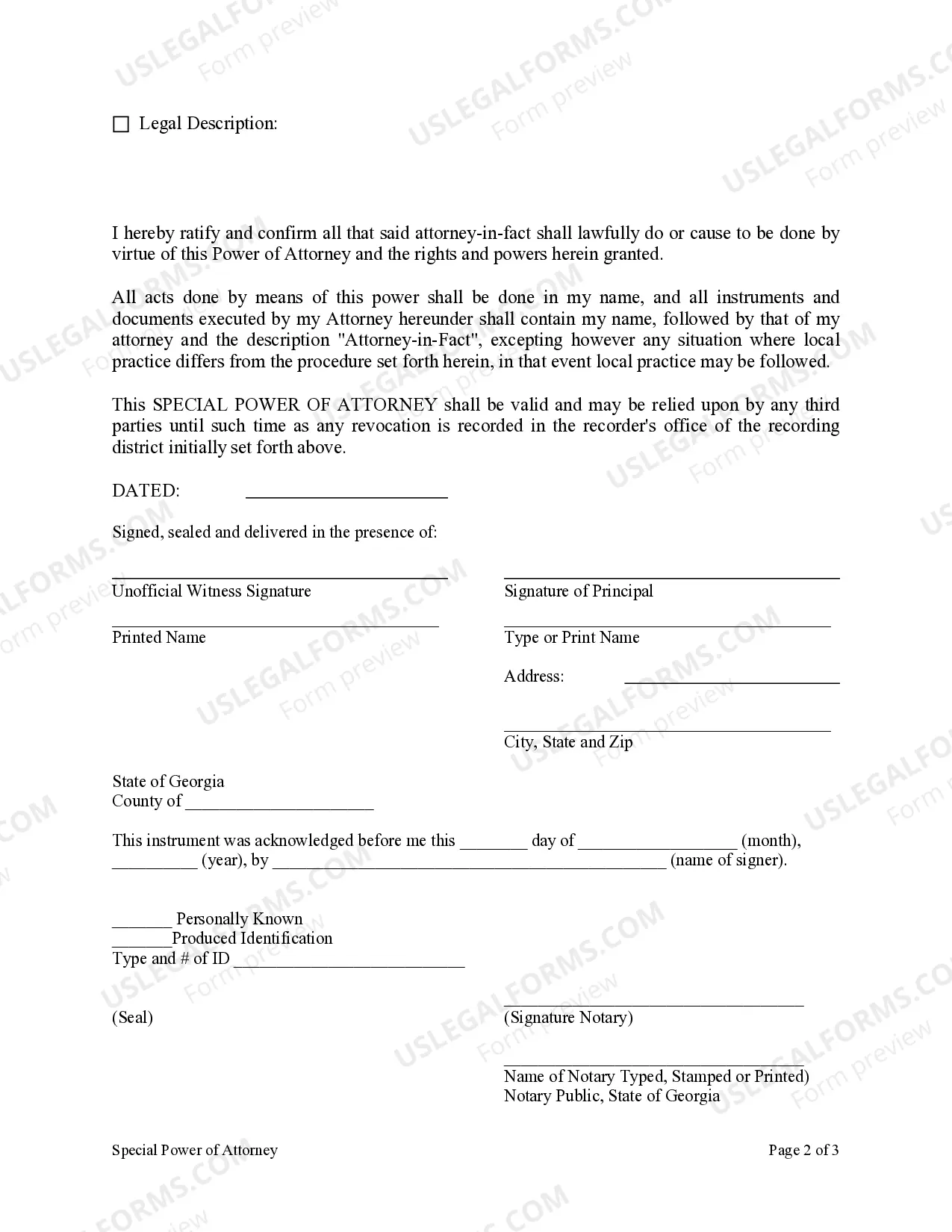
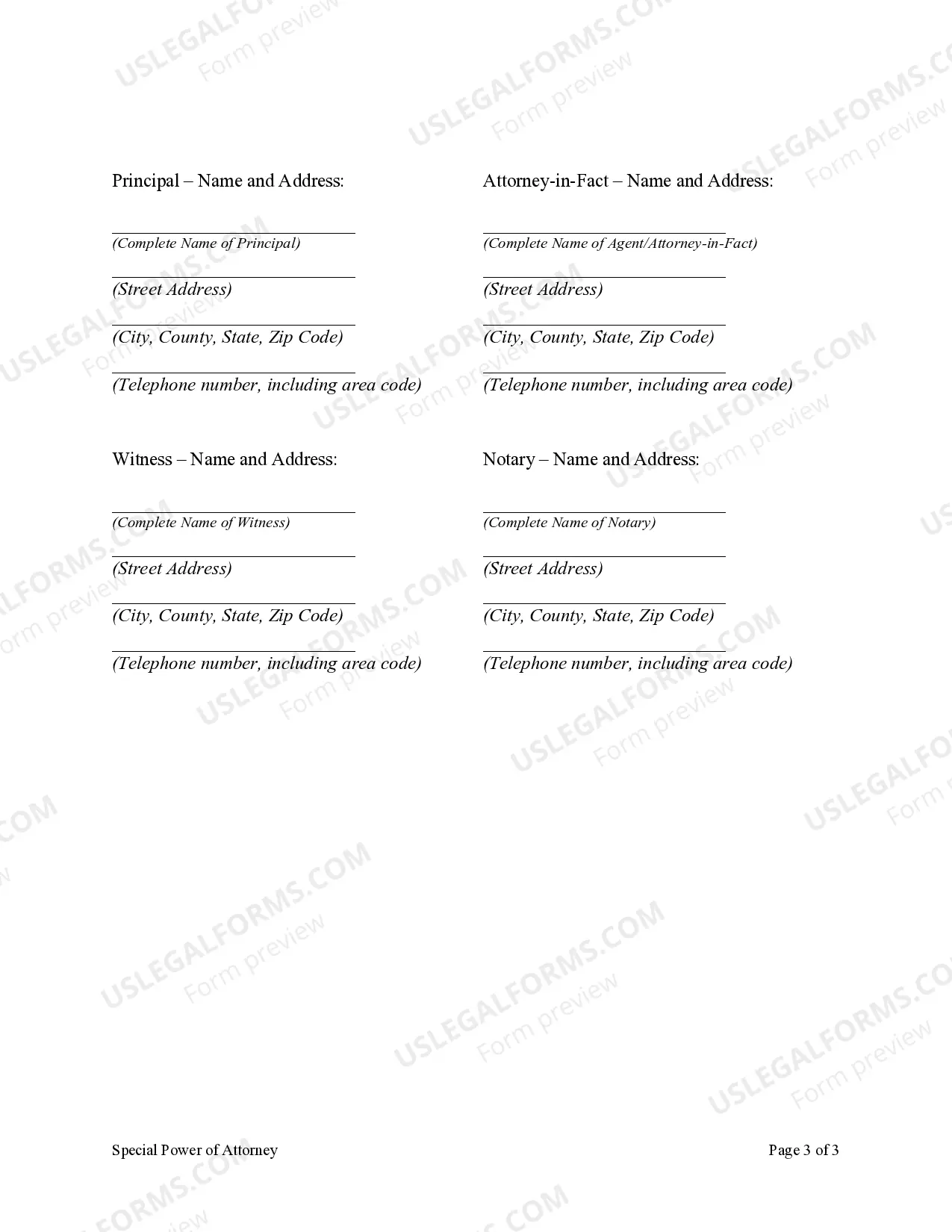
How to fill out Georgia Special Or Limited Power Of Attorney For Real Estate Purchase Transaction By Purchaser?
Whether for professional objectives or personal issues, everyone encounters legal matters at some stage in their life.
Completing legal documents requires meticulous focus, starting from picking the correct form template.
Once saved, you can fill out the form using editing software or print it and complete it by hand. With a vast US Legal Forms catalog available, you won’t have to waste time searching for the correct sample online. Utilize the library’s straightforward navigation to find the appropriate template for any purpose.
- For example, if you choose an incorrect version of a Ga Attorney Real Estate Forum, it will be rejected once submitted.
- Thus, it is crucial to obtain a trustworthy source of legal documents like US Legal Forms.
- If you need a Ga Attorney Real Estate Forum template, follow these straightforward steps.
- Locate the sample you require by using the search bar or catalog browsing.
- Review the form’s description to confirm it fits your situation, state, and county.
- Click on the form’s preview to view it.
- If it is the wrong document, go back to the search feature to find the Ga Attorney Real Estate Forum template you require.
- Obtain the file when it aligns with your needs.
- If you have a US Legal Forms account, just click Log in to access previously saved files in My documents.
- If you do not yet possess an account, you can download the form by clicking Buy now.
- Select the appropriate pricing option.
- Fill out the profile registration form.
- Choose your payment method: utilize a credit card or PayPal account.
- Select the file format you desire and download the Ga Attorney Real Estate Forum.
Form popularity
FAQ
You should discuss your specific real estate needs and any concerns about your property transaction. Questions about contracts, title issues, and local regulations are important to address. Additionally, it's essential to talk about your goals and any potential complications you foresee. This conversation is crucial for ensuring clarity and understanding, which you can explore further on the GA attorney real estate forum.
In Georgia, a licensed Georgia attorney must close all real estate transactions, unlike in many states in which title companies handle escrow and closing matters. The contract is sent to the closing attorney and to the buyer's lender.
There is usually just one attorney involved in the closing, and in Georgia, the buyer typically chooses their own attorneys. If it is a cash purchase, you will typically have the right to pick the closing attorneys. However, the buyer's lender will choose the attorney when you are funding a purchase using a mortgage.
Georgia law requires a licensed attorney to close all real estate transactions. In other states, the title company handles the closing and matters pertaining to escrow. But in Georgia, an attorney does it.
States that mandate the physical presence of an attorney, or restrict other types of closing duties to attorneys, include: Alabama, Connecticut, Delaware, District of Columbia, Florida, Georgia, Kansas, Kentucky, Maine, Maryland, Massachusetts, Mississippi, New Hampshire, New Jersey, New York, North Dakota, ...
In the State of Georgia a Real Estate Closing (which is the entire process by which title to the property is transferred) must be conducted by a licensed Georgia attorney.