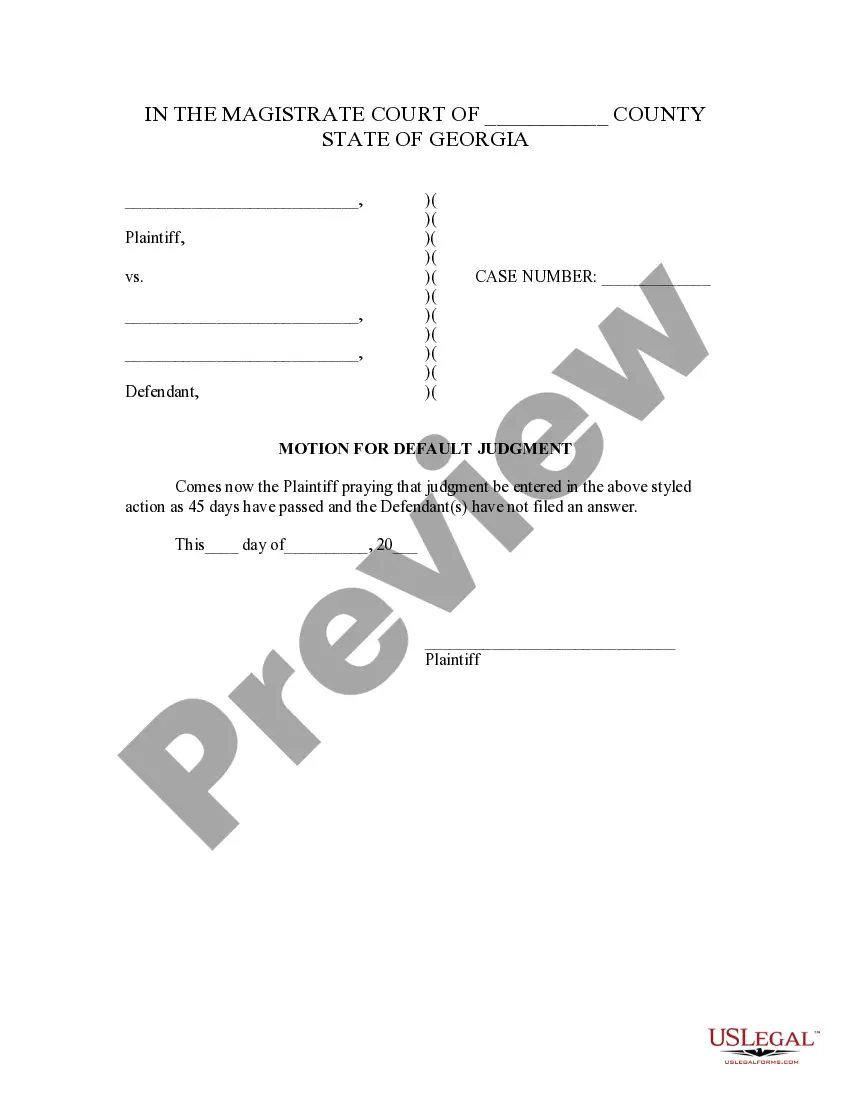
Motion To Vacate Judgment Georgia Form Without Court
Description
Get your form ready online
Our built-in tools help you complete, sign, share, and store your documents in one place.
Make edits, fill in missing information, and update formatting in US Legal Forms—just like you would in MS Word.
Download a copy, print it, send it by email, or mail it via USPS—whatever works best for your next step.
Sign and collect signatures with our SignNow integration. Send to multiple recipients, set reminders, and more. Go Premium to unlock E-Sign.
If this form requires notarization, complete it online through a secure video call—no need to meet a notary in person or wait for an appointment.
We protect your documents and personal data by following strict security and privacy standards.

Make edits, fill in missing information, and update formatting in US Legal Forms—just like you would in MS Word.

Download a copy, print it, send it by email, or mail it via USPS—whatever works best for your next step.

Sign and collect signatures with our SignNow integration. Send to multiple recipients, set reminders, and more. Go Premium to unlock E-Sign.

If this form requires notarization, complete it online through a secure video call—no need to meet a notary in person or wait for an appointment.

We protect your documents and personal data by following strict security and privacy standards.
Looking for another form?
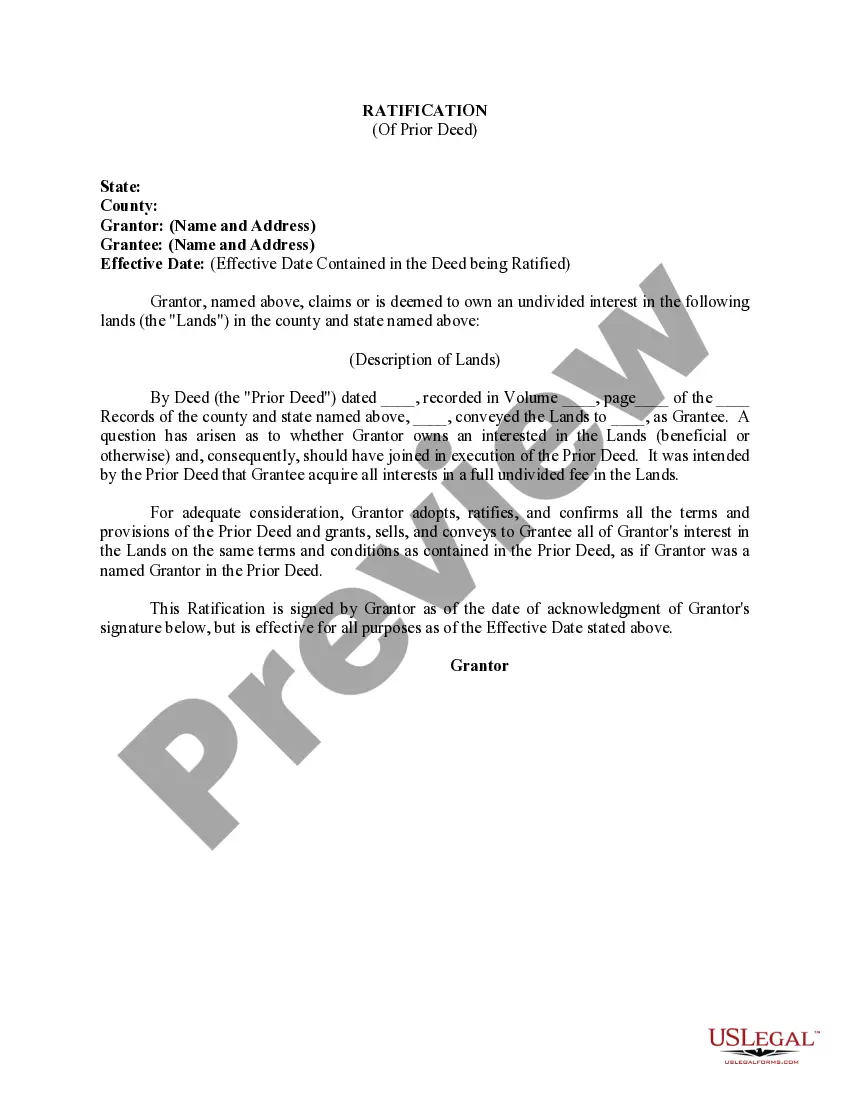

How to fill out Georgia Motion For Default Judgment?
Regardless of whether it’s for corporate reasons or personal issues, everyone must confront legal matters at some stage of their existence.
Completing legal documentation requires meticulous care, starting from selecting the correct form template.
Complete the profile registration form. Choose your payment method: utilize a credit card or PayPal account. Select the document format you desire and download the Motion To Vacate Judgment Georgia Form Without Court. Once saved, you can fill out the form using editing software or print and complete it manually. With a vast US Legal Forms library available, you no longer need to waste time hunting for the precise template online. Leverage the library’s intuitive navigation to locate the suitable form for any circumstance.
- For example, if you choose an incorrect version of the Motion To Vacate Judgment Georgia Form Without Court, it will be denied during submission.
- Thus, it is essential to obtain a trustworthy source of legal documents such as US Legal Forms.
- Should you need to acquire a Motion To Vacate Judgment Georgia Form Without Court template, follow these simple steps.
- Utilize the search box or browse through the catalog to find the template you require.
- Review the form’s details to confirm it corresponds with your case, state, and area.
- Click on the form’s preview to examine it.
- If it’s the wrong document, return to the search tool to locate the Motion To Vacate Judgment Georgia Form Without Court template you need.
- Download the file if it aligns with your requirements.
- If you already possess a US Legal Forms account, click Log in to retrieve previously saved templates in My documents.
- In case you don’t have an account yet, you can obtain the form by clicking Buy now.
- Select the appropriate pricing option.
Form popularity
FAQ
A good reason to set aside a default judgment includes proving that you were not properly notified of the original hearing or that you had a valid defense against the claim. Another reason could be to present newly discovered evidence that could change the outcome of the case. The motion to vacate judgment Georgia form without court can assist in making your case clear and formal to the judge.
To set aside a judgment means to officially cancel a court's previous decision, making it as if the judgment never existed. This action can occur for various reasons, including procedural mistakes or newly discovered evidence. Setting aside a judgment helps restore fairness and justice in legal matters. When you use the motion to vacate judgment Georgia form without court, you create a clear pathway for achieving this goal.
If a defendant does not answer a complaint within 30 days after being served, the defendant is in default. It is an unenviable position, but it is not the end of the road. In Georgia, a defendant is allowed an extra 15 days to open default as a matter of right.
The Request for Default Judgment and Affidavit must be electronically filed via eFileGA at . If you have any questions of procedure you may contact Court staff. If you have legal questions, these will need to be addressed to an attorney.
A motion to set aside may be brought to set aside a judgment based upon: (1) Lack of jurisdiction over the person or the subject matter; (2) Fraud, accident, or mistake or the acts of the adverse party unmixed with the negligence or fault of the movant; or (3) A nonamendable defect which appears upon the face of the ...
The Official Code of Georgia Annotated 9-12-60 addresses the general terms and conditions of judgments in the State of Georgia. This statute was designed to clearly define the force an effect of a judgment taken within Georgia. In Georgia, a judgment is valid and enforceable for seven years from the date it is granted.
You have the option of accepting partial payments. If the defendant fails to satisfy the judgment and make the payments, you may request that the Sheriff's Department levy the defendant's property. If you request a levy, you as plaintiff take on some responsibilities.