Georgia Living Trust With Pour-over Will

Description
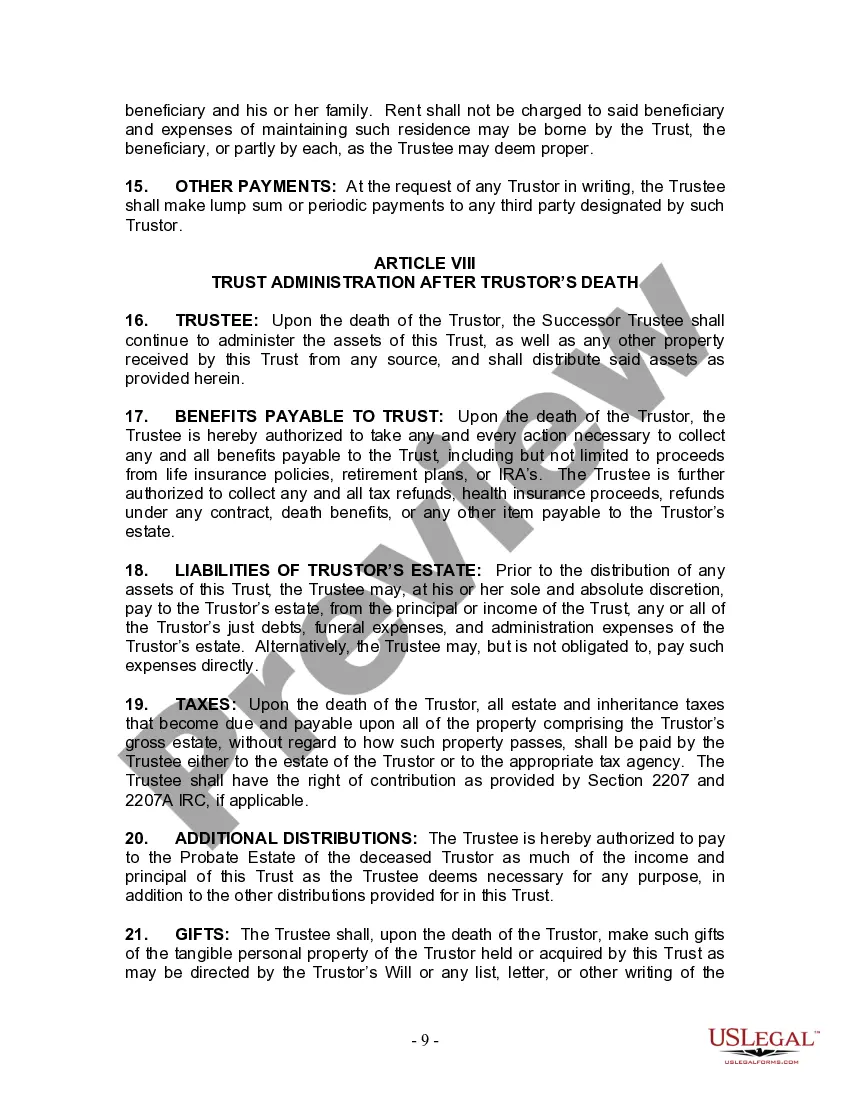
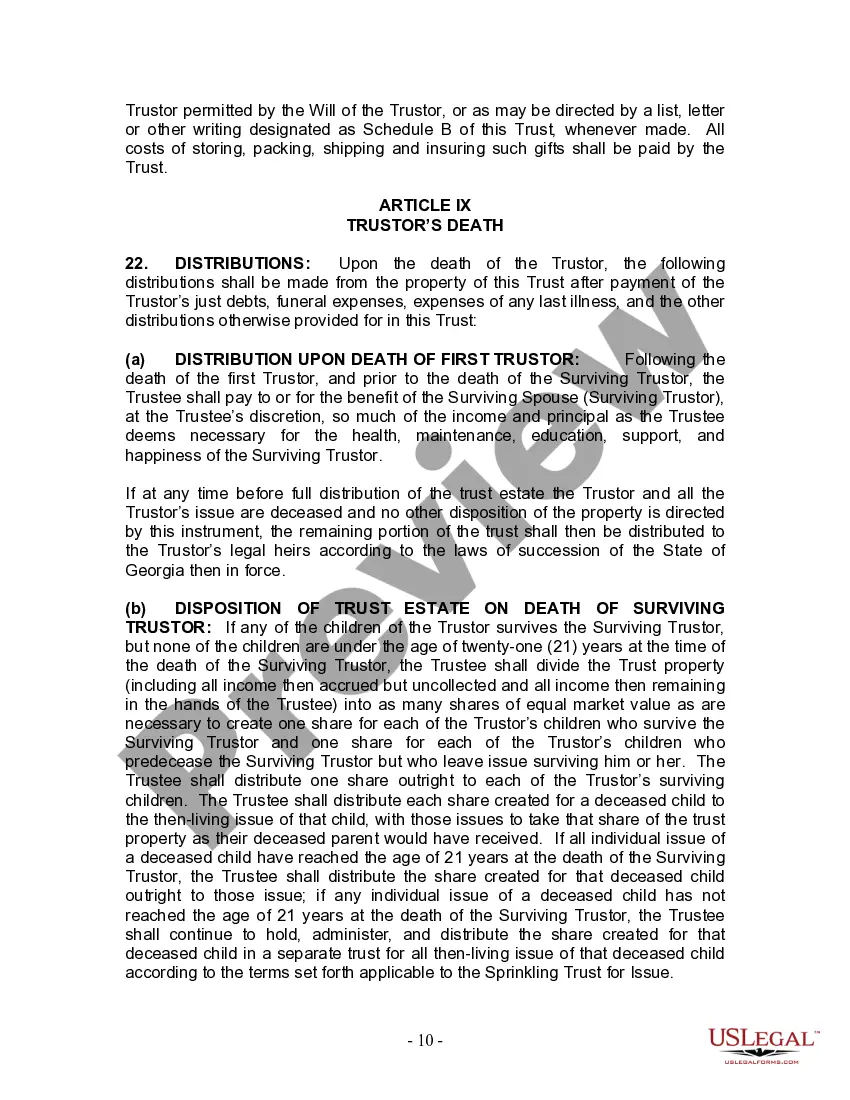



Get your form ready online
Our built-in tools help you complete, sign, share, and store your documents in one place.
Make edits, fill in missing information, and update formatting in US Legal Forms—just like you would in MS Word.
Download a copy, print it, send it by email, or mail it via USPS—whatever works best for your next step.
Sign and collect signatures with our SignNow integration. Send to multiple recipients, set reminders, and more. Go Premium to unlock E-Sign.
If this form requires notarization, complete it online through a secure video call—no need to meet a notary in person or wait for an appointment.
We protect your documents and personal data by following strict security and privacy standards.

Make edits, fill in missing information, and update formatting in US Legal Forms—just like you would in MS Word.

Download a copy, print it, send it by email, or mail it via USPS—whatever works best for your next step.

Sign and collect signatures with our SignNow integration. Send to multiple recipients, set reminders, and more. Go Premium to unlock E-Sign.

If this form requires notarization, complete it online through a secure video call—no need to meet a notary in person or wait for an appointment.

We protect your documents and personal data by following strict security and privacy standards.
Looking for another form?

Form popularity
FAQ
Yes, a pour-over will is often a key component of a living trust. When you create a Georgia living trust with pour-over will, it acts as a safety net to catch any assets that may not be placed within the trust during your lifetime. This ensures that all your assets are eventually transferred to the trust, which can simplify management for your loved ones. Understanding how these tools work together can help you achieve your estate planning goals more effectively.
While a trust offers many advantages, it also has some drawbacks. Establishing a Georgia living trust with pour-over will can involve higher upfront costs and requires ongoing management. Additionally, if you fail to transfer all assets into the trust, portions of your estate may still need to go through probate. Be sure to weigh these factors carefully before making a decision.
Choosing between a will and a trust in Georgia depends on your unique situation. A Georgia living trust with pour-over will allows for smooth asset management and distribution upon your passing, avoiding the probate process. This can save your loved ones time and stress, while also potentially keeping your finances private. Ultimately, consider your goals and consult a professional to make the best choice.
In most cases, a will cannot supersede a living trust if the two documents are properly established and funded. A Georgia living trust with pour-over will typically outlines specific instructions for asset management and distribution, taking priority over the will. Nevertheless, it is crucial to ensure that your documents align with your intentions to prevent any conflicts in your estate plan.
A trust overrides a will because it is designed to manage assets during your lifetime and after your death. When you set up a Georgia living trust with pour-over will, the trust governs the distribution of your assets, regardless of any instructions in the will. This ensures that assets are managed according to your preferences without confusion or delays that can arise during the probate process.
A trust generally takes precedence over a will because it remains operative during your lifetime and directly manages your assets. If you have a Georgia living trust with pour-over will, the trust's terms typically dictate how your assets are distributed, while the will supplements the trust for any assets not included. Understanding this hierarchy can help you better organize your estate planning.
One disadvantage of a pour-over will is that it may require probate, which can be time-consuming and costly. While the will helps transfer assets into your Georgia living trust, the probate process can delay access to those assets for your beneficiaries. It's important to be aware of these potential challenges while considering how a Georgia living trust with pour-over will fits into your overall estate plan.
over will in Georgia is a legal document that directs any assets not already in your living trust to be transferred into the trust upon your death. It acts as a safeguard to ensure that any remaining assets are included in your estate plan. By utilizing a Georgia living trust with pourover will, you can simplify the asset distribution process and maintain greater control over your estate.
In general, a trust holds more power than a will because it can take effect during your lifetime and can manage your assets even if you become incapacitated. Unlike a will, which only takes effect after your death, a Georgia living trust with pour-over will continues to provide benefits while you are alive, ensuring that your assets are handled according to your specifications at all times.
over will serves as a safety net for your estate planning. It ensures that any assets not placed in your living trust during your lifetime will be transferred into the trust upon your death. This process consolidates your assets under the Georgia living trust with pourover will, allowing for seamless management and distribution according to your wishes.