Florida Apartment Laws
Description
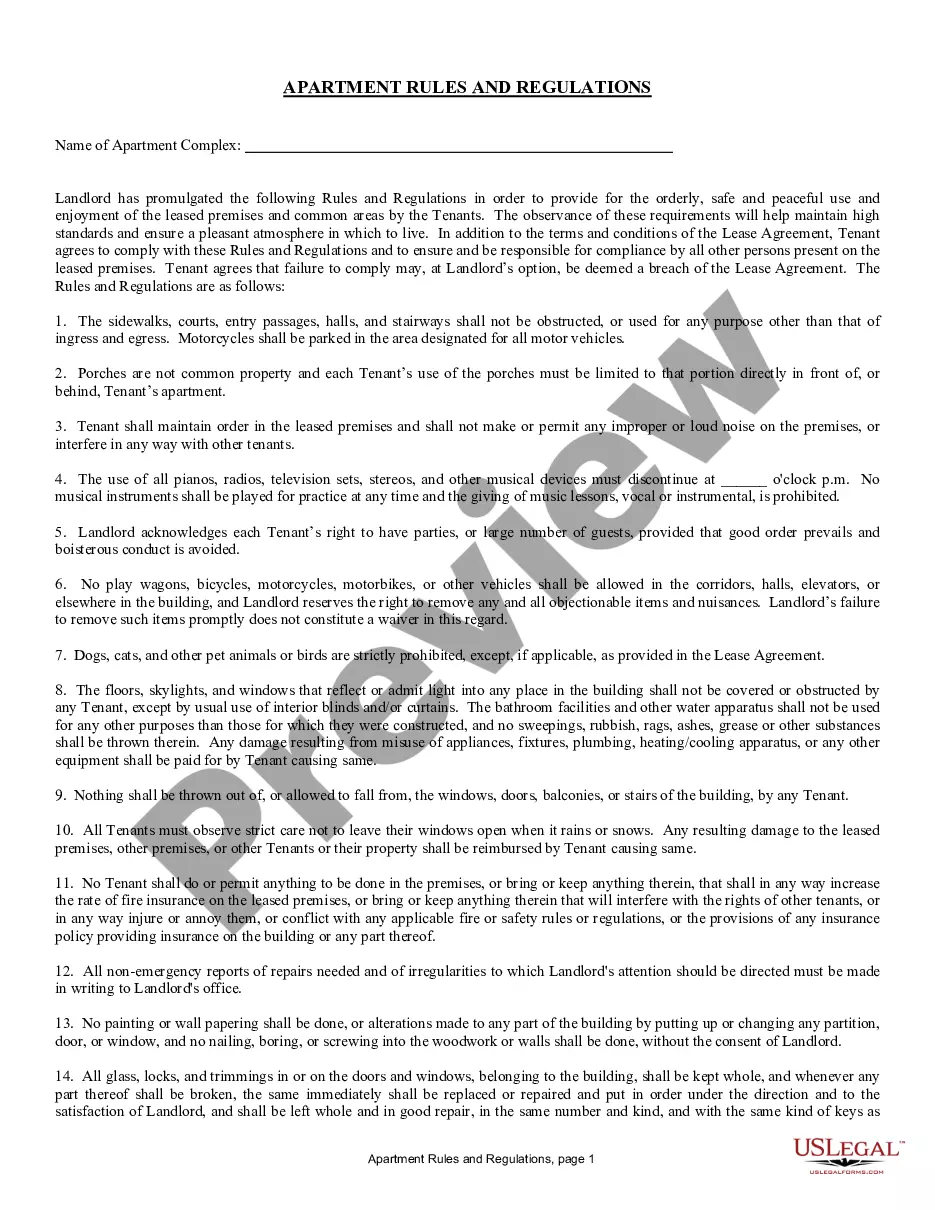
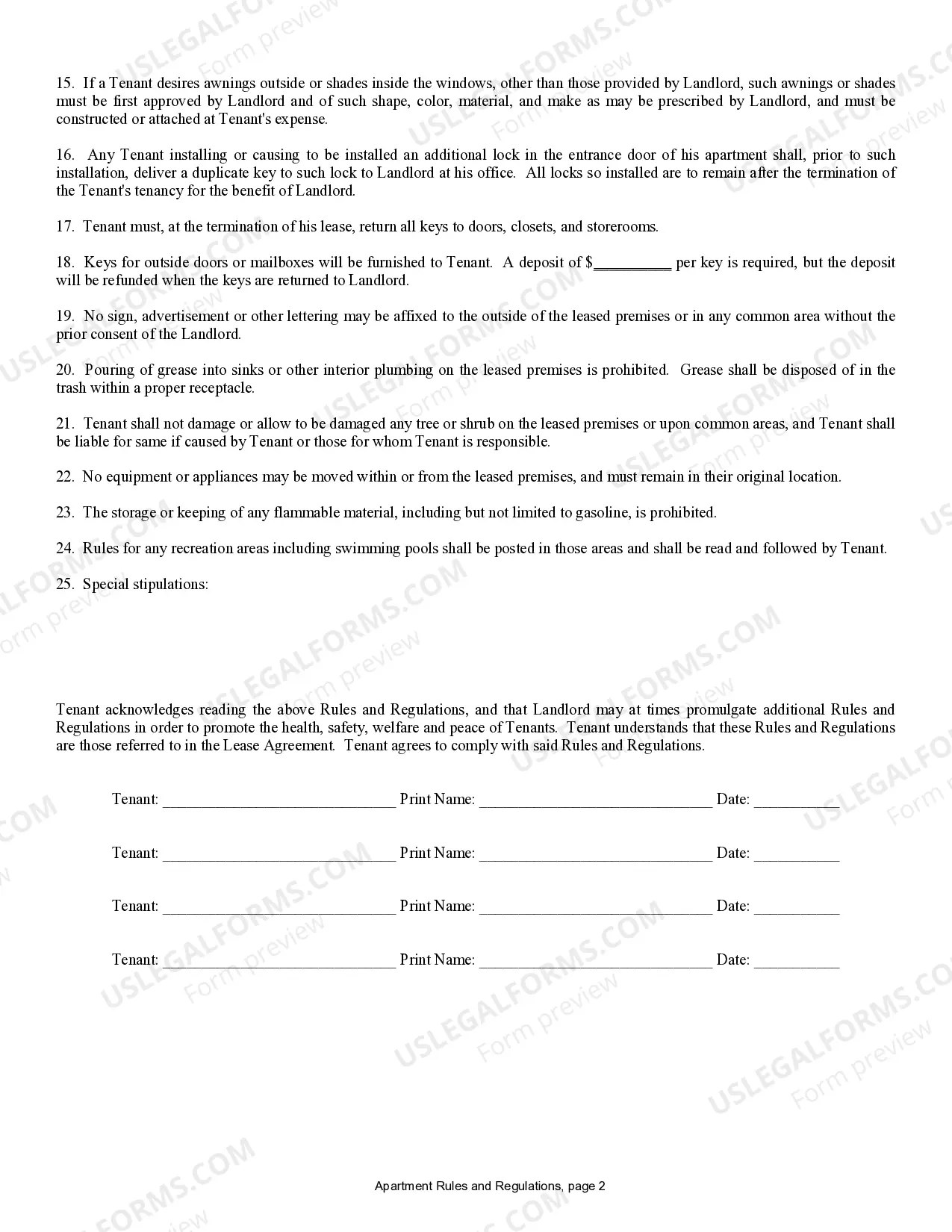
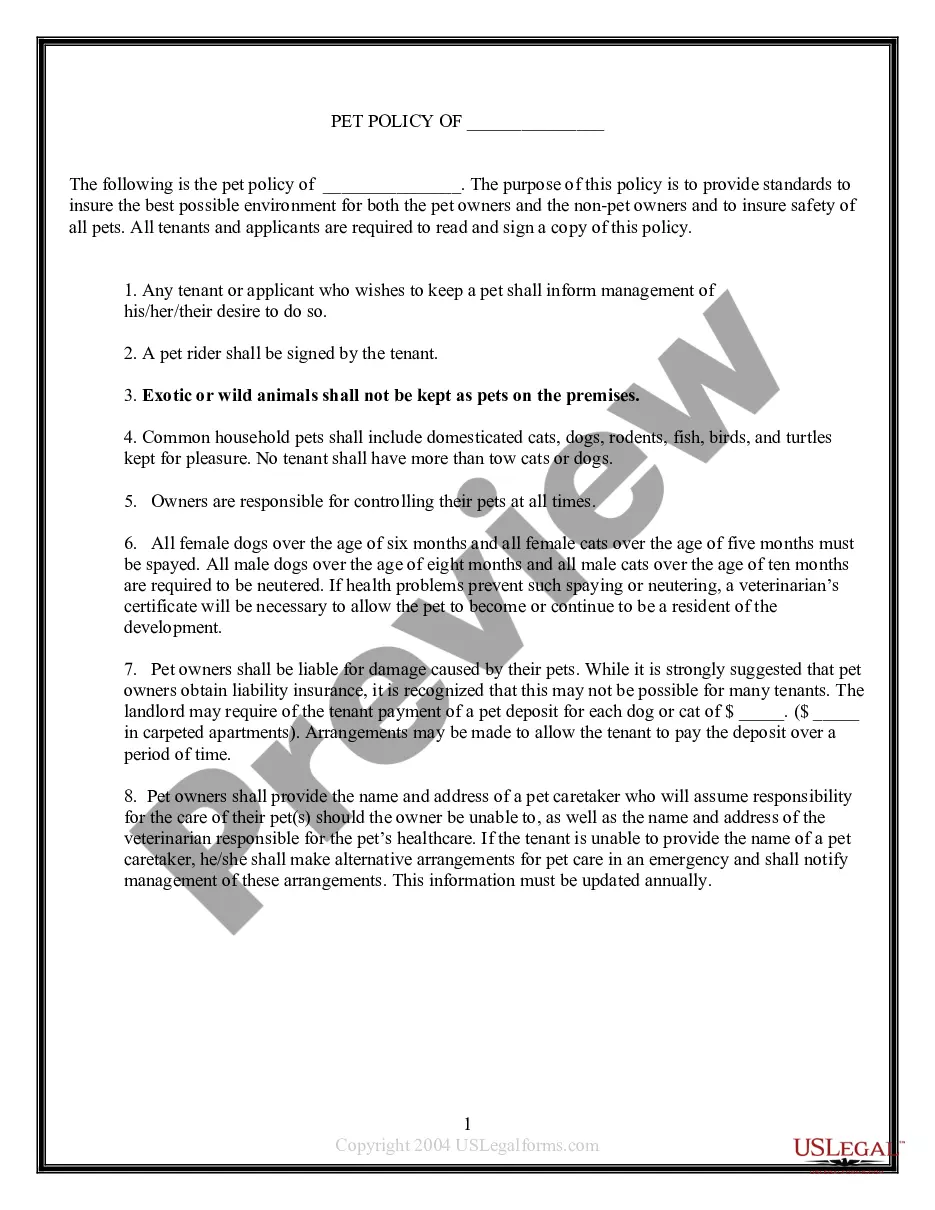
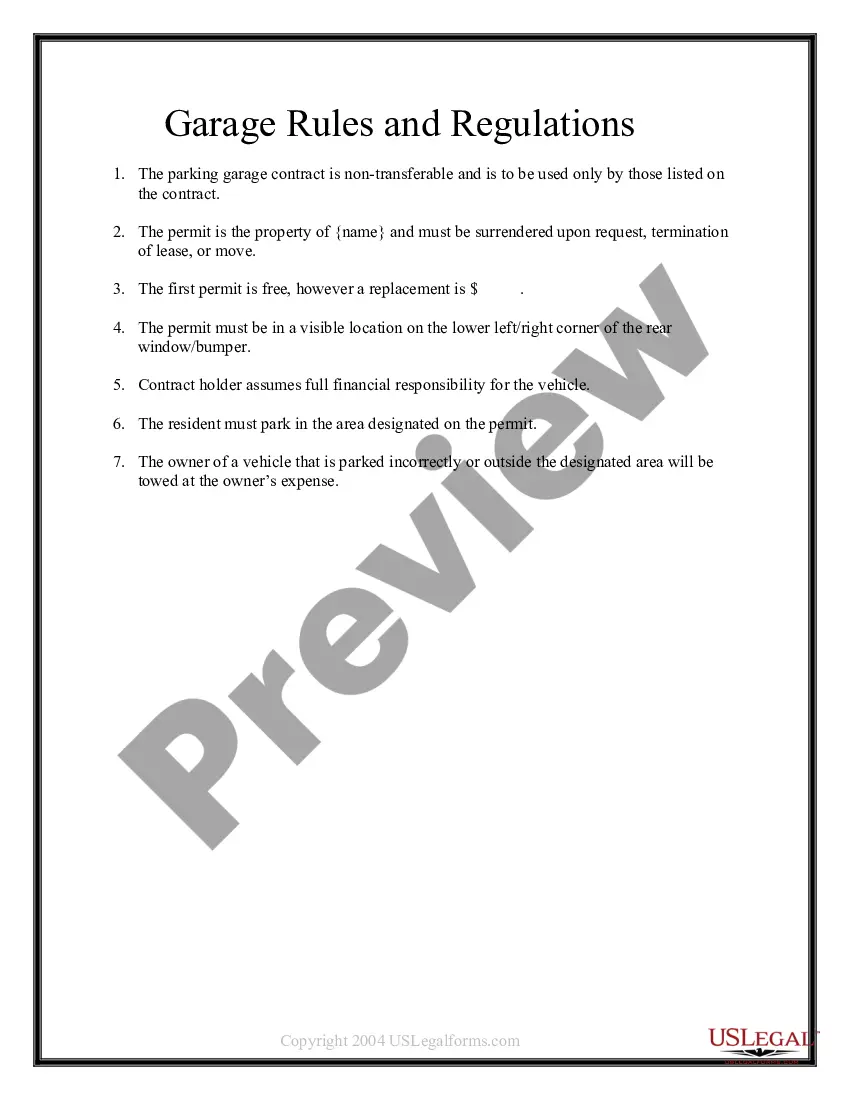
Get your form ready online
Our built-in tools help you complete, sign, share, and store your documents in one place.
Make edits, fill in missing information, and update formatting in US Legal Forms—just like you would in MS Word.
Download a copy, print it, send it by email, or mail it via USPS—whatever works best for your next step.
Sign and collect signatures with our SignNow integration. Send to multiple recipients, set reminders, and more. Go Premium to unlock E-Sign.
If this form requires notarization, complete it online through a secure video call—no need to meet a notary in person or wait for an appointment.
We protect your documents and personal data by following strict security and privacy standards.

Make edits, fill in missing information, and update formatting in US Legal Forms—just like you would in MS Word.

Download a copy, print it, send it by email, or mail it via USPS—whatever works best for your next step.

Sign and collect signatures with our SignNow integration. Send to multiple recipients, set reminders, and more. Go Premium to unlock E-Sign.

If this form requires notarization, complete it online through a secure video call—no need to meet a notary in person or wait for an appointment.

We protect your documents and personal data by following strict security and privacy standards.
Looking for another form?
How to fill out Florida Apartment Rules And Regulations?
Finding a reliable source to obtain the latest and most applicable legal templates is half the battle of dealing with bureaucracy.
Identifying the correct legal documents demands accuracy and meticulousness, which is why it is crucial to obtain samples of Florida Apartment Laws exclusively from reputable sources, such as US Legal Forms. An incorrect template will squander your time and prolong your situation.
Eliminate the stress associated with your legal documents. Explore the comprehensive US Legal Forms library to locate legal templates, assess their relevance to your situation, and download them immediately.
- Use the catalog navigation or search box to locate your sample.
- Access the form’s details to verify if it aligns with the requirements of your state and area.
- Preview the form, if available, to confirm that the template is the one you seek.
- Return to the search to find the suitable template if the Florida Apartment Laws does not meet your needs.
- Once you are certain about the form’s applicability, download it.
- If you are a registered user, click Log in to verify your identity and access your chosen templates in My documents.
- If you do not yet have an account, click Buy now to acquire the form.
- Select the pricing option that suits your needs.
- Proceed to registration to complete your transaction.
- Conclude your purchase by selecting a payment method (credit card or PayPal).
- Choose the file format for downloading Florida Apartment Laws.
- After obtaining the form on your device, you can edit it with the editor or print it for manual completion.
Form popularity
FAQ
Apartments in Florida are primarily regulated by state laws and local ordinances under Florida apartment laws. The Florida Department of Business and Professional Regulation oversees many aspects of property management and landlord-tenant relationships. Additionally, local housing authorities may enforce specific regulations and provide resources for both tenants and landlords. For comprehensive guidance, consider exploring the resources offered by US Legal Forms, which can help you navigate these regulations effectively.
In Florida, tenants have several important rights under Florida apartment laws. These rights include the right to a habitable dwelling, which means your apartment must meet basic safety and health standards. Additionally, tenants can expect privacy, as landlords must give proper notice before entering the property. Furthermore, if a landlord fails to meet their obligations, tenants have the right to seek legal remedies, including repairs or even lease termination.
Recently, Florida has enacted new legislation regarding rent control and tenant rights, which affects rental agreements and eviction procedures. These changes aim to provide greater protections for tenants while ensuring fair practices for landlords. Staying informed about these updates is crucial for anyone navigating the rental market, and resources like US Legal Forms can help you access the necessary information and documentation.
Florida apartment laws outline the rights and responsibilities of both landlords and tenants. These laws cover various aspects, such as lease agreements, security deposits, and eviction processes. Understanding these regulations can help you navigate your rental experience more effectively and ensure that you comply with state requirements.
When renting an apartment in Florida, you typically need to complete a rental application, provide proof of income, and submit identification. Additionally, landlords may require a background check, which can include credit history. It’s essential to understand that these documents help ensure compliance with Florida apartment laws and protect both you and the landlord.
Recently, Florida introduced new laws affecting apartment rentals, aimed at enhancing tenant protections under Florida apartment laws. These changes include stricter regulations on security deposits and improved guidelines for lease agreements, ensuring transparency for renters. Additionally, landlords must now provide clearer communication regarding maintenance requests and tenant rights. For detailed information and assistance, US Legal Forms offers valuable resources that can help you navigate these new regulations.
In Florida, renter rights are defined by Florida apartment laws, which ensure tenants have specific protections. You have the right to a safe and habitable living environment, which includes essential services like water and electricity. Additionally, you cannot be discriminated against based on race, gender, or disability. If you face issues with your landlord, resources like US Legal Forms can help you understand your rights and take appropriate actions.