Enter Residential Landlord With No Title
Description

Get your form ready online
Our built-in tools help you complete, sign, share, and store your documents in one place.
Make edits, fill in missing information, and update formatting in US Legal Forms—just like you would in MS Word.
Download a copy, print it, send it by email, or mail it via USPS—whatever works best for your next step.
Sign and collect signatures with our SignNow integration. Send to multiple recipients, set reminders, and more. Go Premium to unlock E-Sign.
If this form requires notarization, complete it online through a secure video call—no need to meet a notary in person or wait for an appointment.
We protect your documents and personal data by following strict security and privacy standards.

Make edits, fill in missing information, and update formatting in US Legal Forms—just like you would in MS Word.

Download a copy, print it, send it by email, or mail it via USPS—whatever works best for your next step.

Sign and collect signatures with our SignNow integration. Send to multiple recipients, set reminders, and more. Go Premium to unlock E-Sign.

If this form requires notarization, complete it online through a secure video call—no need to meet a notary in person or wait for an appointment.

We protect your documents and personal data by following strict security and privacy standards.
Looking for another form?






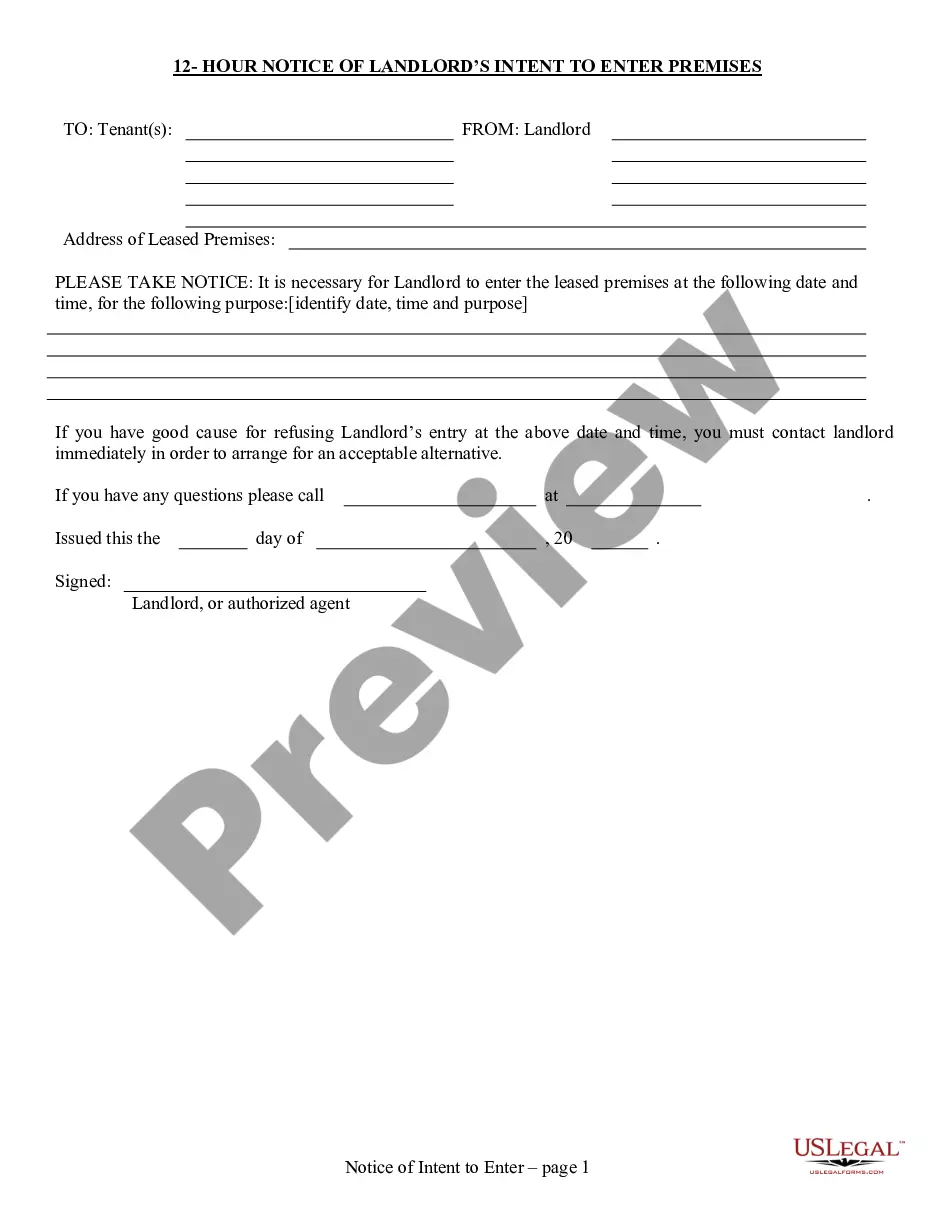
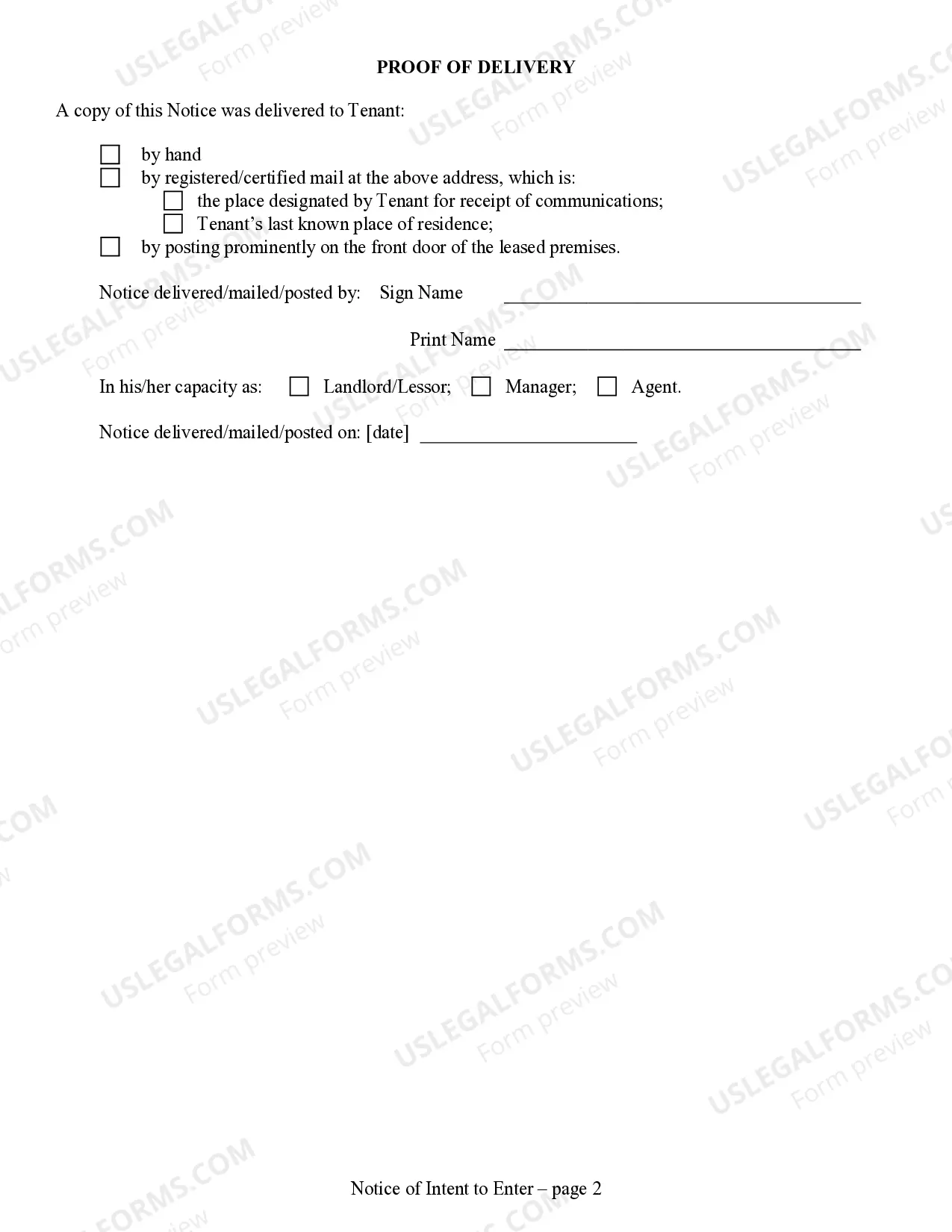
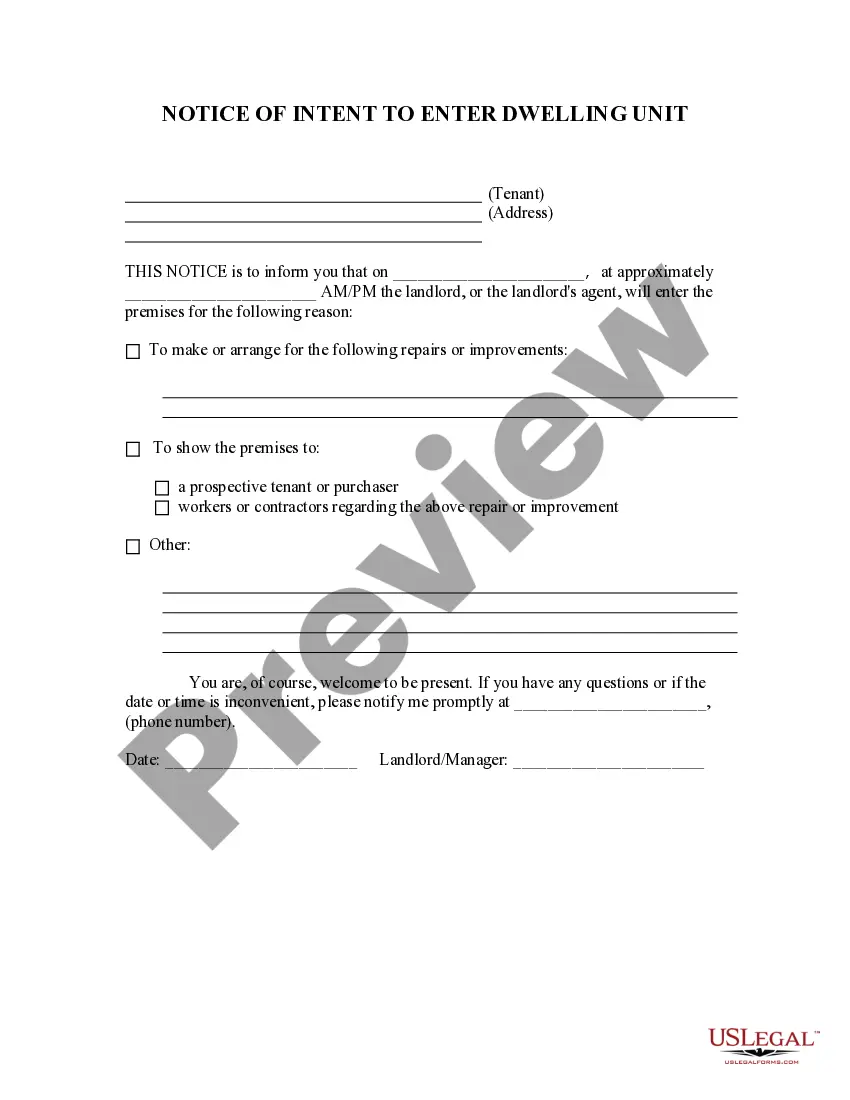
How to fill out Florida 12 Hour Notice Of Landlord's Intent To Enter Premises For Residential From Landlord To Tenant?
- Start by visiting the US Legal Forms website and check if you already have an account. If you do, simply log in and ensure your subscription is current to download the necessary forms.
- For first-time users, browse the extensive library of over 85,000 legal forms. Begin by previewing different document options to find one that fits your needs and adheres to your local laws.
- If the initial search doesn't yield the proper document, utilize the search tab to explore other templates until you find the right fit.
- Once identified, click the 'Buy Now' button and choose a subscription that works for you. An account registration is required for access.
- Complete your purchase by entering your payment information via credit card or PayPal, ensuring you can access your forms immediately.
- Finally, download your selected forms to your device and store them for future use. You will also find these documents in the 'My Forms' section of your profile for easy access later.
US Legal Forms is dedicated to empowering users with a rich assortment of over 85,000 legal documents. You can confidently complete legal procedures with our array of editable templates. Additionally, we provide access to premium experts who can assist you in ensuring your forms are filled out correctly.
Transform your landlord journey today—visit US Legal Forms to streamline your legal process and ensure you're on the right track!
Form popularity
FAQ
In Tennessee, tenants can indeed refuse entry to their landlord, but only under certain circumstances. Landlords must provide reasonable notice before entering, and tenants have the right to deny access for non-emergency situations. Understanding these regulations helps both parties maintain a fair rental relationship. For assistance in navigating landlord-tenant laws, consider resources available on USLegalForms, which can clarify your rights and responsibilities.
You can enter the residential landlord field without owning property by exploring lease options and subletting agreements. Consider partnering with property owners who allow you to manage their properties in exchange for a portion of the rental income. Additionally, platforms like USLegalForms provide resources and documentation that simplify the process, allowing you to enter residential landlord roles with no title.
In South Carolina, a landlord generally cannot enter rental property without permission from the tenant, unless there is an emergency. If a landlord needs to enter residential premises for repairs or inspections, they should provide reasonable notice. Always remember, tenants have rights. If you face issues regarding your landlord entering without consent, consider our US Legal Forms platform to find the resources and documents you need to understand your situation better. We can help you navigate the complexities of your landlord-tenant relationship, especially when concerns about entering residential properties arise without the proper authority.
A tenant can deny entry to a landlord if proper notice has not been given or if the request is unreasonable. It is essential to maintain open communication with your landlord while asserting your rights. If issues arise, understanding how to enter residential landlord with no title can empower you to protect your living space effectively.
In Florida, landlords must provide at least 24 hours' notice before entering a rental property. This notice should include the reason for entry and the time. However, emergencies may allow immediate access without prior notice. Familiarizing yourself with your rights ensures you can respond appropriately to any landlord's attempts to enter.
Yes, a tenant can refuse entry to a landlord in Florida, provided there is no emergency. Landlords are required to give proper notice before entering, emphasizing the importance of a respectful landlord-tenant relationship. If you're unsure about your rights, knowing how to enter residential landlord with no title can help you navigate these situations effectively.
To prove your landlord's ownership, you can check public property records, typically available at your county's property appraiser's office. Additionally, your lease agreement often indicates ownership details. If there's confusion regarding the ownership, consider reaching out to US Legal Forms to help clarify the documentation needed for your situation. This can simplify the process significantly.
Yes, you can sue your landlord for entering your property without permission, as this violates tenant rights. The outcome will depend on the specific circumstances and proof you provide. Documenting each unauthorized entry can strengthen your case, demonstrating a pattern of behavior. To navigate legal proceedings effectively, the resources at US Legal Forms can guide you through the necessary steps.
In Florida, it is illegal for landlords to enter a property without proper notice or consent. They cannot retaliate against tenants for exercising their rights, nor can they lock out tenants without a court order. It's also unlawful to discriminate against tenants based on race, gender, or other protected categories. Always consider seeking help from platforms like US Legal Forms if you face these illegal actions.
In Florida, a tenant can refuse entry to a landlord unless it's an emergency. The law requires landlords to give proper notice before entering a rental property. However, if a landlord continues to enter without permission, it may be deemed harassment. Understanding your rights is crucial, especially if you enter residential landlord with no title.