Tenant Landlord About With Owner
Description



Get your form ready online
Our built-in tools help you complete, sign, share, and store your documents in one place.
Make edits, fill in missing information, and update formatting in US Legal Forms—just like you would in MS Word.
Download a copy, print it, send it by email, or mail it via USPS—whatever works best for your next step.
Sign and collect signatures with our SignNow integration. Send to multiple recipients, set reminders, and more. Go Premium to unlock E-Sign.
If this form requires notarization, complete it online through a secure video call—no need to meet a notary in person or wait for an appointment.
We protect your documents and personal data by following strict security and privacy standards.

Make edits, fill in missing information, and update formatting in US Legal Forms—just like you would in MS Word.

Download a copy, print it, send it by email, or mail it via USPS—whatever works best for your next step.

Sign and collect signatures with our SignNow integration. Send to multiple recipients, set reminders, and more. Go Premium to unlock E-Sign.

If this form requires notarization, complete it online through a secure video call—no need to meet a notary in person or wait for an appointment.

We protect your documents and personal data by following strict security and privacy standards.
Looking for another form?







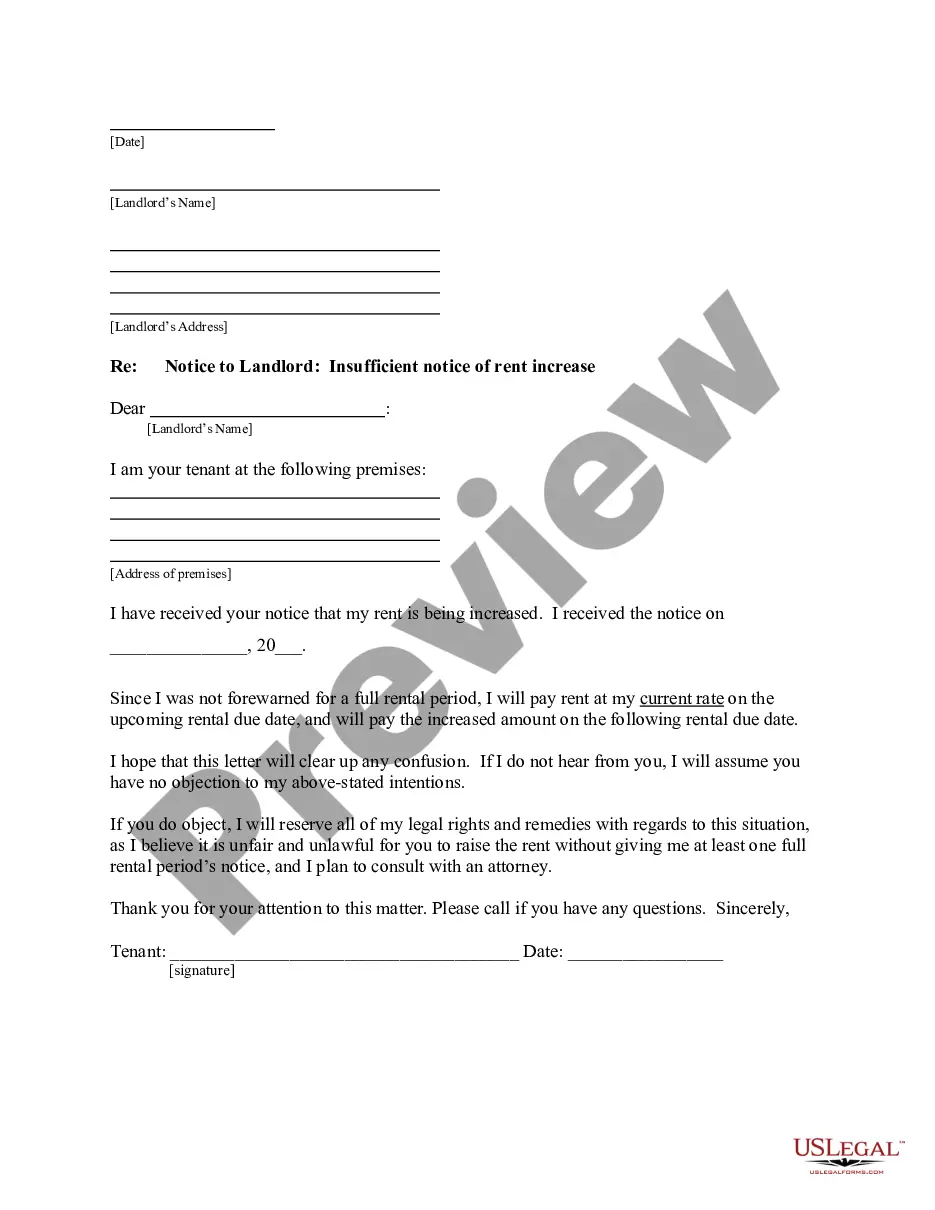
How to fill out Florida Letter From Tenant To Landlord About Insufficient Notice Of Rent Increase?
- For returning users, log in to your account and locate your desired form template by clicking on the Download button. Ensure your subscription is active; if not, renew it based on your payment plan.
- If you're a new user, start by viewing the detailed description and Preview mode of the form to confirm it aligns with your requirements and complies with local laws.
- Should you need a different template, utilize the Search tab above to find one that fits your needs better.
- Once you've selected the correct document, click on the Buy Now button and choose your preferred subscription plan. Registration is necessary to access the library.
- Complete your purchase by entering your credit card information or using your PayPal account for payment.
- Finally, download your form to your device for completion, and find it anytime in the My Forms section of your profile.
Using US Legal Forms not only saves you time but ensures that you have access to a vast library of over 85,000 legal documents that are easy to fill out and edit.
Don't hesitate to take control of your legal documentation today; access US Legal Forms and ensure your tenant-landlord agreements are thorough and compliant!
Form popularity
FAQ
A violation of renters' rights in North Carolina often occurs when landlords fail to maintain a safe living environment or do not respect the tenant’s privacy. Actions such as entering the rental unit without notice or neglecting necessary repairs can constitute violations. Being aware of these rights helps tenants address such issues promptly. Strengthening your knowledge of tenant landlord about with owner can empower you to take action when needed.
Tenants in common in North Carolina enjoy the right to possess their shared property, as well as the right to transfer their share independently. Each tenant can make their own decisions regarding their share without needing the other tenants' consent. Understanding these rights can clarify expectations in co-ownership scenarios. Tools available at UsLegalForms can help clarify these complex arrangements.
Landlords in North Carolina cannot unlawfully evict tenants, meaning they must follow legal procedures before removing someone from a rental property. Additionally, landlords cannot make disruptive changes to the rental unit without consent or ignore repair requests that affect health and safety. Knowing these boundaries is essential in any tenant landlord about with owner situation, ensuring both parties follow the law.
In North Carolina, if a landlord wants a tenant to move out, they typically must provide a written notice of at least 30 days. This applies to most rental agreements unless otherwise stated in the lease. It’s crucial for both tenants and landlords to understand these time frames for a smooth transition. Resources like UsLegalForms can assist both parties in navigating these regulations effectively.
In North Carolina, renters have fundamental rights that protect them within their rental agreements. These include the right to a habitable living space, the right to fair treatment, and the right to privacy. Renters can expect landlords to maintain their properties and ensure no illegal entries occur. Understanding tenant landlord about with owner can help renters stand up for their rights.
Yes, you can face eviction for having someone live with you if it violates your lease agreement. Many leases specify the number of occupants allowed, and exceeding this can be grounds for eviction. Always review your lease and speak with your landlord about any concerns regarding additional occupants.
When writing a letter about an eviction, begin with a respectful greeting and state the purpose clearly. Include specific details such as the reason for the eviction, the timeline for vacating the property, and any references to your lease agreement. If you need guidance, the US Legal Forms platform offers templates that can assist you in crafting a well-structured eviction letter.
Your landlord is the individual or entity with whom you have a rental agreement. This person may be the owner of the property or a property management company representing the owner. Clarifying who your landlord is can streamline communication when you need assistance with your rental situation.
Typically, the landlord is the property owner, but this is not a strict rule. Landlords can be individuals or companies who may lease the property from another owner. Knowing this distinction can help you understand your lease and whom to contact regarding maintenance or issues.
No, a landlord is not always the owner of the property. Sometimes, a property owner may hire someone else to manage the rental unit, meaning the manager acts as the landlord. It is essential to know who your landlord is, whether it's the owner or their appointed representative, to address any concerns.