Florida Personal Representative With Limited Title Guarantee
Description

Get your form ready online
Our built-in tools help you complete, sign, share, and store your documents in one place.
Make edits, fill in missing information, and update formatting in US Legal Forms—just like you would in MS Word.
Download a copy, print it, send it by email, or mail it via USPS—whatever works best for your next step.
Sign and collect signatures with our SignNow integration. Send to multiple recipients, set reminders, and more. Go Premium to unlock E-Sign.
If this form requires notarization, complete it online through a secure video call—no need to meet a notary in person or wait for an appointment.
We protect your documents and personal data by following strict security and privacy standards.

Make edits, fill in missing information, and update formatting in US Legal Forms—just like you would in MS Word.

Download a copy, print it, send it by email, or mail it via USPS—whatever works best for your next step.

Sign and collect signatures with our SignNow integration. Send to multiple recipients, set reminders, and more. Go Premium to unlock E-Sign.

If this form requires notarization, complete it online through a secure video call—no need to meet a notary in person or wait for an appointment.

We protect your documents and personal data by following strict security and privacy standards.
Looking for another form?










How to fill out Florida Personal Representative's Deed Of Distribution?
Legal administration can be exasperating, even for seasoned professionals.
When seeking a Florida Personal Representative With Limited Title Guarantee and lacking the time to search for the correct and current version, the process may be challenging.
US Legal Forms addresses all your requirements, from personal to organizational documents, all in one place.
Utilize advanced tools to complete and manage your Florida Personal Representative With Limited Title Guarantee.
Here are the steps to follow after downloading the document you need: Ensure it is the correct form by previewing it and reviewing its details, confirm that the sample is valid in your state or county, select Buy Now when you are ready, choose a subscription plan, find the format you need, and Download, complete, sign, print, and send your documents. Leverage the US Legal Forms online directory, backed by 25 years of expertise and reliability. Transform your daily document management into a seamless and user-friendly process today.
- Access a valuable repository of articles, guidelines, and manuals pertinent to your situation and needs.
- Conserve time and energy searching for the documents you require, and use US Legal Forms’ sophisticated search and Preview feature to find Florida Personal Representative With Limited Title Guarantee and obtain it.
- If you hold a subscription, Log In to your US Legal Forms account, search for the document, and download it.
- Check the My documents tab to view the documents you have previously downloaded and organize your folders as you wish.
- If this is your first experience with US Legal Forms, create a complimentary account and enjoy unlimited access to all the benefits of the library.
- A comprehensive online form directory could be transformative for anyone aiming to navigate these challenges efficiently.
- US Legal Forms is a leading provider of online legal documents, offering over 85,000 jurisdiction-specific legal forms available to you at any time.
- With US Legal Forms, you can access state- or county-specific legal and business documents.
Form popularity
FAQ
The 57.105 rule in Florida addresses the award of attorney fees in certain legal situations, particularly when a party has pursued frivolous claims. This rule can impact how a Florida personal representative with limited title guarantee operates, as it underscores the importance of acting in good faith and with a reasonable basis for actions taken. Understanding this rule can help personal representatives navigate legal challenges effectively and avoid unnecessary costs.
Indeed, a personal representative can sell property as part of their responsibilities in estate administration. The Florida personal representative with limited title guarantee can execute property sales to settle debts or distribute assets to heirs. This process is essential for maintaining the estate's value and ensuring that beneficiaries receive their rightful shares.
Yes, a personal representative can sell property in Florida. As part of their duties, the Florida personal representative with limited title guarantee has the authority to manage and sell estate assets. This ability facilitates the efficient resolution of the estate, allowing for the distribution of proceeds to beneficiaries without unnecessary delays.
The 90.408 rule in Florida pertains to the authority of a personal representative to convey property with limited title guarantee. This rule allows the Florida personal representative with limited title guarantee to sell or dispose of estate assets without obtaining court approval, providing a streamlined process. It ensures that the personal representative can act swiftly in the best interest of the estate, while also protecting the interests of potential buyers.
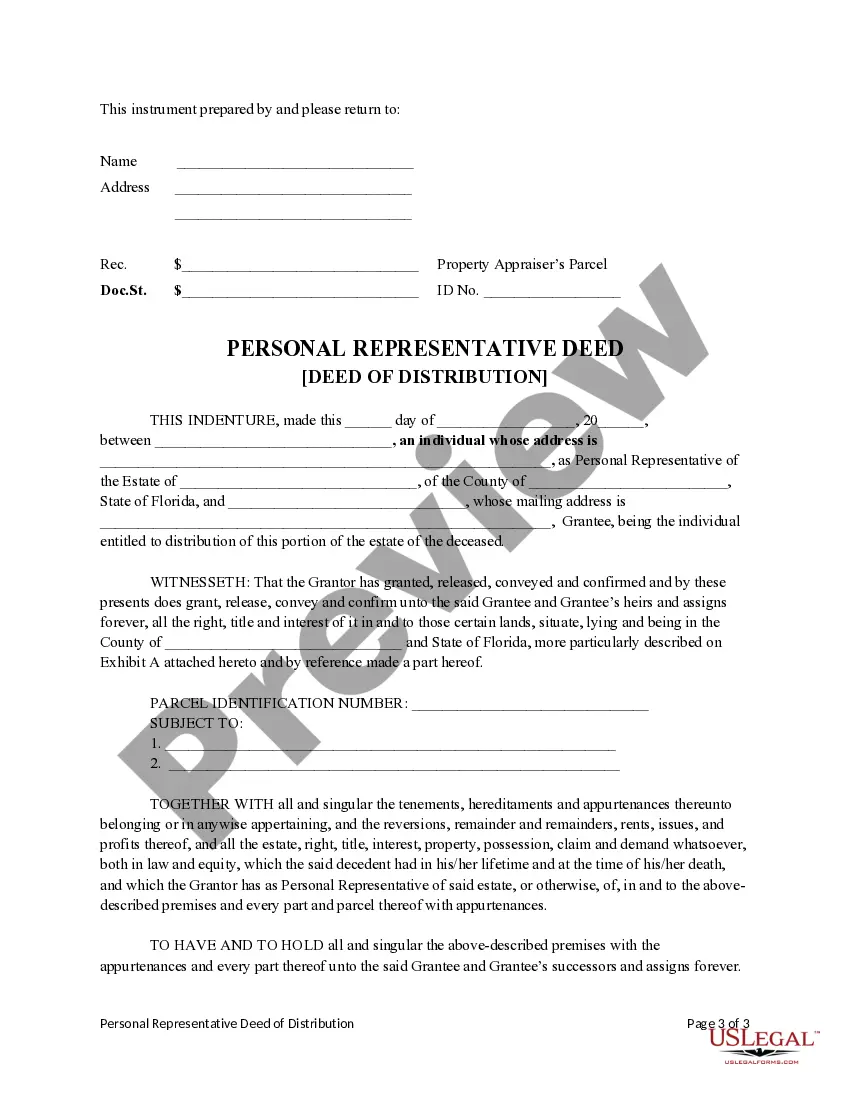
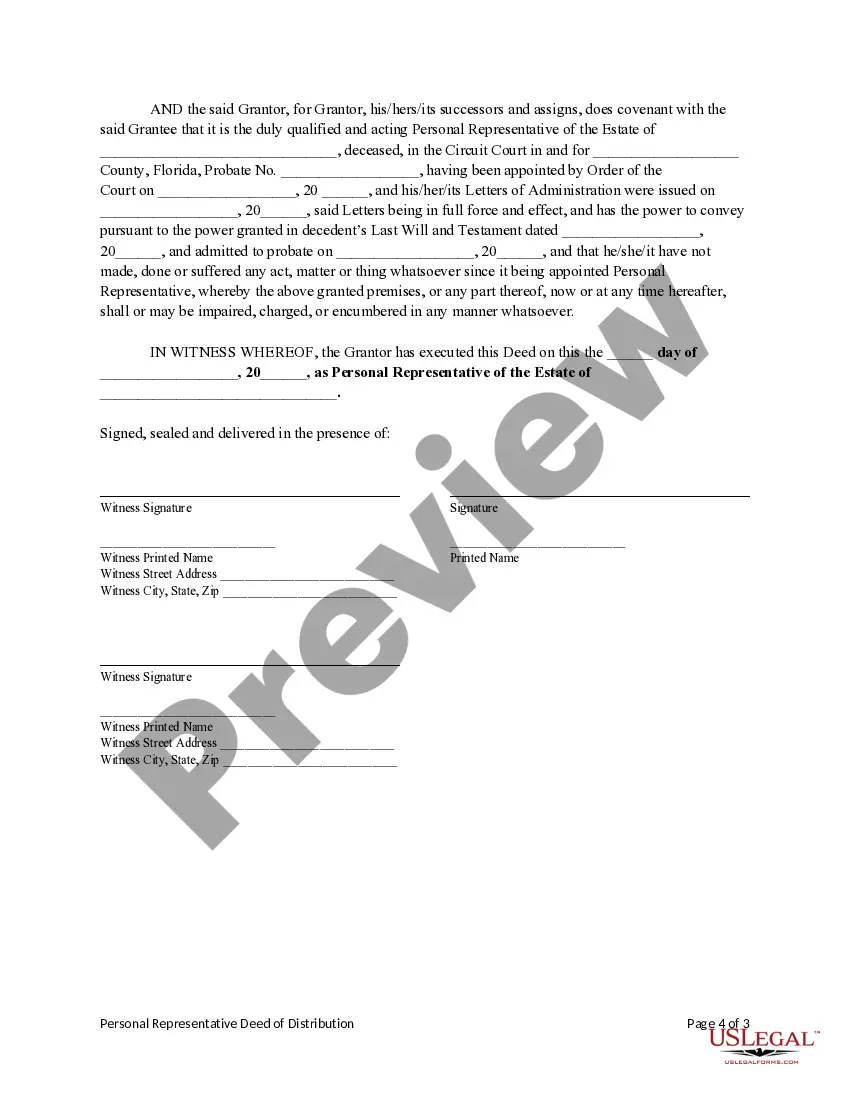
To properly fill out a warranty deed, begin by providing the names of the grantor and grantee, along with a clear description of the property. Include any relevant details that establish the Florida personal representative with limited title guarantee. You might find it helpful to use resources from US Legal Forms, which offer user-friendly templates and instructions to simplify the process.
Filling out a personal representative deed involves several steps, including identifying the property and including the names of the parties involved. For a Florida personal representative with limited title guarantee, ensure accurate information is provided to avoid future disputes. You can utilize online platforms like US Legal Forms to access templates and guides that simplify the process.
While it is not mandatory to have a lawyer for a deed transfer, consulting one can provide valuable insights, especially for a Florida personal representative with limited title guarantee. A lawyer can ensure that all documents meet legal standards, reducing the risk of complications later. If you prefer a DIY approach, make sure to research thoroughly.
Yes, you can prepare a deed yourself, but it is essential to understand the requirements for a Florida personal representative with limited title guarantee. If you choose to do it on your own, ensure that you follow all legal guidelines and include necessary details. However, working with a professional can help avoid mistakes and streamline the process.
To be a personal representative in Florida, you need to be at least 18 years old, a Florida resident, or related to the decedent. Additionally, you cannot have a felony conviction unless your civil rights have been restored. Familiarizing yourself with these requirements ensures that you can effectively manage the responsibilities of a Florida personal representative with limited title guarantee.
A qualified personal representative in Florida can be an individual or an institution, such as a bank or trust company. They must meet age and residency requirements, and they should be capable of managing the estate responsibly. If you're unsure about qualifications, USLegalForms offers guidance to help determine eligibility.