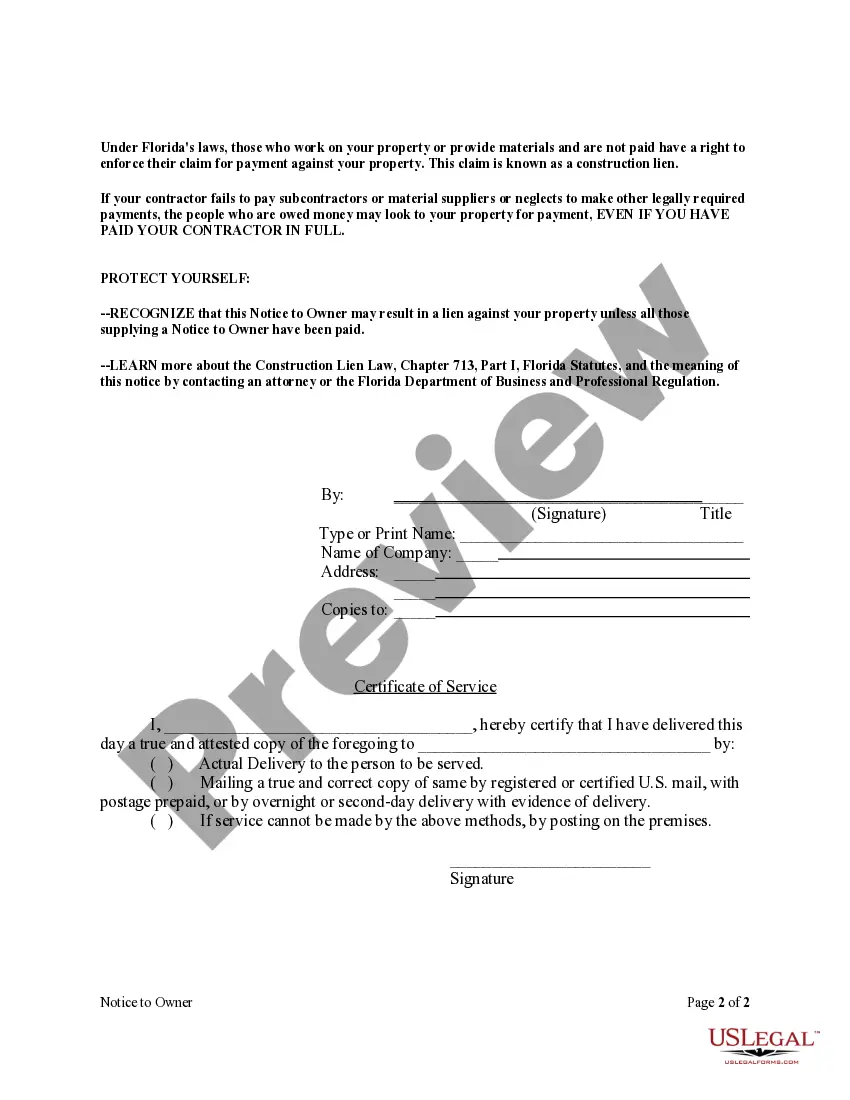
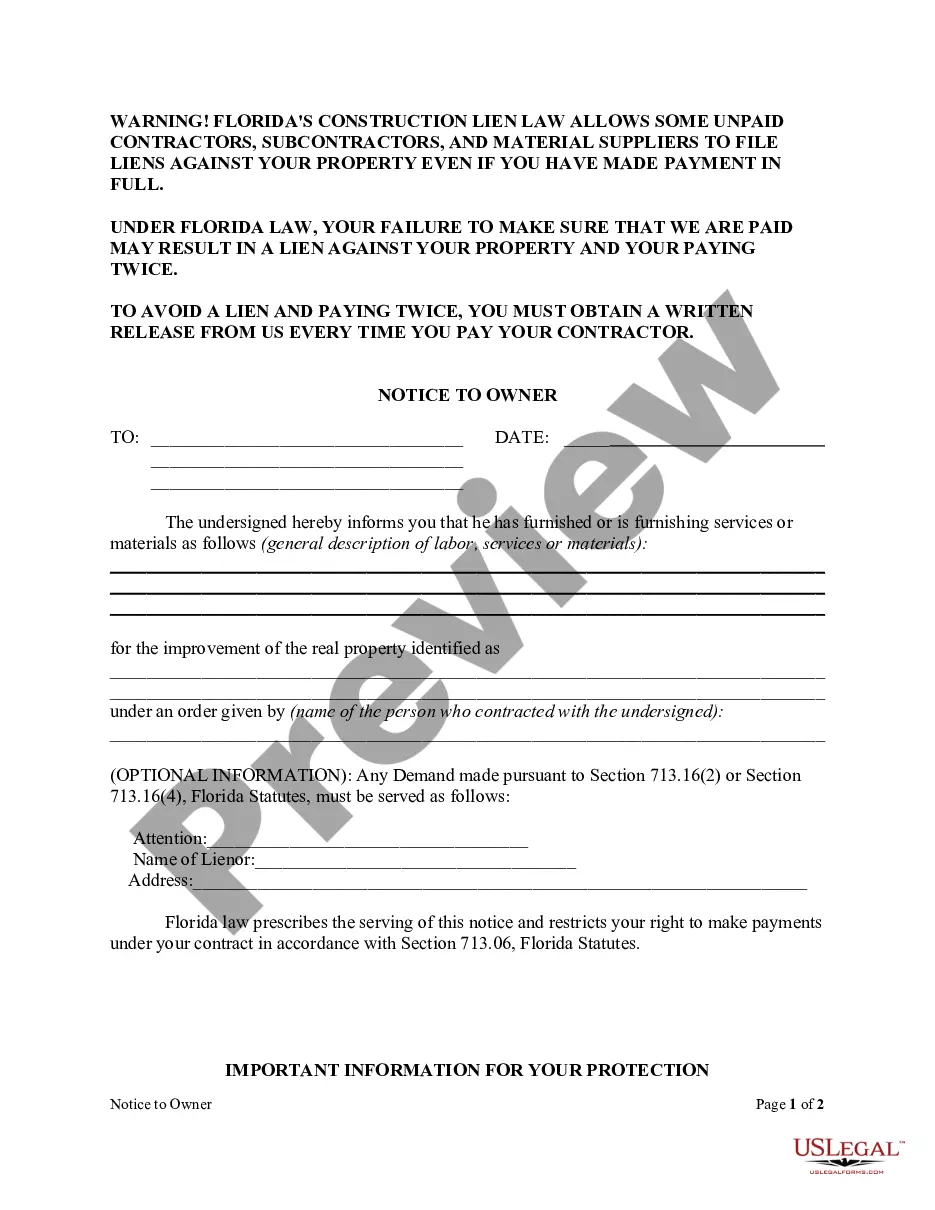
Notice Owner Florida Lien For The Property
Description
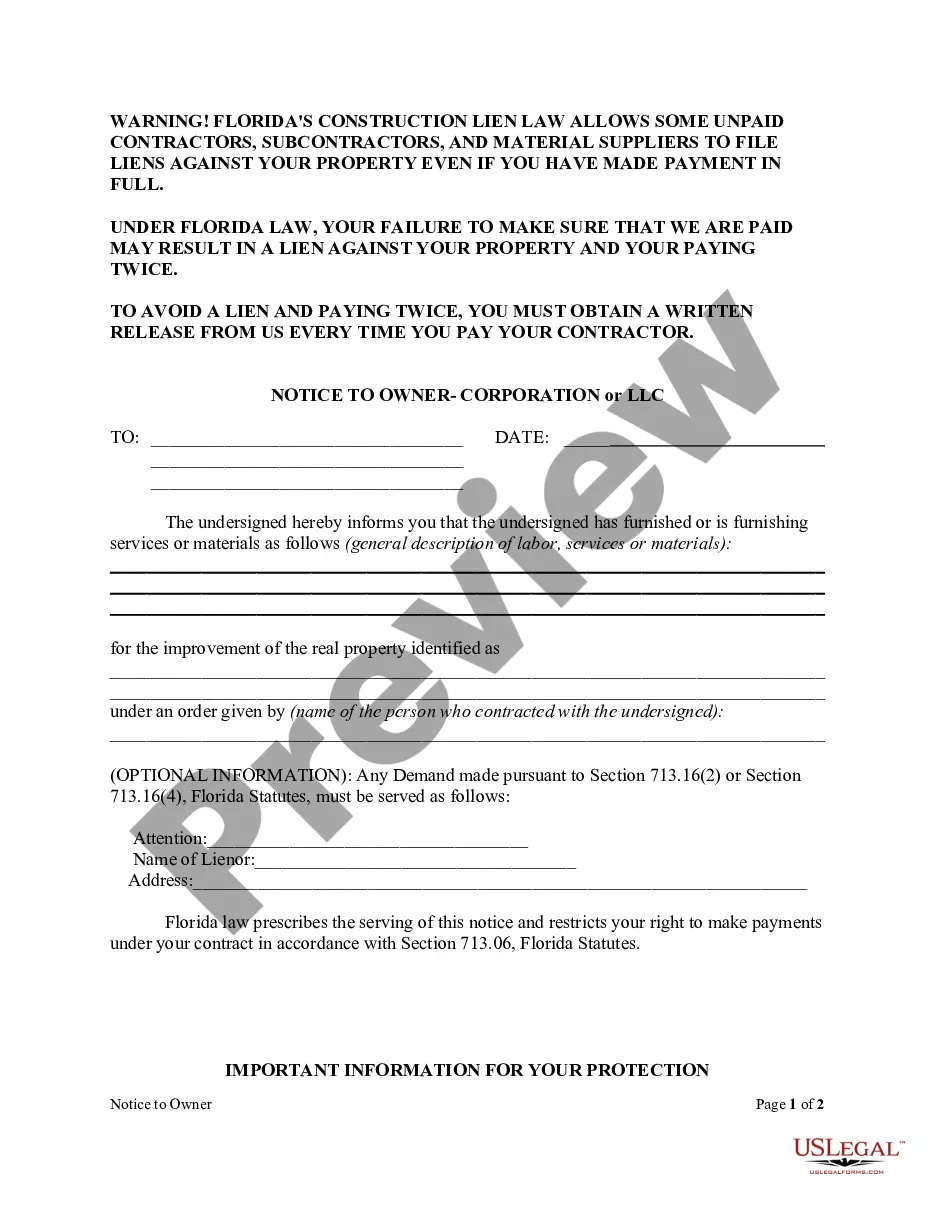
Get your form ready online
Our built-in tools help you complete, sign, share, and store your documents in one place.
Make edits, fill in missing information, and update formatting in US Legal Forms—just like you would in MS Word.
Download a copy, print it, send it by email, or mail it via USPS—whatever works best for your next step.
Sign and collect signatures with our SignNow integration. Send to multiple recipients, set reminders, and more. Go Premium to unlock E-Sign.
If this form requires notarization, complete it online through a secure video call—no need to meet a notary in person or wait for an appointment.
We protect your documents and personal data by following strict security and privacy standards.

Make edits, fill in missing information, and update formatting in US Legal Forms—just like you would in MS Word.

Download a copy, print it, send it by email, or mail it via USPS—whatever works best for your next step.

Sign and collect signatures with our SignNow integration. Send to multiple recipients, set reminders, and more. Go Premium to unlock E-Sign.

If this form requires notarization, complete it online through a secure video call—no need to meet a notary in person or wait for an appointment.

We protect your documents and personal data by following strict security and privacy standards.
Looking for another form?







How to fill out Florida Notice To Owner Form - Construction - Mechanic Liens - Corporation?
- If you're an existing user, log into your account and download the necessary form template. Verify that your subscription is active; renew it if required based on your plan.
- For first-time users, start by checking the Preview mode and form description to confirm you’ve selected the correct document that aligns with your legal needs and jurisdiction.
- If the initial form doesn’t meet your needs, utilize the Search tab to find other suitable templates.
- Once you’ve found the right document, click on the Buy Now button and select your desired subscription plan. You’ll need to register an account to access the full library.
- Complete your purchase by entering your payment details, either via credit card or PayPal, to secure your subscription.
- Finally, download the form and save it to your device, ensuring you can access it through the My Forms section in your profile whenever necessary.
Using US Legal Forms provides a robust collection of over 85,000 legal forms and packages, making it the go-to solution for individuals and attorneys alike. With expert assistance for form completion, you can ensure that your documents are precise and legally sound.
Get started with US Legal Forms today and simplify your legal document needs. Take control of your legal processes effortlessly!
Form popularity
FAQ
Yes, in Florida, various creditors can place a lien on your house, provided they follow the legal process. This can include contractors for unpaid work, tax authorities for owed taxes, and other creditors. It’s important to be aware of your financial obligations to prevent any complications. You might find that using tools from US Legal Forms helps clarify your obligations and manage lien notices effectively.
In Florida, you can typically file a lien without providing a notice to the owner, but this may depend on the type of lien. For construction-related liens, however, it is crucial to send a notice to the owner of the property within a specific timeframe. Ensuring compliance with these legal requirements is vital to enforce lien rights successfully. Using resources like US Legal Forms can help you understand the necessary steps to file a lien properly.
To find out if you have a lien on your property in Florida, you can search your county's public records online or visit the local clerk's office. Many counties offer online databases where you can enter your property information and view any recorded liens. Keeping track of your property's legal status can help you manage any potential issues. Services like US Legal Forms can assist you in navigating these records efficiently.
Yes, it is possible for someone to place a lien on your property without your knowledge. In Florida, a lien can be filed for unpaid debts, and you may not be notified until you receive a notice from the lienholder. It's essential to monitor your property records periodically to check for any new liens. Using services like US Legal Forms can help you stay informed about any notices related to liens on your property.
To send a Notice to Owner in Florida, draft the notice with all required information and send it via certified mail to the property owner. Ensure you keep proof of mailing as evidence of your compliance. Taking these steps helps protect your rights regarding unpaid work or materials. USLegalForms provides templates and instructions to make this process smooth.
To find a lien on a property in Florida, you can check the public records in the county where the property is located. County clerk offices typically maintain these records online, allowing you to search by property address or owner name. This can help you identify any existing liens before purchasing a property. USLegalForms can guide you through the search process efficiently.
No, a Notice to Owner is not the same as a Notice of Commencement in Florida. The Notice of Commencement signals the start of construction, while the Notice to Owner informs property owners about potential liens. Understanding the difference is crucial for both contractors and property owners. USLegalForms offers insights to help you navigate these documents properly.
In Florida, you can still send a Notice to Owner after work is complete, but timing is critical. Doing this lets the property owner know that a lien may be coming due to unpaid work. In many cases, sending a notice as soon as possible helps preserve your lien rights. Consider using USLegalForms to understand the best timing for your situation.
In Florida, a Notice to Owner does not need to be notarized. However, it must comply with certain statutory requirements to be effective. It is wise to keep a copy for your records as proof of delivery. USLegalForms provides resources to ensure your notice is correctly formatted and compliant.
A notice to owner is not a lien itself, but it serves as a crucial step in establishing one. This notice alerts the property owner of possible claims against their property for work done or materials provided. By sending a notice to owner, you can protect your right to file a lien later on. USLegalForms can assist you in drafting this important document.