Foraminal Encroachment With Spondylosis
Description
Get your form ready online
Our built-in tools help you complete, sign, share, and store your documents in one place.
Make edits, fill in missing information, and update formatting in US Legal Forms—just like you would in MS Word.
Download a copy, print it, send it by email, or mail it via USPS—whatever works best for your next step.
Sign and collect signatures with our SignNow integration. Send to multiple recipients, set reminders, and more. Go Premium to unlock E-Sign.
If this form requires notarization, complete it online through a secure video call—no need to meet a notary in person or wait for an appointment.
We protect your documents and personal data by following strict security and privacy standards.

Make edits, fill in missing information, and update formatting in US Legal Forms—just like you would in MS Word.

Download a copy, print it, send it by email, or mail it via USPS—whatever works best for your next step.

Sign and collect signatures with our SignNow integration. Send to multiple recipients, set reminders, and more. Go Premium to unlock E-Sign.

If this form requires notarization, complete it online through a secure video call—no need to meet a notary in person or wait for an appointment.

We protect your documents and personal data by following strict security and privacy standards.
Looking for another form?






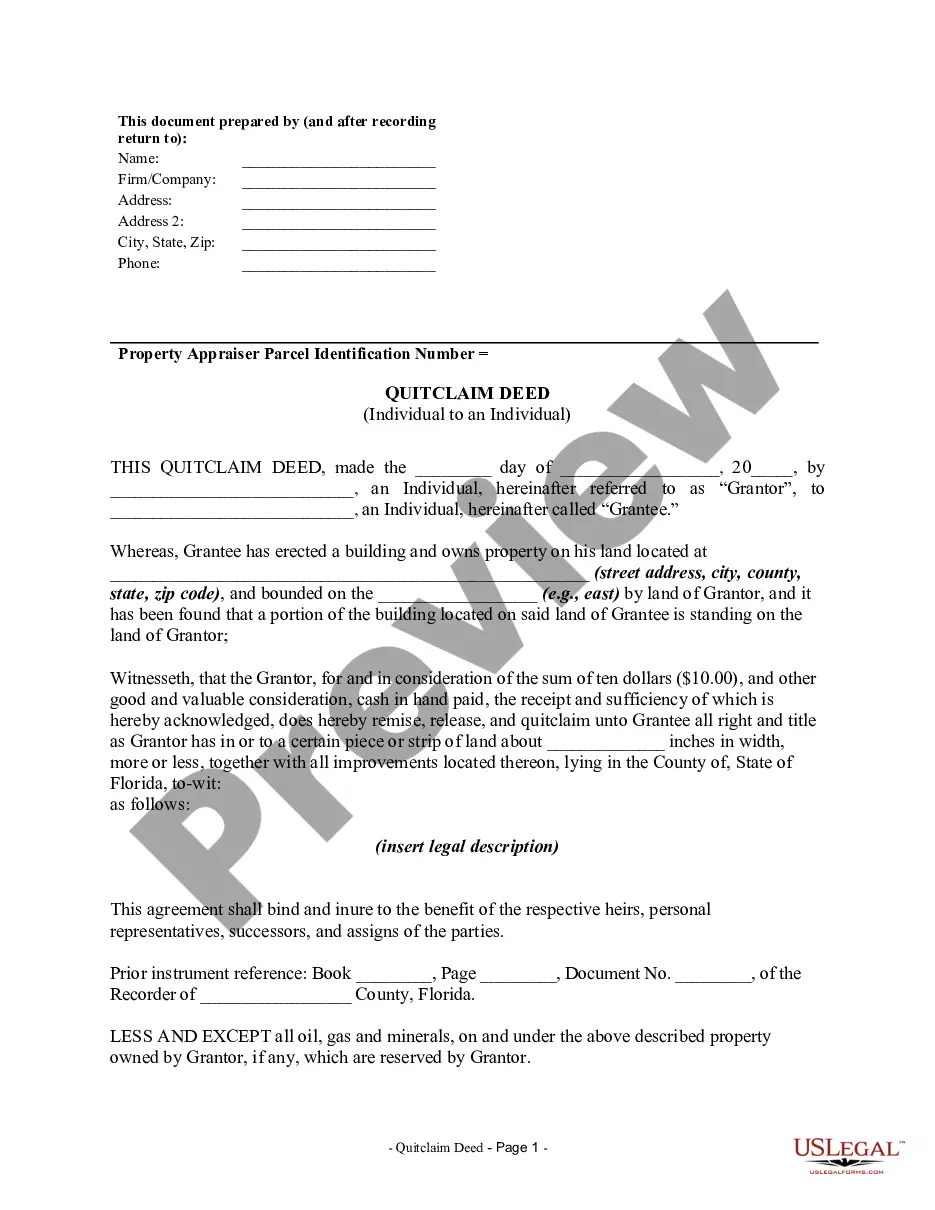
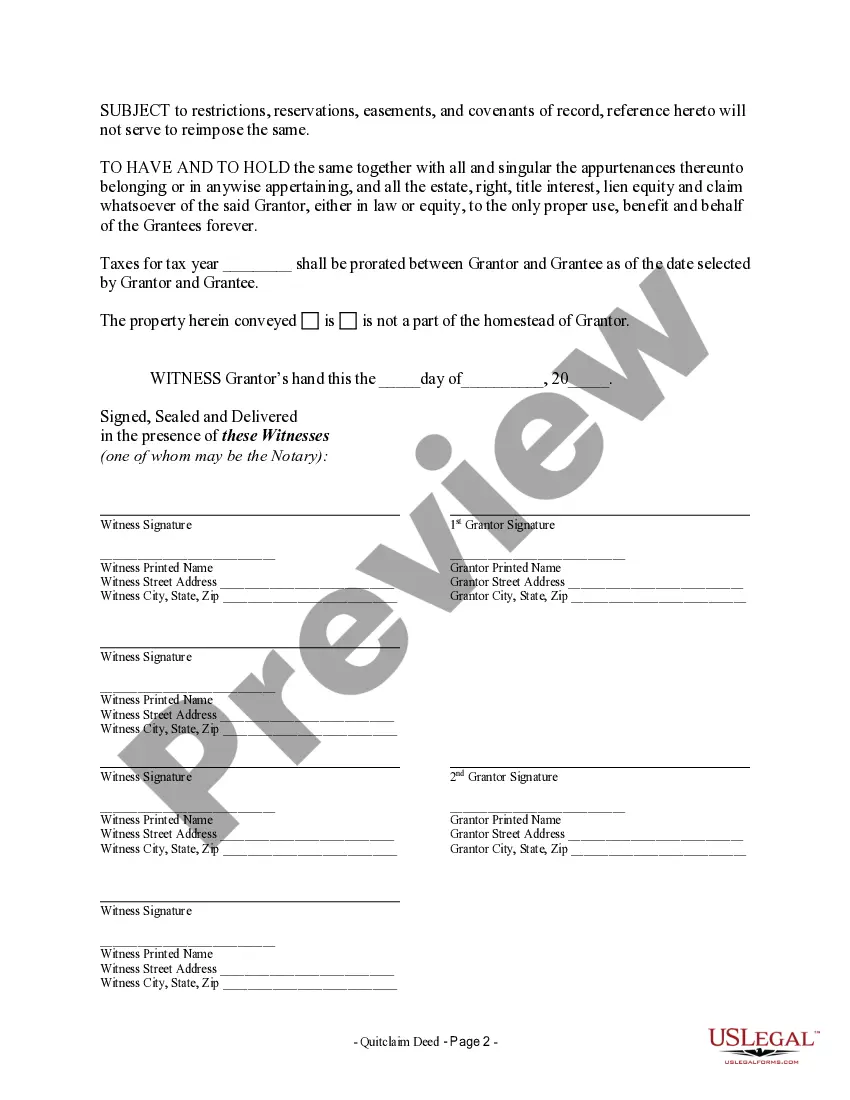
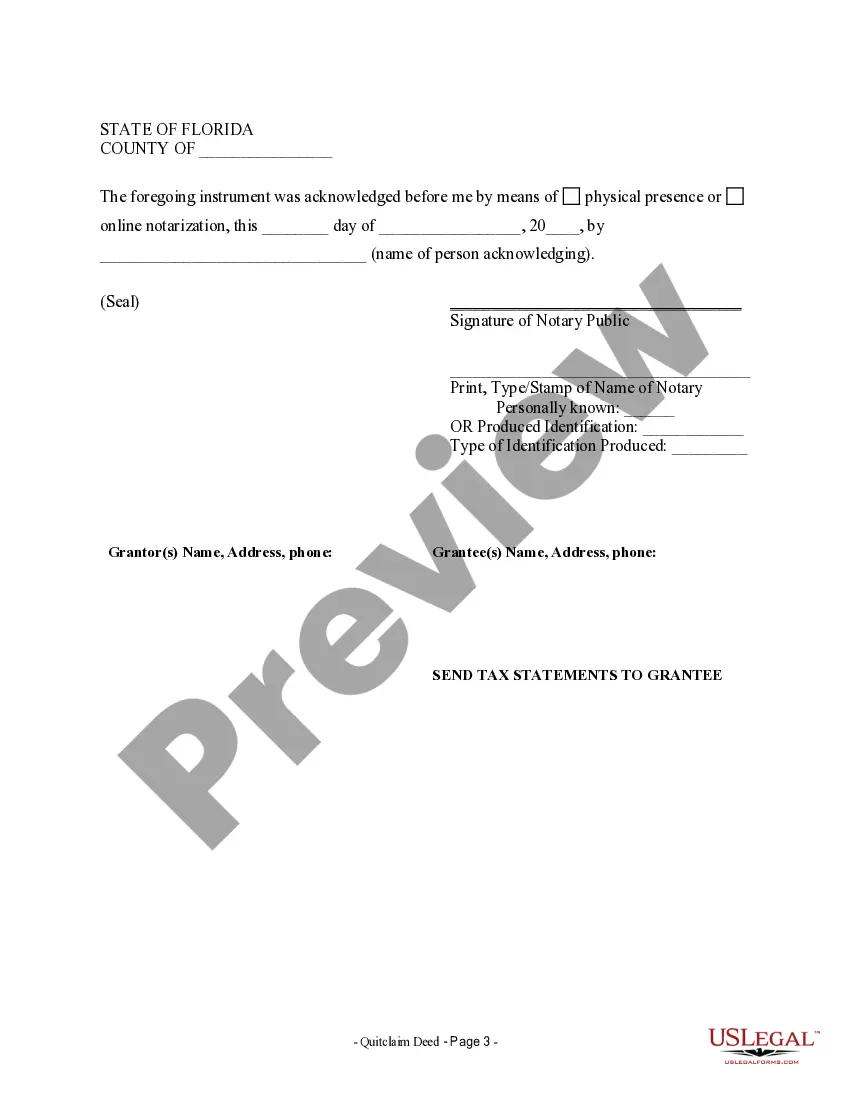
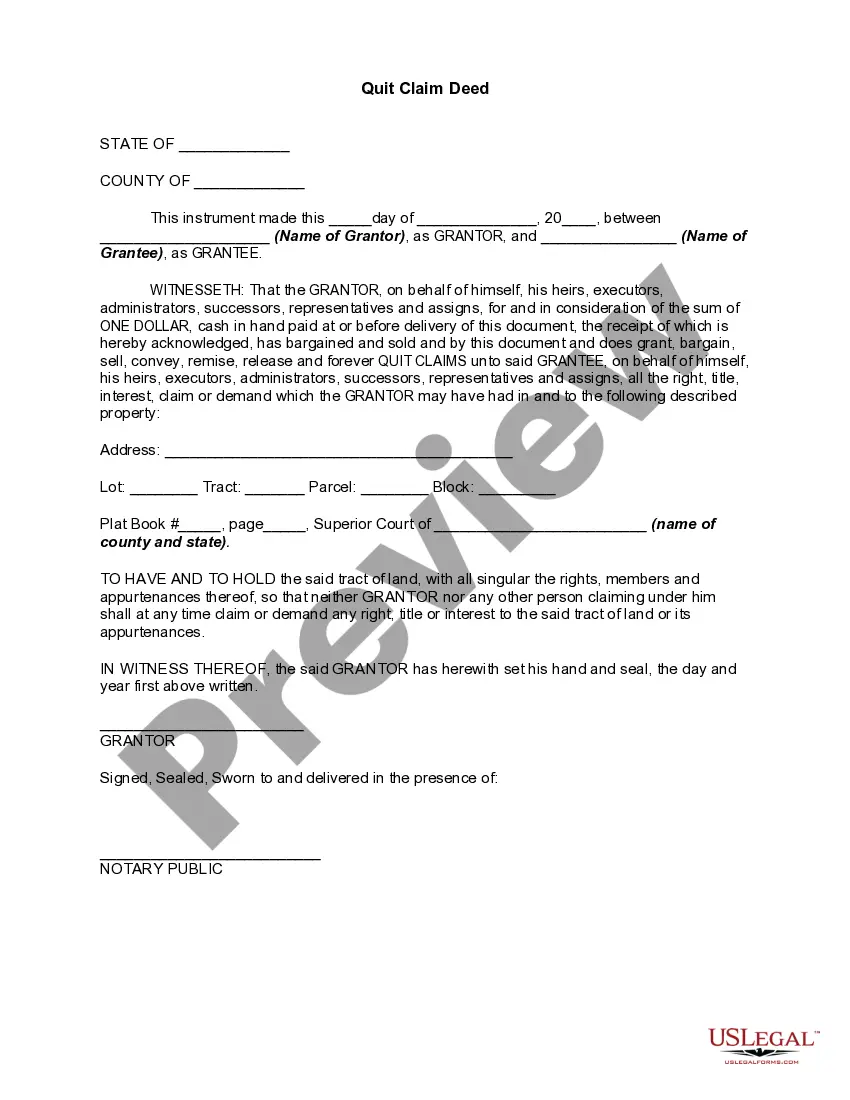
How to fill out Florida Quitclaim Deed Curing Encroachment?
- If you're a returning user, log in to your US Legal Forms account and download the required form by clicking the Download button. Ensure your subscription is current; otherwise, renew it according to your chosen plan.
- For first-time users, start by checking the Preview mode and form description to confirm you've selected the correct document that meets your specific needs and local jurisdiction.
- If you need to find another template, utilize the Search tab to look for a suitable alternative. Proceed to the next step if you find the right one.
- Purchase the document by clicking the Buy Now button and select a subscription plan. You will need to create an account to access the complete library.
- Complete your purchase by entering your credit card details or using your PayPal account for payment.
- Finally, download the form and save it on your device, ensuring you can access it anytime from the My Forms menu in your profile.
By following these steps, you're not just getting a form; you're also gaining access to premium experts who can assist you in completing them accurately. This ensures that your documents are both precise and legally sound.
Take control of your legal documentation today with US Legal Forms. Start your journey by visiting our website and discover how our extensive resources can assist you!
Form popularity
FAQ
Cervical spondylosis with encroachment refers to the degeneration of cervical spine discs and joints, leading to narrowing around the nerve roots. This condition can cause discomfort, stiffness, and nerve issues due to foraminal encroachment. Understanding this condition is crucial for managing symptoms effectively and improving quality of life. Utilizing platforms like USLegalForms can provide resources and documentation to help navigate the legal aspects related to treatment and care.
Treatment for foraminal encroachment generally starts with non-invasive methods, such as medications, physical therapy, and lifestyle adjustments. In cases where these do not provide sufficient relief, surgical options may include procedures like foraminotomy. The goal is to relieve pressure on the nerves affected by foraminal encroachment with spondylosis, ensuring better mobility and comfort.
Foraminal narrowing is often a progressive condition, but certain interventions can help manage it effectively. While complete reversal may not always be possible, lifestyle changes, physical therapy, and proper medical treatments can slow its progression. It's essential to address the underlying causes, typically related to foraminal encroachment with spondylosis, to achieve the best results.
Fixing foraminal encroachment often involves both conservative and surgical approaches. Initially, gentle exercises, physical therapy, and pain management can relieve discomfort. If symptoms persist, surgical options like foraminotomy might be necessary to widen the foraminal space. These methods aim to alleviate pressure caused by foraminal encroachment with spondylosis.
The three stages of spondylosis include early degeneration, advanced degeneration, and severe degeneration. In early stages, you might experience mild discomfort and stiffness related to foraminal encroachment with spondylosis. As the condition progresses, symptoms can worsen, and you may face increased pain and mobility issues. Finally, severe degeneration can lead to significant functional limitations. Monitoring these stages with a healthcare professional can help manage symptoms effectively.
Encroachment seen on an MRI refers to areas where structures, such as vertebrae or disc material, intrude upon or compress nerve pathways. In cases of foraminal encroachment with spondylosis, MRI imaging provides clarity regarding the extent of this compression, helping guide treatment decisions. Understanding what these MRI results mean is crucial for creating an effective care plan. Your healthcare provider can break down these findings to ensure you understand their implications.
Treating nerve root encroachment due to foraminal encroachment with spondylosis often begins with conservative methods, including medication and physical therapy. These strategies can help relieve pain and improve function. If symptoms persist or worsen, your healthcare provider may recommend additional procedures, such as nerve blocks or surgery. Always discuss treatment options with a qualified provider to find the best solution for your needs.
Yes, foraminal encroachment can be serious, particularly if it leads to nerve compression. This condition may cause chronic pain, weakness, or sensory changes, significantly affecting daily activities. Therefore, recognizing the seriousness of symptoms linked to foraminal encroachment with spondylosis is crucial. Seek medical advice to address these issues and explore potential treatment options.
To treat nerve encroachment resulting from foraminal encroachment with spondylosis, a multi-faceted approach is often the most beneficial. Initially, healthcare providers may recommend rest, physical therapy, and anti-inflammatory medications. In more severe cases, techniques such as spinal injections may be suggested to alleviate pain. Consulting with a specialist can help you determine the appropriate treatment plan tailored to your specific situation.
Cervical spondylosis with foraminal narrowing describes the age-related changes in the cervical spine, which can lead to compressed nerve roots in the foraminal openings. This condition affects many individuals as they age and can arise from degeneration of discs and joints in the neck. Symptoms often include pain, numbness, or weakness in the arms. It’s important to recognize these signs early and explore treatment options to maintain quality of life.