Notice Of Vacating Apartment
Description


Get your form ready online
Our built-in tools help you complete, sign, share, and store your documents in one place.
Make edits, fill in missing information, and update formatting in US Legal Forms—just like you would in MS Word.
Download a copy, print it, send it by email, or mail it via USPS—whatever works best for your next step.
Sign and collect signatures with our SignNow integration. Send to multiple recipients, set reminders, and more. Go Premium to unlock E-Sign.
If this form requires notarization, complete it online through a secure video call—no need to meet a notary in person or wait for an appointment.
We protect your documents and personal data by following strict security and privacy standards.

Make edits, fill in missing information, and update formatting in US Legal Forms—just like you would in MS Word.

Download a copy, print it, send it by email, or mail it via USPS—whatever works best for your next step.

Sign and collect signatures with our SignNow integration. Send to multiple recipients, set reminders, and more. Go Premium to unlock E-Sign.

If this form requires notarization, complete it online through a secure video call—no need to meet a notary in person or wait for an appointment.

We protect your documents and personal data by following strict security and privacy standards.
Looking for another form?

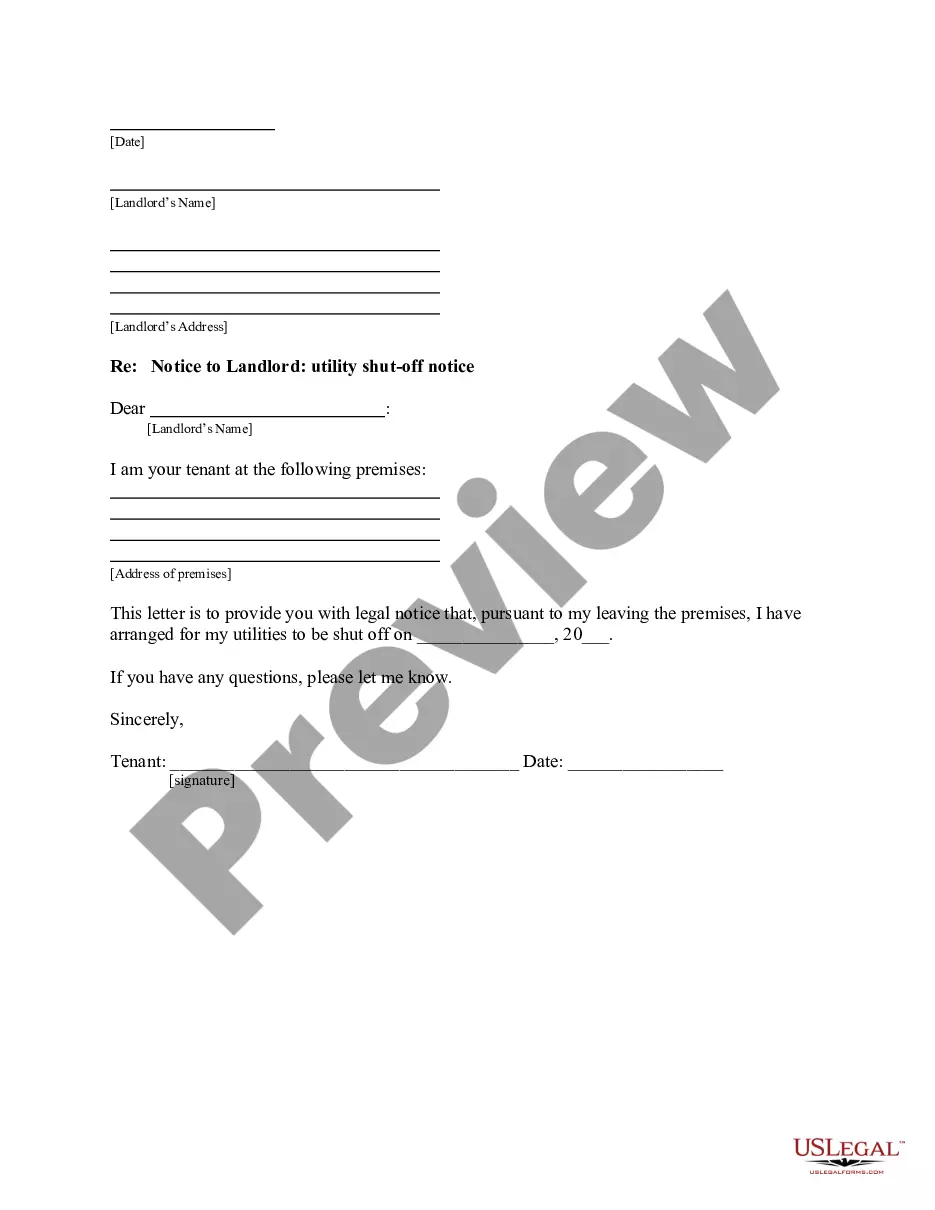
How to fill out Connecticut Letter From Tenant To Landlord - Utility Shut Off Notice To Landlord Due To Tenant Vacating Premises?
- Log in to your US Legal Forms account if you're a returning user and retrieve the required document by tapping the Download button. Verify your subscription status to ensure it's active.
- For new users, start by exploring the Preview mode and form descriptions to find the appropriate Notice of Vacating Apartment that aligns with your local regulations.
- If you encounter any discrepancies, utilize the Search tab above to look for the correct template that suits your requirements.
- Purchase the document by clicking the Buy Now button and select a subscription plan. Creating an account will grant you access to the extensive library of forms.
- Complete your payment using your credit card or PayPal account for the subscription.
- Download your Notice of Vacating Apartment form and save it on your device. You can access it anytime from the My Forms section of your profile.
US Legal Forms offers an extensive collection of over 85,000 customizable legal documents, ensuring that you have everything you need at your fingertips. Their service empowers users to execute legal documents quickly and confidently.
Taking control of your moving process starts with the right documentation. Don’t wait—visit US Legal Forms today to access your Notice of Vacating Apartment and other legal forms effortlessly.
Form popularity
FAQ
A notice to vacate is not the same as an eviction. The notice of vacating apartment simply informs the landlord of your intention to leave, whereas eviction involves legal proceedings initiated by the landlord to remove a tenant for not complying with lease terms. Understanding the difference can help you navigate your rights and responsibilities as a tenant. Utilize USLegalForms for templates to create effective notices.
When writing a notice from a tenant to a landlord, start with a clear subject line that states the nature of the notice, such as 'Notice of vacating apartment.' In the body of the message, briefly introduce yourself and provide relevant details like your lease terms and proposed move-out date. Conclude with your contact information for any follow-up. This structured approach helps convey your message effectively.
To write an apartment move out notice, begin by stating the date of your letter. Clearly express your intention to vacate the apartment, and mention your expected move-out date. Include your full name, the address of the apartment, and any necessary details that the landlord requires. This notice is crucial for establishing clear communication about your plans to leave the premises.
When leaving an apartment, write a brief letter that conveys your intention to vacate the premises. Include crucial details such as your moving date and your new address if necessary. Make note of your appreciation for the accommodation during your stay. This communication serves as a formal notice of vacating apartment, helping to ensure all parties are informed and professional in the process.
To write a letter to vacate your apartment, start by including your address and date at the top. Clearly indicate your intention to vacate, stating the date you plan to move out. It may also help to express appreciation towards your landlord for your time in the rental. This letter serves as an official notice of vacating apartment, providing your landlord with the necessary information to prepare for your departure.
If you do not give 30 days notice before moving, you may risk losing your security deposit or facing additional fees. In many cases, landlords require this notice as part of the lease agreement. By not adhering to this notice period, you could also damage your rental history. It's best to follow the proper procedures to avoid these complications and ensure a smooth transition.
To write a letter of vacating an apartment, begin with your name and address at the top, followed by the date. Next, include your landlord's name and address, and clearly state your intent to vacate, along with your planned moving date. This document should specify that it serves as a notice of vacating apartment to ensure clarity and to maintain a good relationship with your landlord.
In Utah, the eviction process typically ranges from 30 to 60 days, depending on the case details. After receiving an eviction notice, you have a chance to respond, and if unresolved, the landlord may file a complaint in court. This timeline can vary based on court schedules and the reason for eviction. To navigate this process effectively, consider consulting resources on the notice of vacating apartment available through US Legal Forms.
Failing to give a 30-day notice can result in complications such as financial penalties or even potential eviction proceedings. Many rental agreements stipulate that a notice of vacating apartment must meet this timeframe, and not adhering to it could lead to forfeiting your security deposit. Always check your lease agreement to understand the specific requirements. For assistance, consider using platforms like US Legal Forms to find resources related to your rights as a tenant.
It is possible to retract your notice to vacate, but this often depends on your landlord's agreement. Communicate promptly with your landlord to discuss your decision and seek their permission. Remember that the notice of vacating apartment you provided may have already initiated the move-out process, so act quickly to avoid misunderstandings. Using a formal letter template can help structure your request.