Ct Divorce Law For Nri
Description


Get your form ready online
Our built-in tools help you complete, sign, share, and store your documents in one place.
Make edits, fill in missing information, and update formatting in US Legal Forms—just like you would in MS Word.
Download a copy, print it, send it by email, or mail it via USPS—whatever works best for your next step.
Sign and collect signatures with our SignNow integration. Send to multiple recipients, set reminders, and more. Go Premium to unlock E-Sign.
If this form requires notarization, complete it online through a secure video call—no need to meet a notary in person or wait for an appointment.
We protect your documents and personal data by following strict security and privacy standards.

Make edits, fill in missing information, and update formatting in US Legal Forms—just like you would in MS Word.

Download a copy, print it, send it by email, or mail it via USPS—whatever works best for your next step.

Sign and collect signatures with our SignNow integration. Send to multiple recipients, set reminders, and more. Go Premium to unlock E-Sign.

If this form requires notarization, complete it online through a secure video call—no need to meet a notary in person or wait for an appointment.

We protect your documents and personal data by following strict security and privacy standards.
Looking for another form?







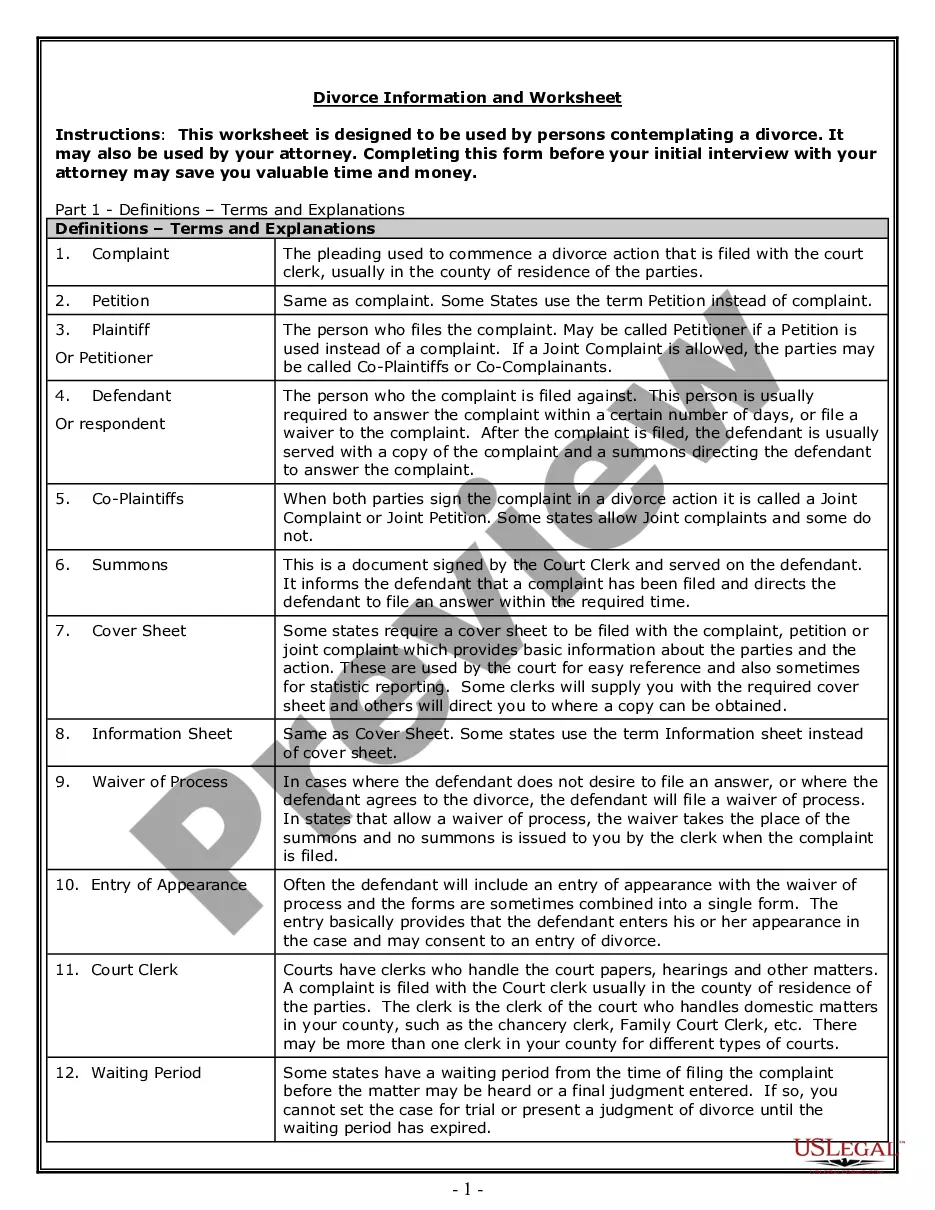
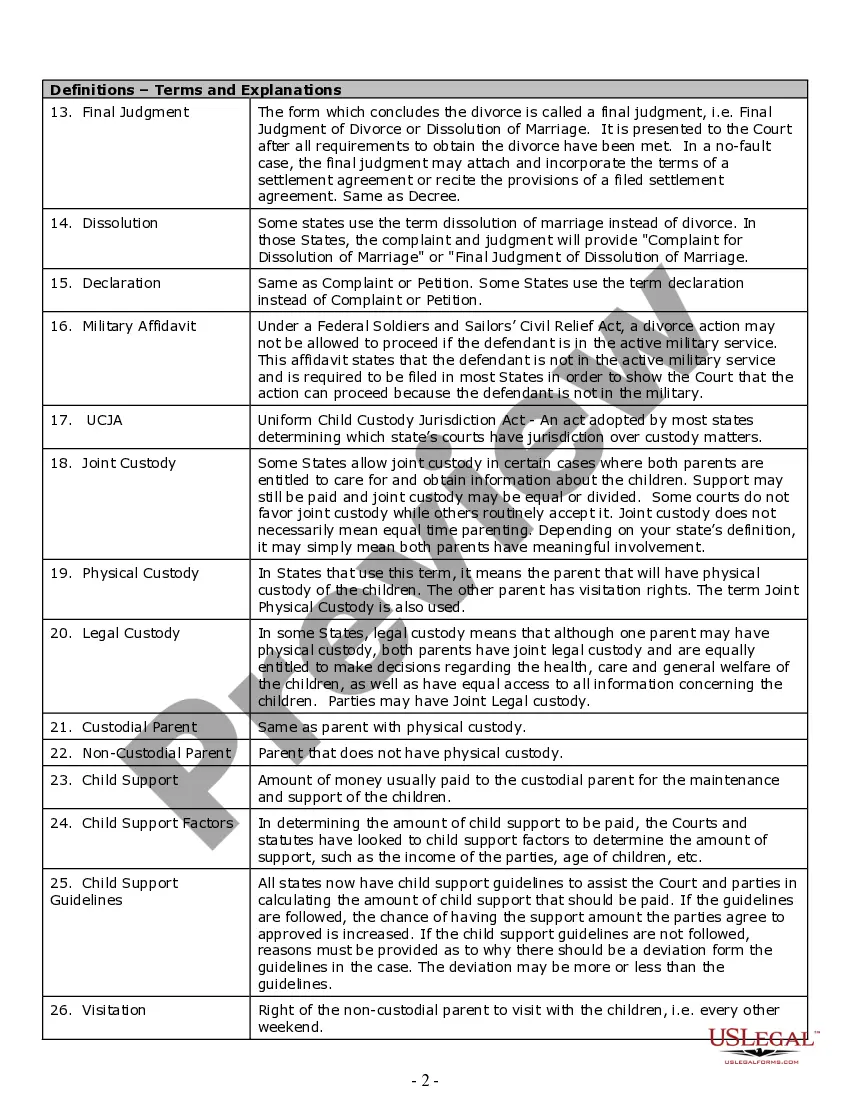
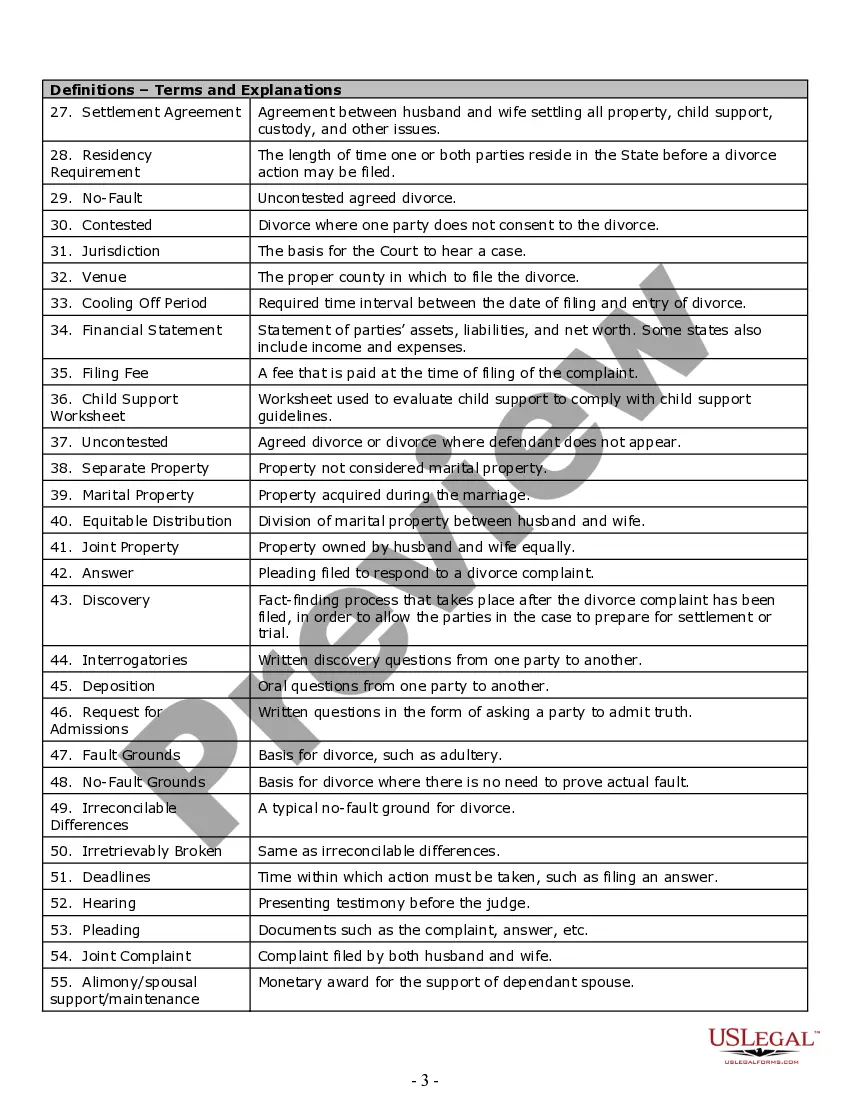
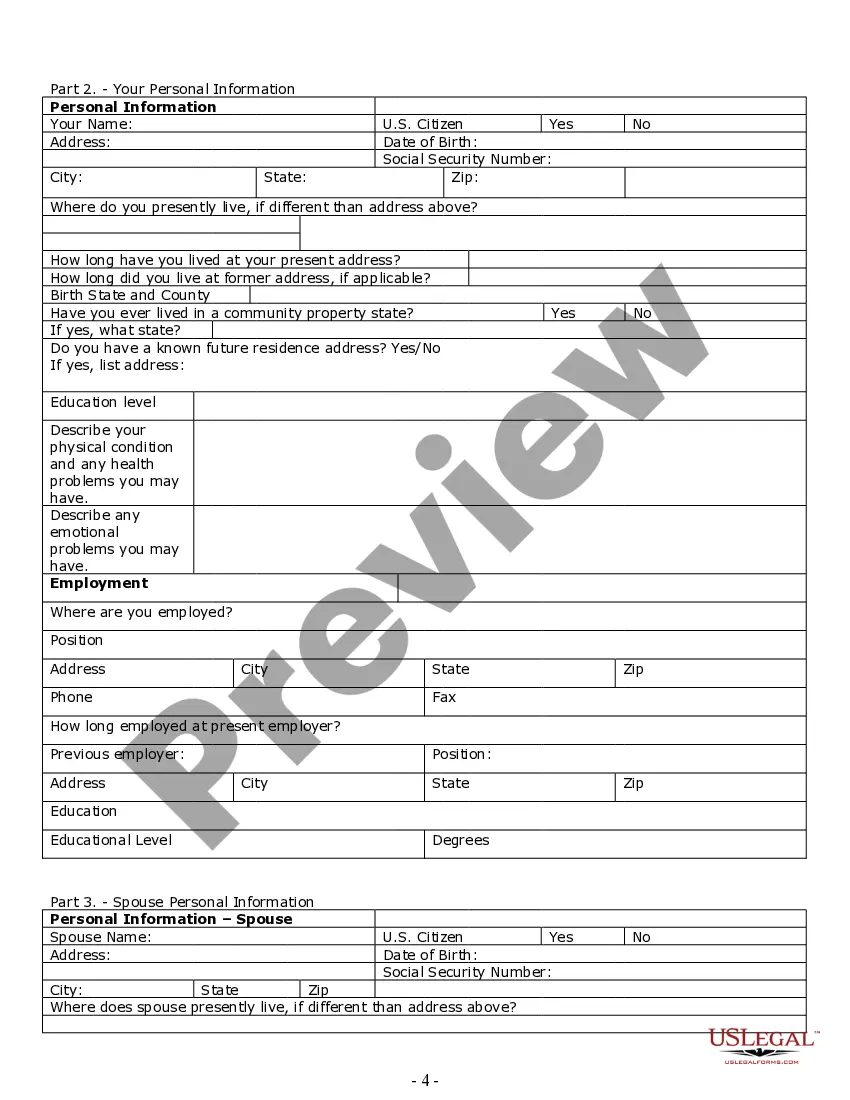
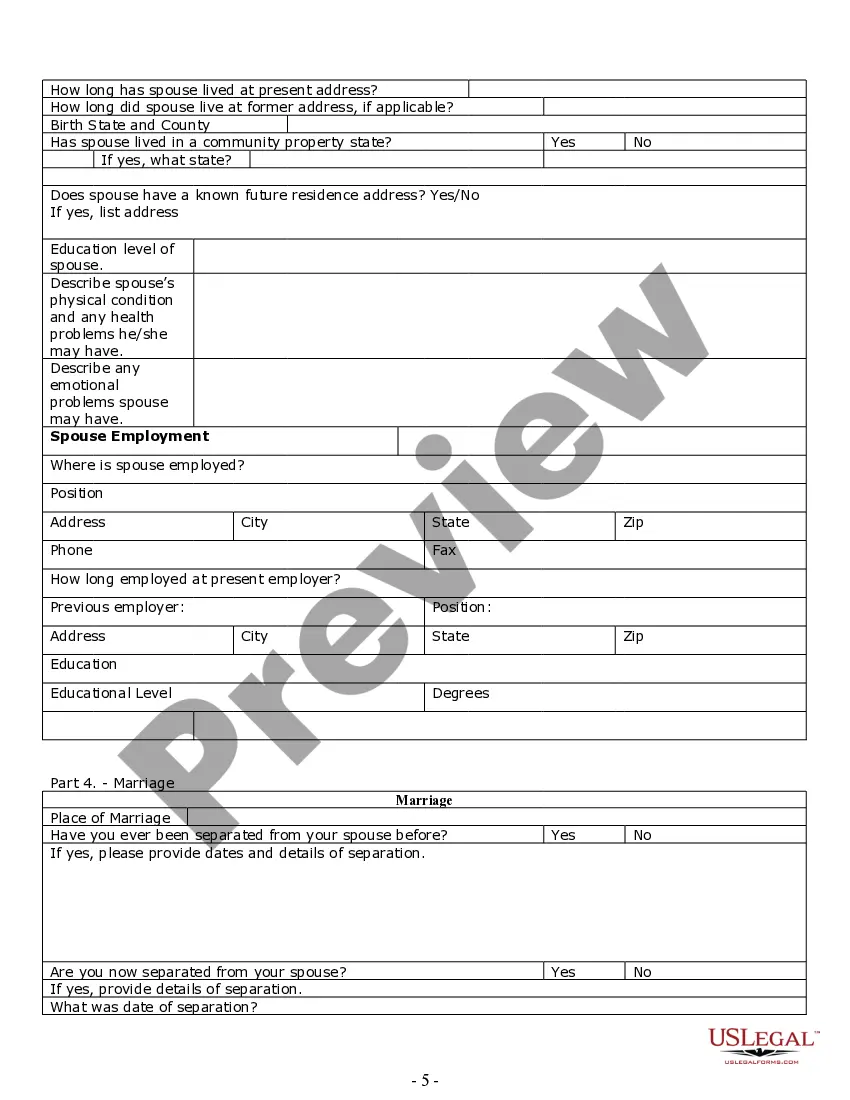
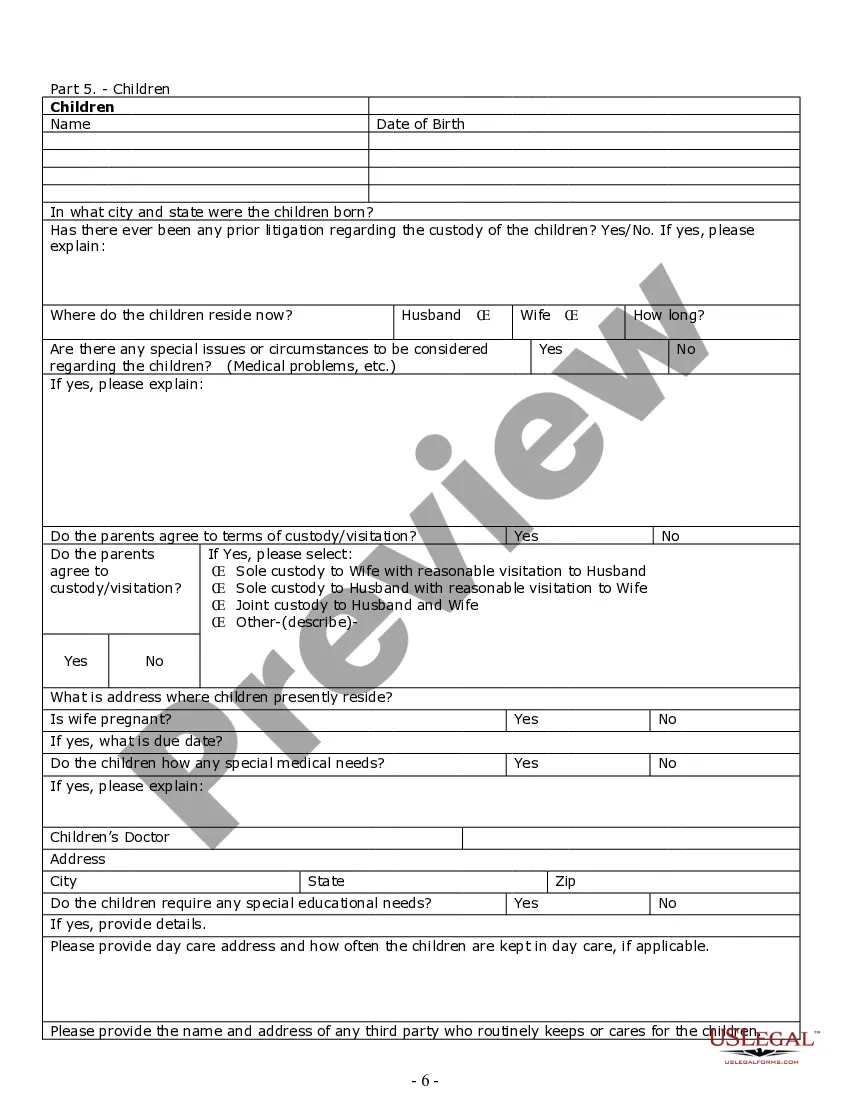
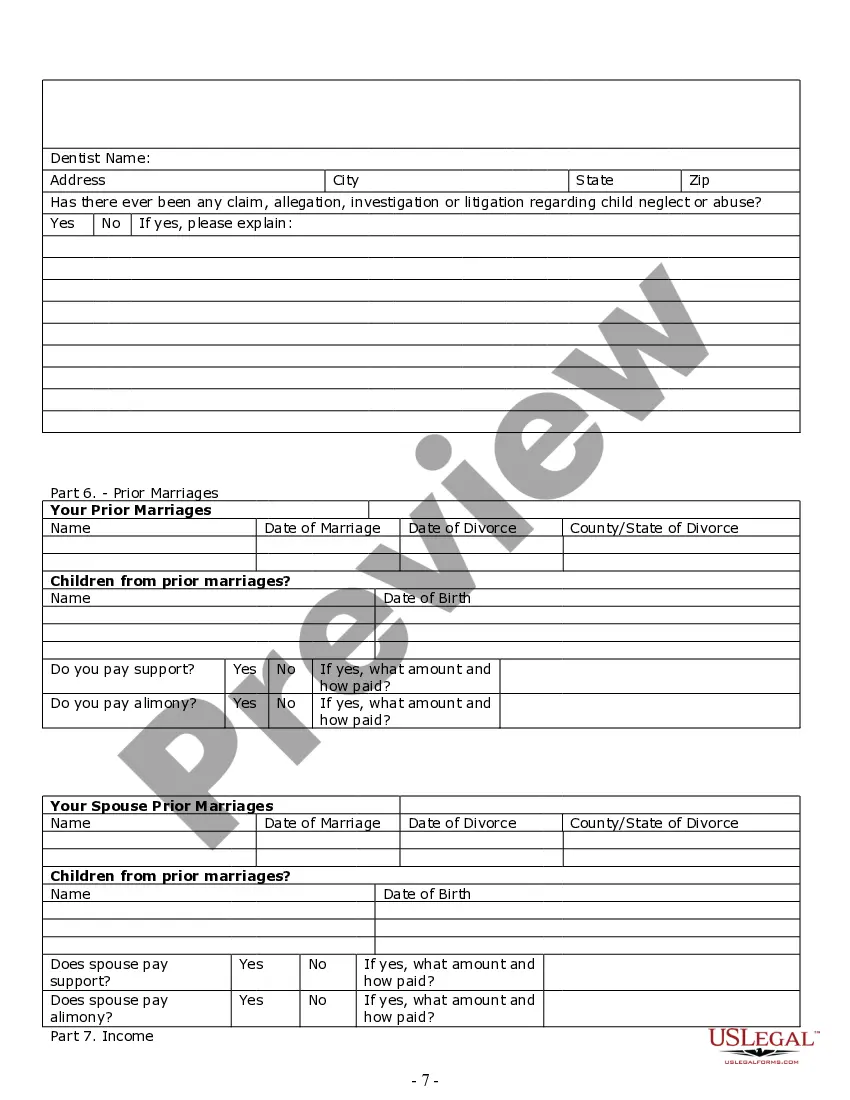
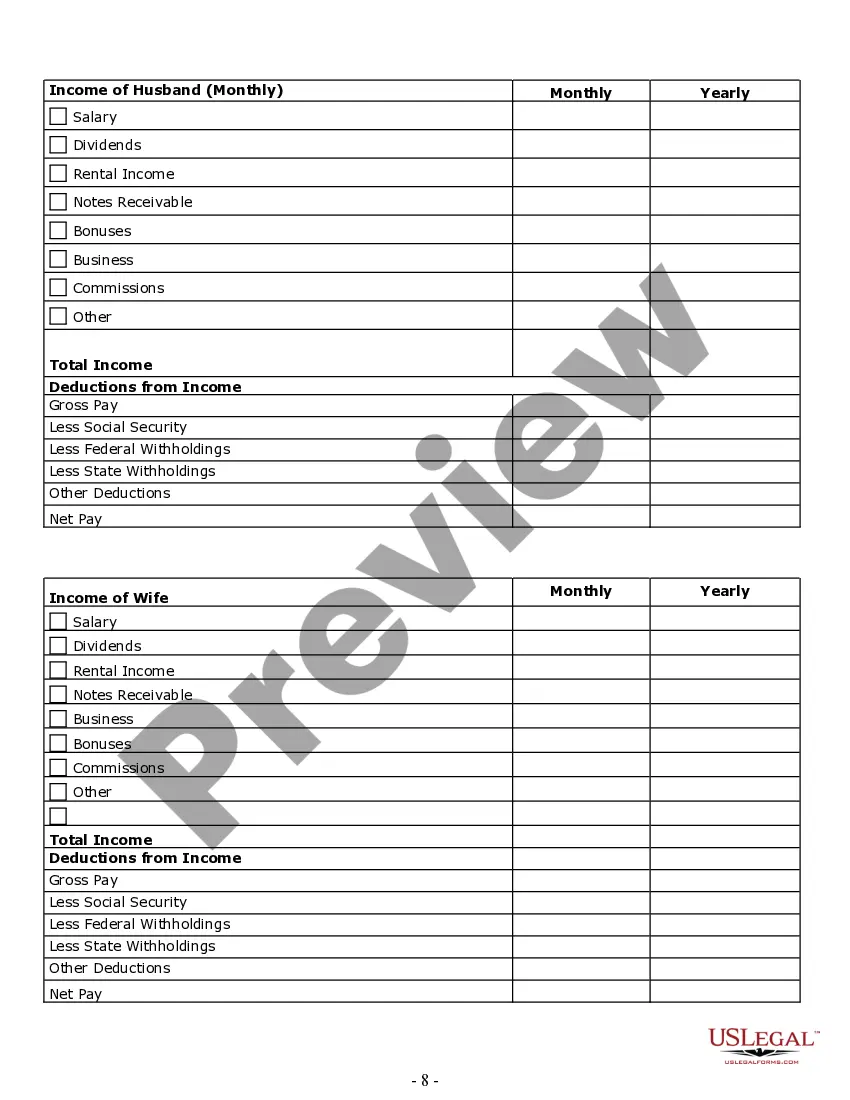
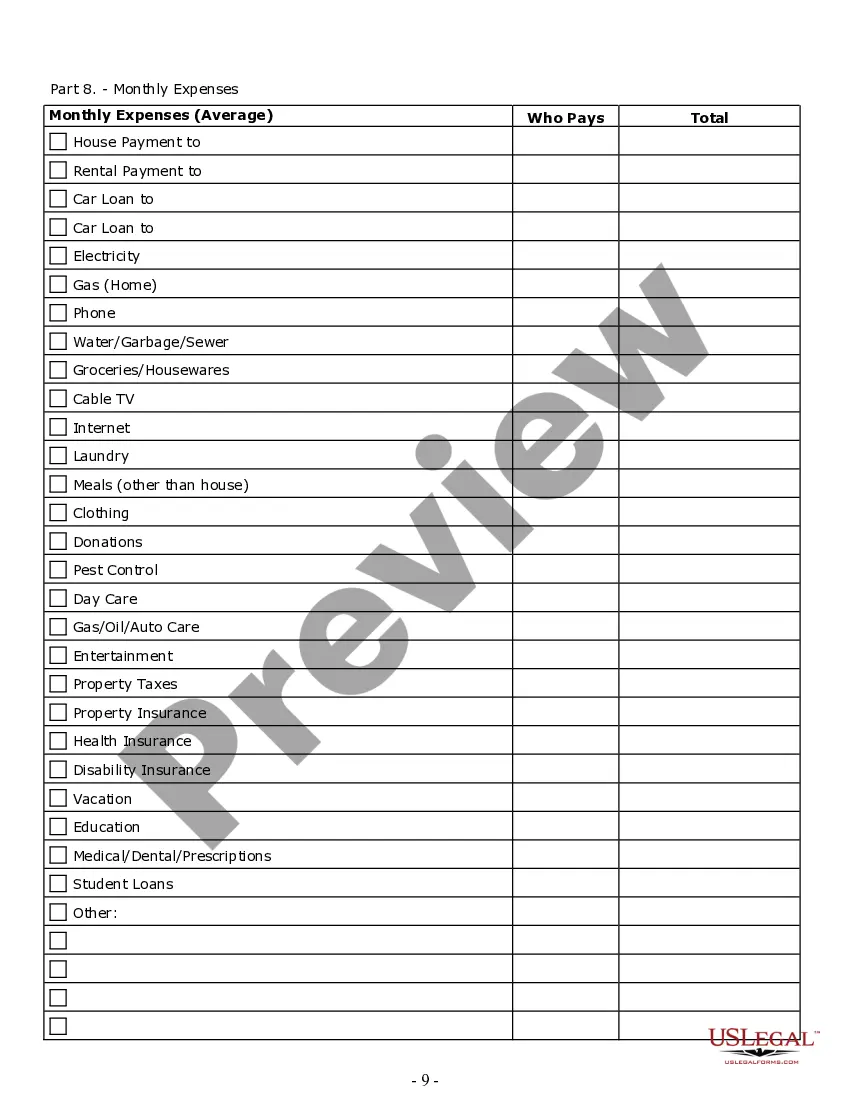
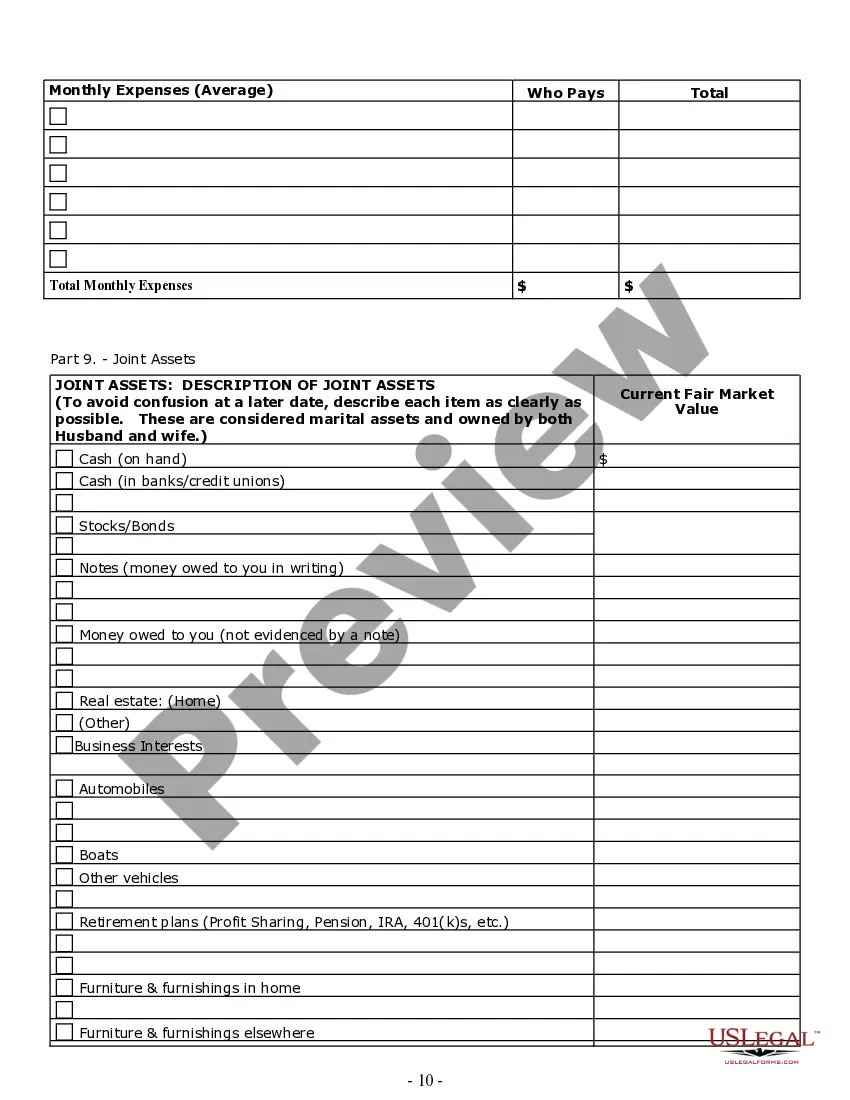
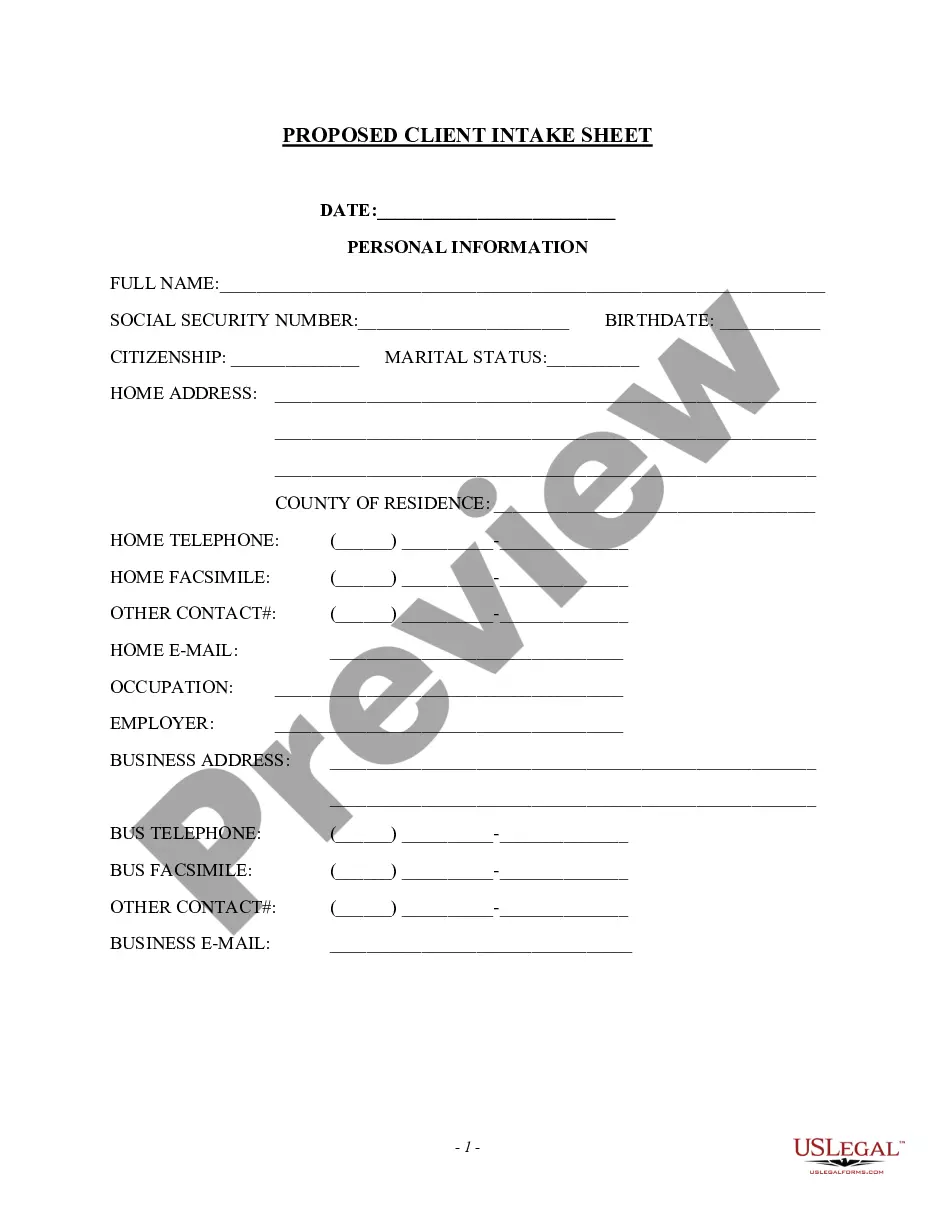
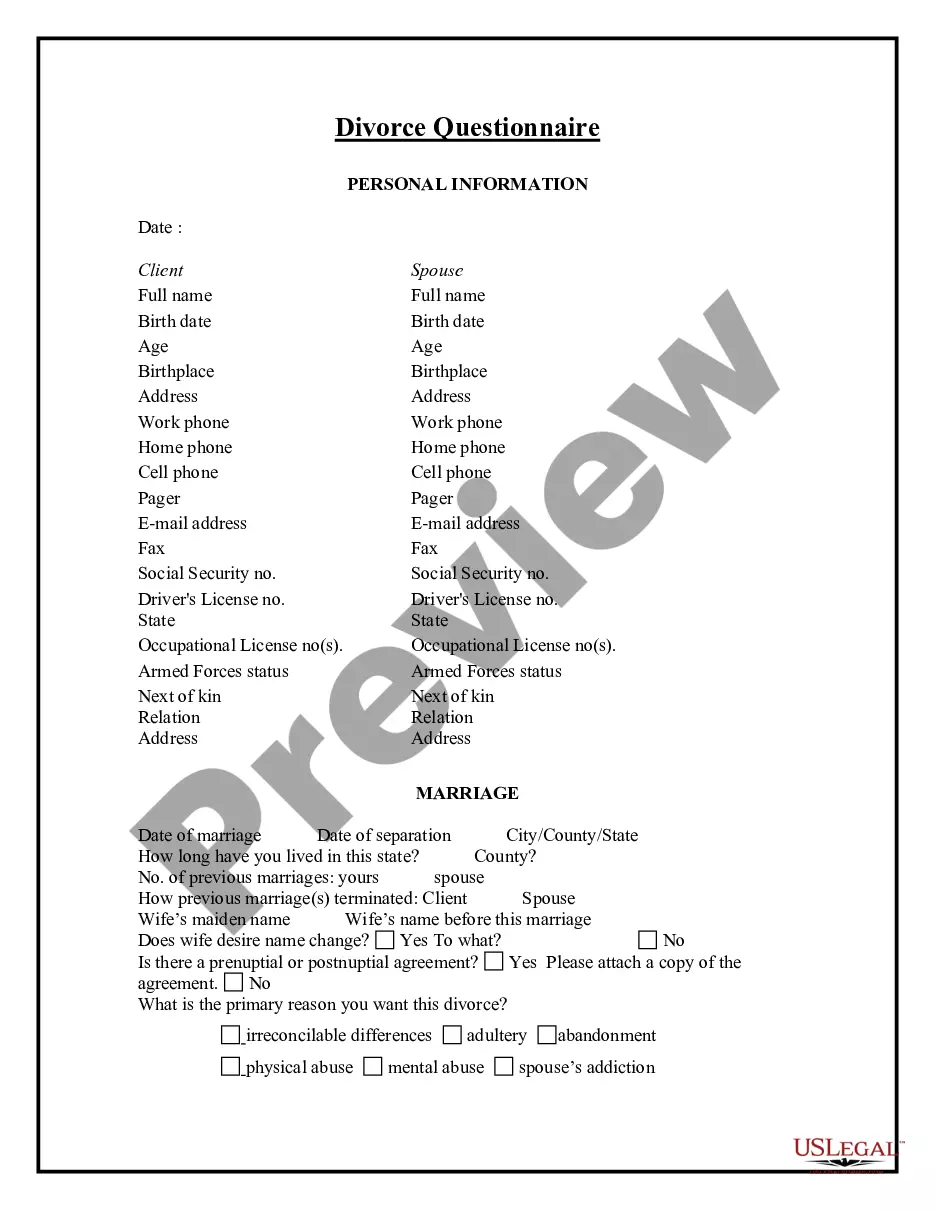
How to fill out Connecticut Divorce Worksheet And Law Summary For Contested Or Uncontested Case Of Over 25 Pages - Ideal Client Interview Form?
Managing legal documents and processes can be a lengthy addition to your entire day.
Ct Divorce Law For Nri and similar forms frequently necessitate that you locate them and maneuver through the steps to fill them out correctly.
Thus, whether you are addressing financial, legal, or personal issues, having a comprehensive and straightforward online collection of forms readily available will be immensely beneficial.
US Legal Forms is the top online resource for legal templates, featuring over 85,000 state-specific documents and a variety of tools to assist you in completing your paperwork effortlessly.
Is this your first experience with US Legal Forms? Sign up and create your account in a few minutes to gain access to the forms catalog and Ct Divorce Law For Nri. Then, follow the steps below to complete your document: Ensure you have the correct form using the Review option and examining the form details. Select Buy Now when prepared, and choose the subscription plan that suits your requirements. Click Download, then fill out, sign, and print the form. US Legal Forms has 25 years of experience helping users manage their legal documents. Acquire the form you need today and streamline any process without much effort.
- Explore the collection of relevant documents accessible to you with just one click.
- US Legal Forms offers state- and county-specific forms available for download at any time.
- Safeguard your document management processes with high-quality services that enable you to prepare any form in minutes without incurring extra or hidden fees.
- Simply Log In to your account, search for Ct Divorce Law For Nri, and download it directly from the My documents section.
- You can also access forms you have saved previously.
Form popularity
FAQ
Mutual Divorce through Indian courts while living abroad: Provide Details. Provide us your details & documents online. Verify Details. Get your case file on email or through post. Attestation. Get your case file attested via a local notary or Indian High Commission. Appear in Court.
Provisions in various laws regarding NRI divorce If the couple is Hindu it can take a decree of divorce with mutual consent under Section 13B of the Hindu Marriage Act, 1955. It affirms the remedy of divorce to an NRI willing to take a decree from an Indian court.
Procedure for NRI divorce The parties must file a divorce petition with the court. The parties must previously agree on a maintenance amount and custody of any children born from the marriage. The case will be adjourned for six months from the date of the plea presentation, generally known as the first motion.
Indeed, the divorce petition can be filed as well as settled outside India even if the marriage has taken place in India. As a general rule under Section 13 of the CPC, any foreign judgement is valid and conclusive in India if it does not falls under certain exceptions.
If a NRI is married in India wants to file a mutual consent divorce, then can file it in India or abroad where both the parties are residing. There is an exception if the same is not a mutual divorce and it is a contested one. A divorce petition needs to be filed to commence the proceedings.