Business Incorporate For The Business
Description

Get your form ready online
Our built-in tools help you complete, sign, share, and store your documents in one place.
Make edits, fill in missing information, and update formatting in US Legal Forms—just like you would in MS Word.
Download a copy, print it, send it by email, or mail it via USPS—whatever works best for your next step.
Sign and collect signatures with our SignNow integration. Send to multiple recipients, set reminders, and more. Go Premium to unlock E-Sign.
If this form requires notarization, complete it online through a secure video call—no need to meet a notary in person or wait for an appointment.
We protect your documents and personal data by following strict security and privacy standards.

Make edits, fill in missing information, and update formatting in US Legal Forms—just like you would in MS Word.

Download a copy, print it, send it by email, or mail it via USPS—whatever works best for your next step.

Sign and collect signatures with our SignNow integration. Send to multiple recipients, set reminders, and more. Go Premium to unlock E-Sign.

If this form requires notarization, complete it online through a secure video call—no need to meet a notary in person or wait for an appointment.

We protect your documents and personal data by following strict security and privacy standards.
Looking for another form?
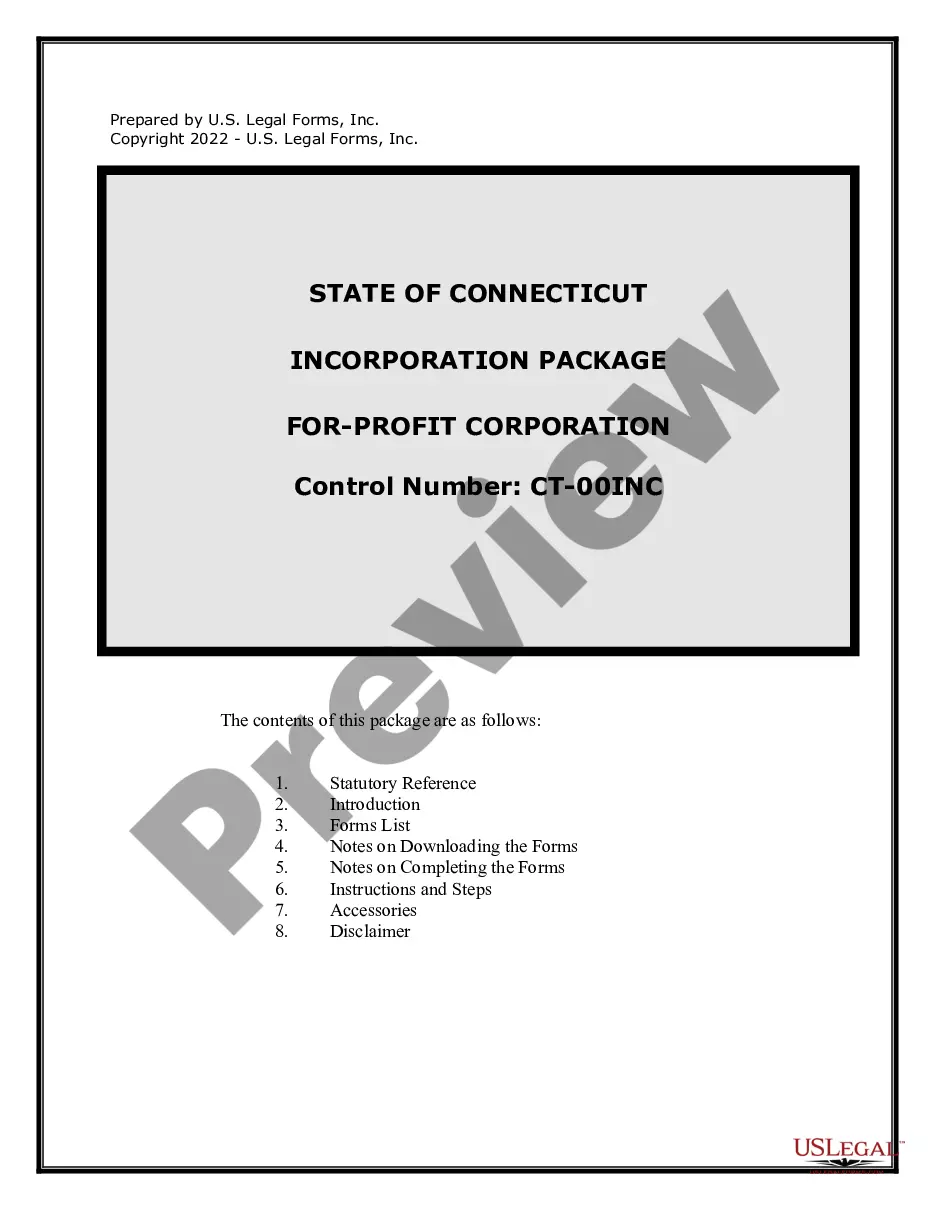
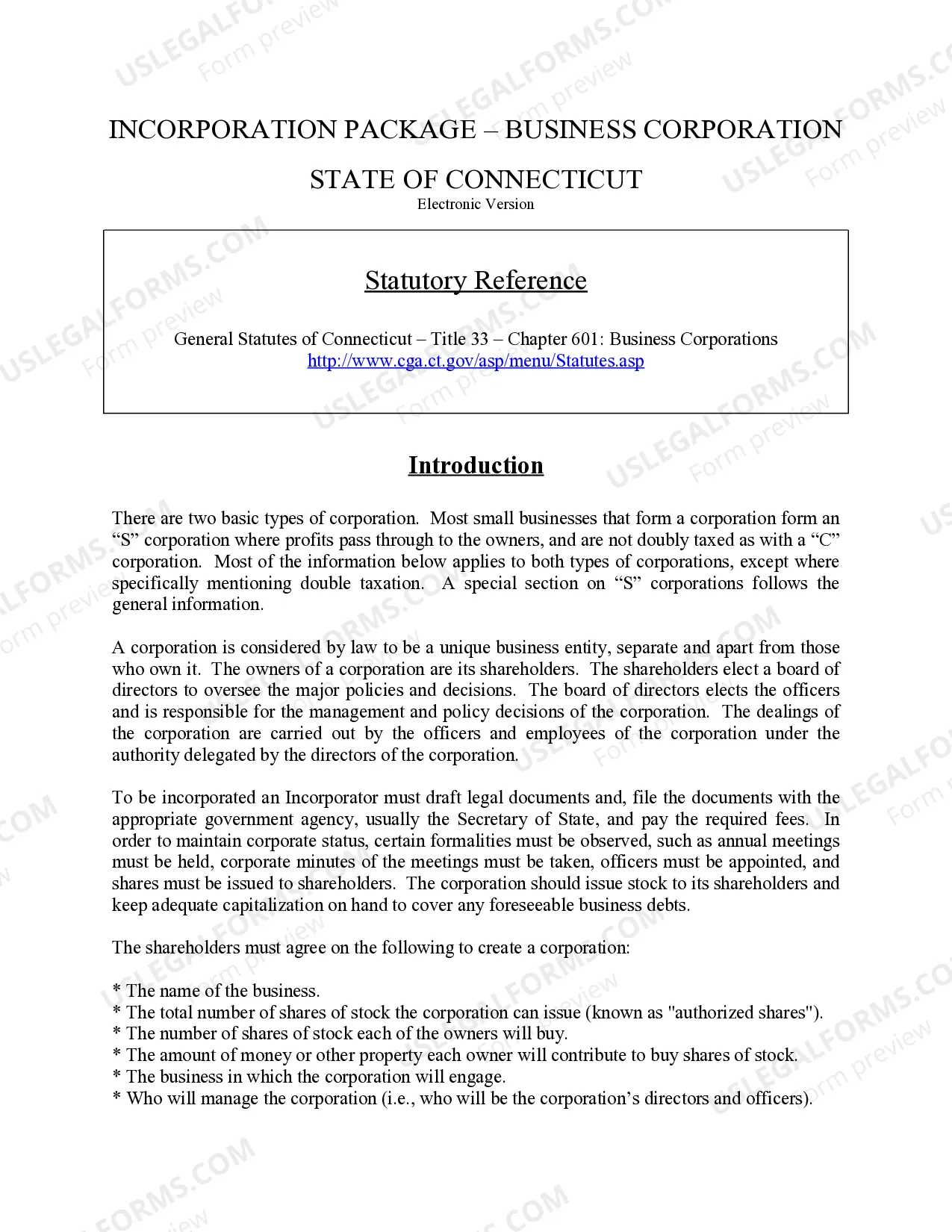
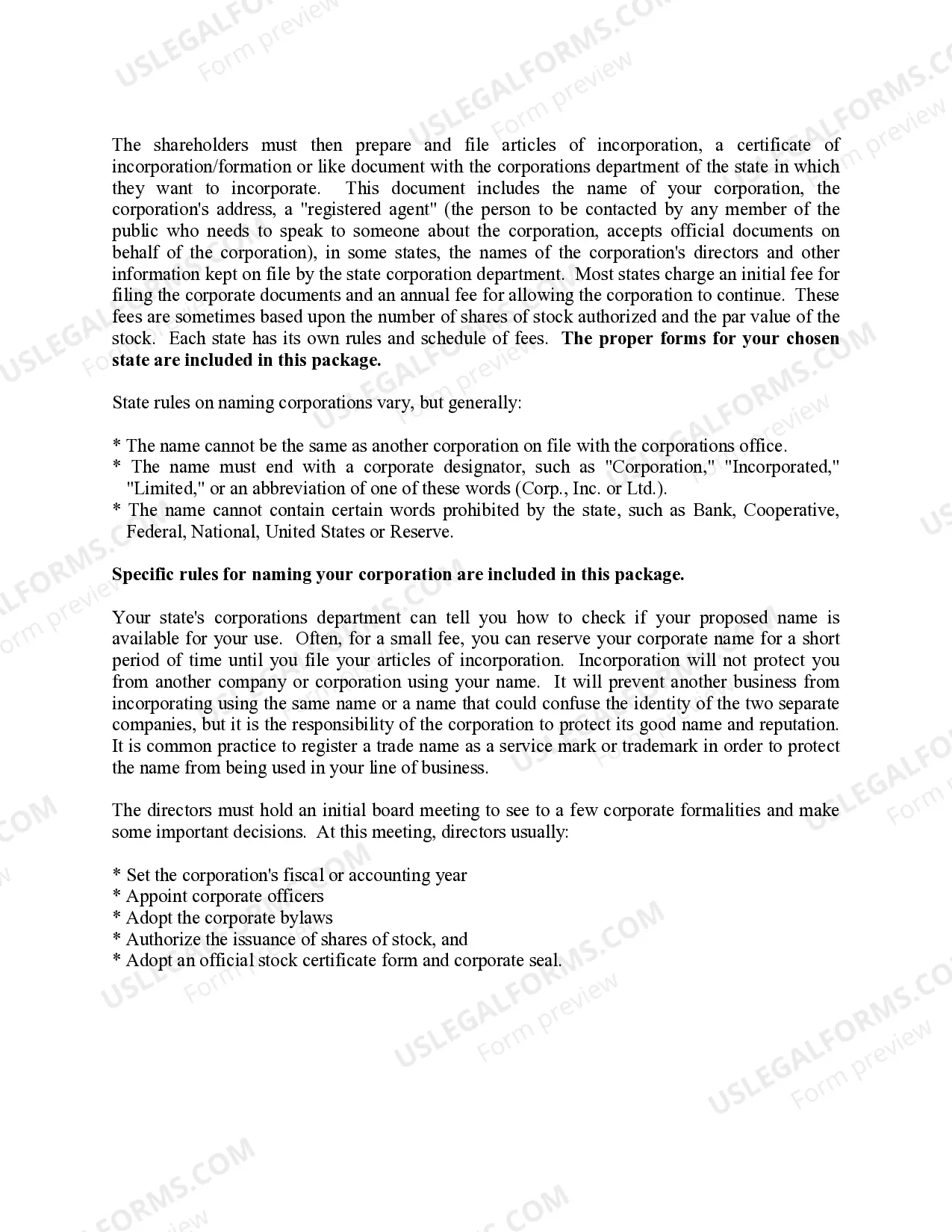
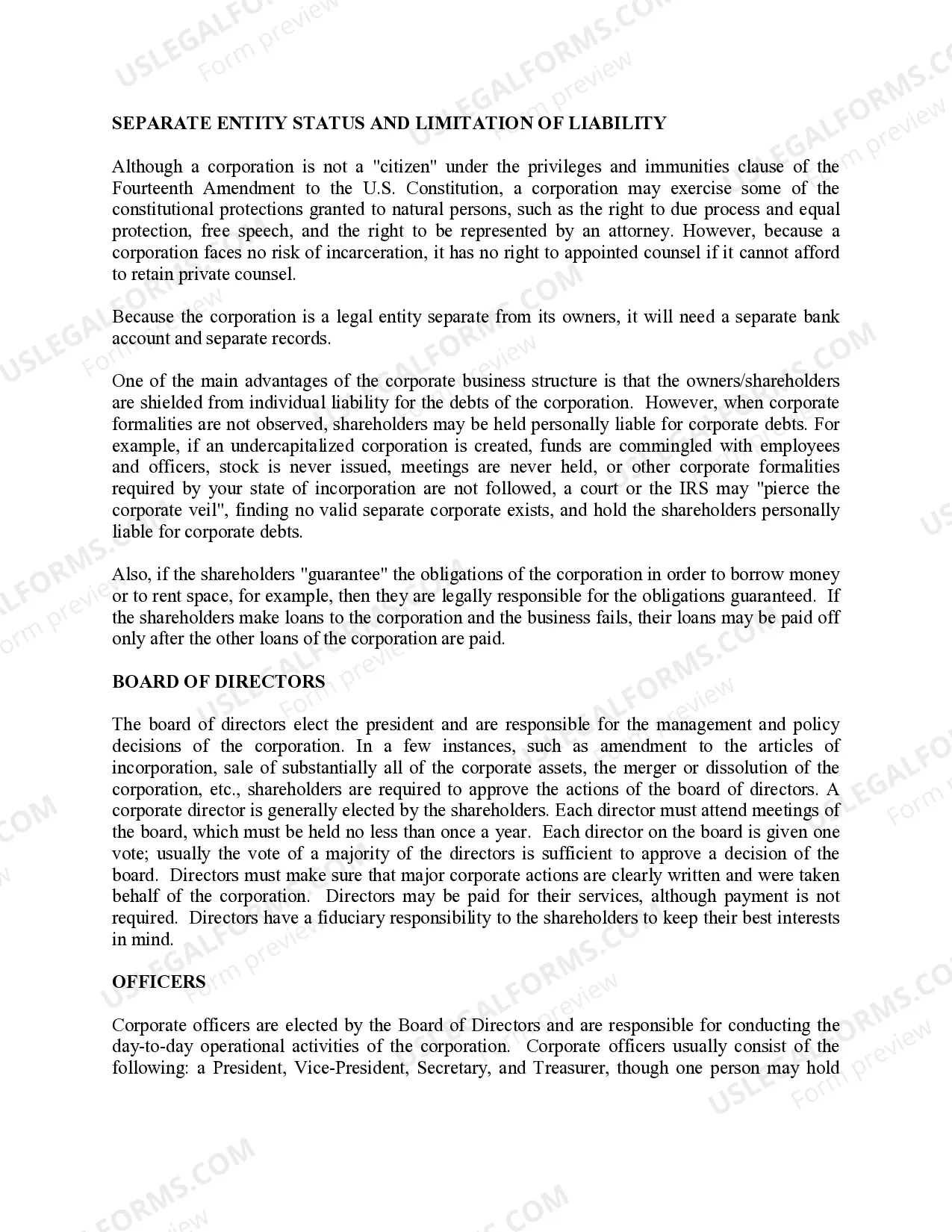
How to fill out Connecticut Business Incorporation Package To Incorporate Corporation?
- Visit the US Legal Forms website and check if you already have an account. If so, log in to access your saved documents.
- Review the available business incorporation form templates in Preview mode to ensure you select the one that meets your specific business needs.
- If you don't find the right template, utilize the Search feature to explore more options that align with your local jurisdiction requirements.
- Select your desired document by clicking the Buy Now button next to the subscription plan that best fits your needs.
- Complete your account registration if you’re a new user to gain access to the full library of forms.
- Finalize your purchase by entering your payment details, either via credit card or PayPal.
- Download the chosen template to your device for easy access and editing.
Incorporating your business through US Legal Forms ensures that you have access to high-quality, legally vetted documents tailored to your specific requirements.
Don't hesitate to start your journey towards successful business incorporation. Visit US Legal Forms today and empower your business!
Form popularity
FAQ
To incorporate a business means to legally establish it as a corporation, creating a distinct legal identity. This process involves filing necessary documents with the state and following specific procedures. When you business incorporate for the business, you enable it to enter into contracts, own property, and continue operating independently of the owners’ personal involvement. This move can provide significant long-term benefits, such as attracting investors and enhancing your business's market position.
Incorporating a business offers several advantages that can significantly impact growth and success. One main reason is the personal liability protection that shields owners' personal assets from business debts and lawsuits. Additionally, incorporating can enhance fundraising opportunities and establish credibility in the marketplace. Ultimately, the decision to business incorporate for the business creates a solid foundation for future expansion and stability.
When a business incorporates, it becomes a separate legal entity from its owners, allowing for greater protection of personal assets. This process involves registering with the state and adhering to various regulations. By choosing to business incorporate for the business, owners can take advantage of limited liability, which means they are not personally responsible for the debts of the business. Incorporation also enhances a business’s credibility with customers and potential investors.
When you consider how to business incorporate for the business, it's important to understand the distinction between an LLC and a corporation. An LLC, or Limited Liability Company, offers personal liability protection and flexible taxation options. Conversely, incorporating a business typically refers to forming a corporation, which is a more formal structure with specific regulatory requirements. Both options can protect personal assets, but the choice depends on your business needs.
To incorporate your company, you must follow a series of steps that typically include choosing a business name, filing articles of incorporation, and obtaining necessary permits. Many entrepreneurs find it beneficial to use a service like US Legal Forms to streamline this process. This platform can assist you with the paperwork and ensure compliance, making it easier for you to business incorporate for the business successfully. Taking these steps helps secure your business's legal structure.
Yes, an LLC is considered an incorporated business, as it has undergone the formal process of incorporation. By choosing to business incorporate for the business as an LLC, you gain the protective benefits associated with this structure. This means your personal assets are generally shielded from the business's debts and liabilities. Therefore, establishing an LLC is a popular choice for many entrepreneurs seeking both protection and flexibility.
To incorporate your business means to create a distinct legal entity that is separate from its owners. This process, often referred to as business incorporation for the business, provides several benefits such as limited liability protection and potential tax advantages. Additionally, incorporating helps establish credibility and engage professionally with clients and vendors. It's a significant step towards building a successful business.
While both LLCs and corporations provide limited liability, they are not the same. When you business incorporate for the business as an LLC, you receive benefits like flexibility in management and pass-through taxation. In contrast, a corporation may require a more formal structure and additional compliance obligations. Hence, it’s essential to assess which structure aligns best with your business goals.
The difference between incorporated and unincorporated LLCs largely revolves around their legal statuses. An incorporated LLC has undergone the formal process of business incorporation for the business, thus gaining limited liability protection, while an unincorporated LLC does not have this legal protection. As a result, owners of an unincorporated LLC may risk personal liability for debts and obligations. Understanding this distinction is crucial for informed decision-making.
An LLC, or Limited Liability Company, falls under the category of business structures that provide legal protection to owners. It combines the benefits of both partnerships and corporations. In essence, when you decide to business incorporate for the business as an LLC, you shield your personal assets from liability. This classification is ideal for many entrepreneurs and small business owners.