Rent Increase Letter For Commercial Property
Description


Get your form ready online
Our built-in tools help you complete, sign, share, and store your documents in one place.
Make edits, fill in missing information, and update formatting in US Legal Forms—just like you would in MS Word.
Download a copy, print it, send it by email, or mail it via USPS—whatever works best for your next step.
Sign and collect signatures with our SignNow integration. Send to multiple recipients, set reminders, and more. Go Premium to unlock E-Sign.
If this form requires notarization, complete it online through a secure video call—no need to meet a notary in person or wait for an appointment.
We protect your documents and personal data by following strict security and privacy standards.

Make edits, fill in missing information, and update formatting in US Legal Forms—just like you would in MS Word.

Download a copy, print it, send it by email, or mail it via USPS—whatever works best for your next step.

Sign and collect signatures with our SignNow integration. Send to multiple recipients, set reminders, and more. Go Premium to unlock E-Sign.

If this form requires notarization, complete it online through a secure video call—no need to meet a notary in person or wait for an appointment.

We protect your documents and personal data by following strict security and privacy standards.
Looking for another form?
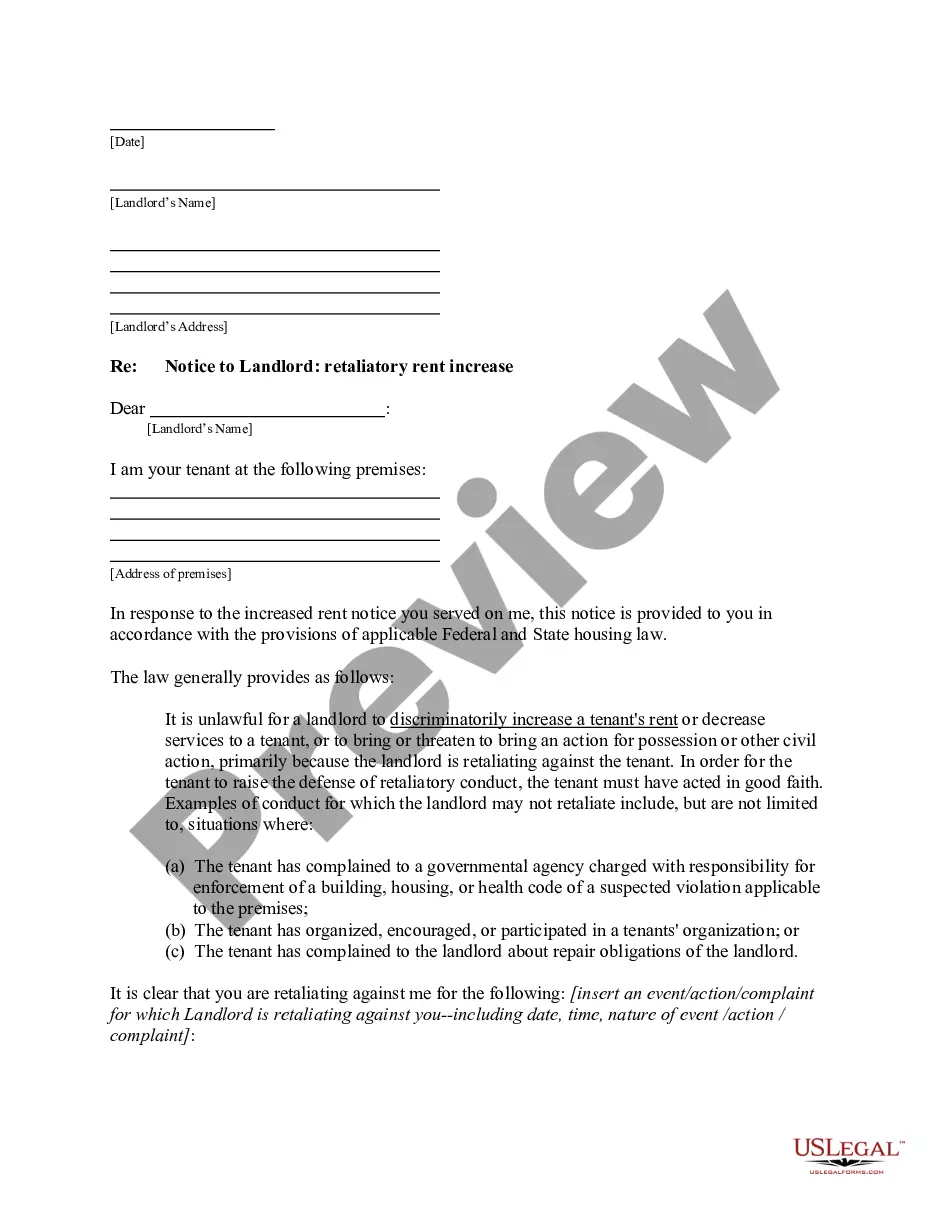
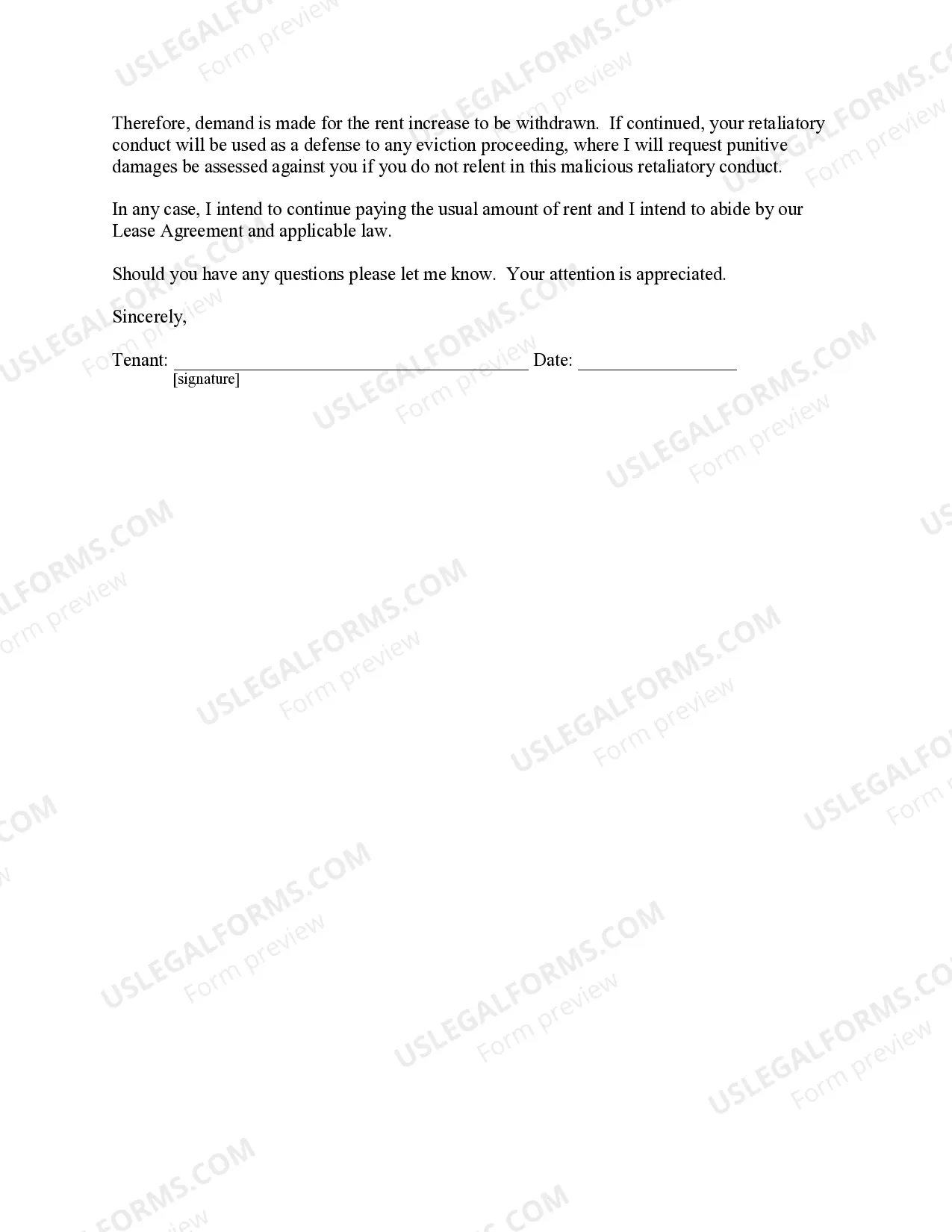
How to fill out Colorado Letter From Tenant To Landlord Containing Notice To Landlord To Withdraw Retaliatory Rent Increase?
- Log in to your US Legal Forms account if you're a returning user. Ensure your subscription is active; renew if necessary.
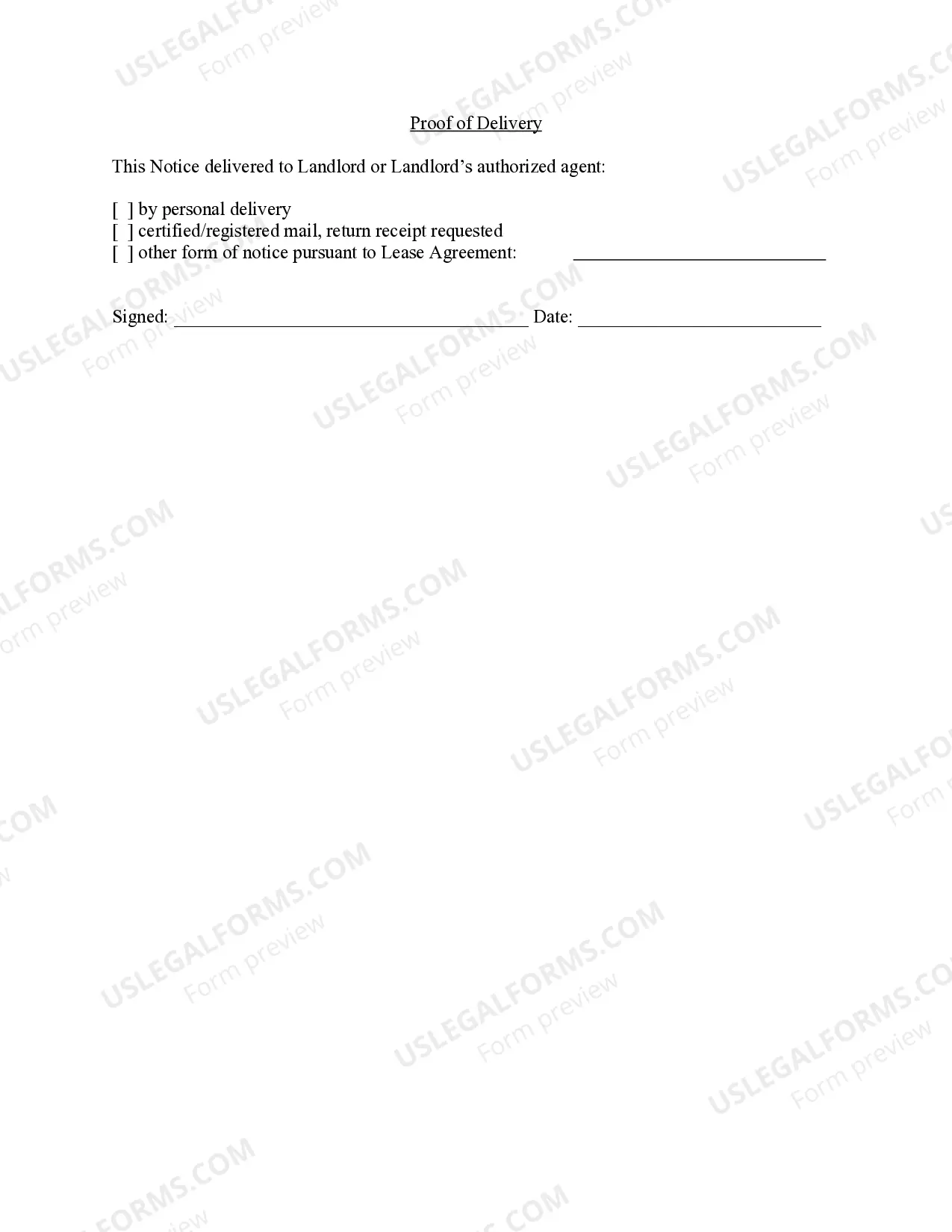
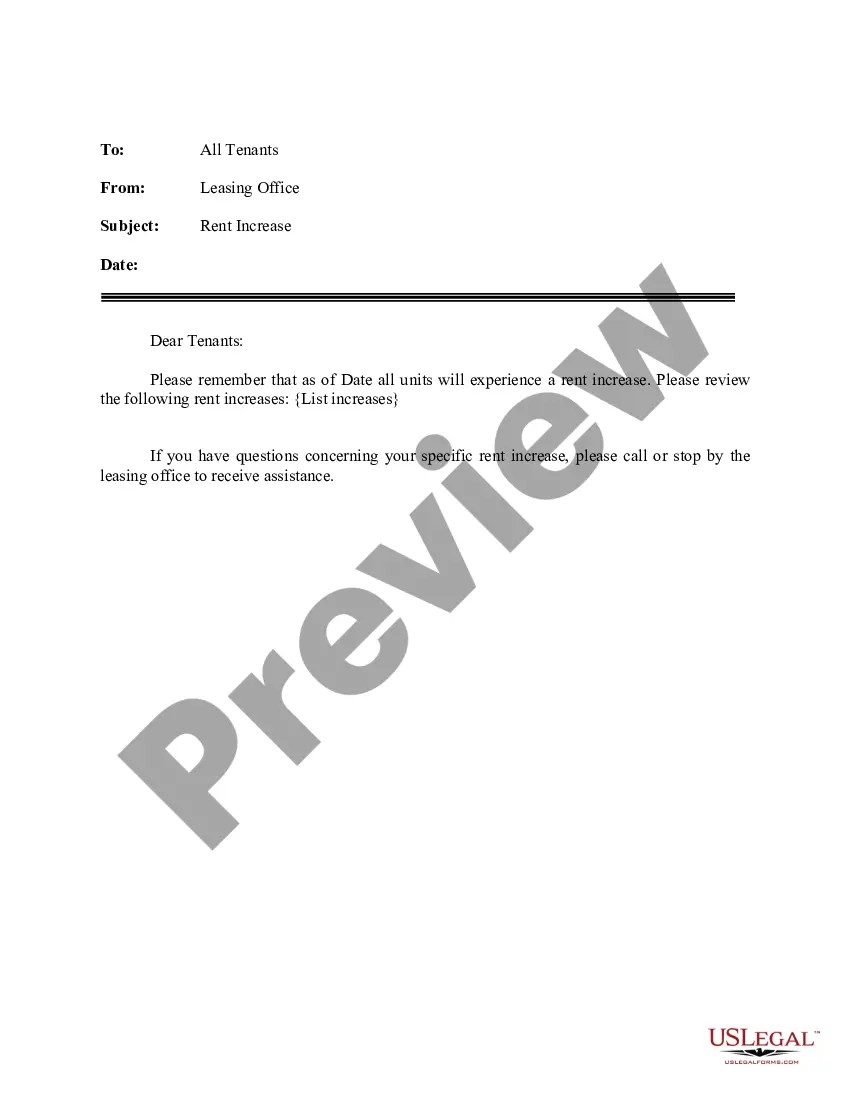
- For new users, start by checking the preview and detailed description of the rent increase letter template to ensure it fits your needs.
- If adjustments are needed, utilize the search tab to explore other templates that align with your requirements.
- Proceed to purchase the document by clicking the 'Buy Now' button and selecting a suitable subscription plan. Register an account if you haven't already.
- Complete your purchase by entering your credit card details or using PayPal to secure access to the library.
- Download the rent increase letter template directly to your device and find it later in the 'My Forms' menu of your profile.
With US Legal Forms, you not only get a legally sound document but also access to a robust collection of over 85,000 forms. The platform allows you to seek expert assistance ensuring that your documents are accurate and compliant.
Start using US Legal Forms today to simplify your rent increase letter process and enjoy peace of mind. Visit the website now and take the first step in creating your legal documents!
Form popularity
FAQ
To write a letter of intent for leasing commercial property, start by clearly stating your intention to lease and the essential details about the property. Include specific terms like lease duration, rental rates, and any necessary deposit information. Additionally, you may reference a rent increase letter for commercial property if you anticipate changes to the rent over time. This structured approach helps establish clear communication and shows your professionalism in commercial leasing.
A fair annual rent increase generally aligns with inflation rates and local market conditions, often ranging from 2% to 5%. It's vital to ensure that increases are reasonable and justifiable based on property value and demand. When discussing potential increases with your landlord, a rent increase letter for commercial property can present your case effectively and foster mutual understanding.
The maximum rent increase per year may depend on local laws and lease agreements. In many cases, there are state regulations that limit how much a landlord can increase rent annually. It's crucial to be informed of these rules to avoid disputes. Utilizing a rent increase letter for commercial property can help you better understand legal boundaries and keep communication clear with your landlord.
Calculating annual commercial rent involves reviewing your lease agreement and understanding the payment structure. Typically, you can multiply the monthly rent by 12 to get the yearly total. Additionally, consider any potential adjustments outlined in your lease. If you need guidance, consider using a rent increase letter for commercial property to clarify issues.
To ask your landlord to reduce commercial rent, begin by preparing supporting documents that justify your request. This may include market comparisons and your current financial situation. A well-drafted rent increase letter for commercial property can also express your concerns and open a constructive dialogue between you and your landlord.
The average commercial lease increase per year can vary significantly based on location and market conditions. Typically, landlords may increase rent by around 2% to 5% annually. It's essential to review your lease terms and local market trends. If you're uncertain, a rent increase letter for commercial property can clarify expectations and facilitate discussions.
The maximum a landlord can raise rent typically depends on local laws and lease agreements. In some areas, rent control may limit increases, while others have no restrictions. If you are unsure, consider seeking advice on crafting a compliant rent increase letter for commercial property to help you navigate this complex issue.
To write a notice letter for a rent increase, include essential details such as the current rent amount and the new increase. Specify the effective date and provide a clear reason for the change, especially if it relates to property updates. Utilizing a rent increase letter for commercial property template can streamline this process.
In California, there is no statewide limit on how much a landlord can raise rent on a commercial building. However, landlords must follow any lease agreements and local ordinances that may impose restrictions. When drafting a rent increase letter for commercial property, ensure it complies with any specific state or local regulations.
Start your letter to inform the tenant of a rent increase with a clear subject line and date. Clearly state the new rental amount and the effective date. Additionally, discussing the reasons for the increase, possibly in a rent increase letter for commercial property format, can help foster understanding and reduce potential disputes.