Notice Time For Rent Increase
Description


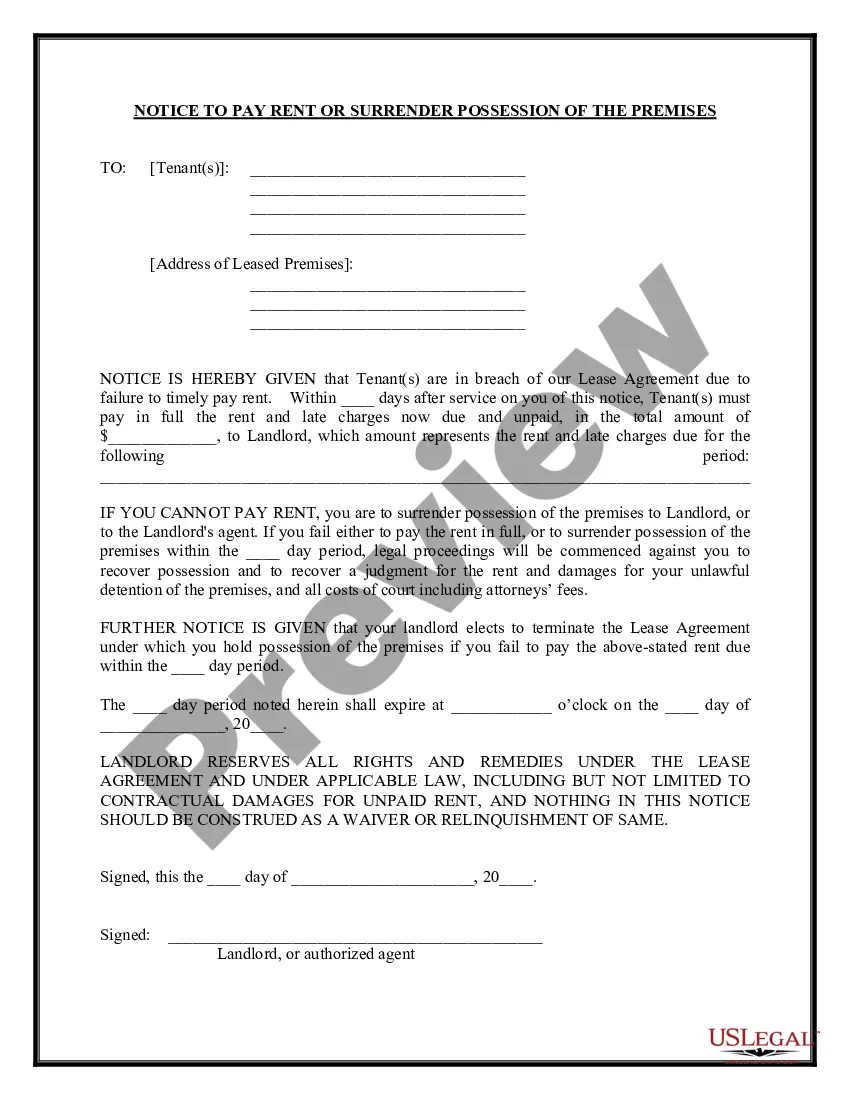
Get your form ready online
Our built-in tools help you complete, sign, share, and store your documents in one place.
Make edits, fill in missing information, and update formatting in US Legal Forms—just like you would in MS Word.
Download a copy, print it, send it by email, or mail it via USPS—whatever works best for your next step.
Sign and collect signatures with our SignNow integration. Send to multiple recipients, set reminders, and more. Go Premium to unlock E-Sign.
If this form requires notarization, complete it online through a secure video call—no need to meet a notary in person or wait for an appointment.
We protect your documents and personal data by following strict security and privacy standards.

Make edits, fill in missing information, and update formatting in US Legal Forms—just like you would in MS Word.

Download a copy, print it, send it by email, or mail it via USPS—whatever works best for your next step.

Sign and collect signatures with our SignNow integration. Send to multiple recipients, set reminders, and more. Go Premium to unlock E-Sign.

If this form requires notarization, complete it online through a secure video call—no need to meet a notary in person or wait for an appointment.

We protect your documents and personal data by following strict security and privacy standards.
Looking for another form?
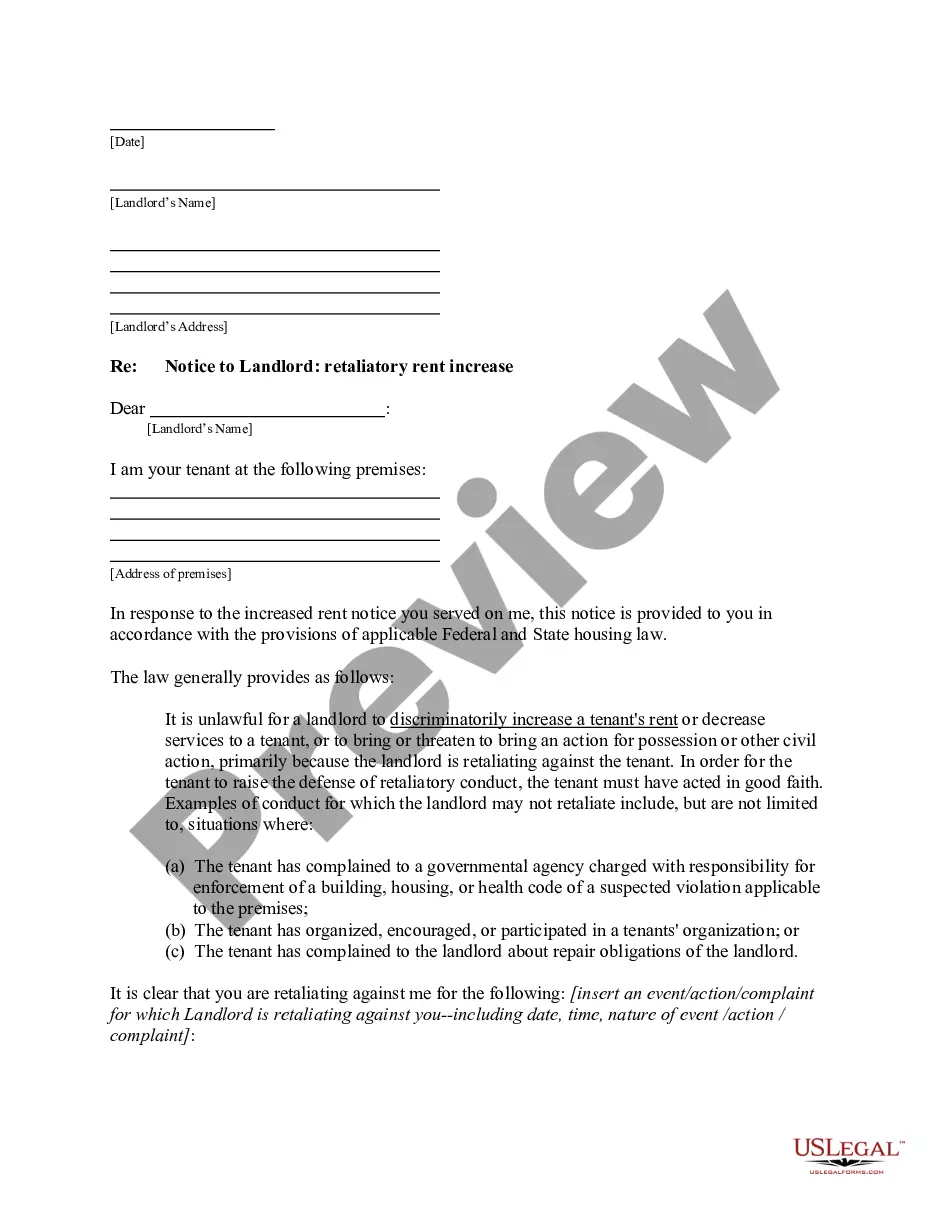
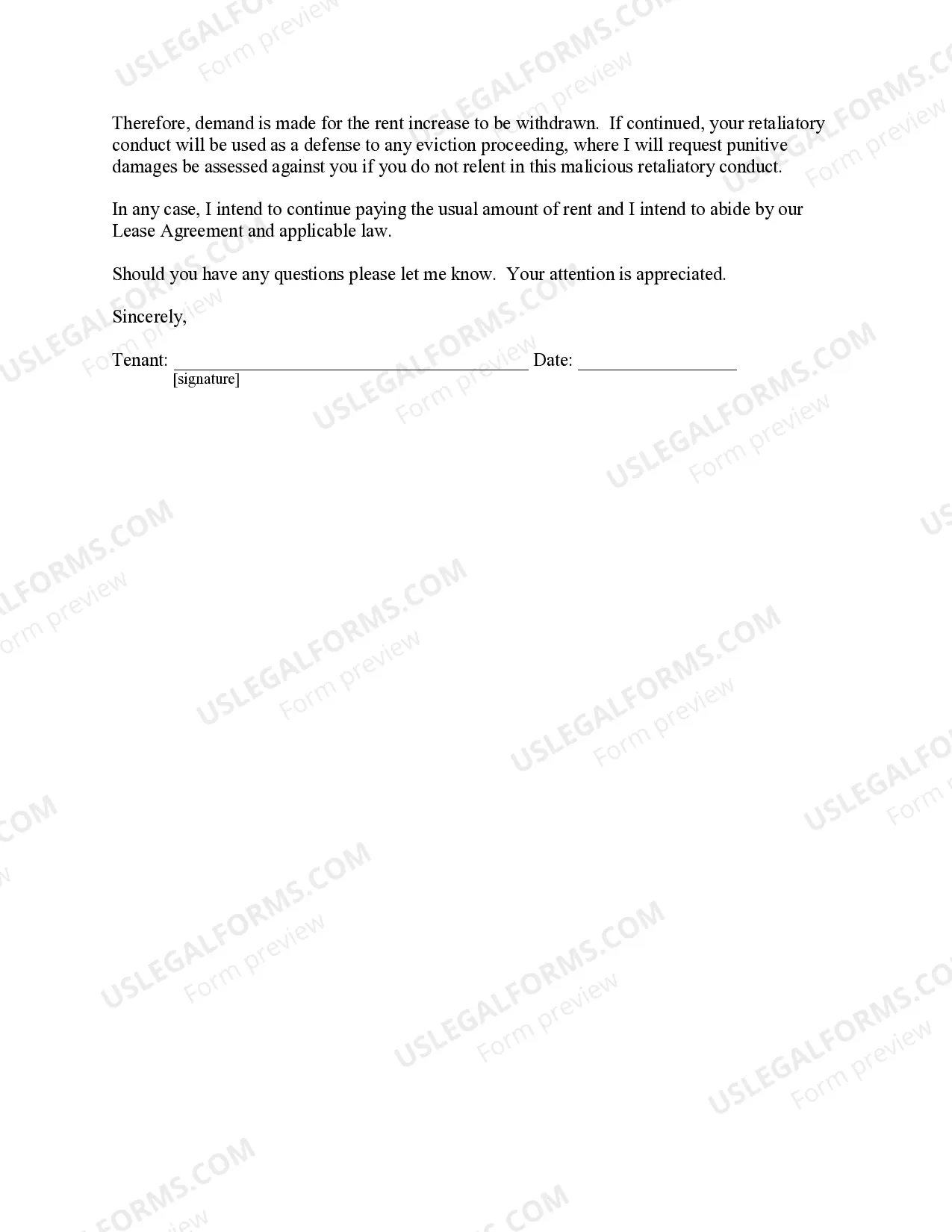
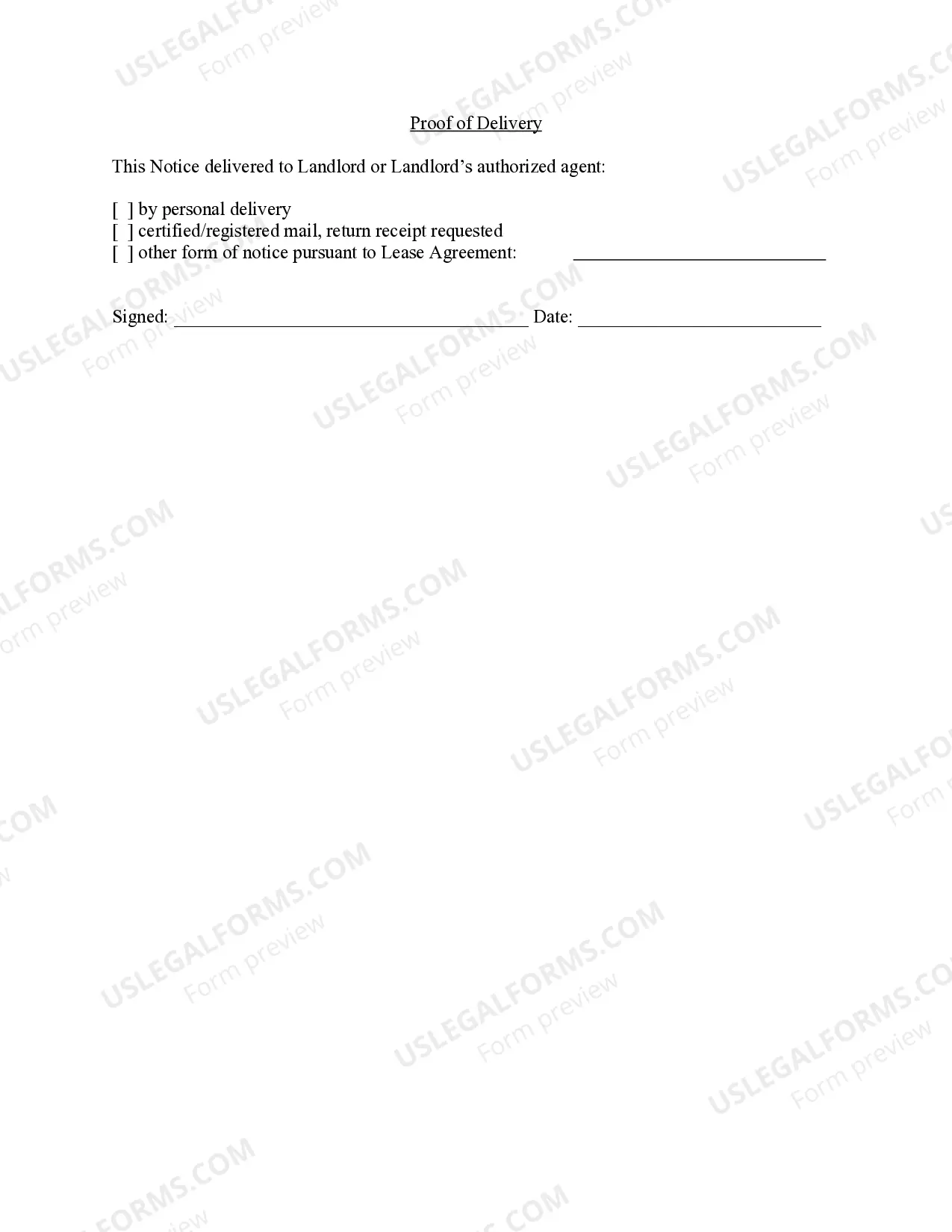
How to fill out Colorado Letter From Tenant To Landlord Containing Notice To Landlord To Withdraw Retaliatory Rent Increase?
- If you're a returning user, log in to your account and locate your desired form template. Confirm your subscription is current; otherwise, consider renewing it.
- For first-time users, start by previewing the available templates. Check the descriptions to ensure they align with your requirement and local jurisdiction.
- If needed, search for alternative templates using the Search tab. Make sure the form you choose meets your criteria perfectly.
- Purchase the document by clicking the Buy Now button. Select a subscription plan that fits your needs and create an account for full access.
- Complete your purchase with your payment details or through PayPal to secure your subscription.
- Once your transaction is confirmed, download your form to your device. You can revisit the My Forms section for future access.
US Legal Forms stands out with its extensive collection of over 85,000 legal documents, providing users with a plethora of options and expert assistance to ensure accuracy.
Start your journey to compliant rent increases today! Visit US Legal Forms and simplify your legal documentation process.
Form popularity
FAQ
The 3x rent rule in Florida generally refers to a guideline where landlords expect tenants to have a monthly income three times greater than the rent amount. This rule serves as a benchmark for landlords in evaluating a tenant’s financial stability before signing a lease. However, it is essential to note that this guideline can vary by landlord and property. Understanding your rights regarding income verification can be pivotal, especially when discussing rent increases.
In Florida, landlords must provide tenants with at least 30 days' notice before raising the rent for month-to-month leases. For fixed-term leases, this may vary, so it's crucial to check the lease agreement for specific terms. Being aware of the notice time for rent increase helps tenants prepare for any changes well in advance, minimizing disruptions.
In Florida, the average rent increase typically falls between 5% to 10% per year, depending on economic factors and local demand. Some markets may experience even higher increases. Understanding this average can help tenants prepare for potential changes in their rental costs, while keeping an eye on the notice time for rent increase for proper planning.
When discussing a rent increase with your landlord, it's best to remain calm and professional. You can inquire about the reasons behind the increase, and express your thoughts on the notice time for rent increase if it seems insufficient. This approach fosters a constructive dialogue, showcasing your willingness to understand their perspective while advocating for your rights as a tenant.
The average rent increase in the United States can vary significantly by region and market conditions. On average, rent increases hover around 3% to 5% annually. However, some areas see much higher increases, especially in high-demand cities. Understanding the notice time for rent increase can help you prepare for these changes in your lease.
In Florida, landlords can raise rent by any amount they choose, provided they follow the proper notice time for rent increase. However, state laws do not cap rent increases, so it's important for tenants to be aware of their rights. Typically, lease agreements outline how much notice a landlord must give before implementing any rent changes. Communication is key, so always discuss potential increases with your landlord.
The maximum rent increase a landlord may enforce varies greatly by location and applicable laws. Many jurisdictions set specific limits and require a notice time for rent increase, usually ranging from 30 to 90 days. It’s essential to consult local laws and your lease terms to understand your rights and obligations thoroughly. For tailored advice, consider using the US Legal Forms platform to access resources.
In New Jersey, landlords must provide at least 30 days' notice before raising rent. This notice time for rent increase allows tenants to prepare for the upcoming change. Depending on the type of lease, the notice may need to be longer. Always refer to your lease agreement to confirm the required notice period.
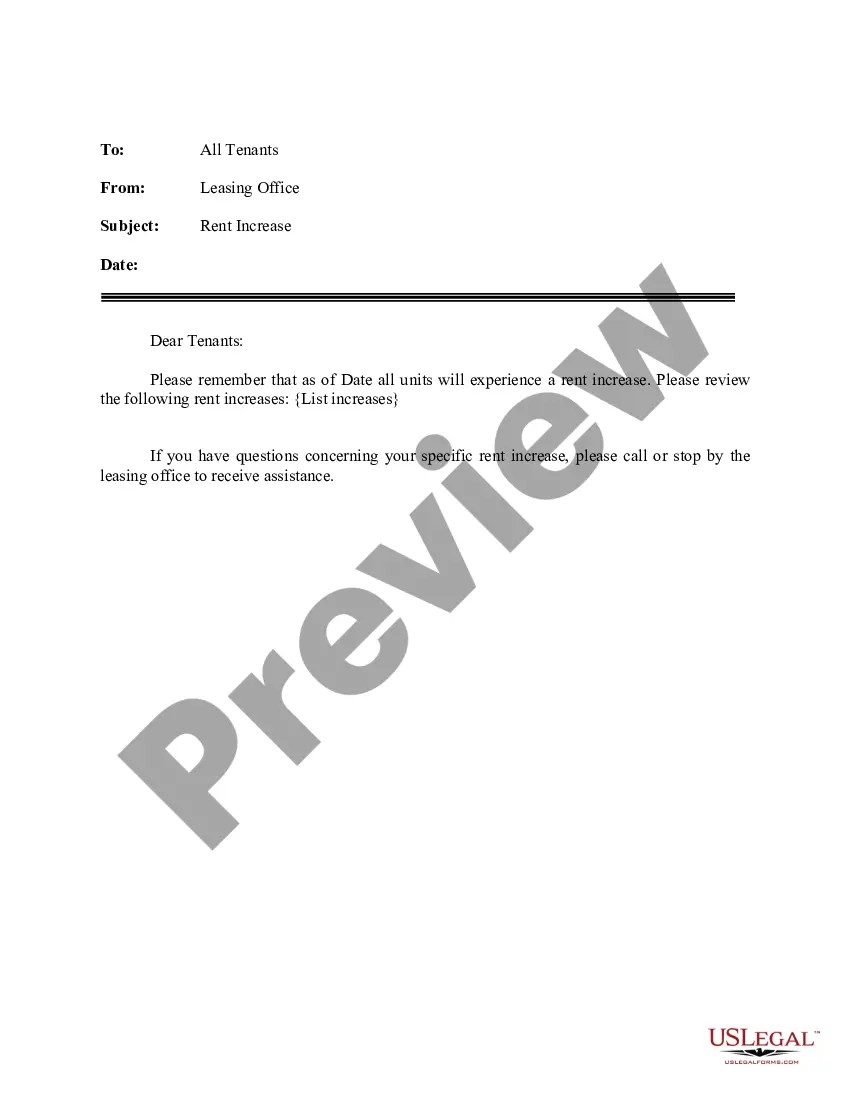
Writing a notice letter for a rent increase is straightforward. Start by stating the current rent amount, the new rent amount, and the effective date of the increase. You should also include the notice time for rent increase as required by law in your state. Ensure the letter is clear and concise to avoid any misunderstandings.
In Tennessee, there are no specific limits on the rent increase amount, but landlords must follow the notice time for rent increase, typically providing 30 days' notice. Landlords should ensure they adhere to any terms agreed upon in the lease. If your lease is up for renewal, it's an opportunity to discuss any changes directly.