Real Estate Attorney For Landlords
Description
Get your form ready online
Our built-in tools help you complete, sign, share, and store your documents in one place.
Make edits, fill in missing information, and update formatting in US Legal Forms—just like you would in MS Word.
Download a copy, print it, send it by email, or mail it via USPS—whatever works best for your next step.
Sign and collect signatures with our SignNow integration. Send to multiple recipients, set reminders, and more. Go Premium to unlock E-Sign.
If this form requires notarization, complete it online through a secure video call—no need to meet a notary in person or wait for an appointment.
We protect your documents and personal data by following strict security and privacy standards.

Make edits, fill in missing information, and update formatting in US Legal Forms—just like you would in MS Word.

Download a copy, print it, send it by email, or mail it via USPS—whatever works best for your next step.

Sign and collect signatures with our SignNow integration. Send to multiple recipients, set reminders, and more. Go Premium to unlock E-Sign.

If this form requires notarization, complete it online through a secure video call—no need to meet a notary in person or wait for an appointment.

We protect your documents and personal data by following strict security and privacy standards.
Looking for another form?







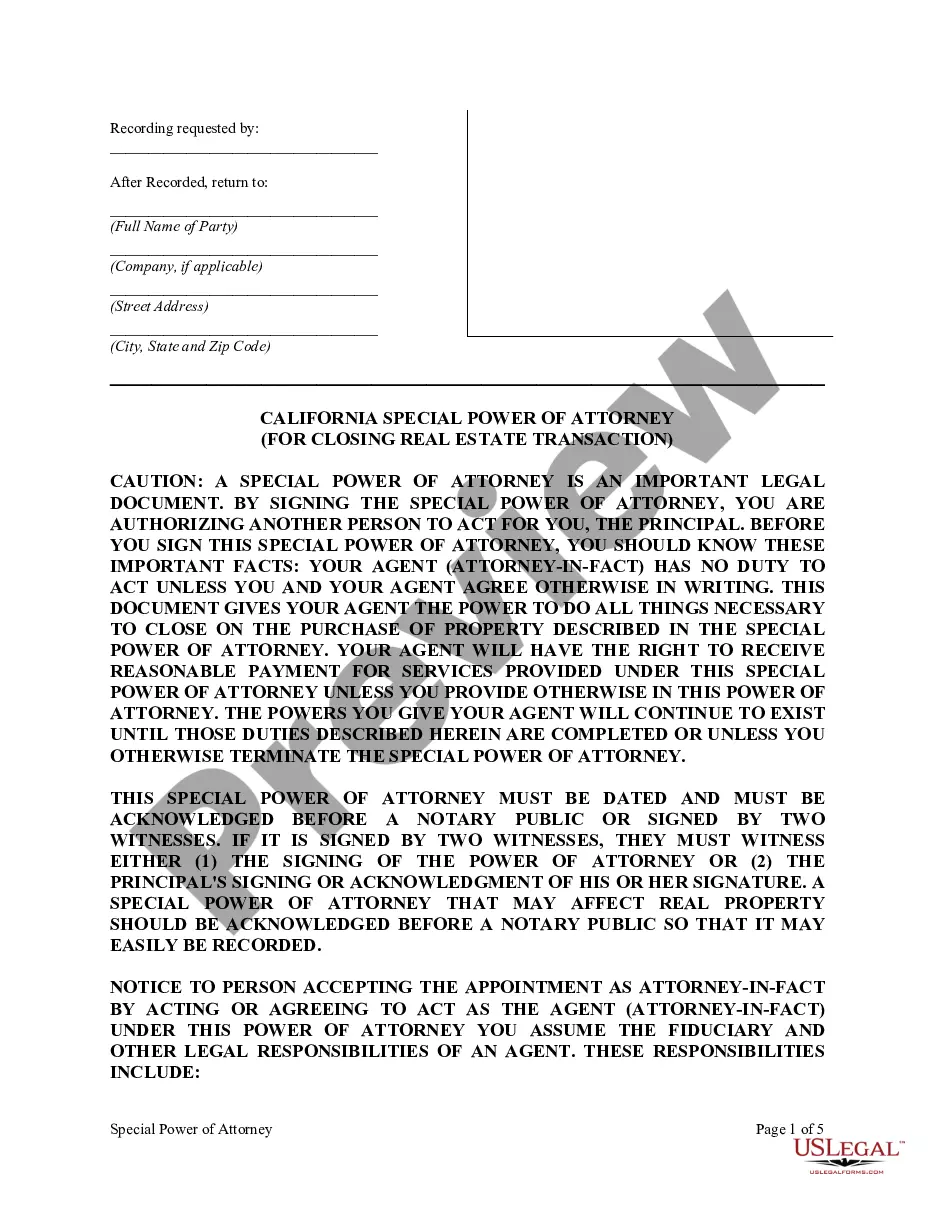
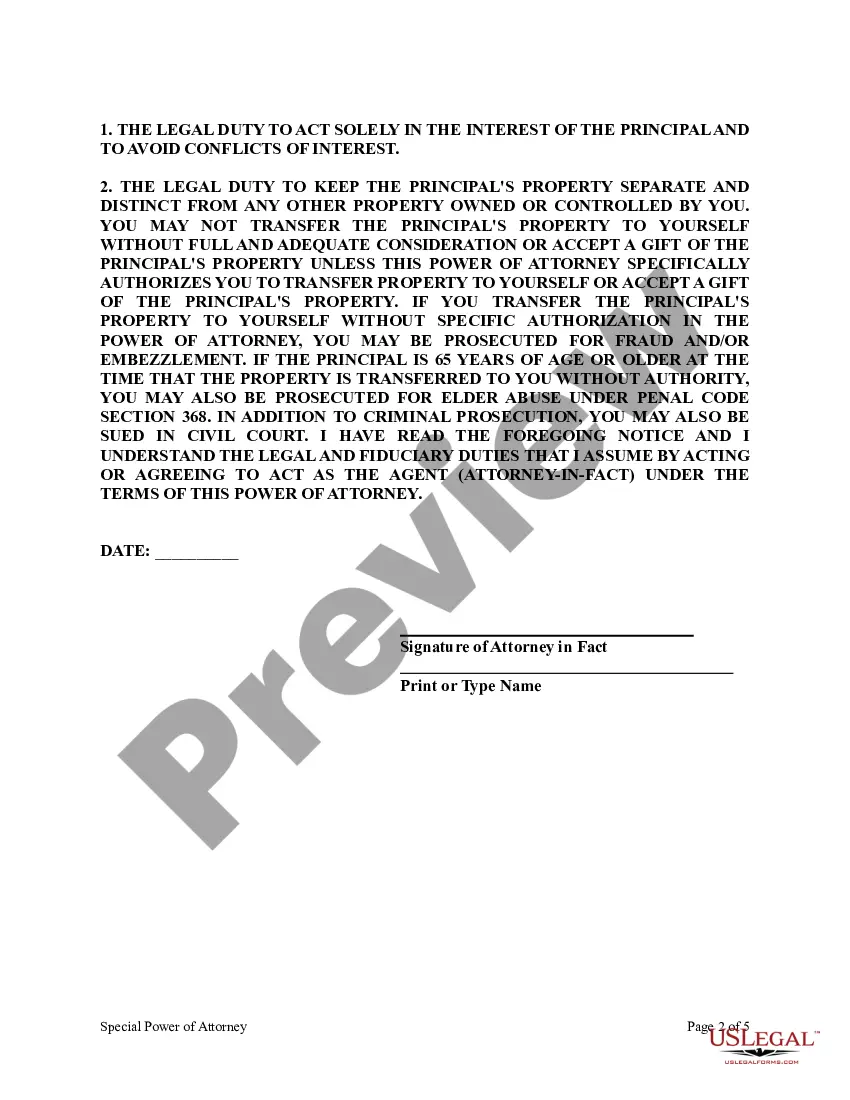
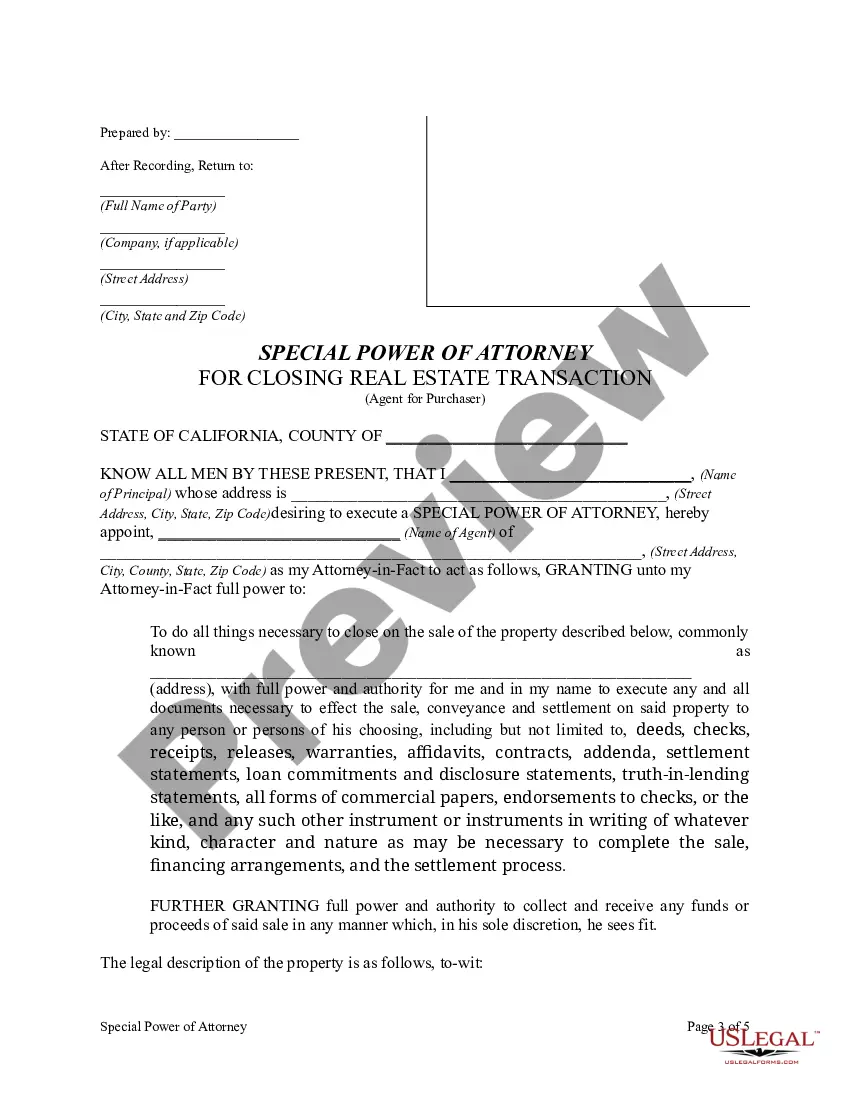
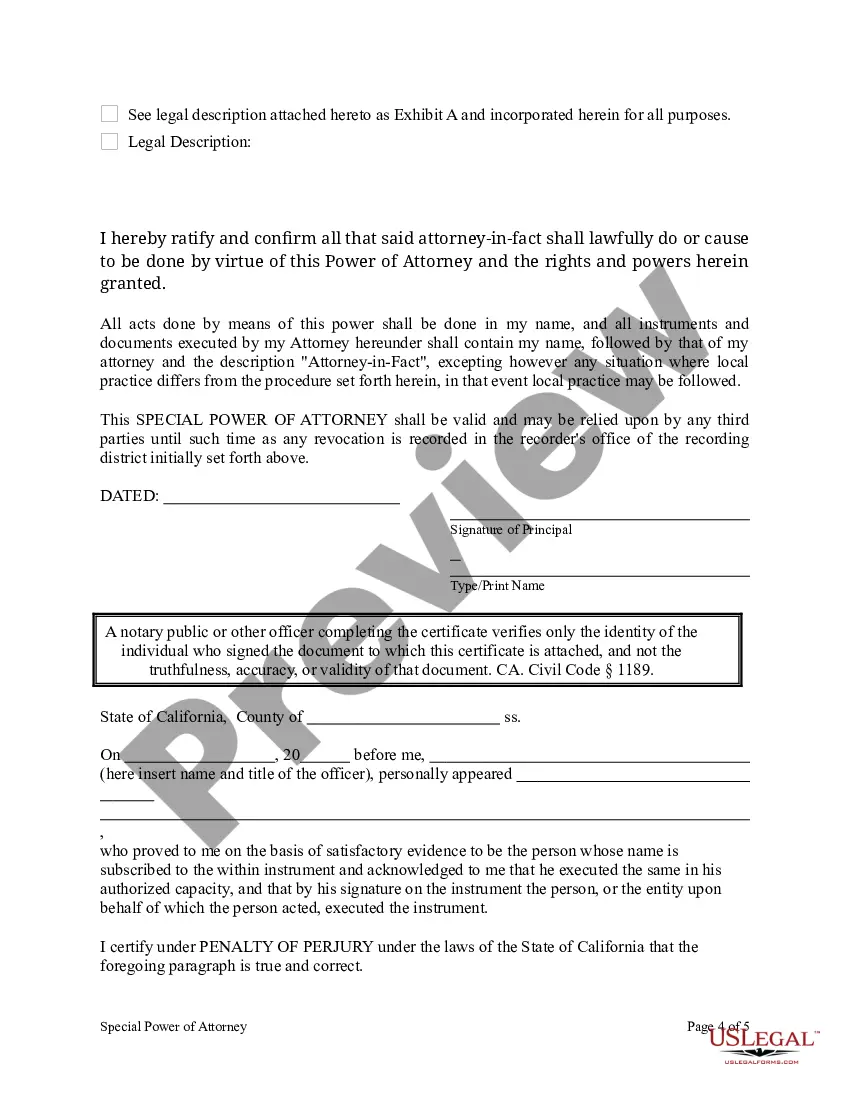
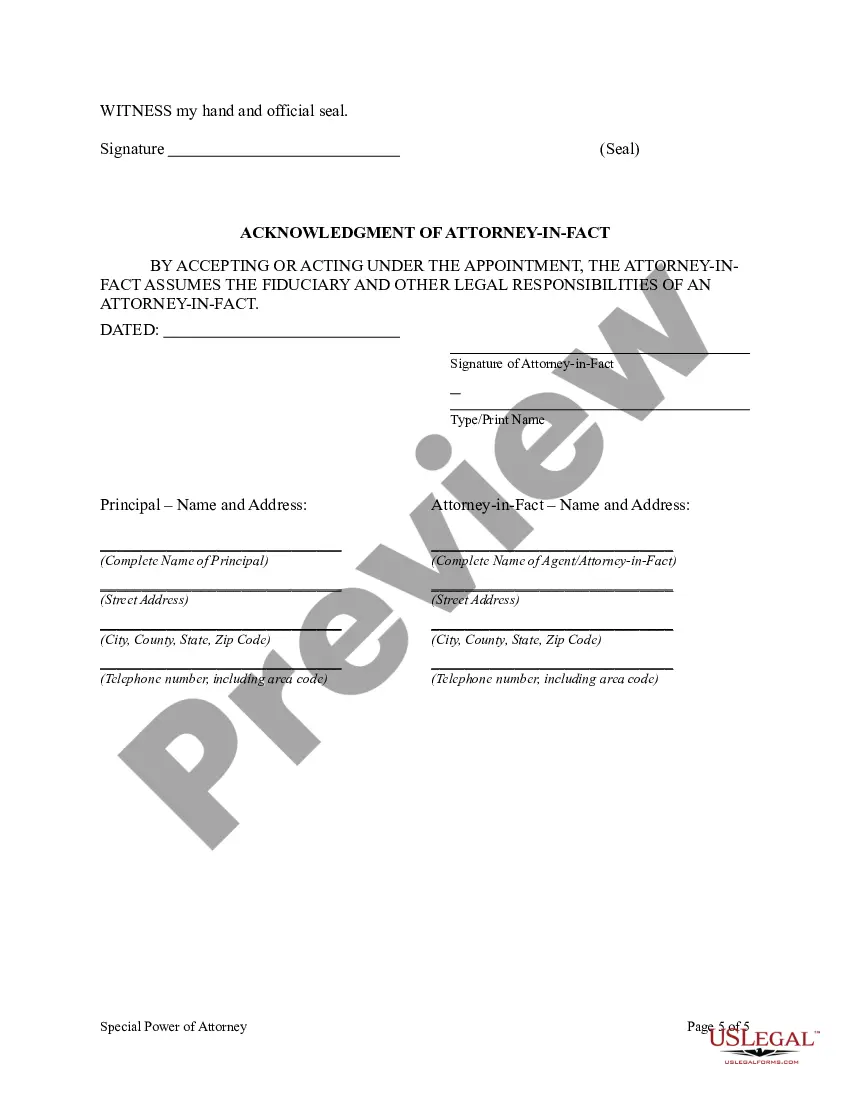
How to fill out California Special Or Limited Power Of Attorney For Real Estate Purchase Transaction By Purchaser?
- If you already have an account, log in and verify that your subscription is active. Download the necessary form by clicking the Download button.
- If you're new to US Legal Forms, start by reviewing the Preview mode along with the form description to ensure it fits your local jurisdiction requirements.
- If you need a different form, utilize the Search tab to find the correct template. Confirm that it meets your needs before proceeding.
- Select the form by clicking the Buy Now button and choose your desired subscription plan. You will need to create an account for access.
- Complete your purchase by entering your credit card information or opting for PayPal.
- Once payment is processed, download the template to your device and access it anytime through the My Forms section of your profile.
By choosing US Legal Forms, you not only gain access to a robust collection of forms but also the option to consult with premium experts to ensure that your documents are precise and legally sound.
Don't wait to streamline your legal documents—visit US Legal Forms today and empower your landlord journey with the right legal tools.
Form popularity
FAQ
To file legal action against a landlord, you should first gather all relevant documentation, such as your lease agreement and any correspondence. Consulting with a real estate attorney for landlords is essential as they can guide you through the process and ensure you meet any legal requirements. Once you are prepared, you can file a complaint in your local court. This step is critical to ensure your rights are protected and that you have a solid case.
Having a lawyer review your lease is highly recommended, especially if it contains complex terms or clauses. A real estate attorney for landlords can help identify any potential issues and ensure your rights are adequately protected. By understanding the agreement fully, you can avoid misunderstandings and future disputes.
Landlord negligence occurs when a landlord fails to fulfill their legal obligations, leading to harm or damage to tenants. This might include ignoring necessary repairs, not adhering to health and safety codes, or providing unsafe living conditions. If you suspect negligence in your rental situation, consulting a real estate attorney for landlords can clarify your options and potential remedies.
A landlord should consider hiring a lawyer when facing complex lease agreements, tenant disputes, or potential legal challenges. Early legal advice can prevent issues from escalating further. Engaging a knowledgeable real estate attorney for landlords ensures your rights are protected and your responsibilities are clear.
Typically, the party that hires the real estate attorney for landlords is responsible for payment. This means landlords usually cover the costs if they seek legal advice or representation. However, it is essential to review your lease agreements and local laws, as some circumstances may allow for different arrangements.
A landlord's most important responsibility is to provide a safe and habitable environment for their tenants. This includes maintaining the property, addressing repairs promptly, and following local housing laws. A skilled real estate attorney for landlords can help ensure your obligations are understood and met, protecting you from potential disputes.
Winning a lawsuit against a landlord often requires strong evidence and a clear understanding of your rights. Document your interactions, gather any communications, and keep a record of issues like property maintenance or rental practices. Consulting a real estate attorney for landlords can provide you with essential legal insights and improve your chances of a favorable outcome.
Landlords in North Carolina cannot refuse to rent based on discriminatory factors, lock tenants out without a legal eviction process, or fail to make necessary repairs. It's crucial for landlords to understand these limitations to avoid potential legal issues. A consultation with a real estate attorney for landlords can help clarify these rules and assist in maintaining a harmonious rental relationship.
Filling out a landlord application typically involves providing personal information, rental property details, and your rental history. Make sure to include information about any background checks and employment verification processes. If you want to streamline this process or ensure accuracy, consider using the resources provided by uslegalforms to guide you.
In North Carolina, violations of renters' rights include illegal eviction, failure to provide habitable living conditions, and retaliatory actions against tenants for exercising their rights. Tenants have the right to a safe and secure home, and a real estate attorney for landlords can assist landlords in staying compliant with these regulations, preventing costly legal disputes.