Employee Files
Description
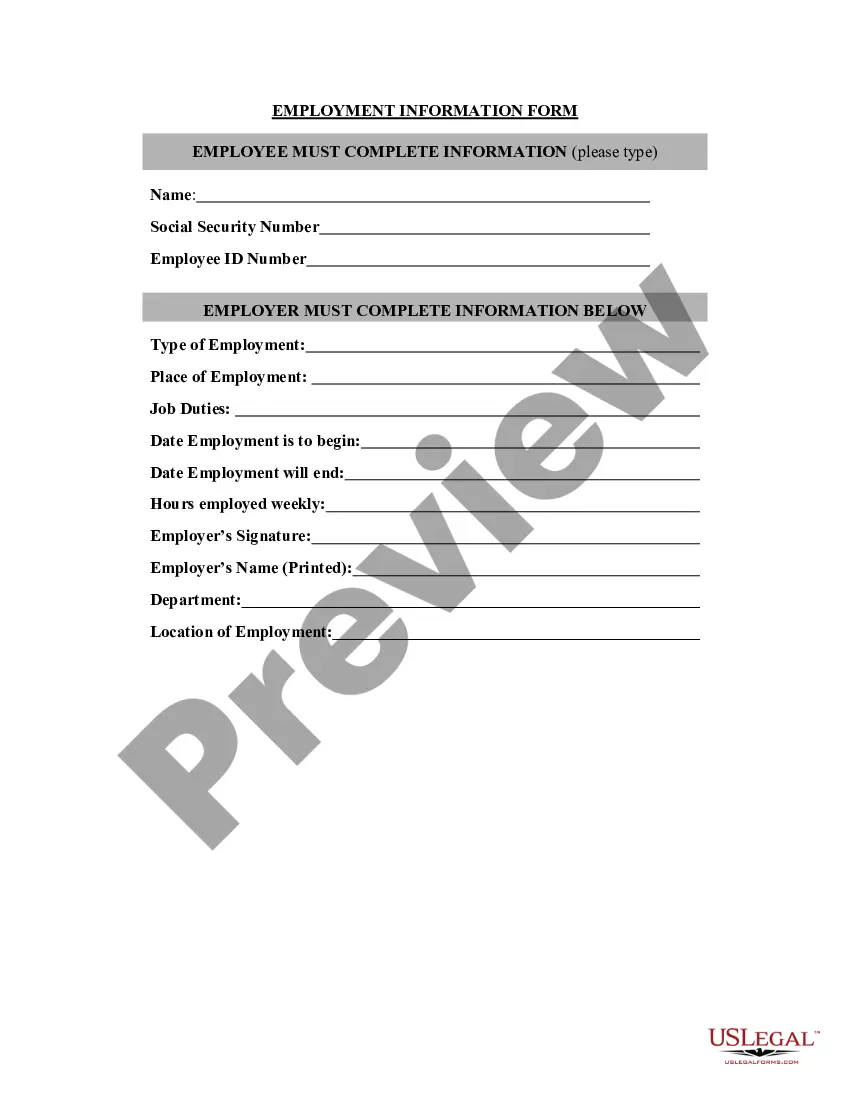
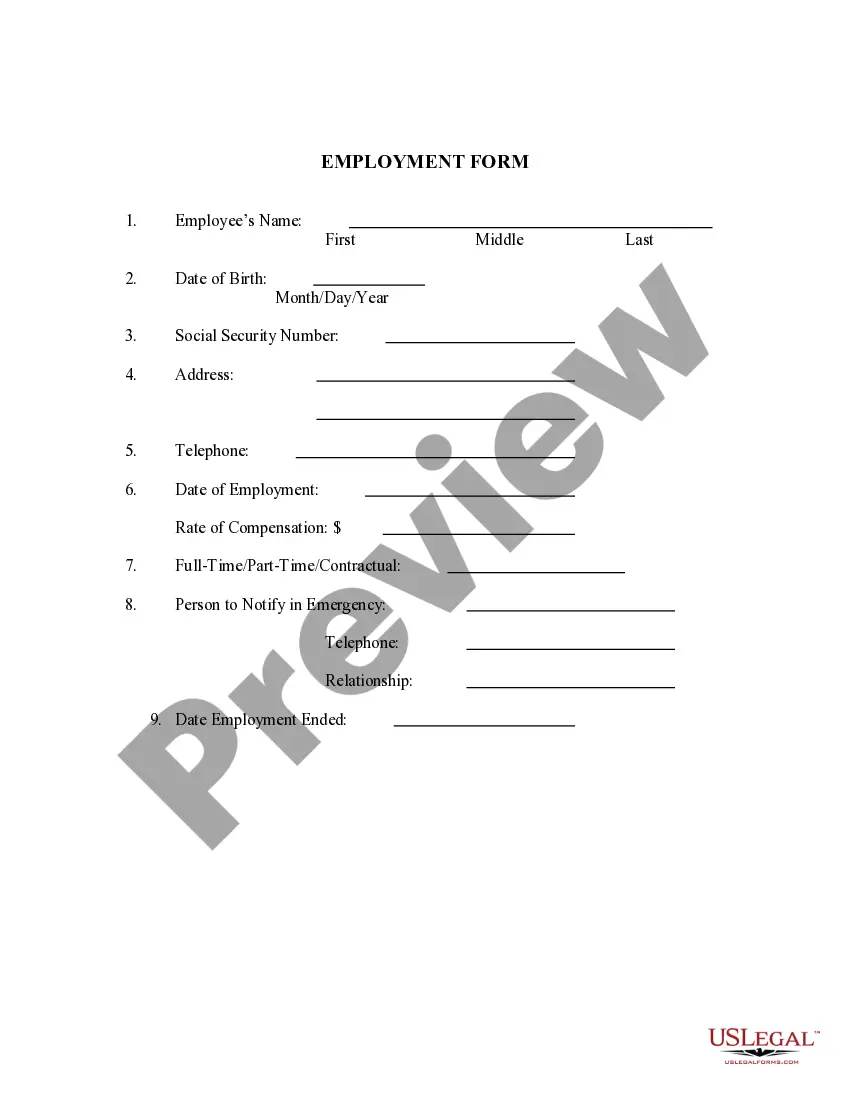
Get your form ready online
Our built-in tools help you complete, sign, share, and store your documents in one place.
Make edits, fill in missing information, and update formatting in US Legal Forms—just like you would in MS Word.
Download a copy, print it, send it by email, or mail it via USPS—whatever works best for your next step.
Sign and collect signatures with our SignNow integration. Send to multiple recipients, set reminders, and more. Go Premium to unlock E-Sign.
If this form requires notarization, complete it online through a secure video call—no need to meet a notary in person or wait for an appointment.
We protect your documents and personal data by following strict security and privacy standards.

Make edits, fill in missing information, and update formatting in US Legal Forms—just like you would in MS Word.

Download a copy, print it, send it by email, or mail it via USPS—whatever works best for your next step.

Sign and collect signatures with our SignNow integration. Send to multiple recipients, set reminders, and more. Go Premium to unlock E-Sign.

If this form requires notarization, complete it online through a secure video call—no need to meet a notary in person or wait for an appointment.

We protect your documents and personal data by following strict security and privacy standards.
Looking for another form?




How to fill out California Employment Employee Personnel File Package?
- If you're a returning user, visit the US Legal Forms website and log in to your account. Ensure your subscription is active before proceeding to the next step.
- For first-time users, begin by browsing the Preview mode and form descriptions to find the document that meets your specific needs and complies with your local regulations.
- If the chosen document doesn't fit your requirements, utilize the Search tab at the top to explore alternative templates until you find the right one.
- Once you've found the appropriate form, click the Buy Now button and select a subscription plan that suits your needs. Registration is required for account access.
- Complete your purchase by entering your credit card information or using your PayPal account for payment.
- Now, download your chosen form to your device, enabling you to fill it out and access it anytime under the My Forms section of your profile.
By utilizing US Legal Forms, you gain access to a vast library of over 85,000 legal documents, ensuring you find precisely what you need without the hassle. The platform also connects you to expert assistance for any completion queries, providing confidence in your legal dealings.
Start utilizing the benefits of US Legal Forms today to streamline your employee file management. Explore the extensive library to ensure your documents are always aligned with legal requirements!
Form popularity
FAQ
Filling out a personnel record requires attention to detail and accuracy to ensure all information is current and valid. Start by gathering essential information such as full name, address, contact details, and job title. Include data related to employment history, performance reviews, and any disciplinary actions. Using platforms like uslegalforms can provide templates and ensure you adhere to compliance standards while filling out personnel records.
Your employee file should contain records that are essential for employment verification and organizational accountability. Key records include hiring documents, performance assessments, disciplinary actions, and attendance records. Maintaining these records helps monitor employee progress and develop training plans as needed. Utilizing resources from uslegalforms can simplify this process and ensure all records are in place.
It is crucial to avoid storing certain sensitive documents in an employee file to prevent privacy issues. Typically, medical records, personal financial information, and any documents that are not directly related to job performance should be excluded. This precaution helps protect the employee's privacy and keeps your organization compliant with regulations. Consider using uslegalforms for guidance on best practices related to employee file management.
An employee file should include various important documents that pertain to the individual's employment. Generally, you should have personal identification, tax information, employment agreements, and performance evaluations. Keeping these documents organized aids in managing employee relations and regulatory compliance effectively. Platforms like uslegalforms can provide templates to ensure you have all necessary documentation.
The job file folder should house crucial documents that reflect an employee's role and responsibilities. Important items include the job description, performance reviews, disciplinary records, and training acknowledgments. These documents not only help in evaluating employee performance but also serve as a basis for career development. By leveraging uslegalforms, you can efficiently store and manage these vital documents.
Organizing employee files effectively can boost your overall workflow and ensure easy access to important information. Start by categorizing files into clear sections such as personal information, job history, and performance reviews. Utilize a digital file management system for consistent organization and secure storage options. With platforms like uslegalforms, you can streamline this process and ensure compliance with legal standards.
Typically, access to employee files is restricted to human resources personnel, managers, and certain authorized staff members. These individuals require access to maintain records and manage workplace policies. If you have concerns about your personal information, you can reach out to your HR department to understand their data protection measures regarding employee files.
Yes, you can request a copy of your employee file from your employer. It's your right to access your records, which may include performance evaluations and other important documents. If your company has a formal process for accessing employee files, make sure to follow their guidelines to ensure a smooth request.
To obtain your full job history, you can start by contacting your past employers directly. They should have records of your employment dates and roles. If you need more comprehensive information, consider using a service that specializes in retrieving employee files. These services can help you gather all the necessary documents in one place.
Records such as timecards, medical records, and correspondence related to employee performance should be kept for seven years. This timeframe allows organizations to stay compliant while providing them with a safety net in case of legal challenges. Ensuring that these records are organized can significantly streamline the management of employee files.