Residential Lease Form Agreement For Landlord
Description
Get your form ready online
Our built-in tools help you complete, sign, share, and store your documents in one place.
Make edits, fill in missing information, and update formatting in US Legal Forms—just like you would in MS Word.
Download a copy, print it, send it by email, or mail it via USPS—whatever works best for your next step.
Sign and collect signatures with our SignNow integration. Send to multiple recipients, set reminders, and more. Go Premium to unlock E-Sign.
If this form requires notarization, complete it online through a secure video call—no need to meet a notary in person or wait for an appointment.
We protect your documents and personal data by following strict security and privacy standards.

Make edits, fill in missing information, and update formatting in US Legal Forms—just like you would in MS Word.

Download a copy, print it, send it by email, or mail it via USPS—whatever works best for your next step.

Sign and collect signatures with our SignNow integration. Send to multiple recipients, set reminders, and more. Go Premium to unlock E-Sign.

If this form requires notarization, complete it online through a secure video call—no need to meet a notary in person or wait for an appointment.

We protect your documents and personal data by following strict security and privacy standards.
Looking for another form?





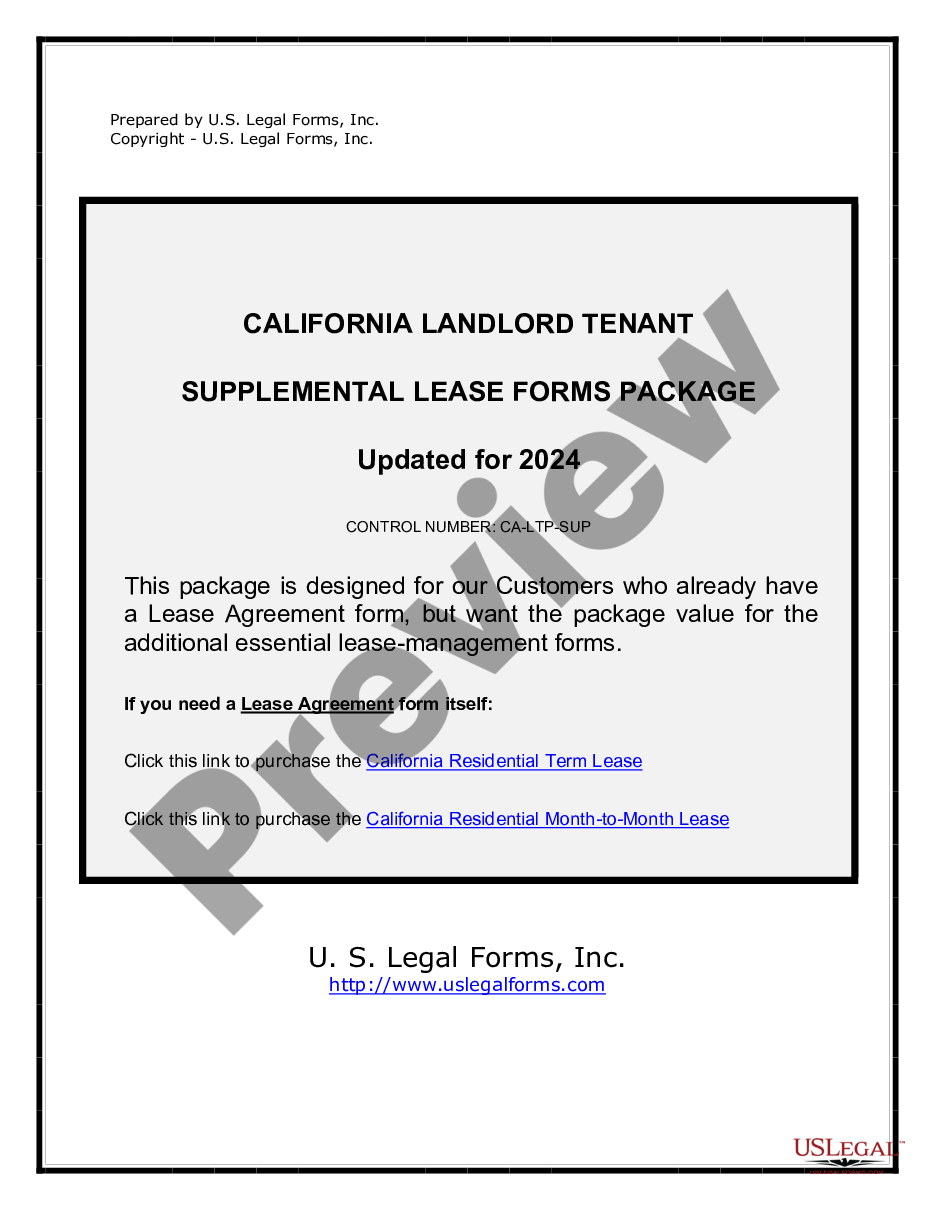
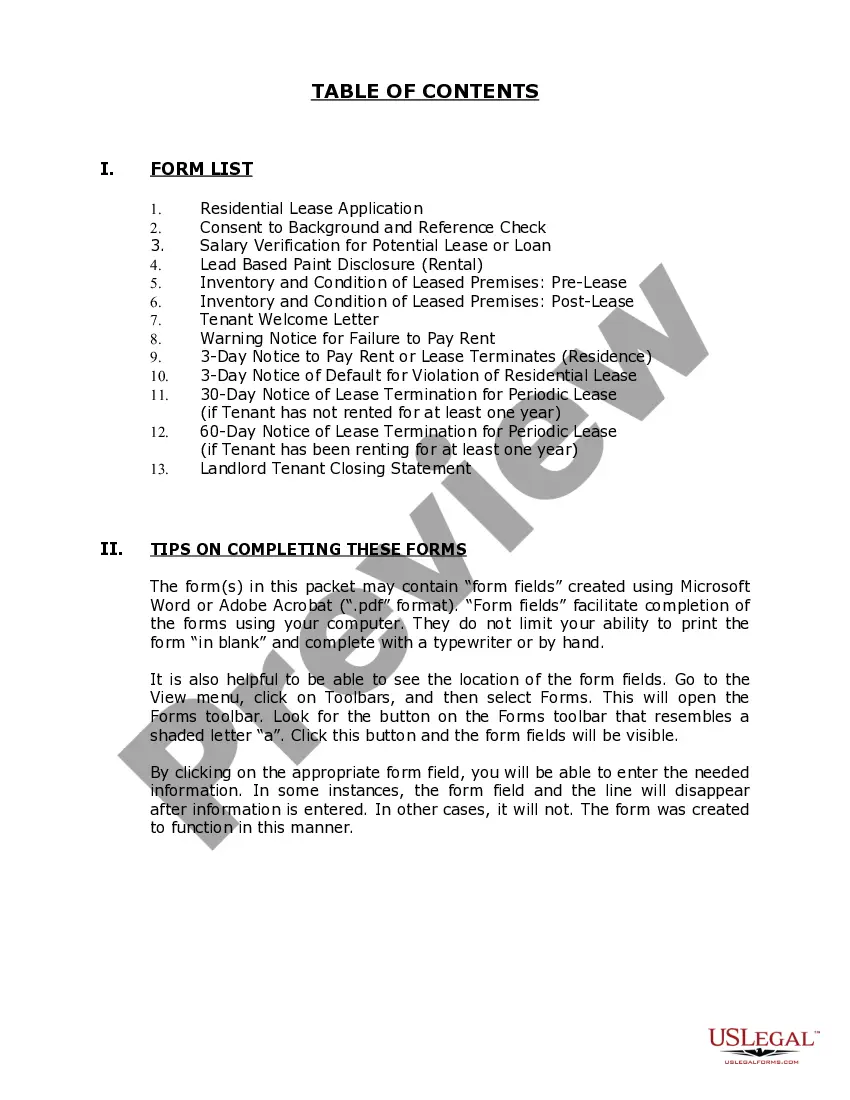
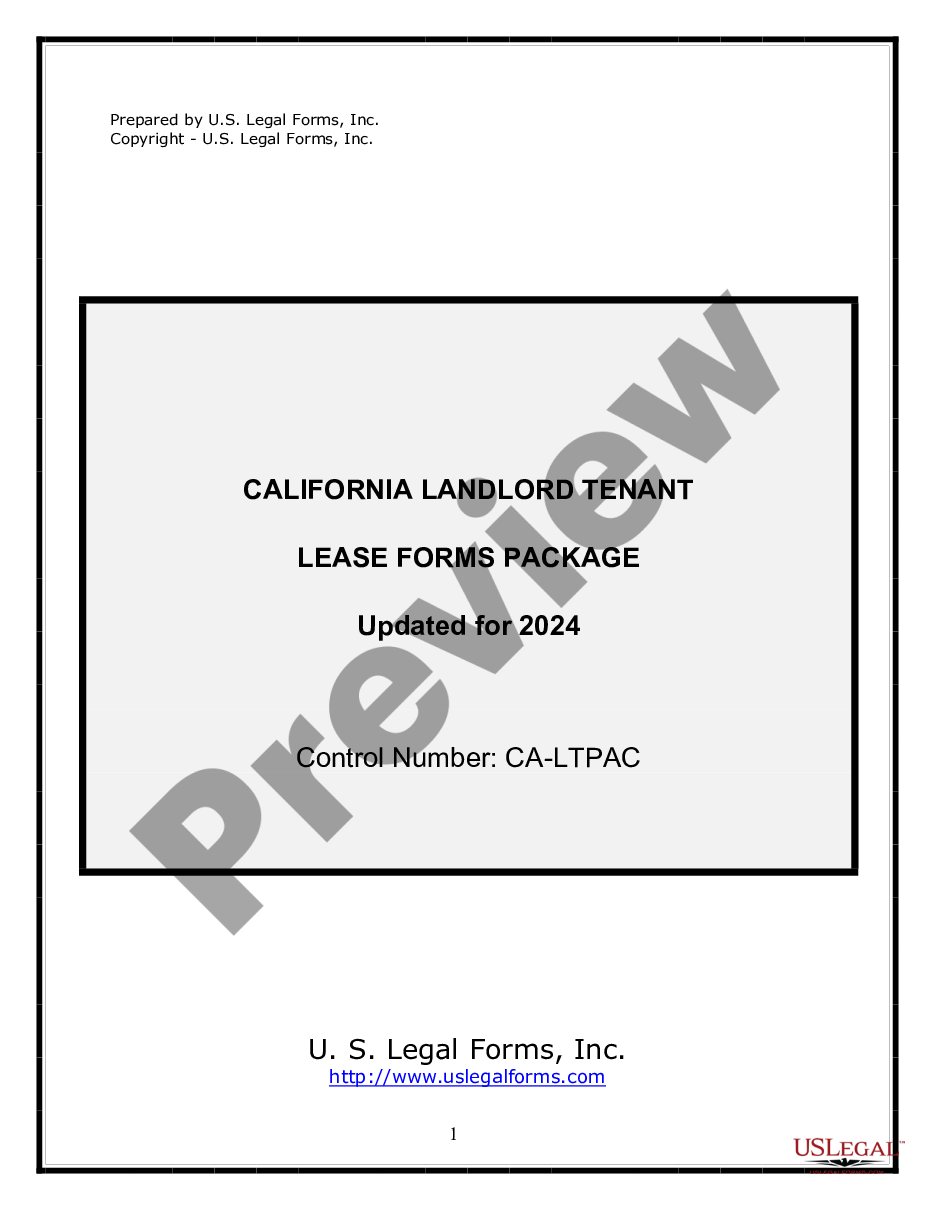
How to fill out California Supplemental Residential Lease Forms Package?
- If you are a returning user, first log into your account and ensure your subscription is active before downloading the required form template.
- For first-time users, start by checking the Preview mode and reviewing the form description to confirm that it meets your needs and local jurisdiction standards.
- If you need additional templates, utilize the Search function to find the appropriate forms. Once the right one is selected, proceed to the next step.
- Purchase the document by clicking the Buy Now button and selecting your preferred subscription plan. Account registration is required for access.
- Complete your purchase safely using your credit card or PayPal, ensuring secure payment.
- Download your form to your device, allowing you to complete it and access it later in the My Forms section.
In conclusion, utilizing US Legal Forms to acquire a residential lease form agreement for landlord ensures you access a robust selection of templates and premium support. Their extensive library simplifies the legal documentation process, allowing for more focus on your property management.
Start navigating your legal document needs today!
Form popularity
FAQ
The fixed-term lease is the most popular type of lease among landlords and tenants alike. This residential lease form agreement for landlord clearly lays out the rental period and terms, making expectations clear. Landlords appreciate the predictability it brings, while tenants enjoy the sense of stability. Overall, this type of lease contributes to a smoother rental experience.
The most popular lease term is typically one year. This duration provides a balanced approach in a residential lease form agreement for landlord relationships. It allows landlords to secure their income while giving tenants a reasonable time frame to settle in. Longer or shorter terms can be customized based on specific situations, but many prefer the annual commitment.
Generally, landlords use a fixed-term lease or a month-to-month lease for residential properties. The fixed-term lease is favored for its clarity and stability, while the month-to-month option offers flexibility for tenants. Each residential lease form agreement for landlord should detail the specific terms agreed upon to avoid misunderstandings. Choose the best option based on your rental strategy and tenant needs.
The most common type of residential lease is the fixed-term lease. Typically lasting for one year, this residential lease form agreement for landlord offers stability for both parties. It clearly defines rental terms and provides security for landlords. This structure promotes a consistent rent schedule and helps in planning for long-term renters.
Yes, you can definitely write your own lease agreement. However, when drafting a residential lease form agreement for landlord purposes, it is crucial to include essential terms such as duration, rent amount, and responsibilities. Be sure to follow state laws to ensure your agreement is legally binding. If you're unsure, consider using a template for guidance.
Yes, you can find a rental agreement template in Word format designed specifically for landlords. This template streamlines the process of creating a residential lease form agreement for landlord use. Having a template makes it easier to include necessary clauses and information, ensuring you cover all legal requirements. You can also customize it to fit your unique rental situation.
A handwritten lease agreement can be legally binding, provided it includes all necessary components of a valid contract. This includes clearly stated terms, signatures from both parties, and the date of agreement. However, using a standard residential lease form agreement for landlord can reduce potential legal issues. It is always wise to have any agreement reviewed for compliance.
The best type of lease for a landlord often depends on their specific objectives. A fixed-term lease provides stability and ensures rental income for a set period. In contrast, a month-to-month lease offers flexibility for both parties. Whichever option you choose, it's important to draft a comprehensive residential lease form agreement for landlord to clearly state the terms.
Yes, landlords can create their own residential lease form agreement for landlord. This allows flexibility in tailoring the lease to fit specific needs and circumstances. It is essential to include all relevant clauses and comply with state laws. Using a template can simplify this process significantly.
You do not necessarily need a lawyer to write up a residential lease form agreement for landlord. Many landlords create their own agreements using templates that are available online. However, consulting a lawyer can help ensure compliance with local laws and regulations. This extra step can provide peace of mind for both landlords and tenants.