This form is an official California Judicial Council form which complies with all applicable state codes and statutes. USLF updates all state forms as is required by state statutes and law.
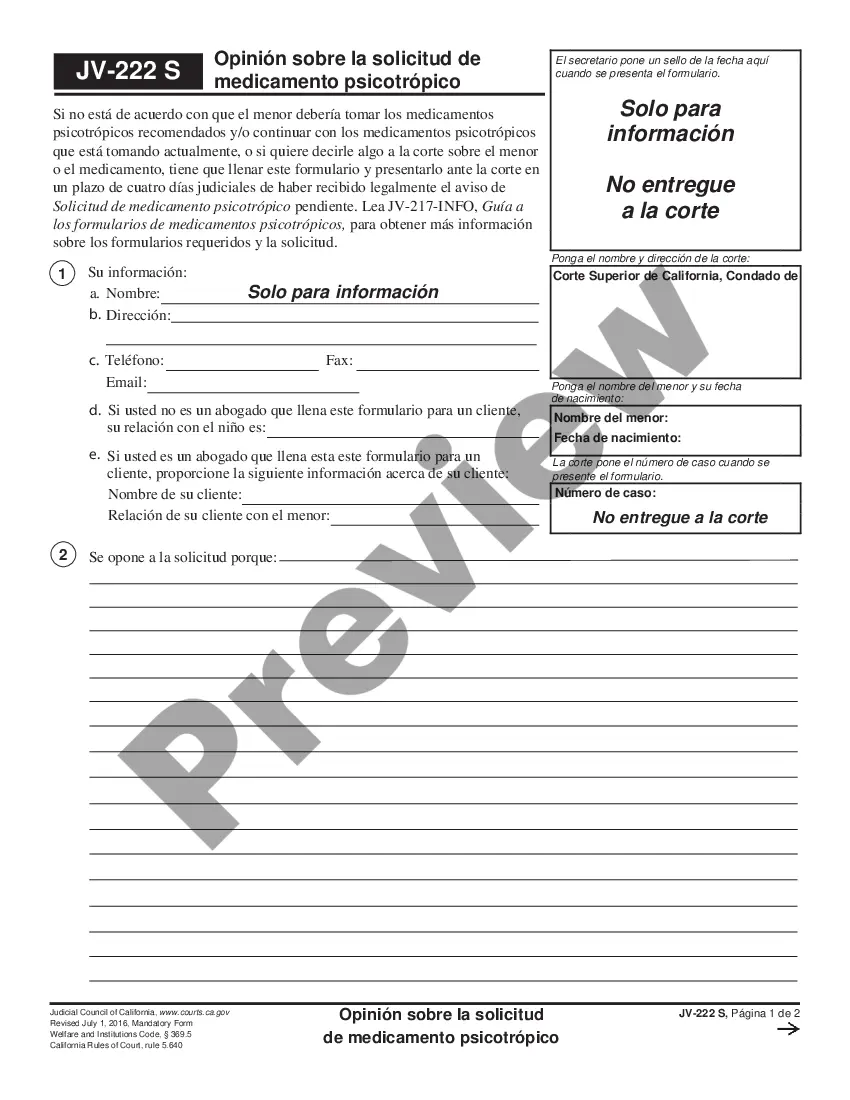
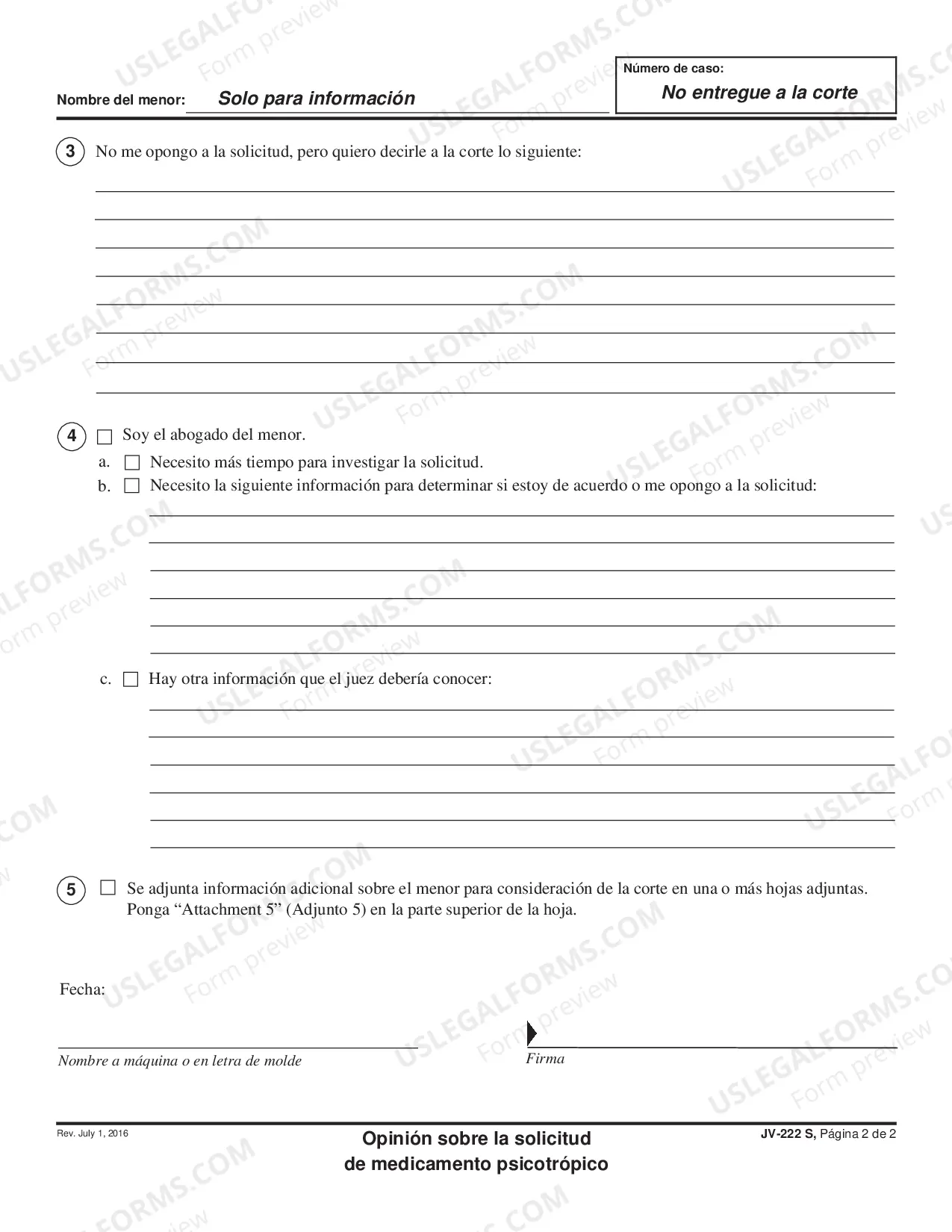
California Opposition To Motion For Good Faith Settlement
State:
California
Category:
Control #:
CA-JV-222S
Format:
PDF
Instant download
This website is not affiliated with any governmental entity
Public form
Description
Free preview
Get your form ready online
Our built-in tools help you complete, sign, share, and store your documents in one place.
Built-in online Word editor
Make edits, fill in missing information, and update formatting in US Legal Forms—just like you would in MS Word.
Export easily
Download a copy, print it, send it by email, or mail it via USPS—whatever works best for your next step.
E-sign your document
Sign and collect signatures with our SignNow integration. Send to multiple recipients, set reminders, and more. Go Premium to unlock E-Sign.
Notarize online 24/7
If this form requires notarization, complete it online through a secure video call—no need to meet a notary in person or wait for an appointment.
Store your document securely
We protect your documents and personal data by following strict security and privacy standards.

Make edits, fill in missing information, and update formatting in US Legal Forms—just like you would in MS Word.

Download a copy, print it, send it by email, or mail it via USPS—whatever works best for your next step.

Sign and collect signatures with our SignNow integration. Send to multiple recipients, set reminders, and more. Go Premium to unlock E-Sign.

If this form requires notarization, complete it online through a secure video call—no need to meet a notary in person or wait for an appointment.

We protect your documents and personal data by following strict security and privacy standards.
Looking for another form?
Form popularity
FAQ
In California, you should file opposition to a motion for good faith settlement when you believe the settlement undermines your rights or interests in the case. Typically, this opposition is filed before the hearing date, allowing the court to consider your arguments. Acting swiftly is vital because timelines for opposition vary. Utilizing resources from UsLegalForms can help clarify the process and provide the necessary forms to effectively articulate your California opposition to motion for good faith settlement.
A good faith settlement motion in California is a formal request made by parties involved in a lawsuit to determine that a particular settlement agreement is made in good faith. By filing this motion, the settling party seeks judicial approval to protect themselves from further claims related to the settled matter. This process helps to promote fair resolutions and limits the risk of ongoing litigation. Understanding the nuances of California opposition to motion for good faith settlement is crucial for parties wishing to challenge this motion.
To respond to an opposition to a motion in California, you must prepare a written reply addressing the points made in the opposition. Focus on clarifying your arguments and providing any necessary evidence that supports your initial motion. A well-crafted response can significantly impact the court's decision, particularly in matters related to California opposition to motion for good faith settlement. Consider consulting resources like USLegalForms for guidance on responding effectively.
A motion for good faith settlement in California refers to a legal request asking the court to find that a settlement between parties was made in good faith. This determination can protect settling parties from liability and future claims. It is an essential tool in resolving disputes efficiently while minimizing ongoing litigation risks. Using a reliable platform like USLegalForms can help you navigate the details of filing such a motion.
In California, you typically have 5 days to file a reply to the opposition of your motion for summary judgment. This time frame is crucial because it allows you to clarify and reinforce your arguments before the court. Properly adhering to these timelines can strengthen your position in any California opposition to motion for good faith settlement.
Yes, you can appeal a motion for summary judgment in California. If the court grants or denies your motion, you have the right to appeal that decision. However, it's important to consider the timing and grounds for the appeal. Understanding the nuances of the California opposition to motion for good faith settlement can play a significant role in your appeal strategy.
In California, the page limit for a reply brief in support of a motion for summary judgment is generally 10 pages. This limitation helps streamline court proceedings and ensures focused arguments. When preparing your reply, it's crucial to address the opposition to your motion succinctly. A well-structured brief can support your position effectively in the California opposition to motion for good faith settlement.
Yes, in California, your opposition is typically due 9 court days before the hearing date of the motion. This rule helps ensure that all parties have adequate time to prepare and review the arguments before the court date. Meeting this timeline is key to a successful legal strategy. For clarity on filing and deadlines, consider using the resources from USLegalForms to help streamline your preparations.
To file an opposition to a motion in California, you usually have 16 court days after service of the motion. If the motion is served by mail, this time frame might change slightly, allowing for different calculations. Staying aware of the timeline is essential to effectively present your case. For support in managing this process, you can rely on the USLegalForms platform, which offers valuable templates and information.
In California, you typically have 14 days to file your opposition to a motion to compel. This window starts from the date you receive the motion, and it is important to adhere to these timelines to ensure your voice is heard in court. Missing this deadline could severely impact your case. Utilize platforms like USLegalForms to help you draft and file your opposition efficiently.