This form is an official California Judicial Council form which complies with all applicable state codes and statutes. USLF updates all state forms as is required by state statutes and law.
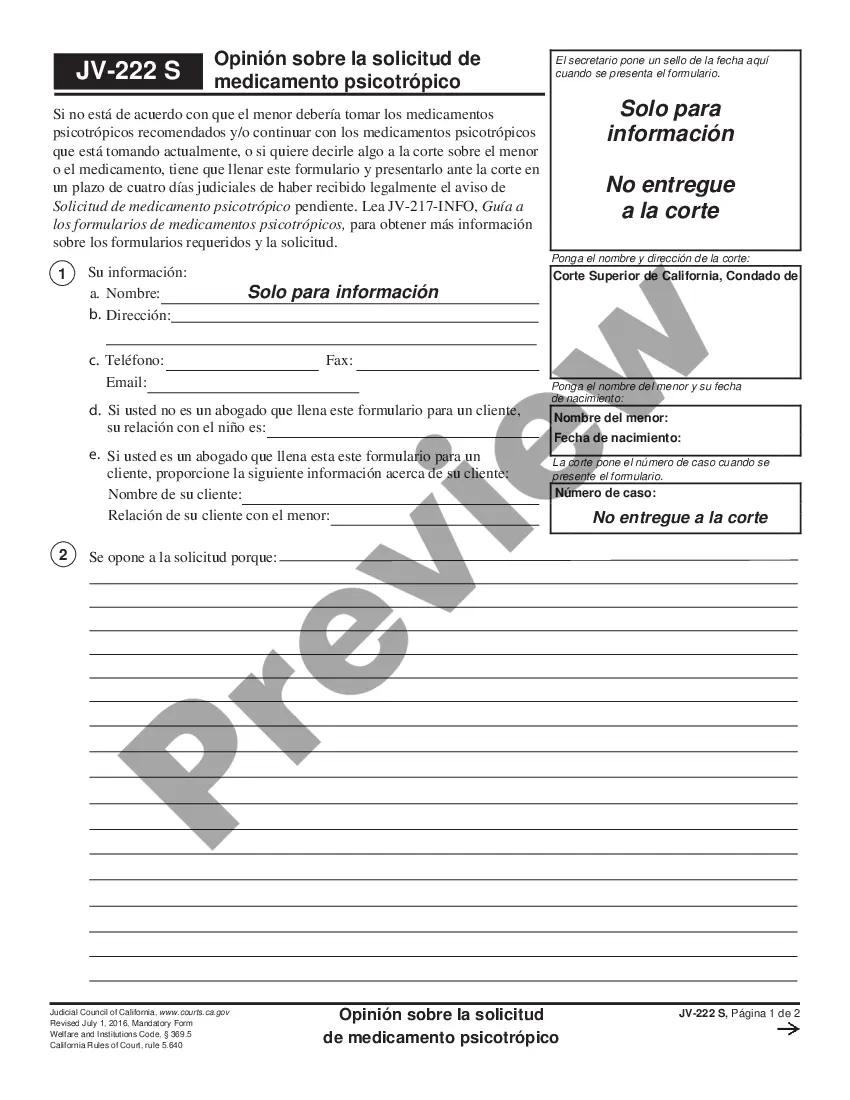
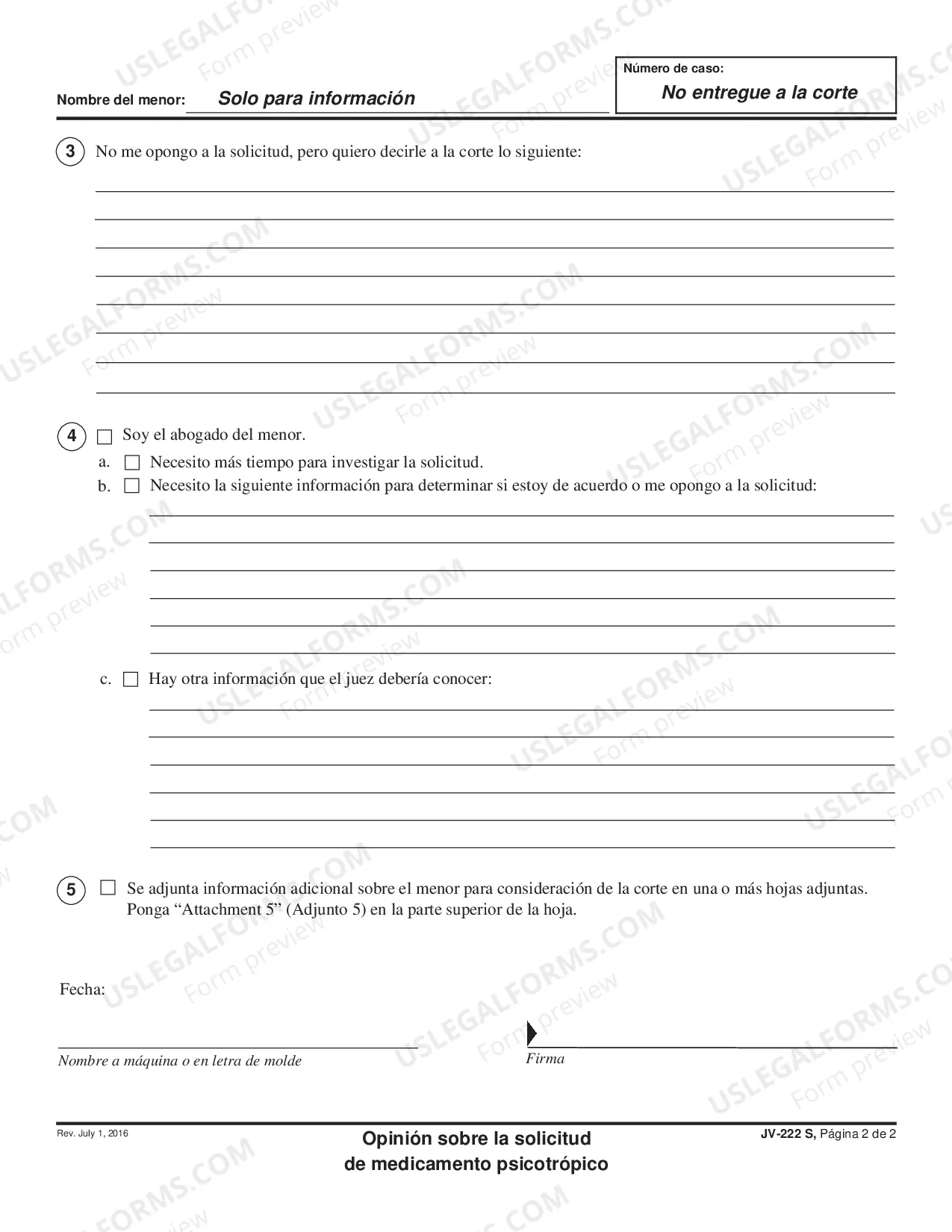
California Opposition To Motion Deadline
State:
California
Category:
Control #:
CA-JV-222S
Format:
PDF
Instant download
This website is not affiliated with any governmental entity
Public form
Description
Free preview
Get your form ready online
Our built-in tools help you complete, sign, share, and store your documents in one place.
Built-in online Word editor
Make edits, fill in missing information, and update formatting in US Legal Forms—just like you would in MS Word.
Export easily
Download a copy, print it, send it by email, or mail it via USPS—whatever works best for your next step.
E-sign your document
Sign and collect signatures with our SignNow integration. Send to multiple recipients, set reminders, and more. Go Premium to unlock E-Sign.
Notarize online 24/7
If this form requires notarization, complete it online through a secure video call—no need to meet a notary in person or wait for an appointment.
Store your document securely
We protect your documents and personal data by following strict security and privacy standards.

Make edits, fill in missing information, and update formatting in US Legal Forms—just like you would in MS Word.

Download a copy, print it, send it by email, or mail it via USPS—whatever works best for your next step.

Sign and collect signatures with our SignNow integration. Send to multiple recipients, set reminders, and more. Go Premium to unlock E-Sign.

If this form requires notarization, complete it online through a secure video call—no need to meet a notary in person or wait for an appointment.

We protect your documents and personal data by following strict security and privacy standards.
Looking for another form?

Form popularity
FAQ
In California, you must oppose a motion to tax costs within 15 days after the service of the notice of motion. This California opposition to motion deadline is important to uphold your rights regarding costs. Make sure your opposition is well-prepared, addressing all relevant points to strengthen your case. If you need assistance, US Legal Forms offers resources and templates that can simplify this procedure.
In California, you typically have 14 days to file an opposition to a motion after you receive it. This California opposition to motion deadline is crucial, as missing it may affect your case. It's essential to prepare your documents carefully and submit them on time to ensure your arguments are considered. Utilizing services like US Legal Forms can help streamline the filing process and ensure compliance with all necessary deadlines.
The remedy against an ex parte order may involve filing a motion to set aside or vacate the order. This action must also occur before the California opposition to motion deadline to have the best chance of success. Present clear and compelling reasons for why the order should not stand, supported by evidence. Consulting a platform like USLegalForms can provide you with the necessary forms and guidance for this process.
To oppose an ex parte application in California, begin by drafting a clear opposition statement. Outline your objections and provide supporting facts or evidence that justify your position. It is crucial to ensure that you submit your opposition before the California opposition to motion deadline for the court's consideration. Using resources like USLegalForms can guide you through this process efficiently.
Yes, an ex parte order can be overturned in California, but it typically requires a formal motion. You must demonstrate that you have a valid reason to challenge the order and file it within the California opposition to motion deadline set by the court. This process allows the judge to reconsider the order based on your new evidence or argument. Being prepared with proper documentation can strengthen your case.
To file an opposition to an ex parte application in California, you first need to draft your opposition document. Make sure to include the relevant case information and your arguments against the application. Then, file the document with the court, ensuring you meet the California opposition to motion deadline to prevent any delays in your case. You may also want to serve a copy to the opposing party to keep them informed.
The deadline to file an opposition to a motion in California is typically 14 days prior to the scheduled hearing date. It is important to keep this timeline in mind as missing it could jeopardize your case. Utilizing platforms like US Legal Forms can simplify the process of preparing your opposition and help you meet the California opposition to motion deadline efficiently.
You have 14 days to oppose a motion to strike in California. The timeline is crucial for preparing a strong argument against the motion. Ensure that you file your opposition within this period to protect your interests and adhere to the California opposition to motion deadline.
When it comes to opposing a motion to strike in California, the deadline is generally 14 days before the hearing. This allows you time to gather your arguments and evidence. Timely filing is essential to uphold your position in court, making awareness of the California opposition to motion deadline vital.
In California, you typically have 14 days to file your opposition to a motion to compel. This timeframe starts from the date you receive the motion papers. It's crucial to meet this deadline, as failing to do so may result in your inability to present your arguments. Staying organized helps ensure your compliance with the California opposition to motion deadline.