Labor Laws On Working Overtime
Description
Get your form ready online
Our built-in tools help you complete, sign, share, and store your documents in one place.
Make edits, fill in missing information, and update formatting in US Legal Forms—just like you would in MS Word.
Download a copy, print it, send it by email, or mail it via USPS—whatever works best for your next step.
Sign and collect signatures with our SignNow integration. Send to multiple recipients, set reminders, and more. Go Premium to unlock E-Sign.
If this form requires notarization, complete it online through a secure video call—no need to meet a notary in person or wait for an appointment.
We protect your documents and personal data by following strict security and privacy standards.

Make edits, fill in missing information, and update formatting in US Legal Forms—just like you would in MS Word.

Download a copy, print it, send it by email, or mail it via USPS—whatever works best for your next step.

Sign and collect signatures with our SignNow integration. Send to multiple recipients, set reminders, and more. Go Premium to unlock E-Sign.

If this form requires notarization, complete it online through a secure video call—no need to meet a notary in person or wait for an appointment.

We protect your documents and personal data by following strict security and privacy standards.
Looking for another form?







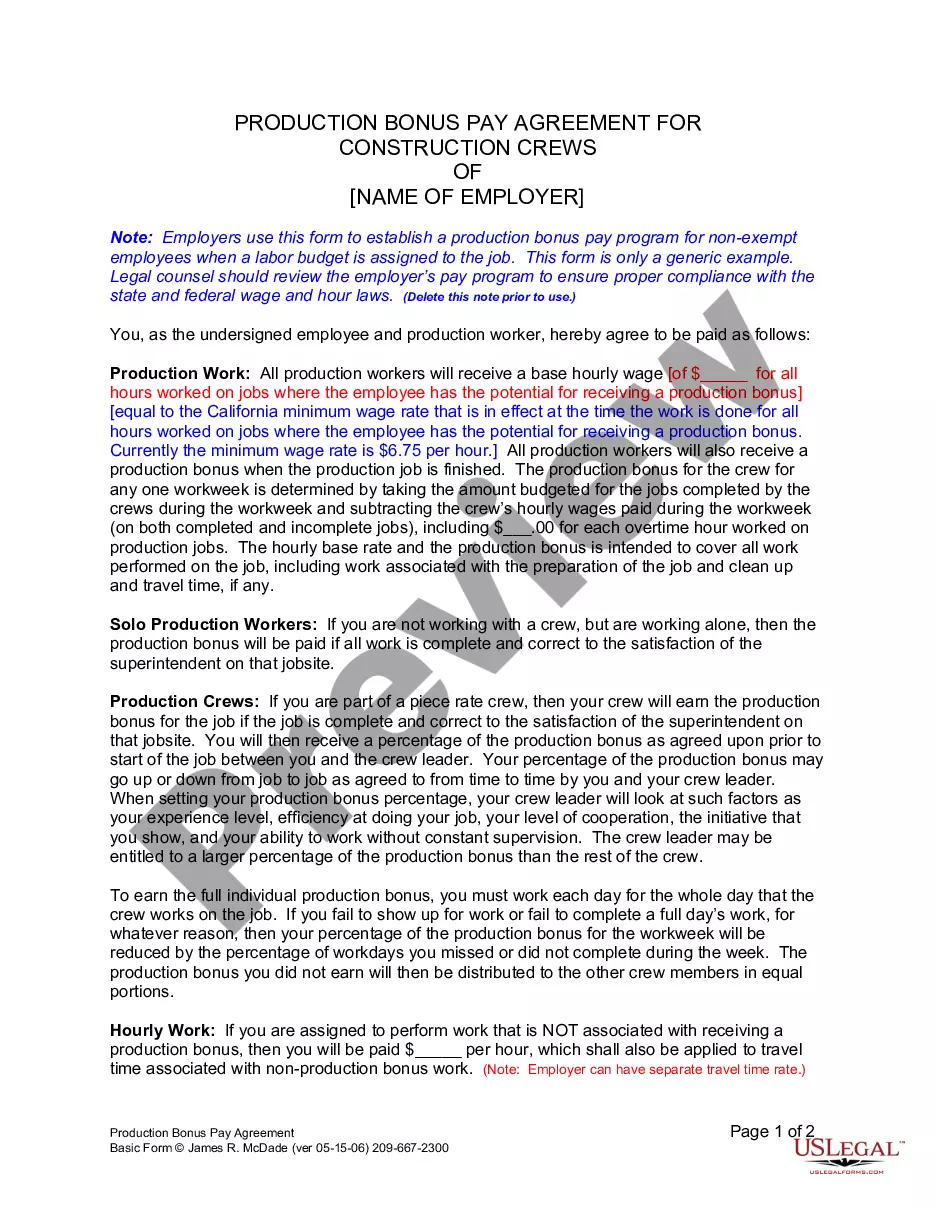
How to fill out California Production Bonus Pay Agreement For Construction?
It’s clear that you cannot become a legal expert instantly, nor can you swiftly learn how to prepare Labor Laws On Working Overtime without a specialized skill set.
Drafting legal documents is a lengthy procedure that demands specific training and abilities. So why not entrust the development of the Labor Laws On Working Overtime to the professionals.
With US Legal Forms, one of the most extensive legal document libraries, you can discover anything from court documents to templates for workplace communication.
You can regain access to your documents from the My documents tab at any time. If you’re an existing customer, you can simply Log In, and find and download the template from the same section.
Regardless of the intent behind your documentation—whether financial, legal, or personal—our platform has you covered. Try US Legal Forms today!
- Find the document you require by utilizing the search bar at the top of the page.
- View it (if this option is available) and examine the supporting description to ascertain if Labor Laws On Working Overtime is what you need.
- Initiate your search again if you seek a different template.
- Create a free account and choose a subscription plan to acquire the form.
- Select Buy now. Once the purchase is finalized, you can download the Labor Laws On Working Overtime, fill it out, print it, and send or mail it to the necessary individuals or organizations.
Form popularity
FAQ
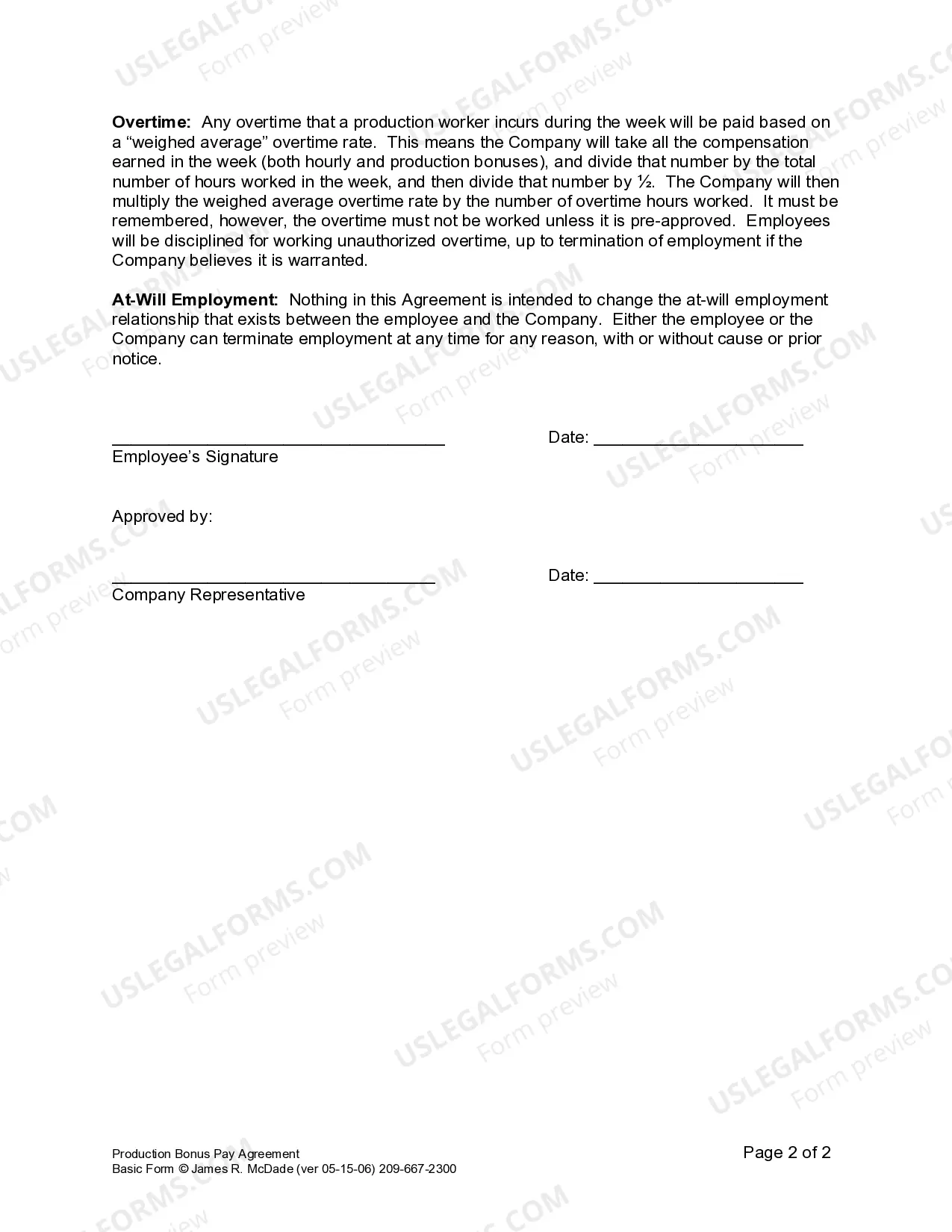
Using the time-and-a-half rule of thumb, you'd calculate overtime pay by multiplying an employee's hourly rate by 1.5 and then multiplying the result by the number of overtime hours they worked. You then add that total to the amount they make within a 40-hour workweek.
Presently, no OSHA standard to regulate extended and unusual shifts in the workplace exists. A work period of eight consecutive hours over five days with at least eight hours of rest in between shifts defines a standard shift. Any shift that goes beyond this standard is considered to be extended or unusual.
No employer is allowed to make them work for over 12 hours in Karnataka but again the number of hours can differ from state to state.
An employer can force you to work overtime. ing to the FLSA, they can require you to work any hours over a regular workweek, which is 40 hours. If an employer ?requires you to work overtime, they're legally obliged to pay you time and a half, or 1.5 times your regular hourly pay rate.
The overtime policy should include: Definition of ?standard working hours? and what qualifies as ?overtime? Classification of employees as exempt or non-exempt ing to overtime pay laws. Procedures for recording overtime and ensuring accurate compensation.