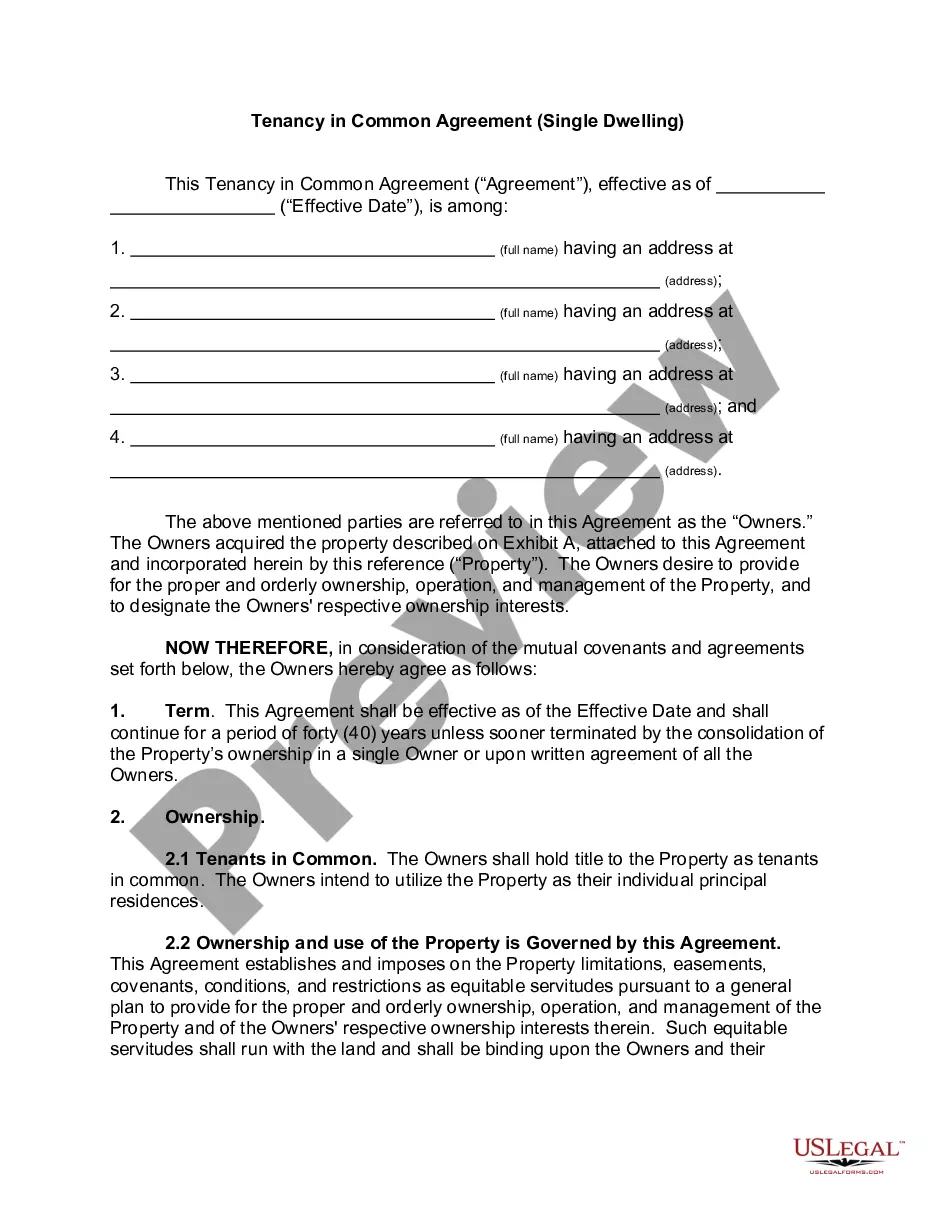
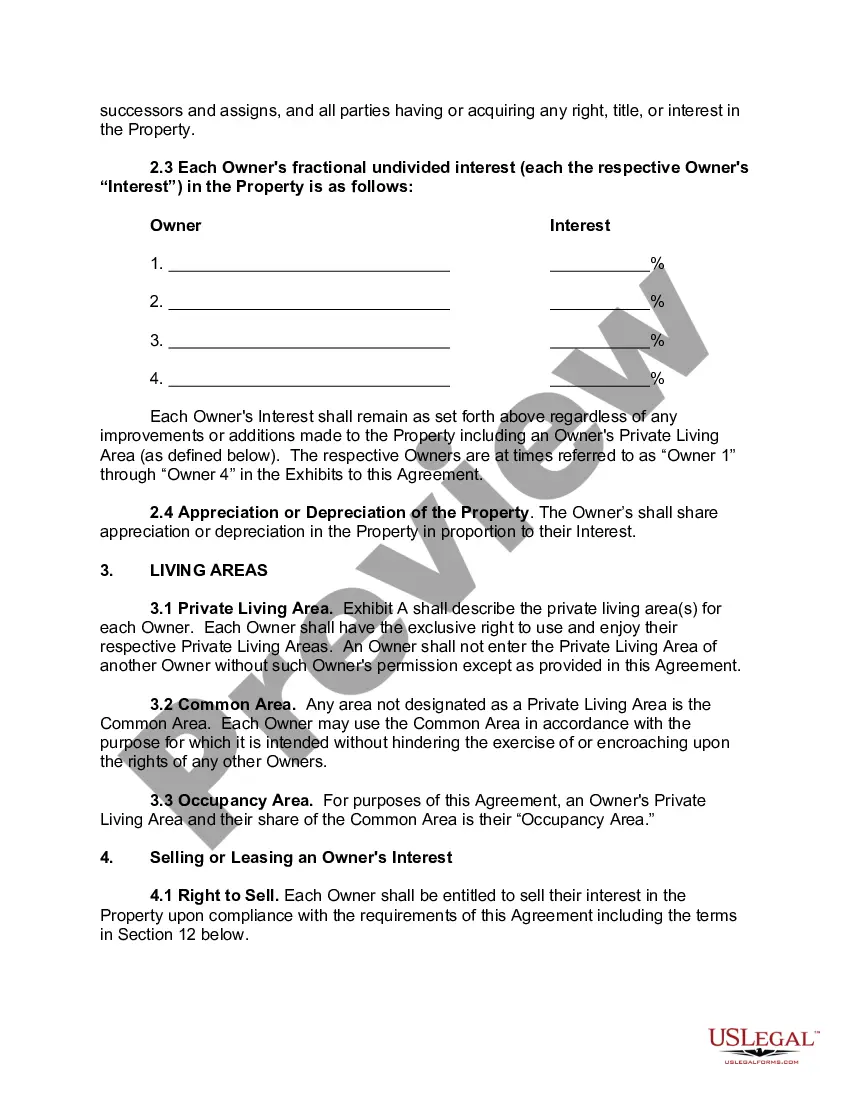
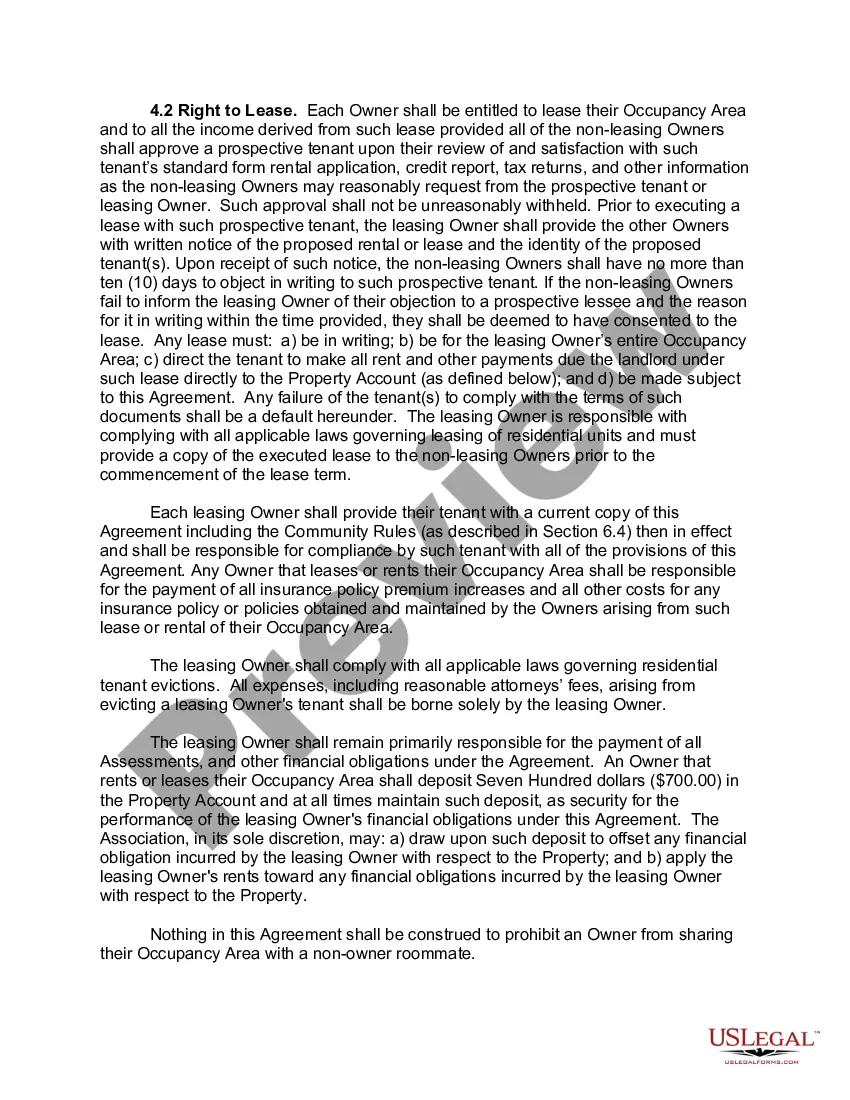
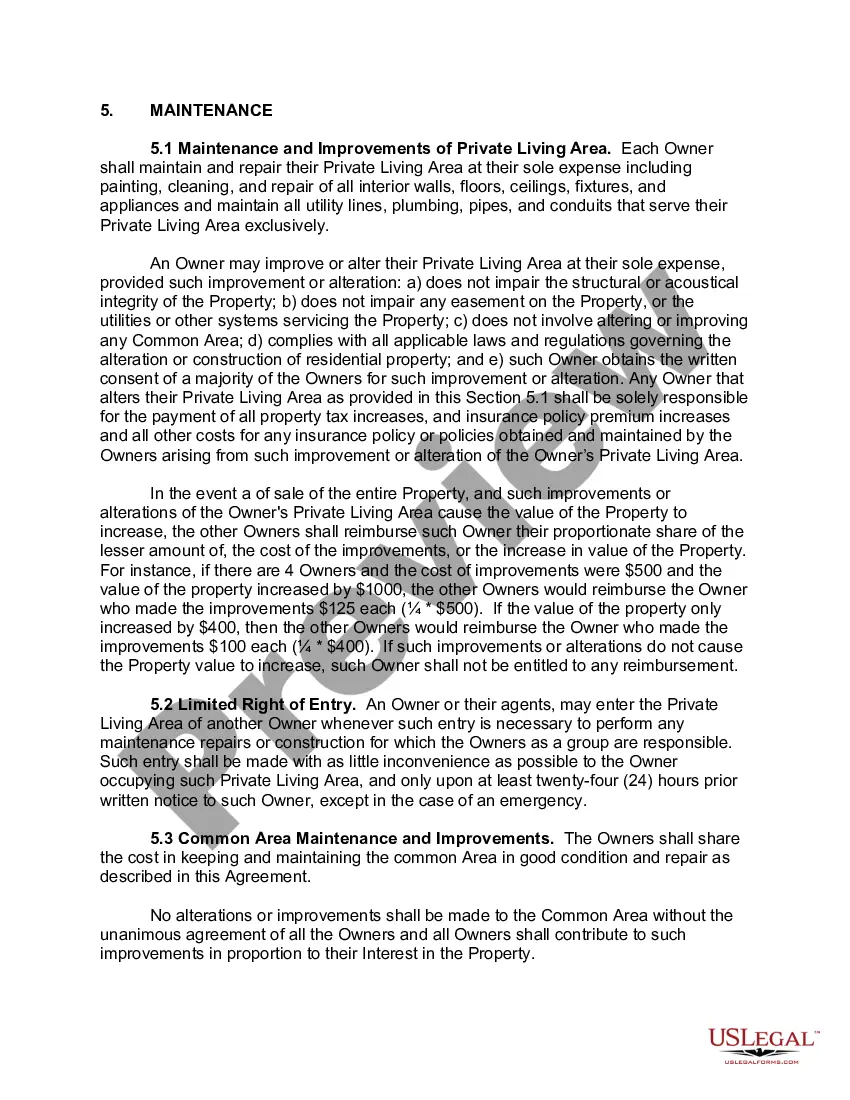
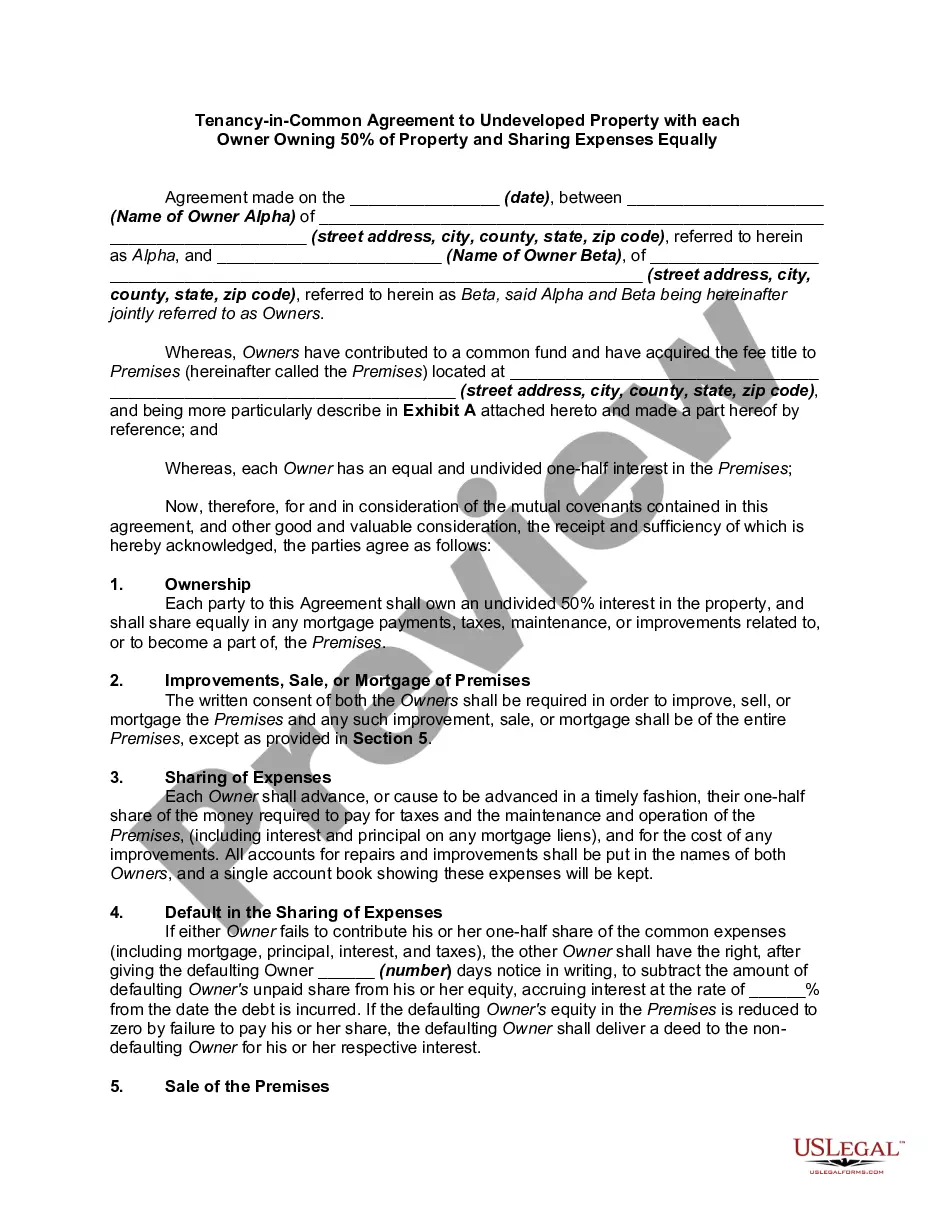
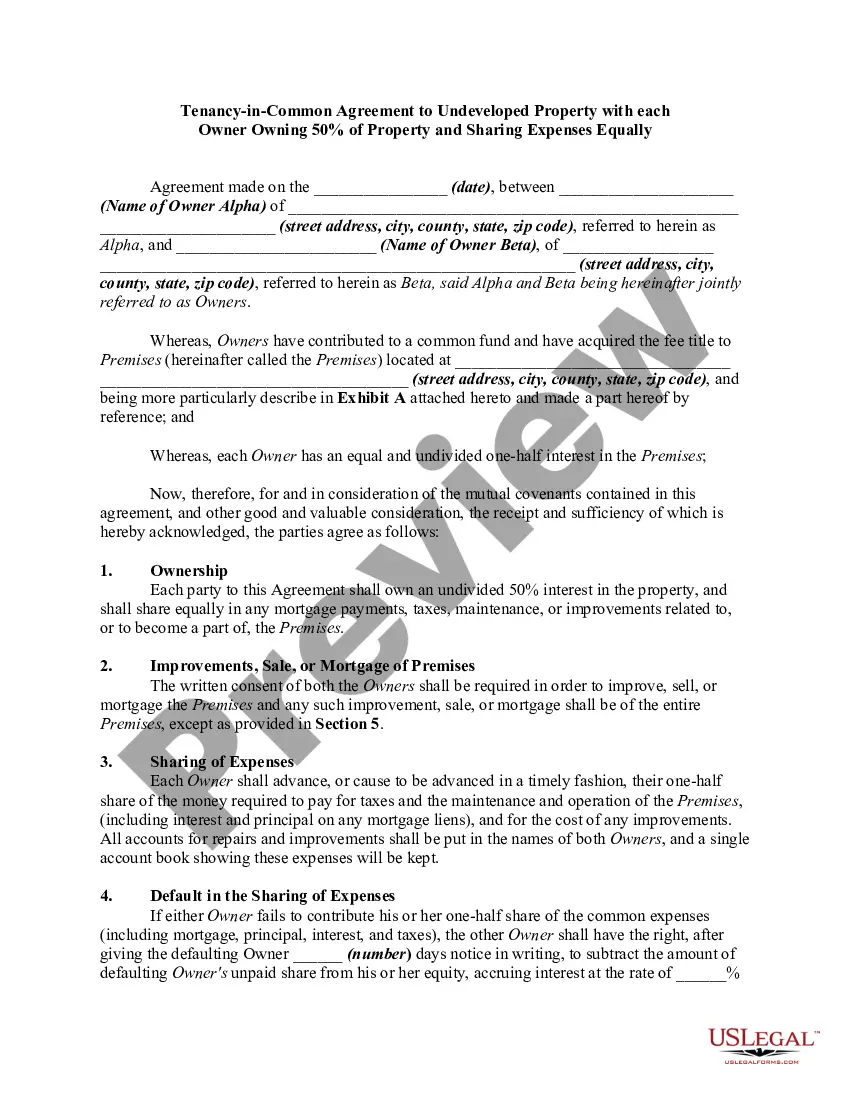
Tenant In Common Agreement Template With Vesting
Description


Get your form ready online
Our built-in tools help you complete, sign, share, and store your documents in one place.
Make edits, fill in missing information, and update formatting in US Legal Forms—just like you would in MS Word.
Download a copy, print it, send it by email, or mail it via USPS—whatever works best for your next step.
Sign and collect signatures with our SignNow integration. Send to multiple recipients, set reminders, and more. Go Premium to unlock E-Sign.
If this form requires notarization, complete it online through a secure video call—no need to meet a notary in person or wait for an appointment.
We protect your documents and personal data by following strict security and privacy standards.

Make edits, fill in missing information, and update formatting in US Legal Forms—just like you would in MS Word.

Download a copy, print it, send it by email, or mail it via USPS—whatever works best for your next step.

Sign and collect signatures with our SignNow integration. Send to multiple recipients, set reminders, and more. Go Premium to unlock E-Sign.

If this form requires notarization, complete it online through a secure video call—no need to meet a notary in person or wait for an appointment.

We protect your documents and personal data by following strict security and privacy standards.
Looking for another form?




How to fill out California Tenancy In Common Agreement - Single Dwelling - Up To 4 Owners?
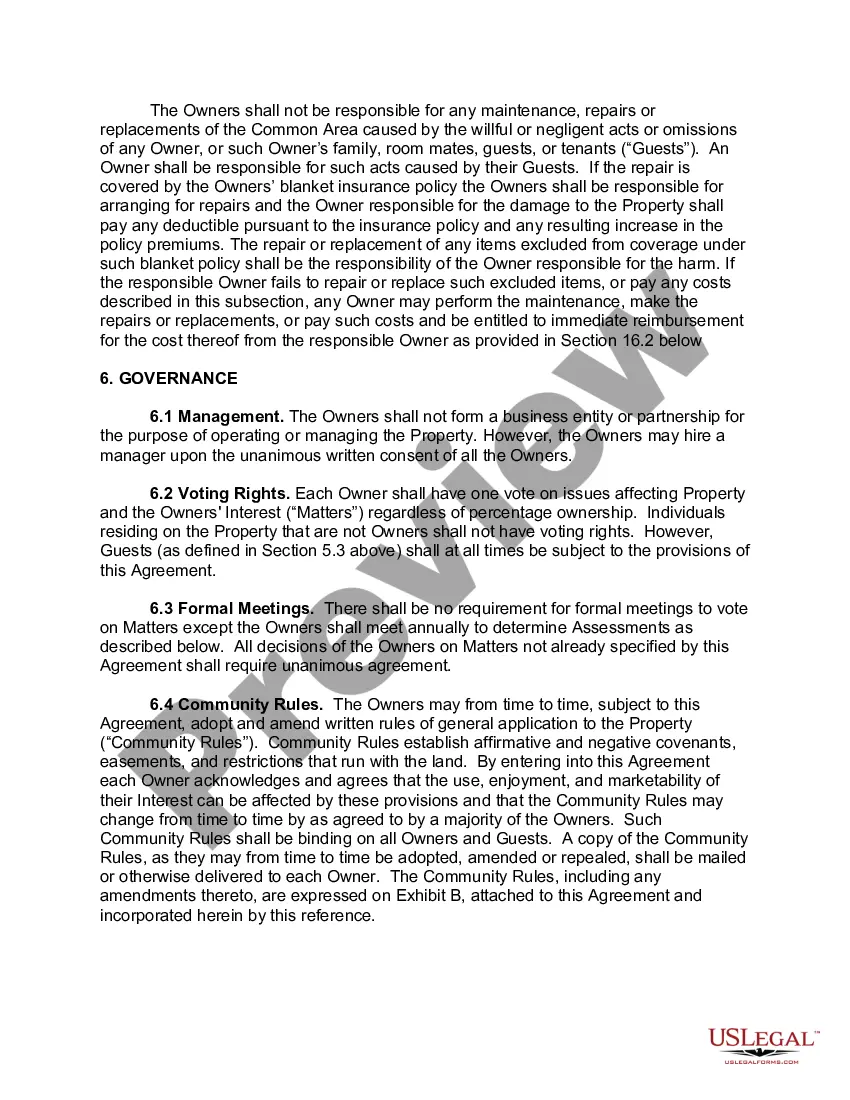
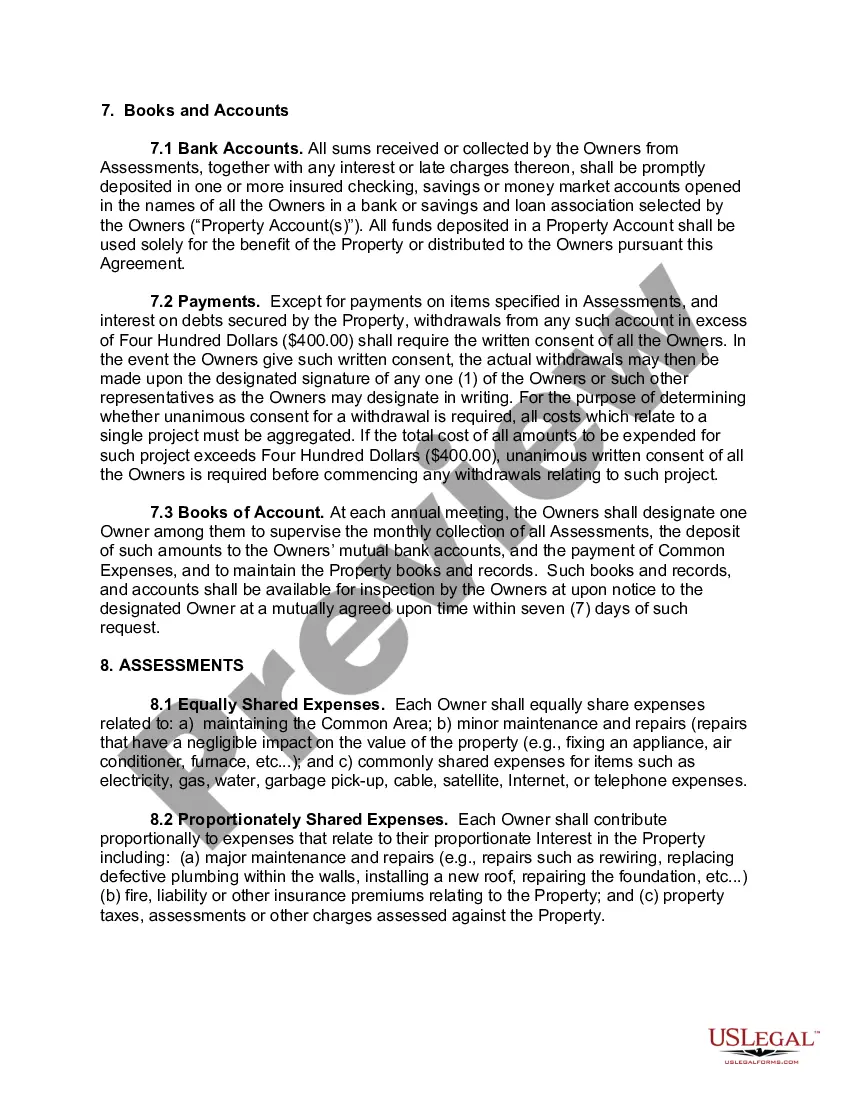
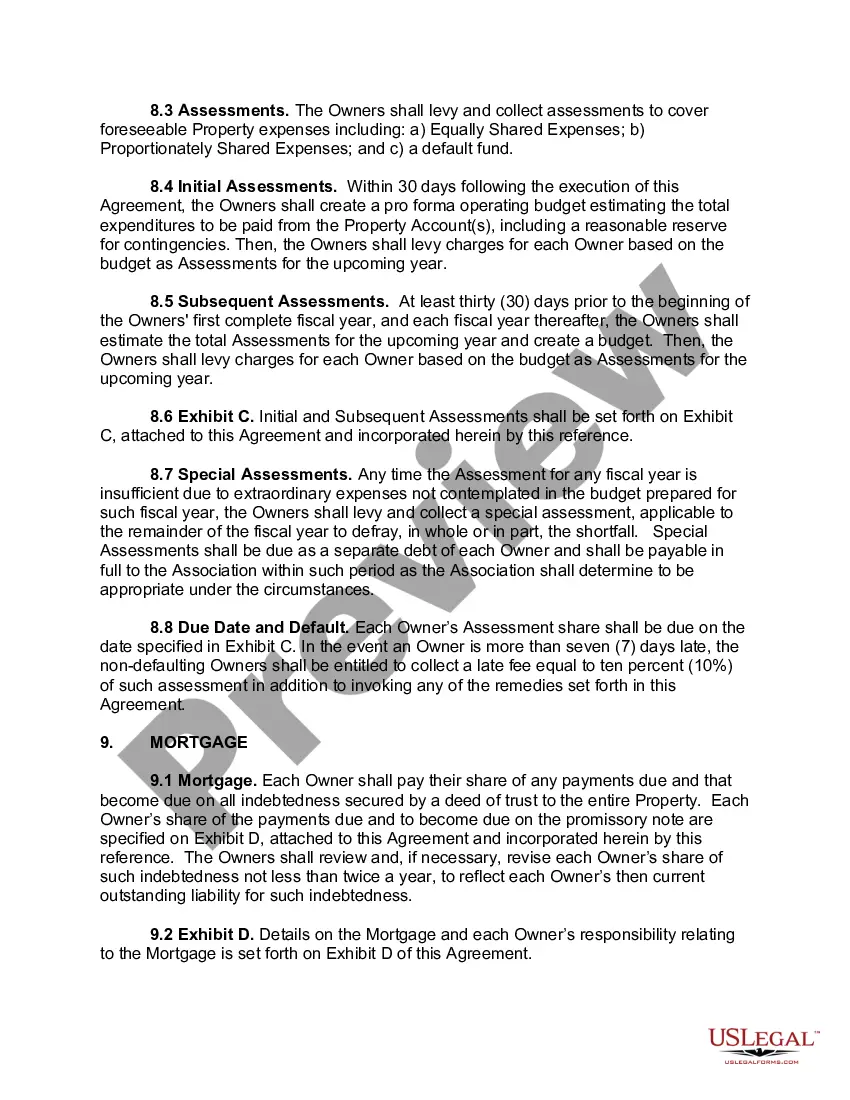
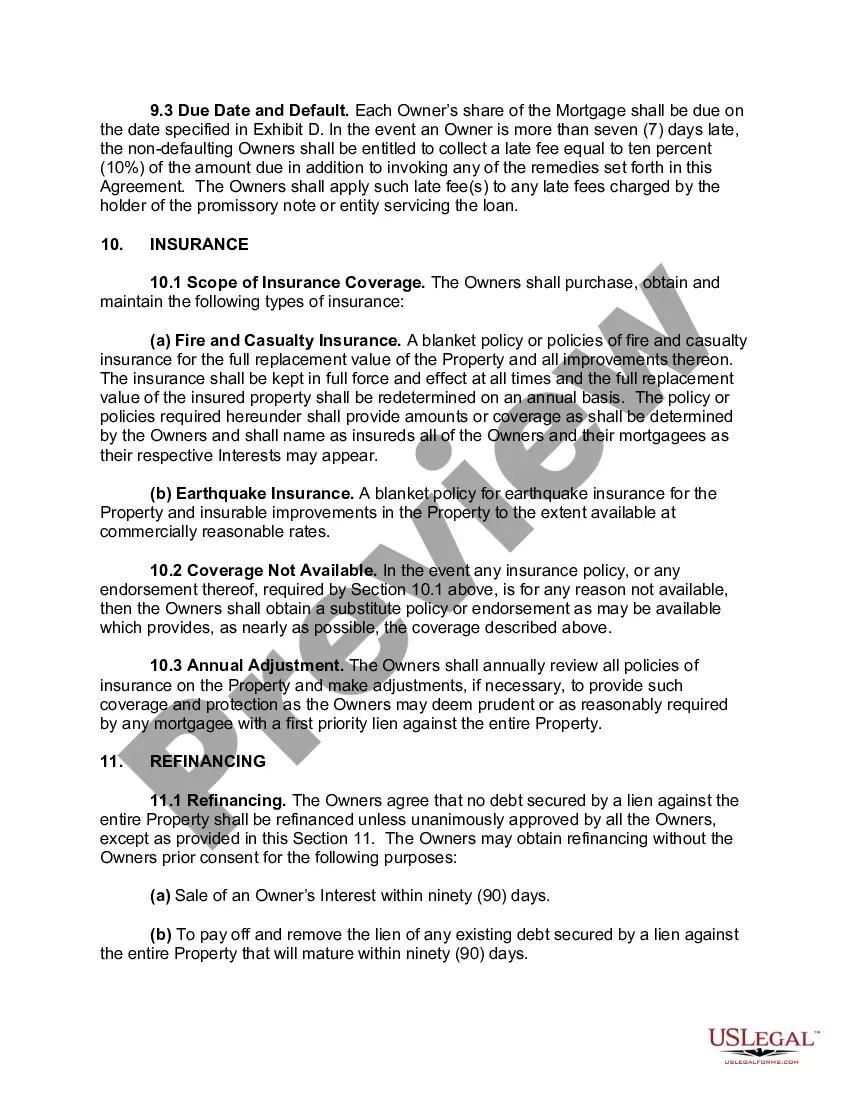
The Tenant In Common Agreement Template With Vesting you observe on this page is a reusable formal template crafted by professional attorneys in accordance with federal and state statutes and regulations.
For over 25 years, US Legal Forms has supplied individuals, businesses, and lawyers with more than 85,000 validated, state-specific forms for any commercial and personal occasion. It’s the fastest, simplest, and most reliable way to acquire the documents you require, as the service ensures the utmost level of data security and malware protection.
Subscribe to US Legal Forms to access verified legal templates for all of life’s circumstances at your convenience.
- Search for the document you require and review it.
- Sign up and Log In.
- Obtain the fillable template.
- Fill out and sign the document.
- Redownload your papers as needed.
Form popularity
FAQ
Joint tenancy with right of survivorship (JTWROS) This is often a common vesting for married couples, but it also applies to family members planning to own a property together.
Tenancy In Common: This refers to equal or unequal undivided ownership between two or more people. A key characteristic of this type of ownership is that if one of the owners dies, their share is conveyed to their heirs, not the other owners who are still alive.
The Problems with This Kind of Joint Tenancy Joint and Several Liability. Every Co-owner Has the Same Ownership Rights. No Direct Right of Survivorship. Tenants in Common Are Free to Resell Their Portion. Do Your Research About Every Co-owner Before Entering into an Agreement. Use a Well-drafted Agreement.
Do You Have Any Property Rights If You Are Not Married? Each partner generally keeps whatever property they brought into the relationship, along with anything that they earned or bought during the relationship. Jointly owned assets, however, are typically split 50-50.
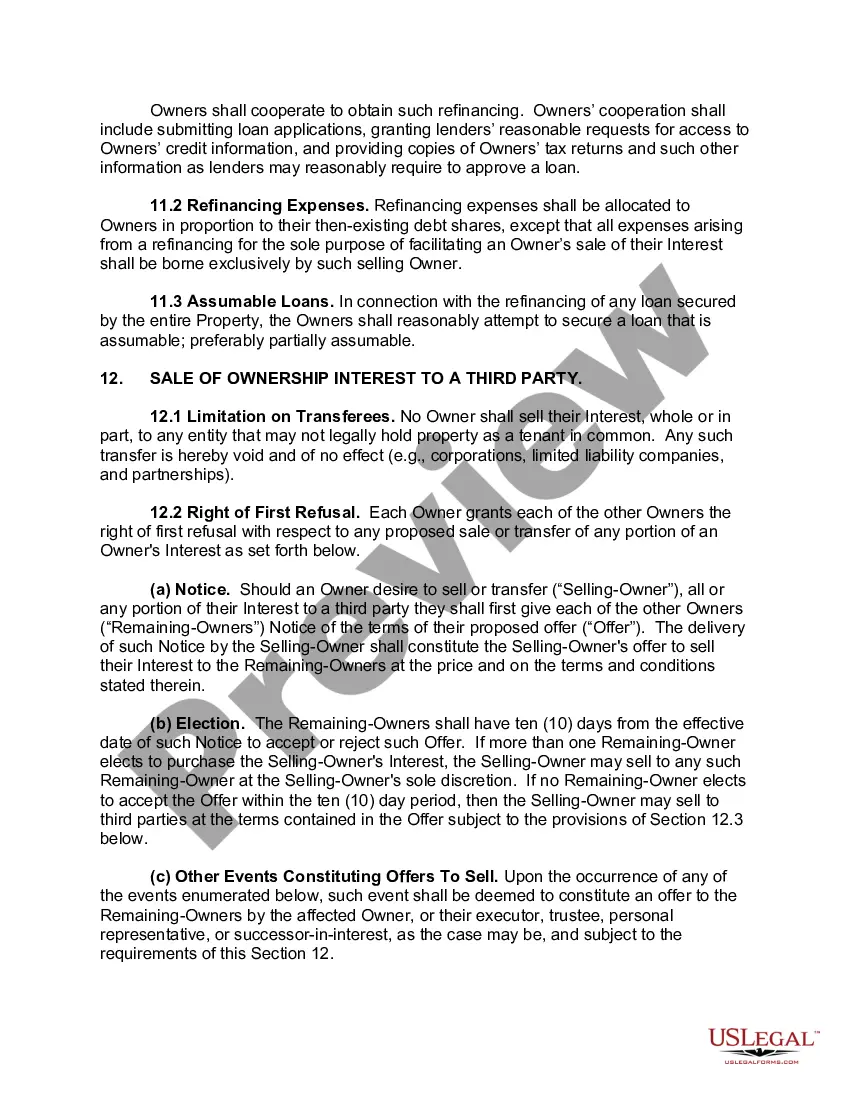
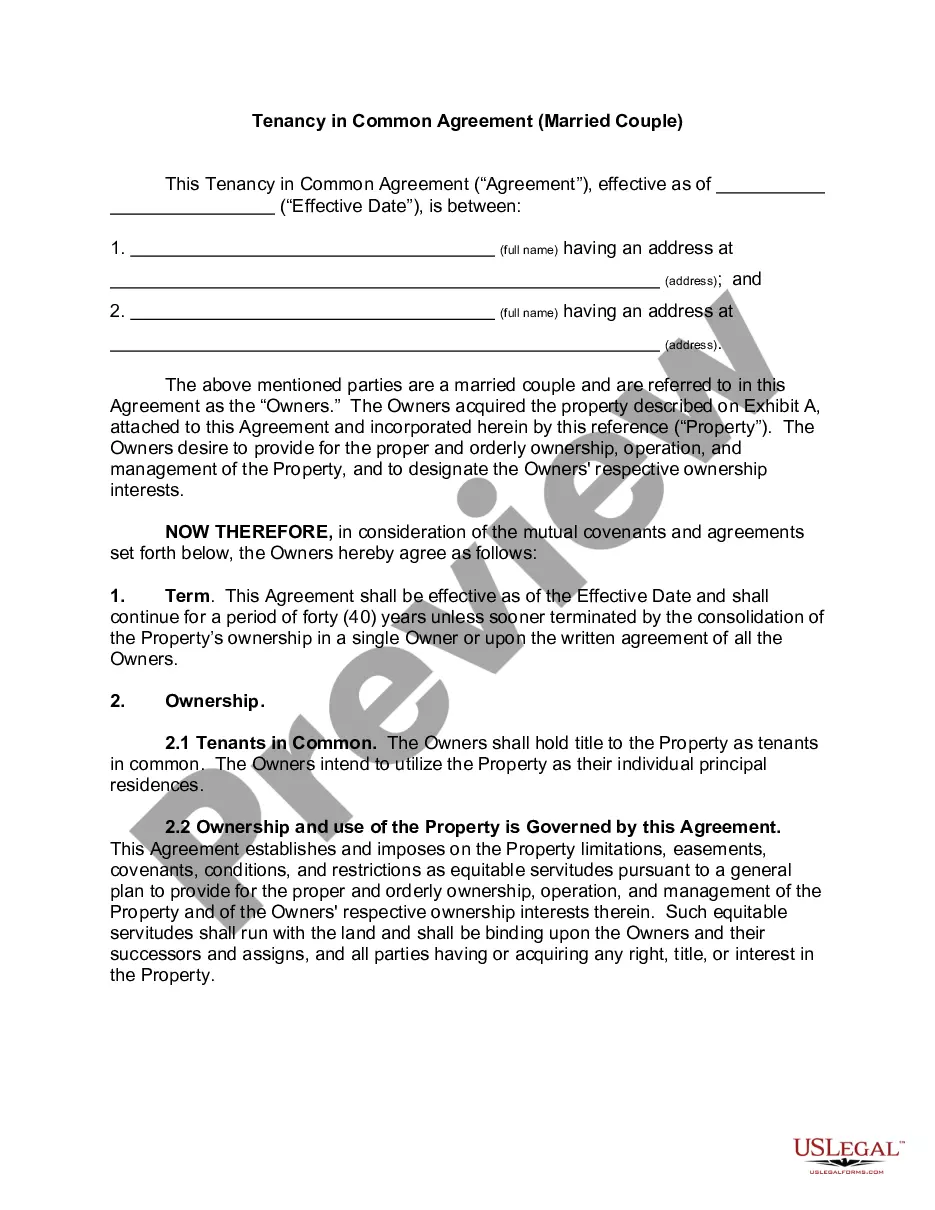
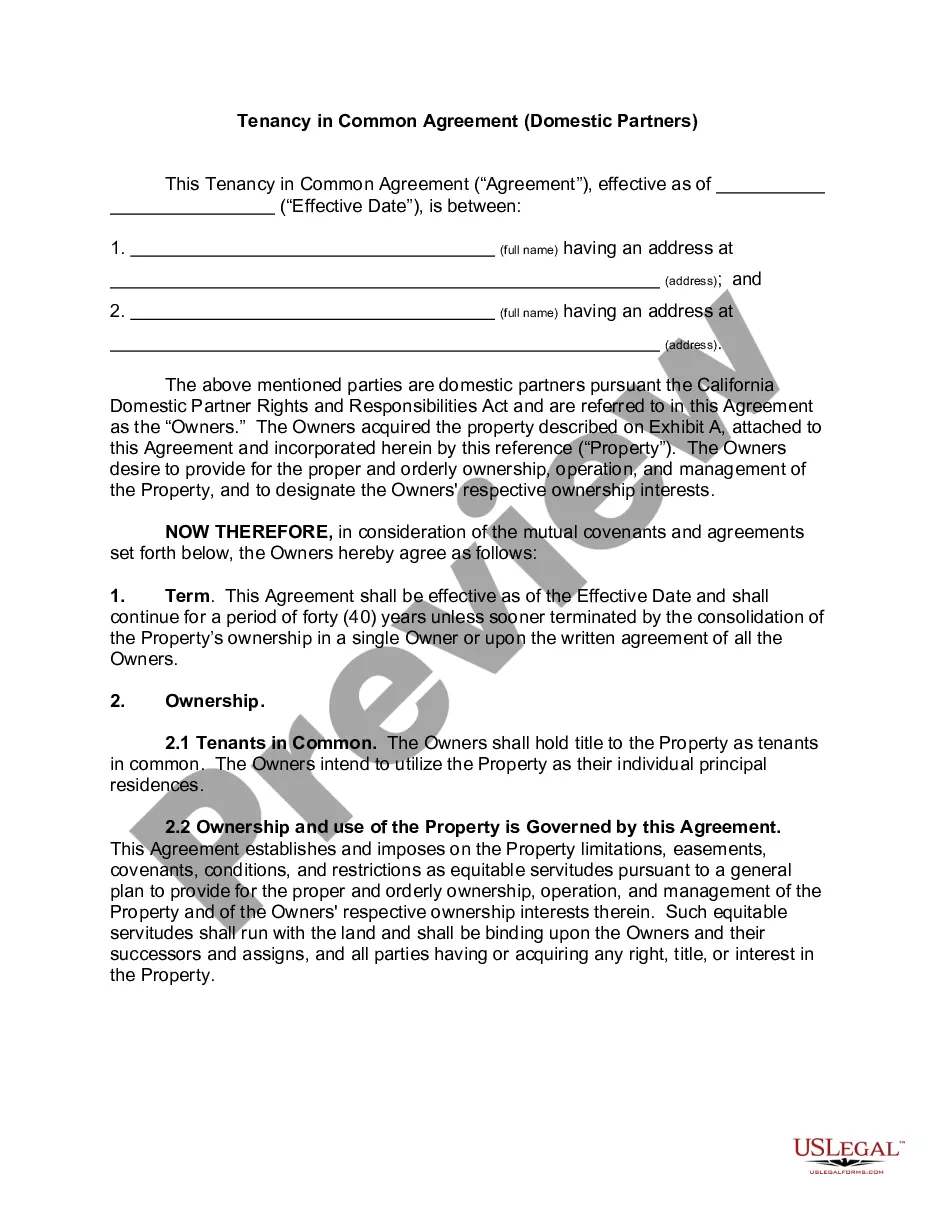
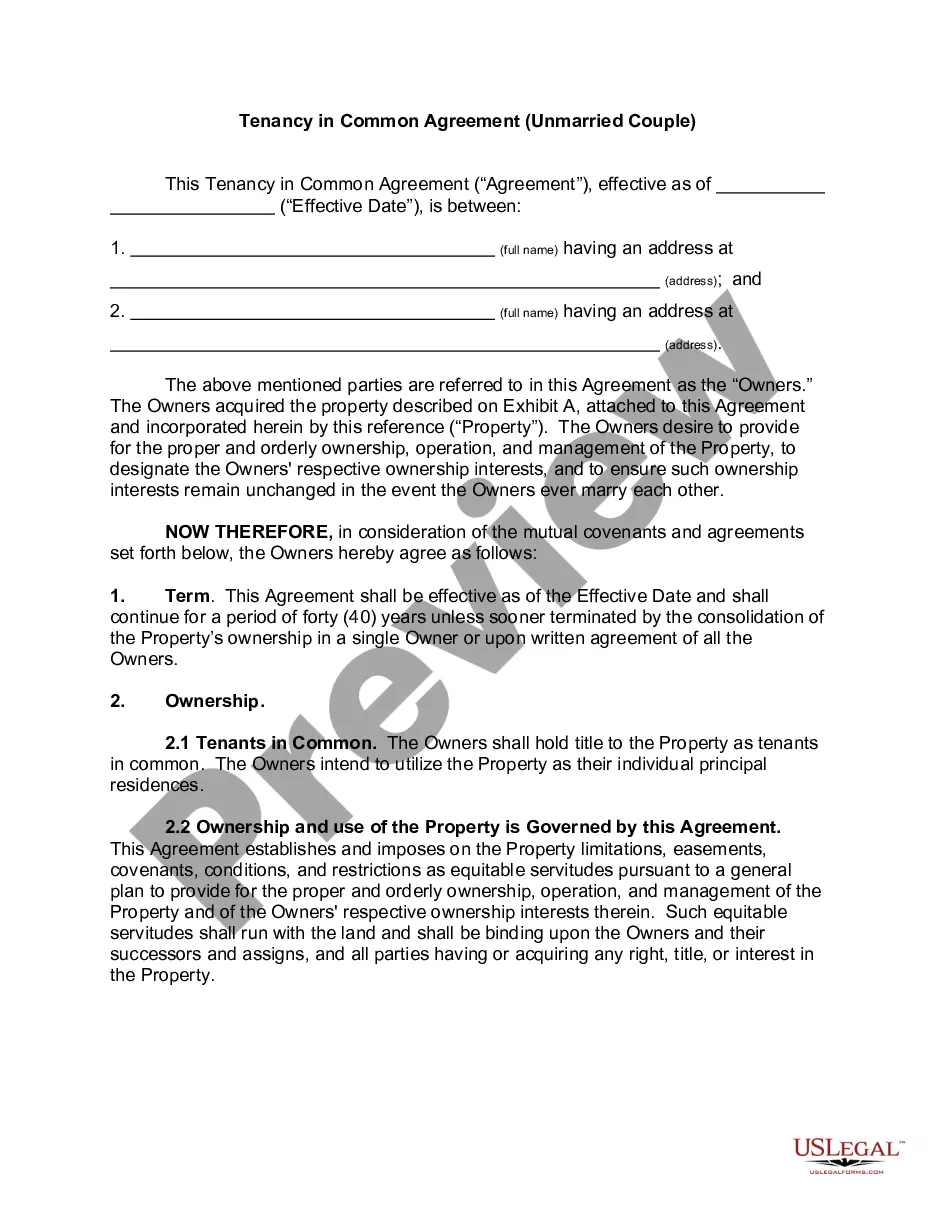
Tenancy in Common (TIC) is a legal arrangement in which two or more parties have ownership interests in a real estate property or parcel of land. Tenants in common can own different percentages of the property. Tenants in common can bequeath their share of the property to a named beneficiary upon their death.