Legal Documents From Court
Description

Get your form ready online
Our built-in tools help you complete, sign, share, and store your documents in one place.
Make edits, fill in missing information, and update formatting in US Legal Forms—just like you would in MS Word.
Download a copy, print it, send it by email, or mail it via USPS—whatever works best for your next step.
Sign and collect signatures with our SignNow integration. Send to multiple recipients, set reminders, and more. Go Premium to unlock E-Sign.
If this form requires notarization, complete it online through a secure video call—no need to meet a notary in person or wait for an appointment.
We protect your documents and personal data by following strict security and privacy standards.

Make edits, fill in missing information, and update formatting in US Legal Forms—just like you would in MS Word.

Download a copy, print it, send it by email, or mail it via USPS—whatever works best for your next step.

Sign and collect signatures with our SignNow integration. Send to multiple recipients, set reminders, and more. Go Premium to unlock E-Sign.

If this form requires notarization, complete it online through a secure video call—no need to meet a notary in person or wait for an appointment.

We protect your documents and personal data by following strict security and privacy standards.
Looking for another form?








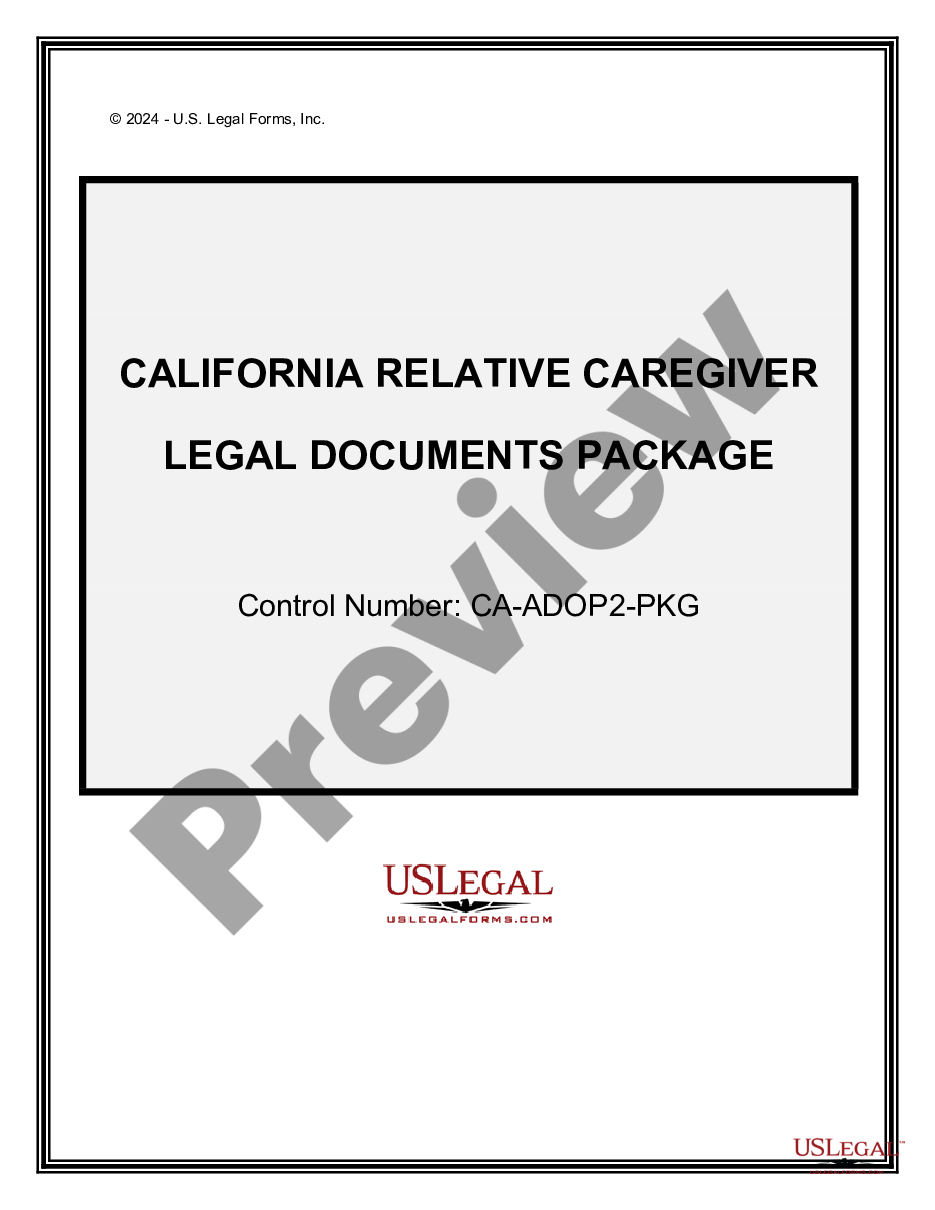
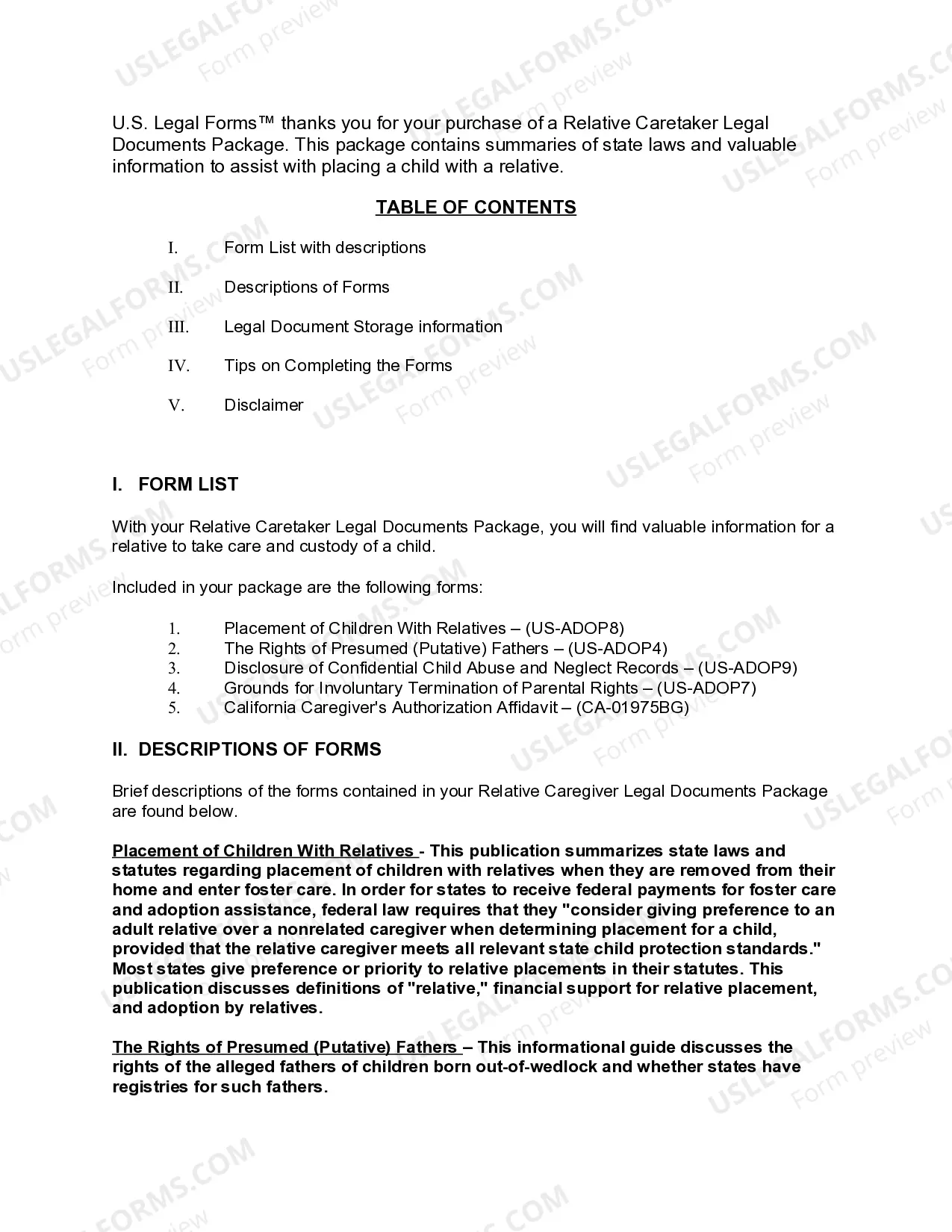
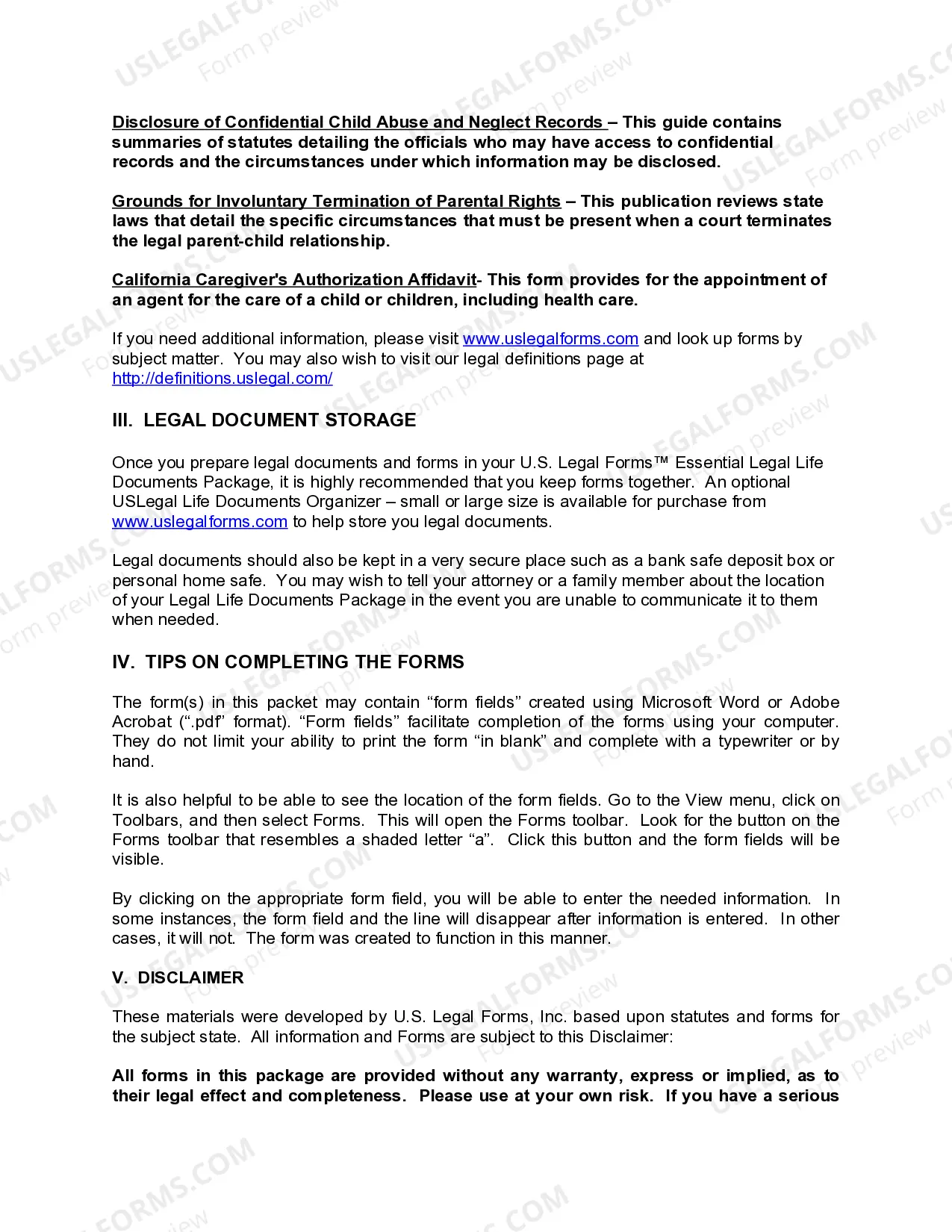
How to fill out California Relative Caretaker Legal Documents Package?
- Log in to your US Legal Forms account if you are a returning user. Verify that your subscription is active or renew it if necessary.
- Browse the extensive library and select the appropriate document type. Review the preview mode to confirm it fits your requirements.
- Utilize the search feature to find alternative templates if the selected one does not meet your needs.
- Once you identify the correct form, click the 'Buy Now' button and choose your preferred subscription plan. Create an account if this is your first visit.
- Complete your purchase either by entering credit card information or through your PayPal account.
- Download the completed form to your device, making it accessible for future reference in the 'My Forms' section of your profile.
After following these straightforward steps, you'll have the essential legal documents from court at your fingertips. This convenience streamlines legal processes and ensures you have the necessary paperwork ready whenever you need it.
Don't hesitate! Start your journey with US Legal Forms today and experience the power of easy access to legal documentation.
Form popularity
FAQ
Court issued documents refer to the official paperwork generated by a court during legal proceedings. These documents include decisions, orders, and notices that hold legal weight. Each of these legal documents from court serves an important role in the judicial process, as they outline the court's directives and decisions. For those seeking these documents, uslegalforms offers an easy way to obtain them efficiently.
Yes, California court records are generally public, allowing anyone to access legal documents from court. These records include case filings, court decisions, and other related documents. However, some records may remain sealed or restricted due to privacy laws. If you need assistance in navigating these records, uslegalforms can provide the necessary tools.
Court records in the US are generally public unless sealed or restricted. This access ensures transparency within the judicial system. You can find these legal documents from court through online databases or by visiting the relevant courthouse. However, consult state-specific regulations to understand the extent of public access.
Yes, in the United States, criminal records are typically public, allowing anyone to access them. However, laws vary by state regarding how and when these records can be shared. You might discover that accessing these legal documents from court can vary in complexity, depending on local regulations. It’s advisable to check the laws specific to your state or utilize dedicated resources for a seamless experience.
To access court documents in California, you can use the online services offered by the California Court System. Searching by case number or party name will help you locate the necessary records. If you prefer physical copies, you may visit the courthouse where the case was heard. Using established platforms can streamline this process and provide you with legal documents from court efficiently.
In Maine, court documents can be accessed online through the Maine Judicial Branch website. You can search by case number or by party name to view the available details. If you require printed copies of these legal documents from court, you can request them directly from the court. Online resources provide a convenient way to obtain this information swiftly.
Yes, US court records are generally public. This means you can access them unless they fall under specific confidentiality or sealing orders. These legal documents from court provide vital information about various cases, making them important for transparency. You can usually find this information online or at the court clerk’s office.
To look up a court case in Maryland, you can visit the Maryland Judiciary Case Search website. This tool allows you to search by case number, party name, or other criteria. It's user-friendly and provides access to essential legal documents from court. If you need assistance, legal platforms can guide you through the search process.
Yes, criminal records are generally considered public in Maryland. This means that anyone can access these records unless they are sealed by the court. You can find these legal documents from court through various online platforms, including state databases. However, there are restrictions on how this information can be used.
To request evidence in court, you typically need to file a motion with the court. This motion should specify the evidence you want, along with reasons for your request. It's important to reference any legal documents from court that support your case, as this strengthens your position. Ensure you meet any deadlines for filing that are set by the court.