Bad Criminal Issuer With The Same Certificate
Description
Get your form ready online
Our built-in tools help you complete, sign, share, and store your documents in one place.
Make edits, fill in missing information, and update formatting in US Legal Forms—just like you would in MS Word.
Download a copy, print it, send it by email, or mail it via USPS—whatever works best for your next step.
Sign and collect signatures with our SignNow integration. Send to multiple recipients, set reminders, and more. Go Premium to unlock E-Sign.
If this form requires notarization, complete it online through a secure video call—no need to meet a notary in person or wait for an appointment.
We protect your documents and personal data by following strict security and privacy standards.

Make edits, fill in missing information, and update formatting in US Legal Forms—just like you would in MS Word.

Download a copy, print it, send it by email, or mail it via USPS—whatever works best for your next step.

Sign and collect signatures with our SignNow integration. Send to multiple recipients, set reminders, and more. Go Premium to unlock E-Sign.

If this form requires notarization, complete it online through a secure video call—no need to meet a notary in person or wait for an appointment.

We protect your documents and personal data by following strict security and privacy standards.
Looking for another form?








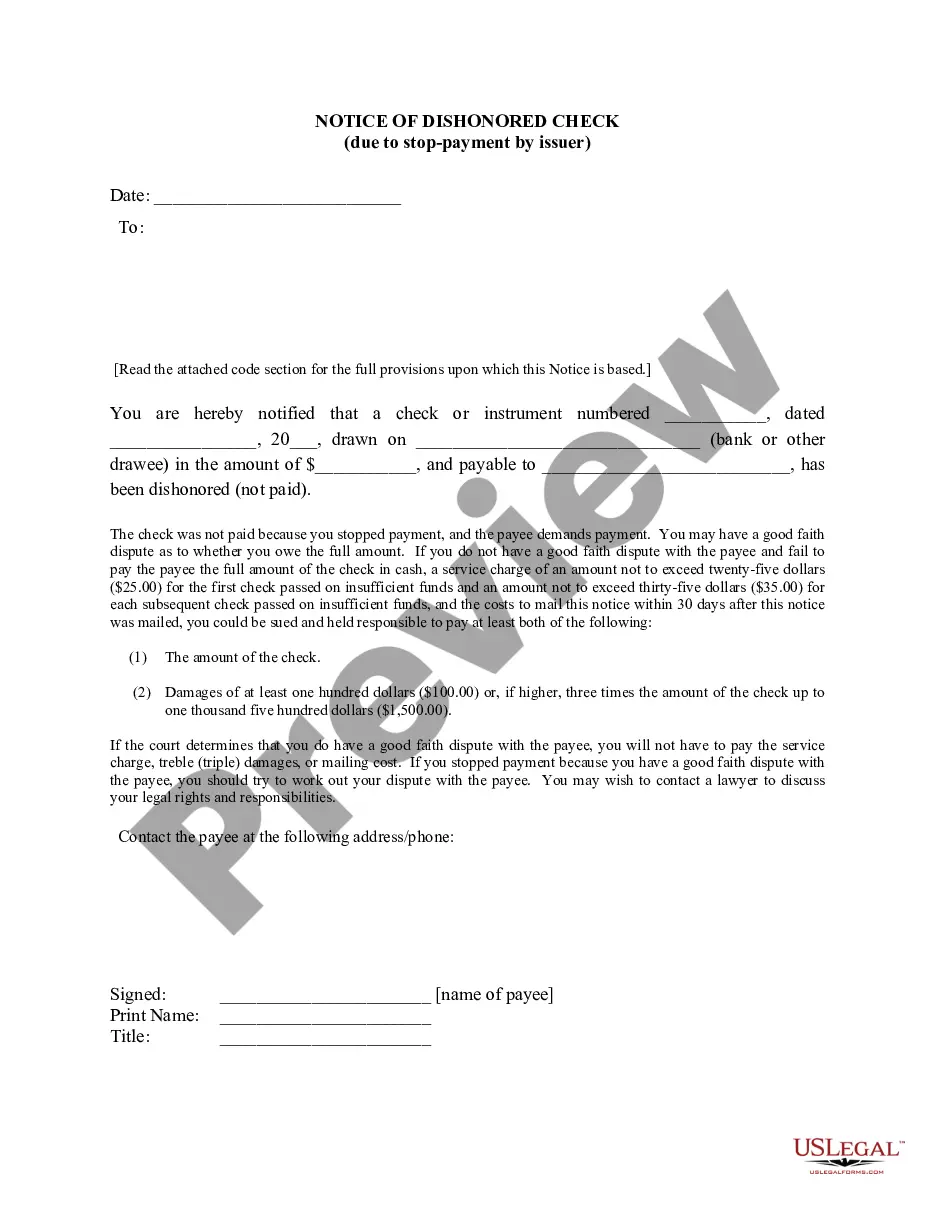
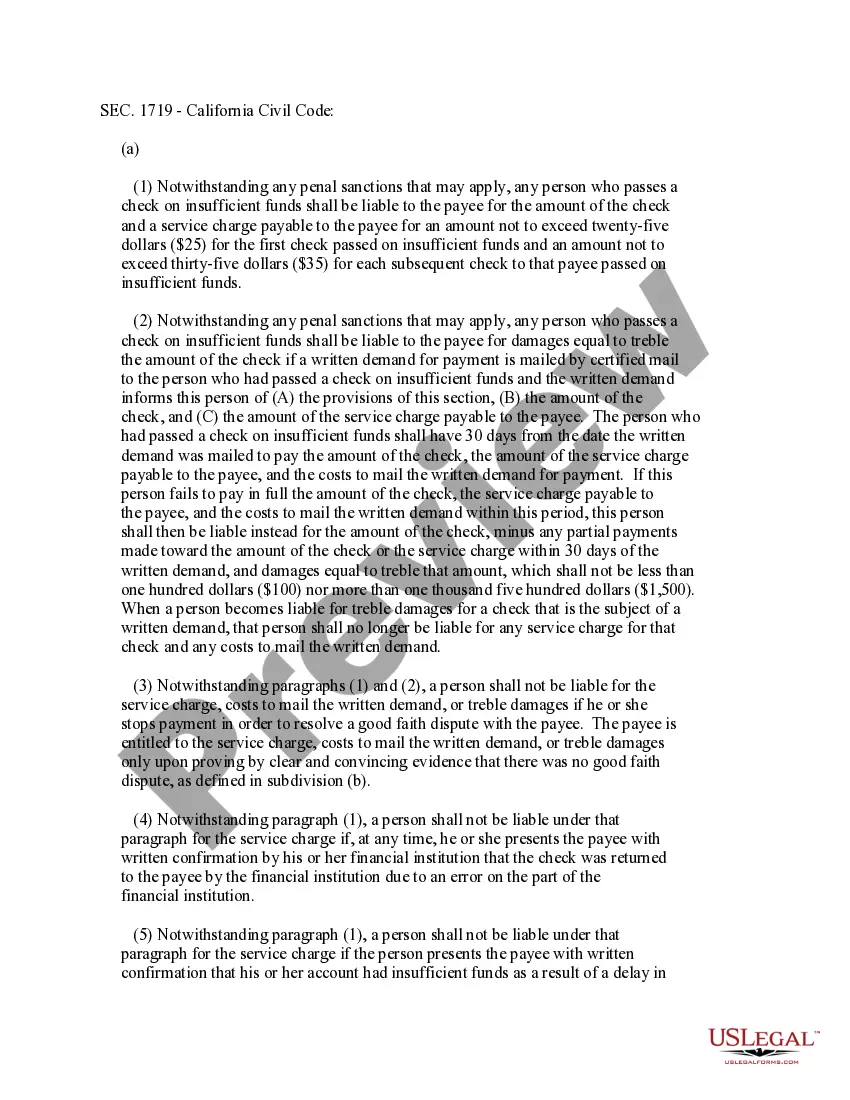
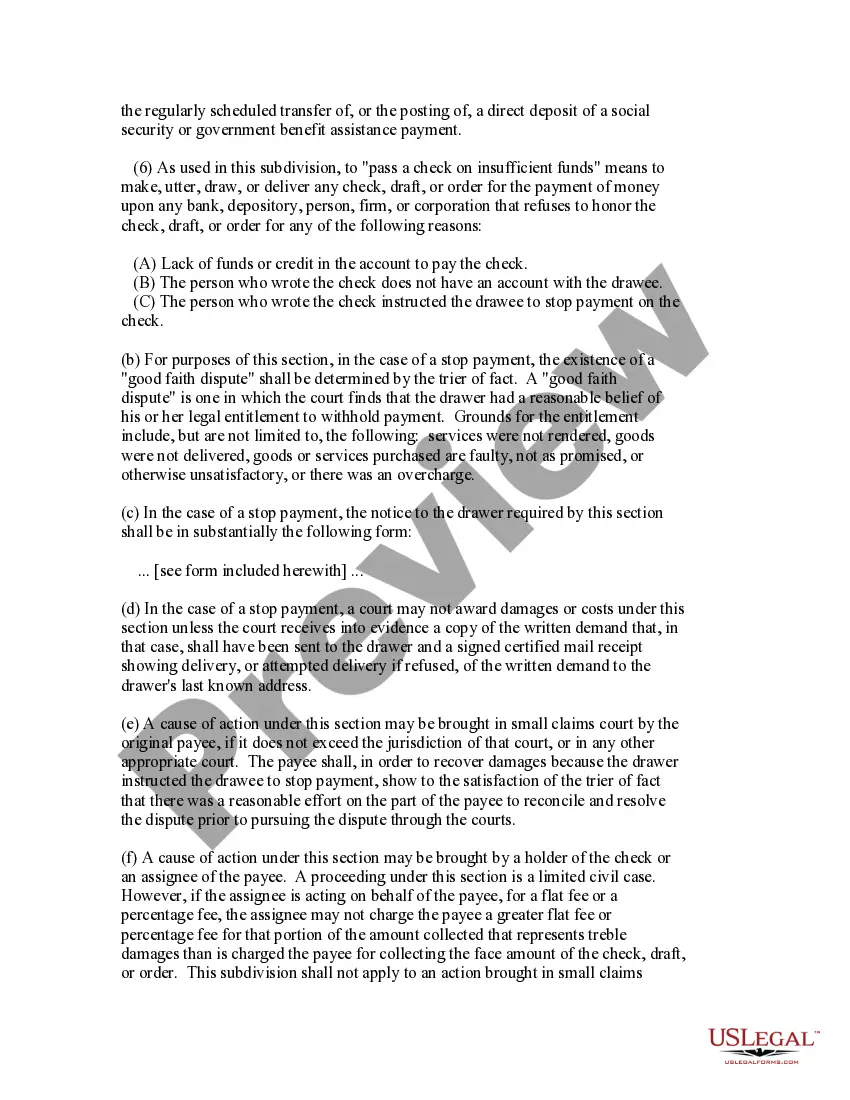
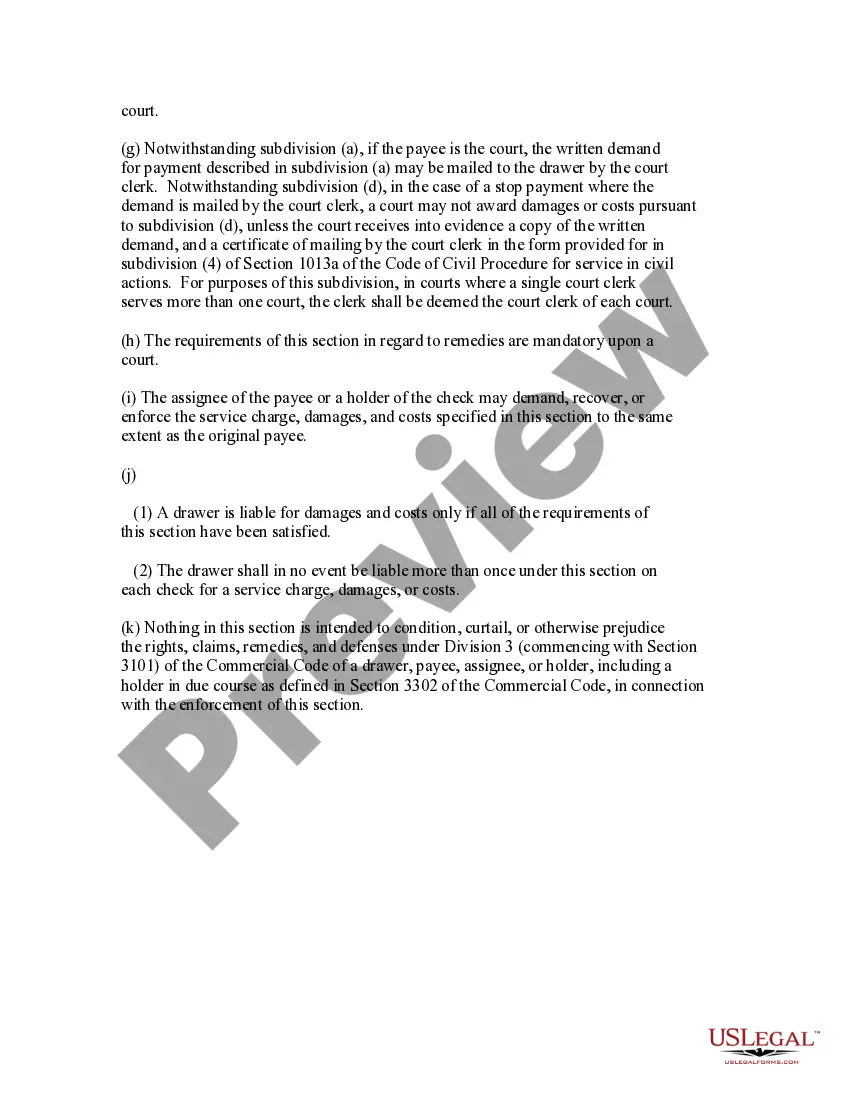
How to fill out California Notice Of Dishonored Check - Civil - Only For Stopped Payment - Keywords: Bad Check, Bounced Check?
- Log in to your account if you’ve used US Legal Forms before, ensuring your subscription is active. If it’s expired, renew it based on your payment plan.
- If you are new, start by searching for the desired legal document. Review the preview mode and description carefully to ensure it meets your specific needs and complies with local regulations.
- Should you need a different template, utilize the Search feature to find the correct form that reflects your requirements.
- Purchase the document by clicking the Buy Now button, selecting a subscription plan that works for you. Create an account to access the comprehensive library.
- Complete your purchase by entering your payment information via credit card or PayPal.
- Finally, download your form and save it for easy access. You can revisit your downloaded documents in the My Forms section of your profile at any time.
By following these straightforward steps, you can confidently acquire the legal forms you need, effectively navigating through potential issues such as a bad criminal issuer with the same certificate.
Don't hesitate to explore the extensive library of US Legal Forms and empower yourself with the tools necessary for managing legal matters efficiently!
Form popularity
FAQ
Evidence rule 609 allows for the impeachment of a witness's character by introducing prior felony convictions under specific circumstances. When discussing a bad criminal issuer with the same certificate, understanding this rule can be vital in legal contexts. Knowledgeable services, such as USLegalForms, can help clarify how this rule may impact your situation.
A felony does not automatically 'fall off' after seven years; however, many reporting agencies can drop this information from their reports after this timeframe. In reference to a bad criminal issuer with the same certificate, it is essential for individuals to know that while the felony may not appear in certain background checks, the record still exists unless formally expunged.
Several states enforce a seven-year limit on background checks, especially in regard to employment. States such as California, New York, and Texas implement this limit under specific conditions, which could relate to a bad criminal issuer with the same certificate. Knowing these limits can empower individuals during their job search or when assessing their legal rights.
Similar to the previous question, the need to disclose a felony, even after seven years, can depend on various factors, including state residency and the nature of the job. With a bad criminal issuer with the same certificate, understanding local laws becomes critical. Utilizing services like USLegalForms can provide guidance on how to navigate these rules effectively.
This question often arises when discussing a bad criminal issuer with the same certificate. Typically, individuals may not need to disclose a felony after seven years on some job applications, depending on the state law. However, it’s crucial to note that disclosure requirements can vary, and individuals should consult legal advice or resources from platforms like USLegalForms for clarity.
In the context of a bad criminal issuer with the same certificate, many people wonder if their criminal record clears after seven years. Typically, this period applies to various background checks and not to the actual expungement of records. While some states may allow for records to be sealed or hidden from view after this time, the actual record remains unless formally expunged.
When considering a bad criminal issuer with the same certificate, it’s essential to know which states provide the most opportunities for individuals with felony records. States like Alaska, Florida, and Texas have more lenient laws regarding felony records. These states often allow individuals to move forward without significant restrictions, which can lead to better prospects for employment and housing.
Rule 506 of Regulation D is a crucial regulation that allows companies to offer and sell securities without having to register with the SEC, provided they meet specific criteria. Importantly, it identifies what constitutes a bad criminal issuer with the same certificate, which can disqualify certain individuals or entities from utilizing this exemption. This rule is especially beneficial for startups seeking investment, while maintaining compliance with federal laws. For a deeper understanding of these aspects, consider exploring the resources available at USLegalForms.
The primary purpose of bad actor disqualifications is to protect investors from individuals or firms that may pose risks due to past misconduct. This regulation specifically targets any bad criminal issuer with the same certificate, ensuring that the market remains fair and transparent. By disqualifying such actors, it helps maintain the integrity of securities offerings. USLegalForms provides helpful guidelines for understanding these disqualifications and ensuring compliance.
A beneficial owner under rule 506 D refers to individuals or entities that directly or indirectly possess a significant stake in the company, often including shareholders with control or influence. These owners may face scrutiny regarding any past actions, especially if they are classified as a bad criminal issuer with the same certificate. Understanding this designation is crucial, as it affects eligibility for exemptions under this rule. You can find comprehensive resources on this topic through USLegalForms to navigate the complexities.