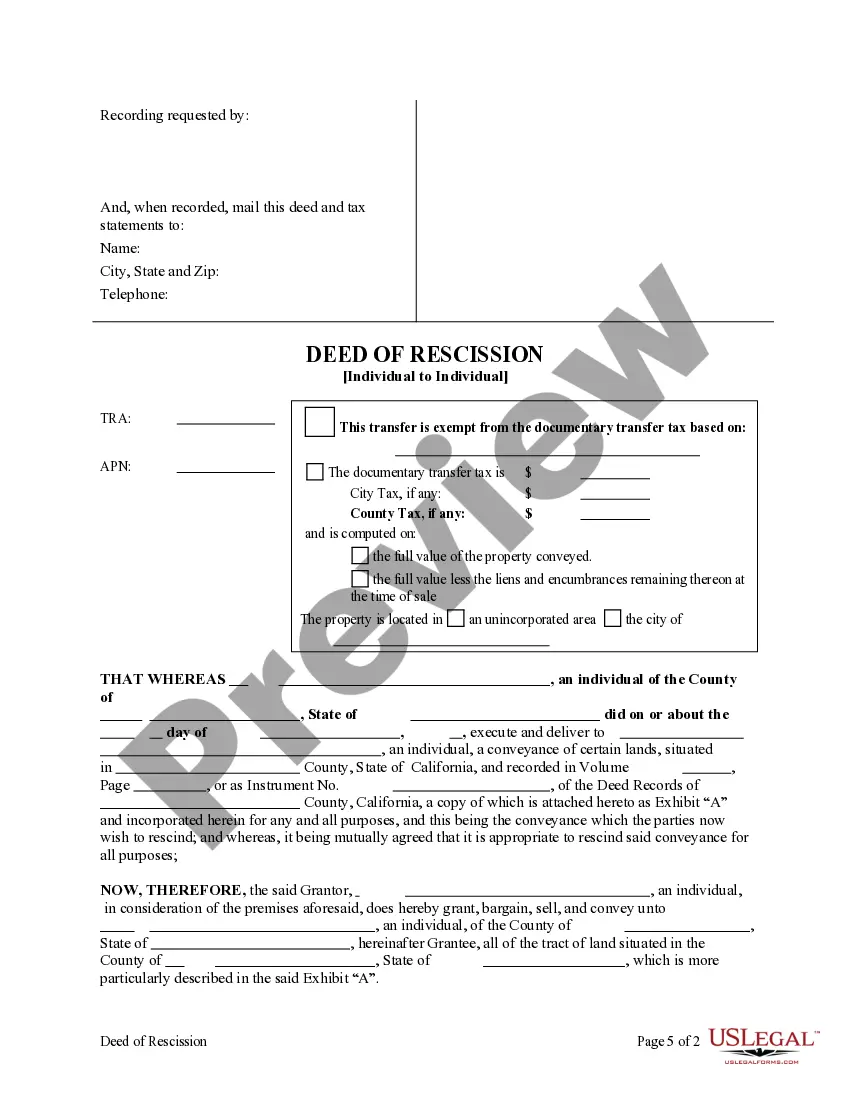
California Deed Form For California
Description


Get your form ready online
Our built-in tools help you complete, sign, share, and store your documents in one place.
Make edits, fill in missing information, and update formatting in US Legal Forms—just like you would in MS Word.
Download a copy, print it, send it by email, or mail it via USPS—whatever works best for your next step.
Sign and collect signatures with our SignNow integration. Send to multiple recipients, set reminders, and more. Go Premium to unlock E-Sign.
If this form requires notarization, complete it online through a secure video call—no need to meet a notary in person or wait for an appointment.
We protect your documents and personal data by following strict security and privacy standards.

Make edits, fill in missing information, and update formatting in US Legal Forms—just like you would in MS Word.

Download a copy, print it, send it by email, or mail it via USPS—whatever works best for your next step.

Sign and collect signatures with our SignNow integration. Send to multiple recipients, set reminders, and more. Go Premium to unlock E-Sign.

If this form requires notarization, complete it online through a secure video call—no need to meet a notary in person or wait for an appointment.

We protect your documents and personal data by following strict security and privacy standards.
Looking for another form?







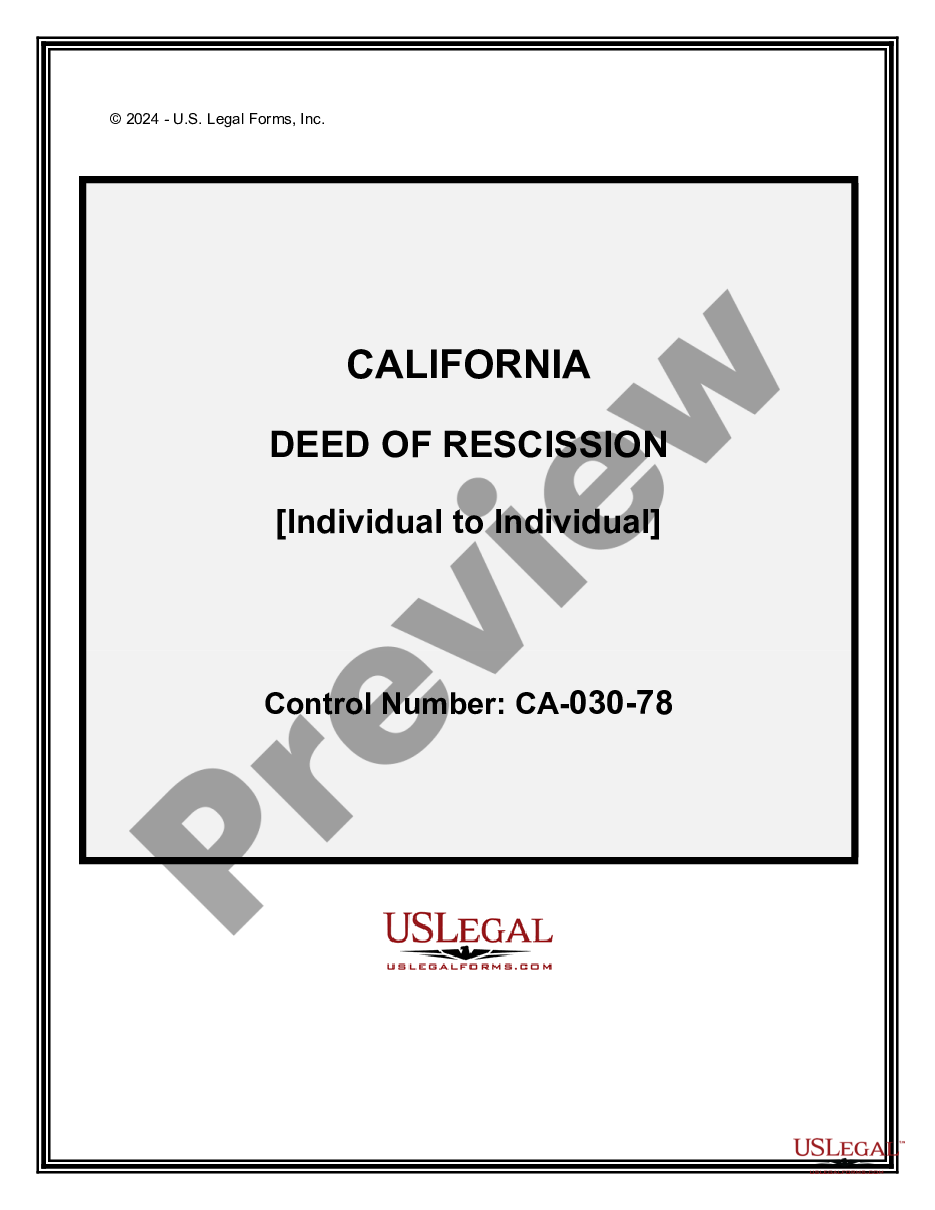
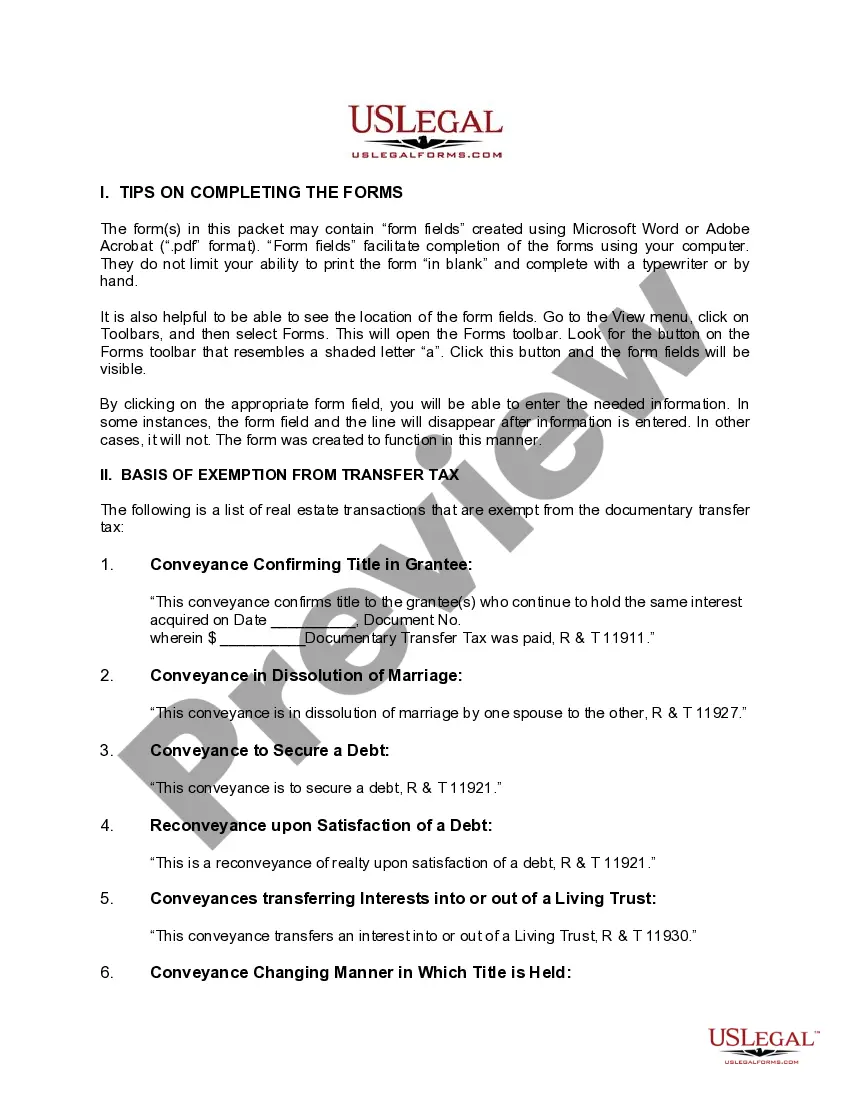
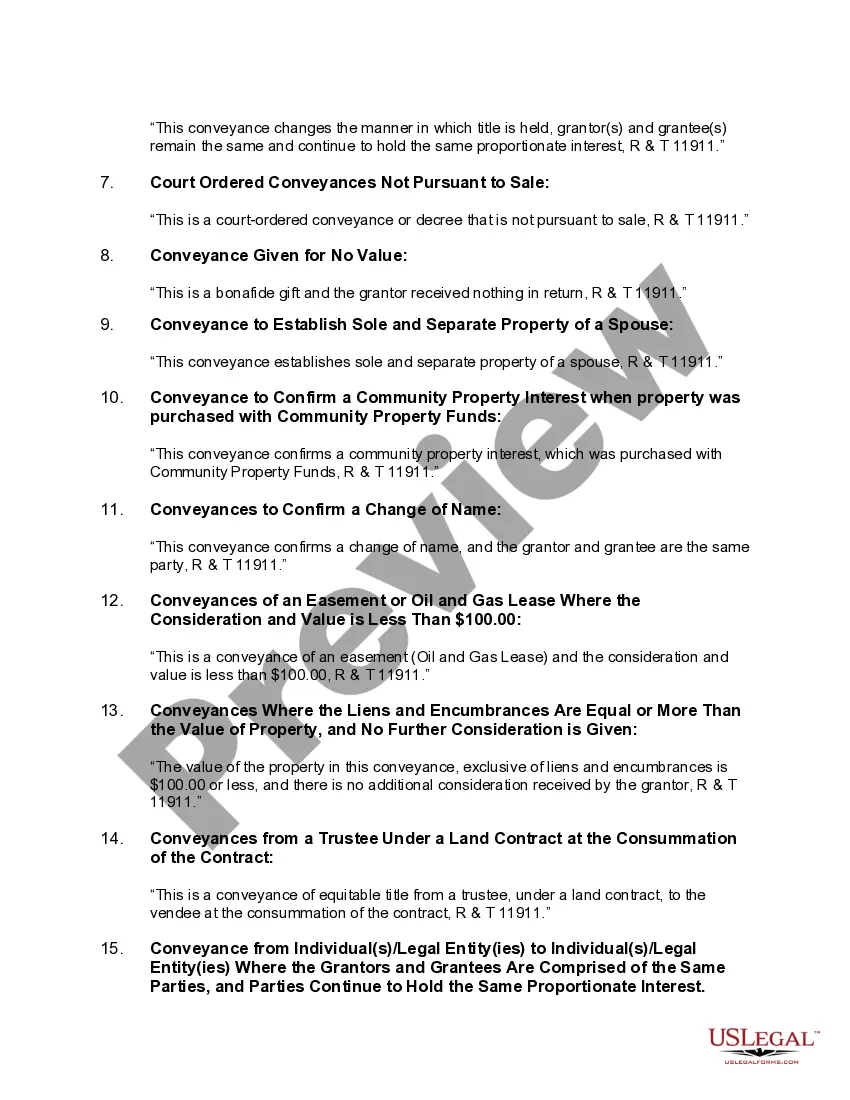
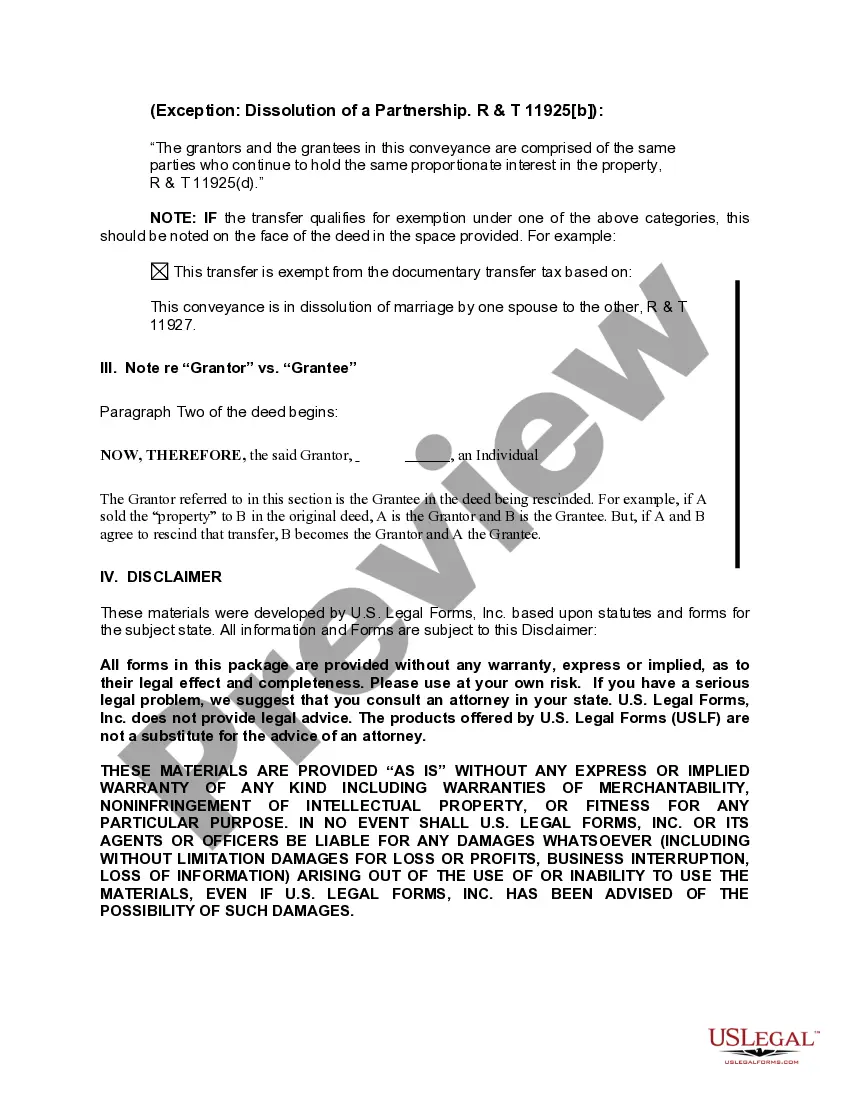
How to fill out California Deed Of Rescission - Individual To Individual?
Whether for business purposes or for individual matters, everyone has to handle legal situations sooner or later in their life. Completing legal documents requires careful attention, beginning from choosing the correct form sample. For example, if you choose a wrong edition of the California Deed Form For California, it will be declined when you send it. It is therefore crucial to get a reliable source of legal documents like US Legal Forms.
If you need to get a California Deed Form For California sample, stick to these simple steps:
- Get the template you need using the search field or catalog navigation.
- Examine the form’s information to make sure it matches your situation, state, and region.
- Click on the form’s preview to view it.
- If it is the wrong form, return to the search function to find the California Deed Form For California sample you require.
- Get the file when it meets your requirements.
- If you have a US Legal Forms account, simply click Log in to gain access to previously saved documents in My Forms.
- In the event you don’t have an account yet, you can obtain the form by clicking Buy now.
- Choose the correct pricing option.
- Finish the account registration form.
- Choose your transaction method: you can use a credit card or PayPal account.
- Choose the document format you want and download the California Deed Form For California.
- After it is downloaded, you are able to fill out the form with the help of editing software or print it and finish it manually.
With a substantial US Legal Forms catalog at hand, you do not need to spend time seeking for the right template across the web. Make use of the library’s simple navigation to get the correct template for any situation.
Form popularity
FAQ
DEEDS IN GENERAL It must be in writing; 2. The parties must be properly described; 3. The parties must be competent to convey and capable of receiving the grant of the property; 4. The property conveyed must be described so as to distinguish it from other parcels of real property.; 5.
Step 1: Locate the Current Deed for the Property. ... Step 2: Determine What Type of Deed to Fill Out for Your Situation. ... Step 3: Determine How New Owners Will Take Title. Step 4: Fill Out the New Deed (Do Not Sign) ... Step 5: Grantor(s) Sign in Front of a Notary. ... Step 6: Fill Out the Preliminary Change of Ownership Report (PCOR)
A general warranty deed must include the following to be valid: The name and address of the seller (called the grantor) The name and address of the buyer (called the grantee) A legal description of the property (found on the previous deed) A statement that the grantor is transferring the property to the grantee.
It must note the legal description of the property in the accepted verbiage of the state in which it is transferred, and it must be signed, notarized and delivered to the grantee. In order to provide the most protection, it should be recorded in a timely fashion with the county recorder's office.
From here, the process looks like this: Choose the most appropriate deed. Prepare the deed. Complete the deed with accurate information about the property and the person being added. Sign the deed in the presence of a notary public. File the deed with the county recorder's office. Update the property records.