Life Estate Trust With A Trust
Description
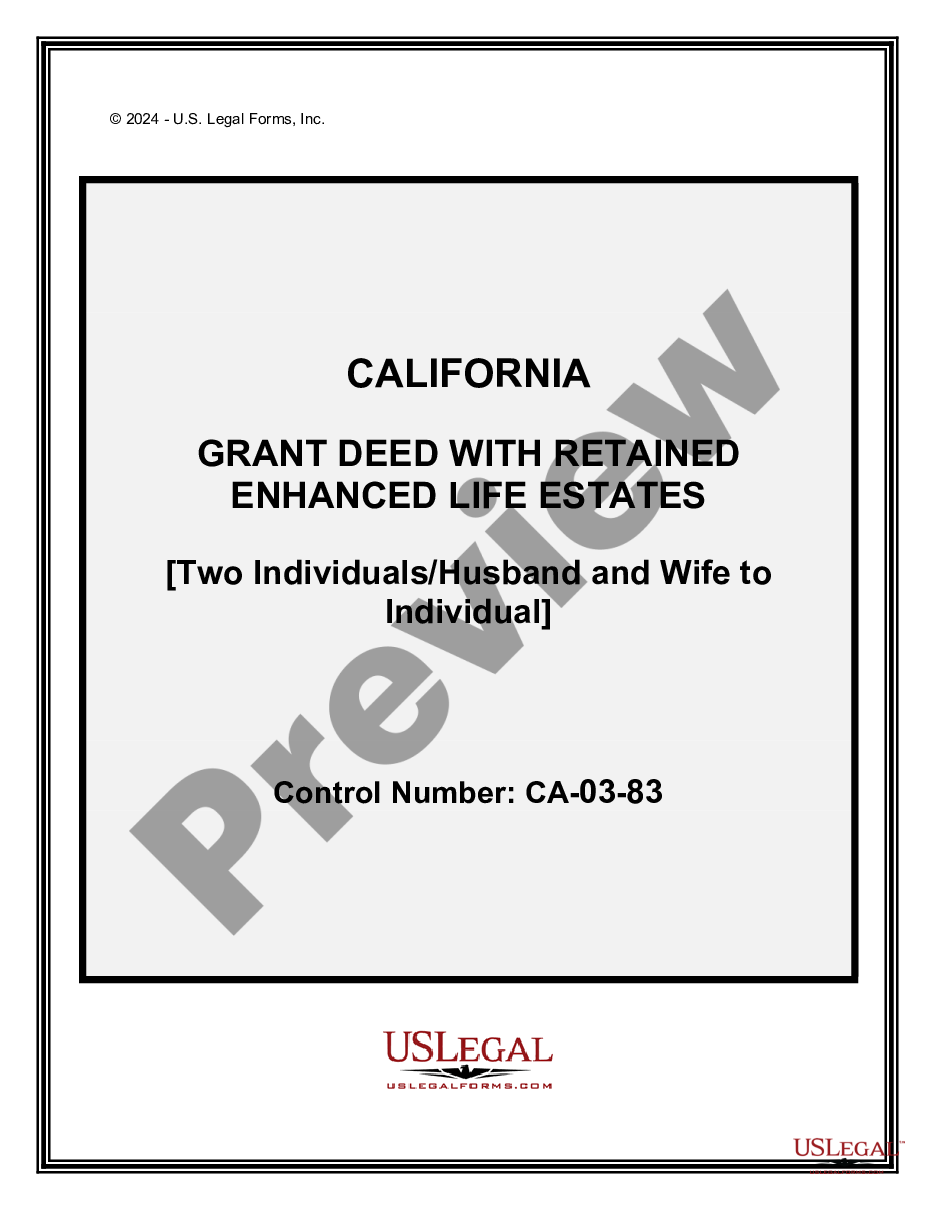

Get your form ready online
Our built-in tools help you complete, sign, share, and store your documents in one place.
Make edits, fill in missing information, and update formatting in US Legal Forms—just like you would in MS Word.
Download a copy, print it, send it by email, or mail it via USPS—whatever works best for your next step.
Sign and collect signatures with our SignNow integration. Send to multiple recipients, set reminders, and more. Go Premium to unlock E-Sign.
If this form requires notarization, complete it online through a secure video call—no need to meet a notary in person or wait for an appointment.
We protect your documents and personal data by following strict security and privacy standards.

Make edits, fill in missing information, and update formatting in US Legal Forms—just like you would in MS Word.

Download a copy, print it, send it by email, or mail it via USPS—whatever works best for your next step.

Sign and collect signatures with our SignNow integration. Send to multiple recipients, set reminders, and more. Go Premium to unlock E-Sign.

If this form requires notarization, complete it online through a secure video call—no need to meet a notary in person or wait for an appointment.

We protect your documents and personal data by following strict security and privacy standards.
Looking for another form?
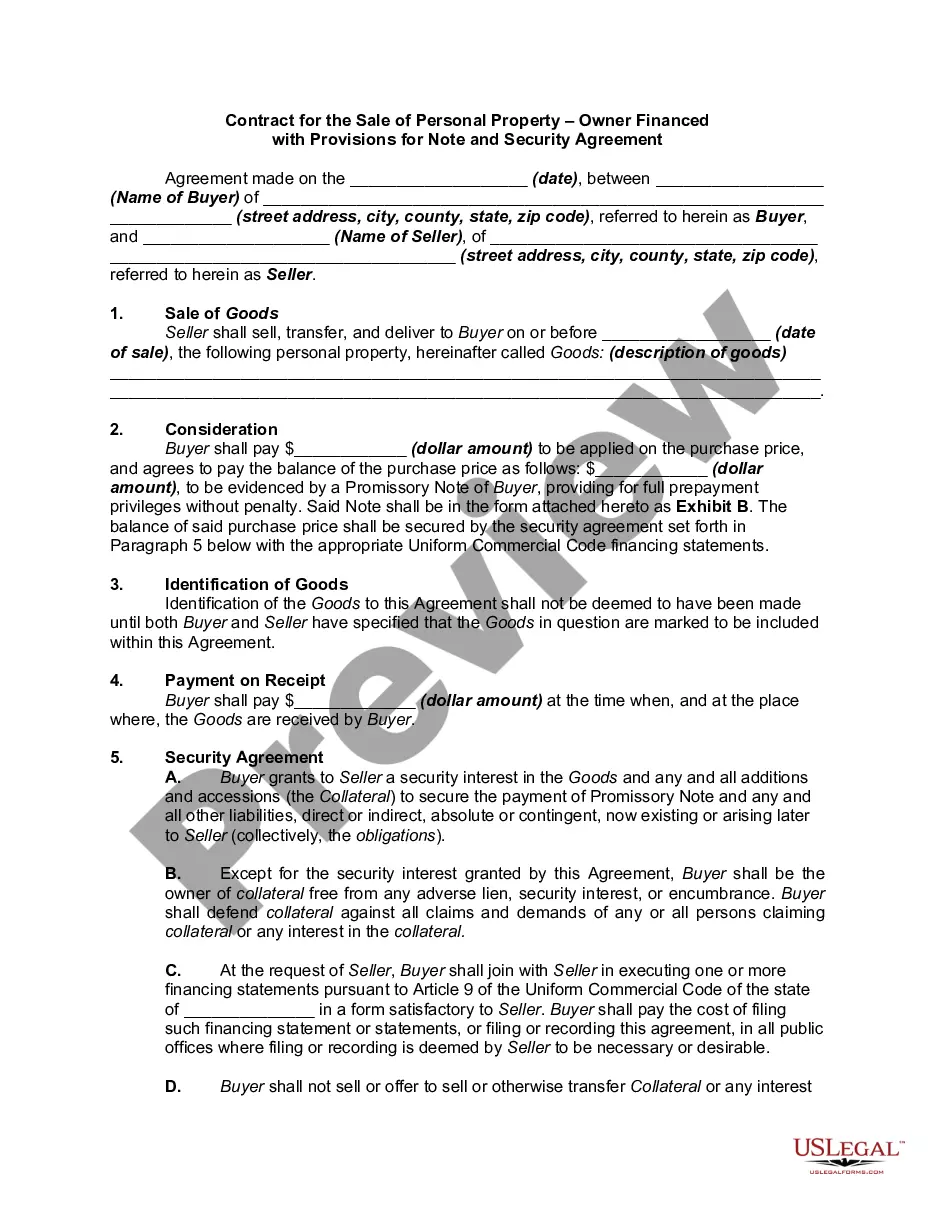

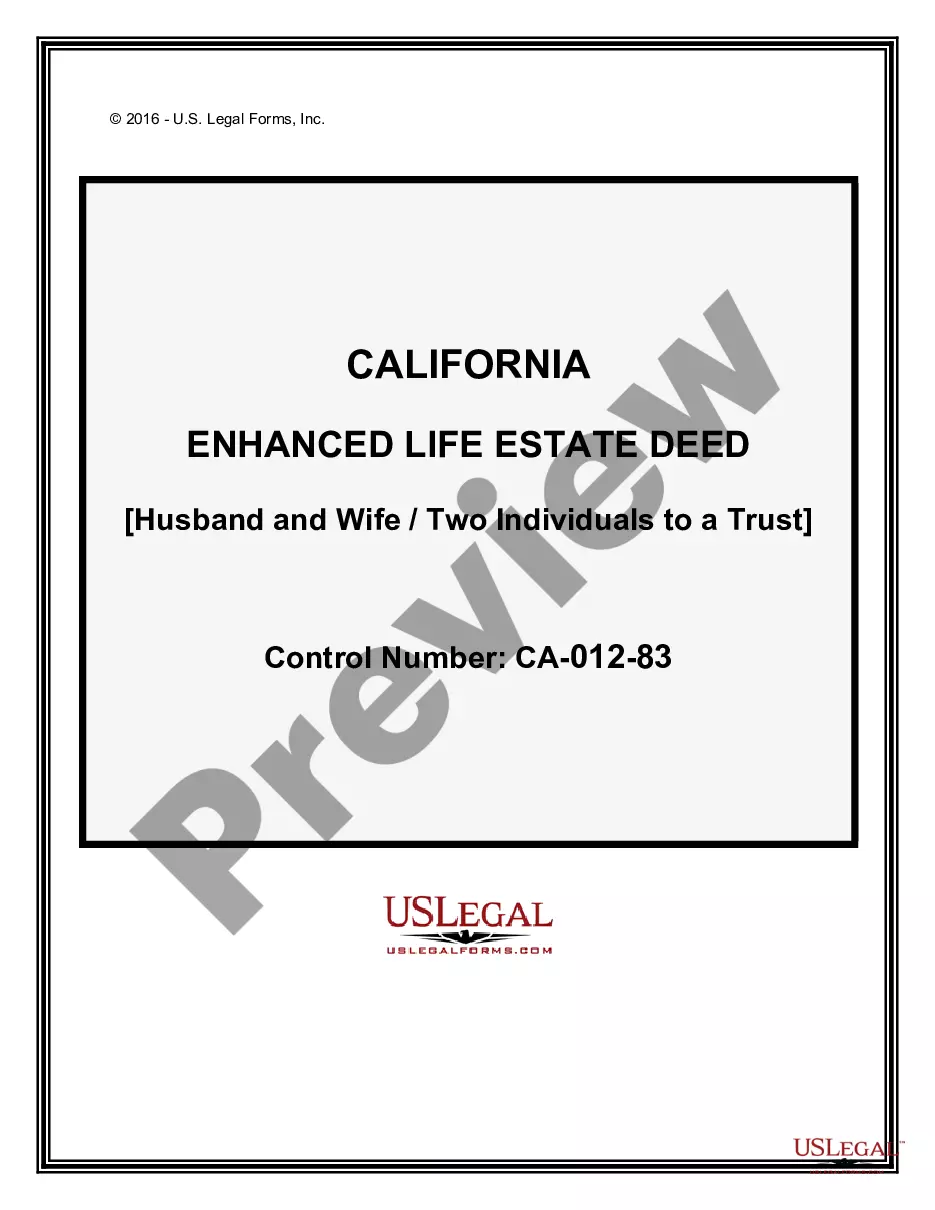
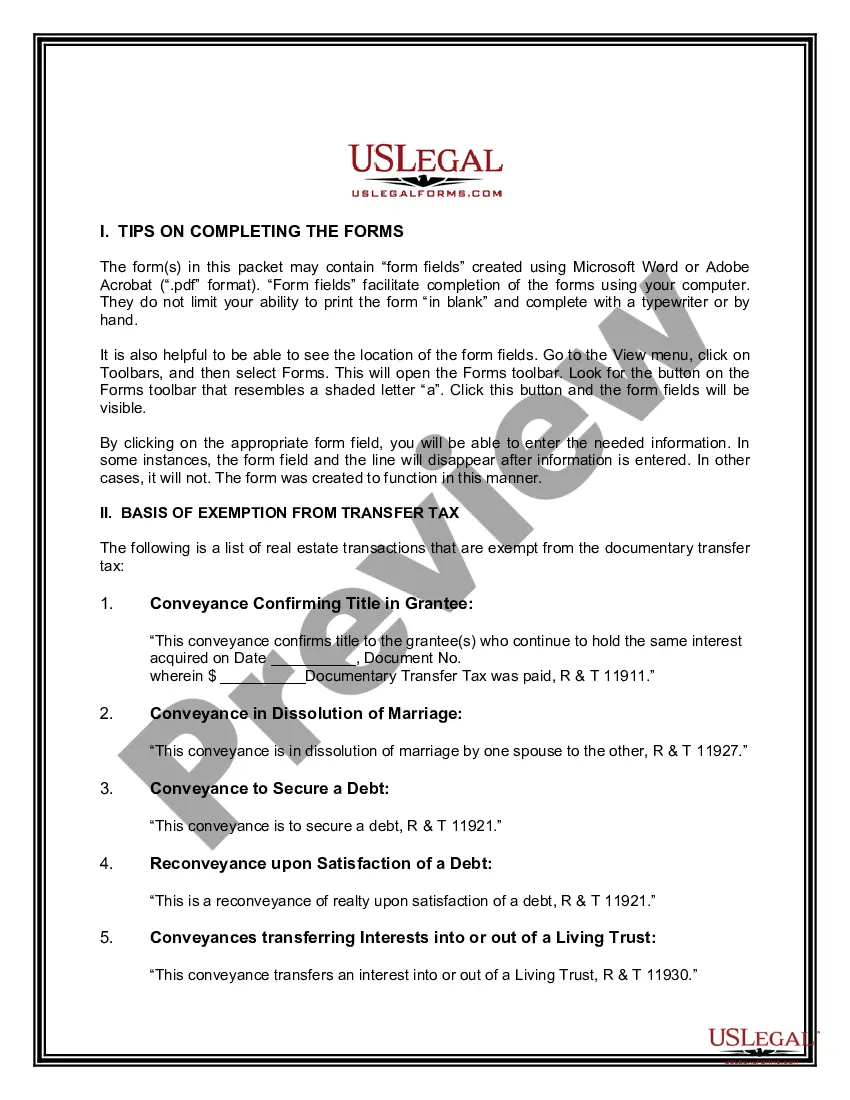
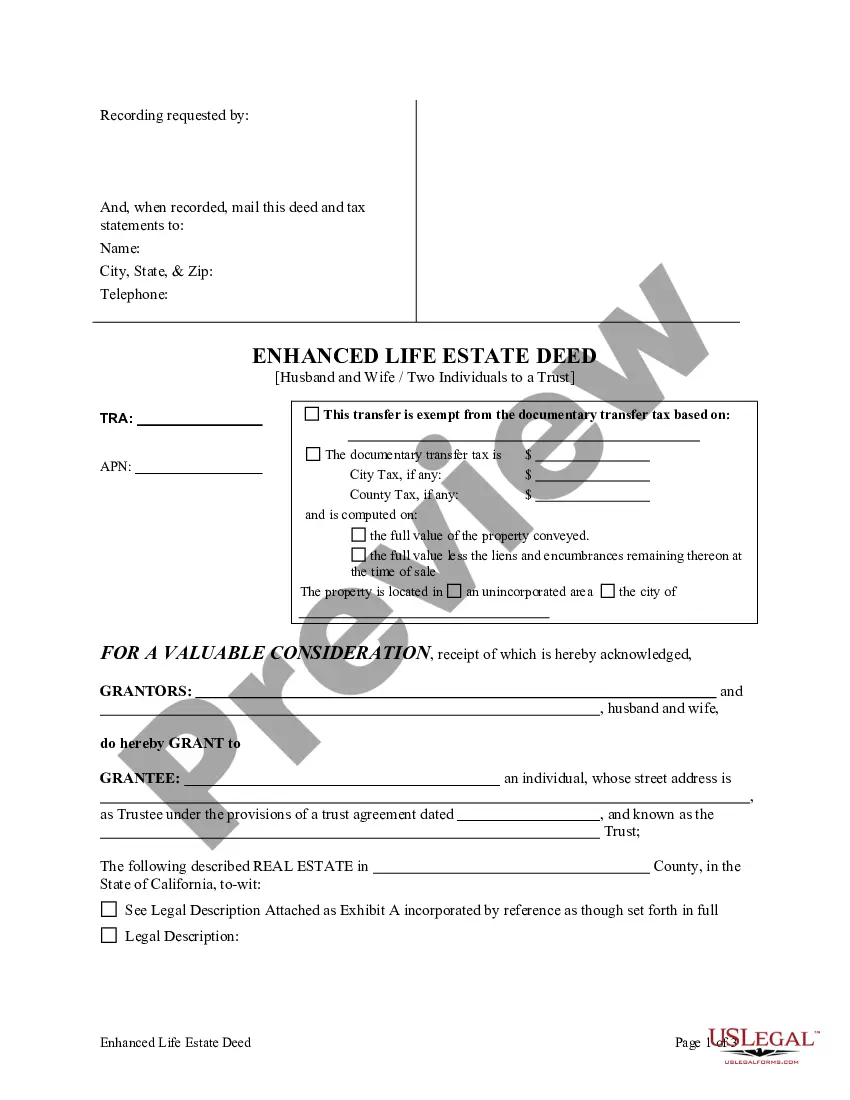
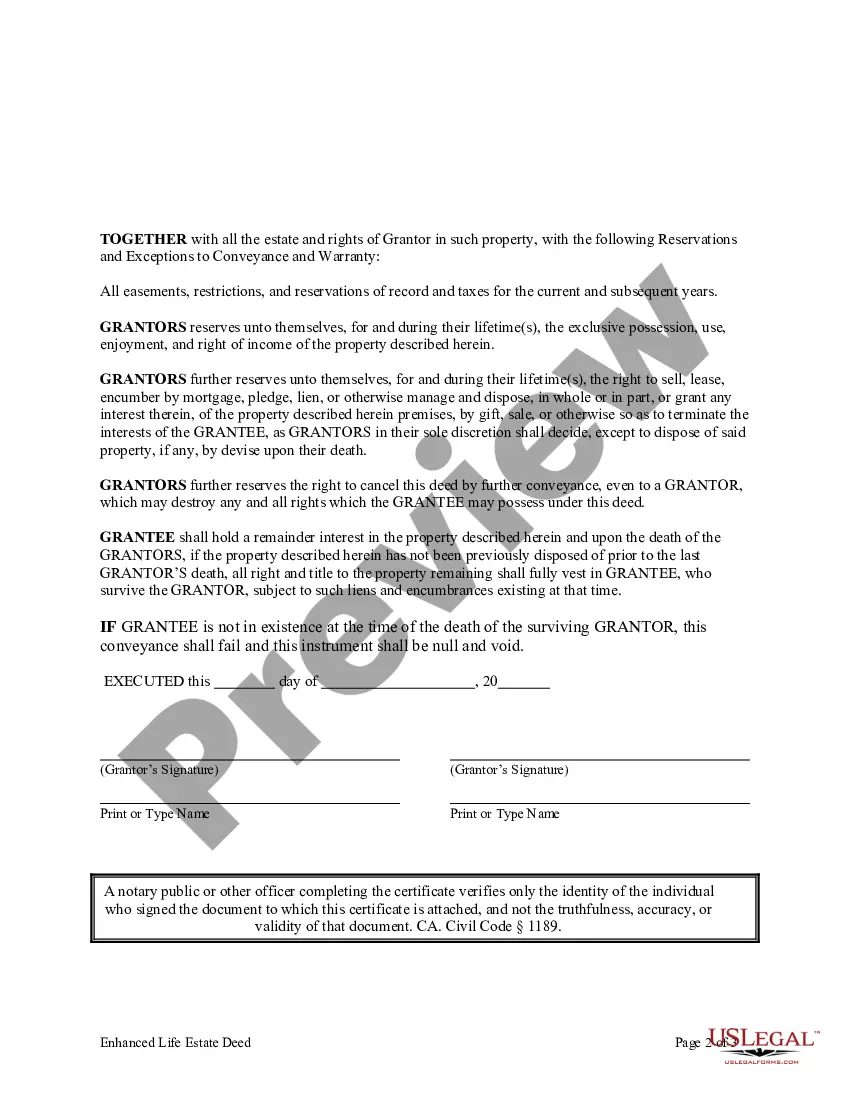
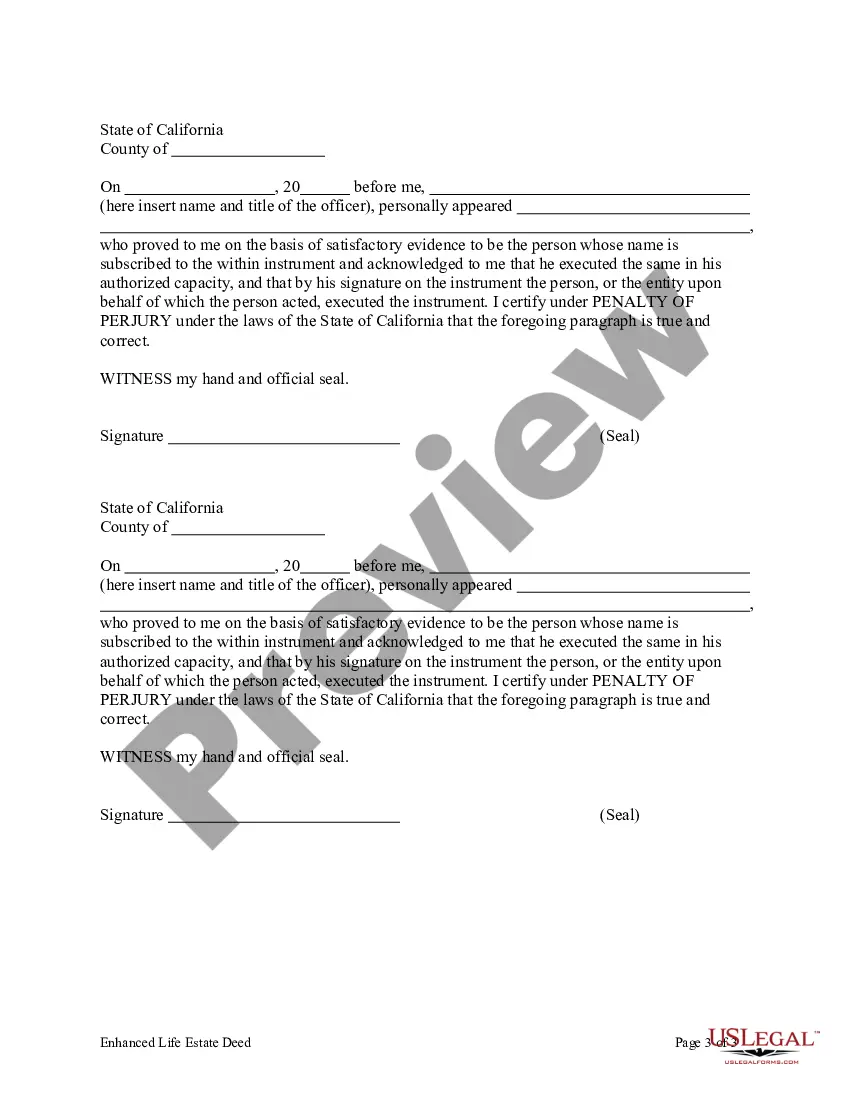
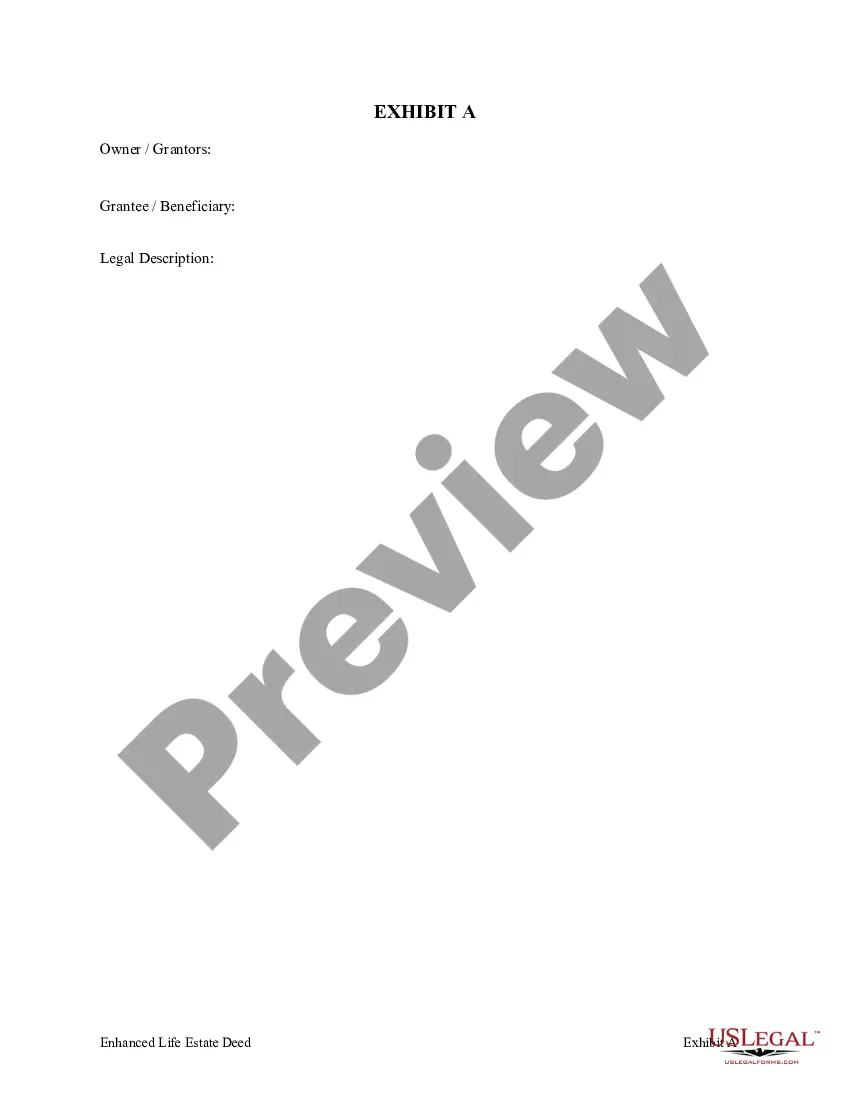
How to fill out California Enhanced Life Estate Deed From Husband And Wife, Or Two Individuals, To A Trust.?
- Login to your US Legal Forms account. If you don't have one, sign up for a new account to access the extensive legal library.
- Navigate to the main dashboard and search for 'life estate trust' to find the applicable templates.
- Preview the selected form and verify that it fulfills your specific legal requirements and local jurisdiction.
- If necessary, utilize the search feature to explore other document options until you find the right one.
- Purchase the desired template by clicking on the 'Buy Now' button and select a subscription plan that fits your needs.
- Complete the payment using your credit card or PayPal account, ensuring that you can access your forms seamlessly.
- Download the completed template to your device for easy access or future modifications.
By following these steps, you can efficiently create a life estate trust with a trust using US Legal Forms. This ensures that your wishes are formally documented and legally binding.
Experience the ease of creating legal documents today. Visit US Legal Forms to start simplifying your estate planning process!
Form popularity
FAQ
A trust is a legal arrangement where one party holds property for the benefit of another, allowing for clearer management of assets. In contrast, a trust estate encompasses all assets, income, and property that fall under that trust. Essentially, a life estate trust with a trust allows you to specify how your property is managed and distributed after your lifetime. Understanding these differences can assist you in choosing the right estate planning tools for your needs.
The 3-year rule for a deceased estate generally refers to the period in which certain financial transactions may be scrutinized for tax implications. When someone passes away, any gifts made within three years before their death may be included in their estate for tax purposes. Understanding this rule is crucial when dealing with a life estate trust with a trust, as it impacts how assets are handled and taxes are assessed.
Settling an estate with a trust involves several steps. First, identify and locate all assets covered by the trust. Then, follow the trust’s provisions for asset distribution. Engaging with a service such as US Legal Forms can help navigate these steps efficiently, providing templates and guidance for proper administration.
To settle an estate with a trust, start by gathering all pertinent documents, including the trust agreement and asset information. Next, you should follow the instructions laid out in the trust regarding the distribution of assets. Utilizing platforms like US Legal Forms can simplify this process, guiding you through necessary paperwork and ensuring compliance with legal obligations.
The primary disadvantage of a life estate in a life estate trust with a trust is the potential loss of control over the asset. Once established, you cannot sell or mortgage the property without the consent of the remainderman. Additionally, property taxes and upkeep responsibility remain yours during your lifetime, which can lead to financial strain.
A trust is a legal arrangement that allows one party to hold assets for the benefit of another. An estate trust, specifically a life estate trust with a trust, is a unique form where the beneficiaries receive benefits during a person's lifetime. After the individual's death, the trust manages the distribution of assets according to the trust's terms.
The purpose of a lifetime trust, including a life estate trust with a trust, is to manage and protect assets during a person's lifetime and beyond. This type of trust helps ensure that your assets are passed on according to your wishes, while also providing for beneficiaries. It can also offer tax benefits and avoid probate. Many individuals find this approach simplifies the process of estate planning.
A common downfall of a living trust is the potential lack of funding. If assets are not properly transferred into the life estate trust with a trust, it won't function as intended. Additionally, some may overlook the ongoing management needed for the trust. Addressing these issues early can prevent complications later on.
One major mistake parents often make is failing to clearly define their wishes. When setting up a life estate trust with a trust, it's crucial to outline goals for asset distribution and care for beneficiaries. This oversight can lead to confusion and unintended consequences. To avoid this, parents should work with professionals who understand the intricacies of life estate trusts.
People put their estate in a trust to simplify the management and distribution of their assets after death. Trusts can help prevent probate, protect assets from creditors, and ensure that funds are allocated according to the individual’s wishes. Additionally, they can provide financial security for loved ones. If you're considering a trust, US Legal Forms can assist you in understanding the benefits and navigating the setup process.