Life Estate Trust For The Disabled
Description
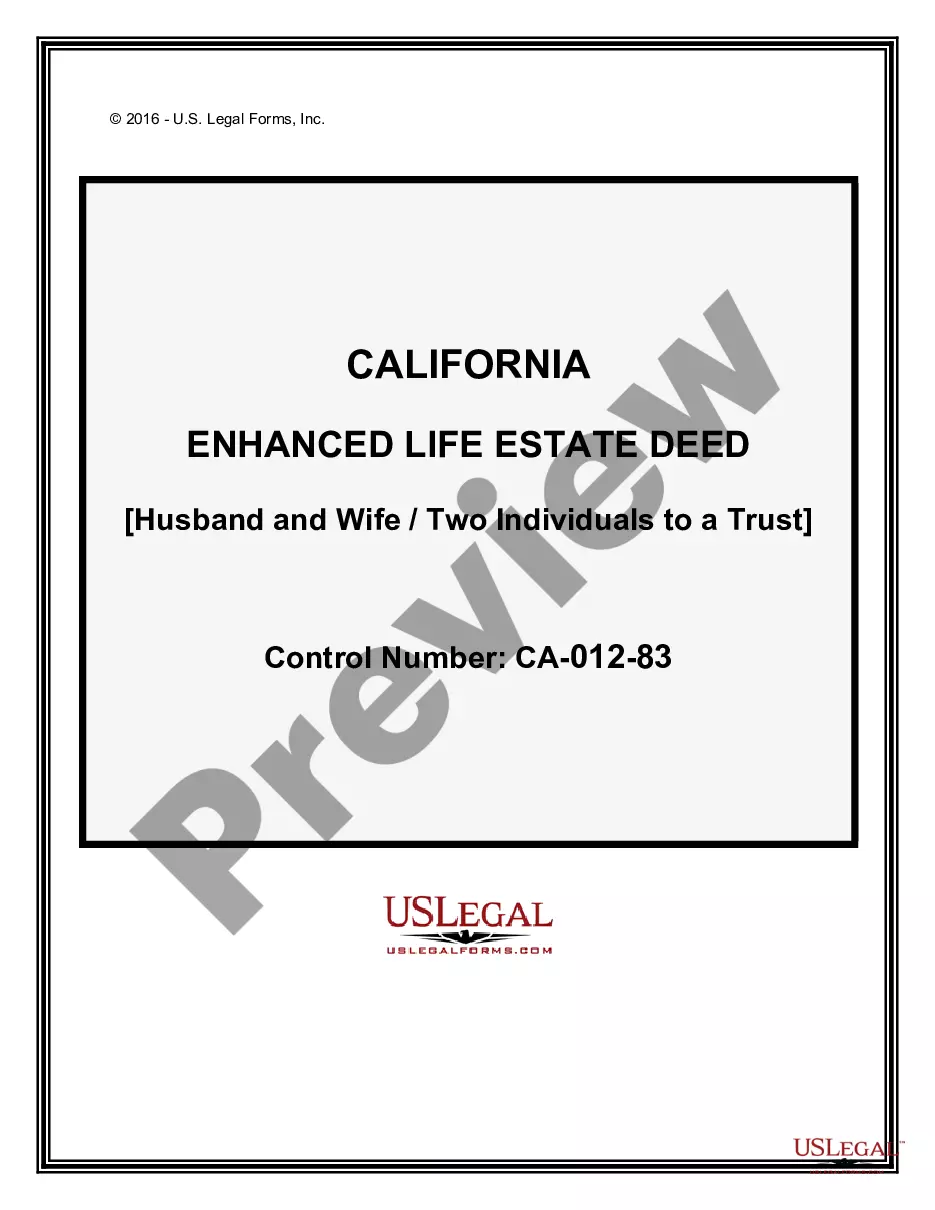

Get your form ready online
Our built-in tools help you complete, sign, share, and store your documents in one place.
Make edits, fill in missing information, and update formatting in US Legal Forms—just like you would in MS Word.
Download a copy, print it, send it by email, or mail it via USPS—whatever works best for your next step.
Sign and collect signatures with our SignNow integration. Send to multiple recipients, set reminders, and more. Go Premium to unlock E-Sign.
If this form requires notarization, complete it online through a secure video call—no need to meet a notary in person or wait for an appointment.
We protect your documents and personal data by following strict security and privacy standards.

Make edits, fill in missing information, and update formatting in US Legal Forms—just like you would in MS Word.

Download a copy, print it, send it by email, or mail it via USPS—whatever works best for your next step.

Sign and collect signatures with our SignNow integration. Send to multiple recipients, set reminders, and more. Go Premium to unlock E-Sign.

If this form requires notarization, complete it online through a secure video call—no need to meet a notary in person or wait for an appointment.

We protect your documents and personal data by following strict security and privacy standards.
Looking for another form?

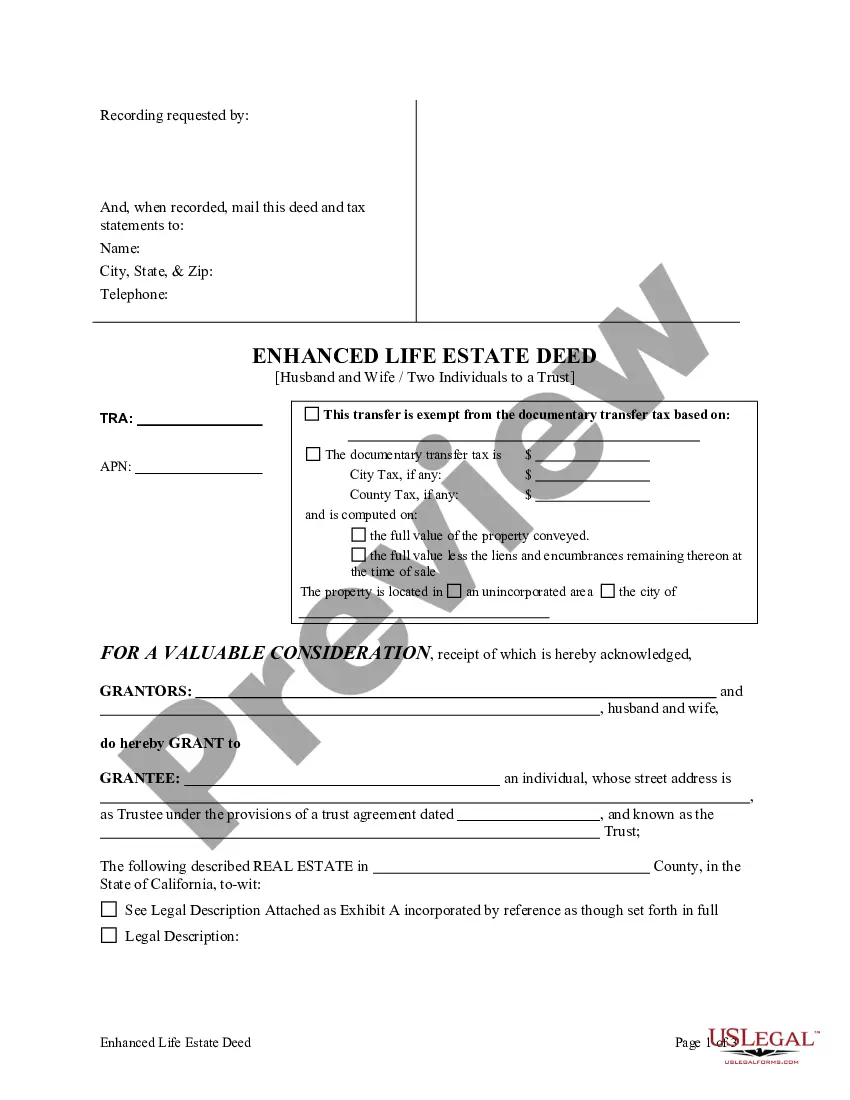
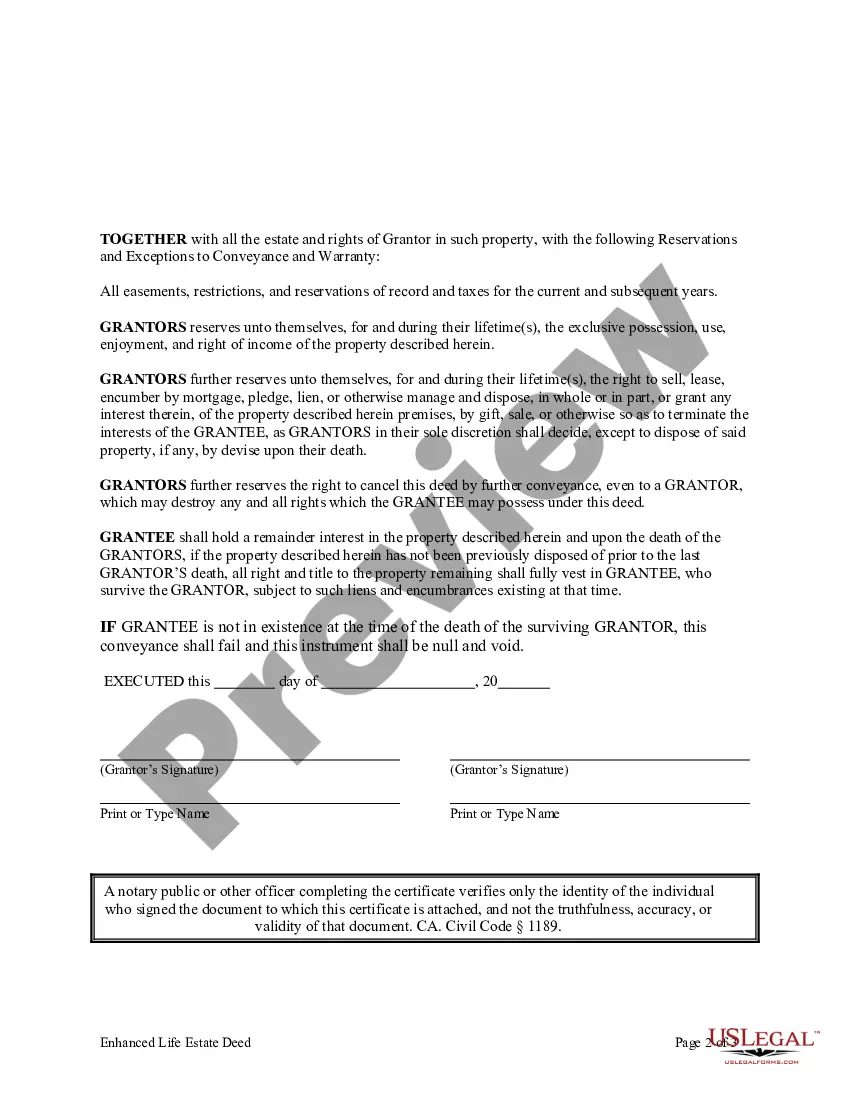
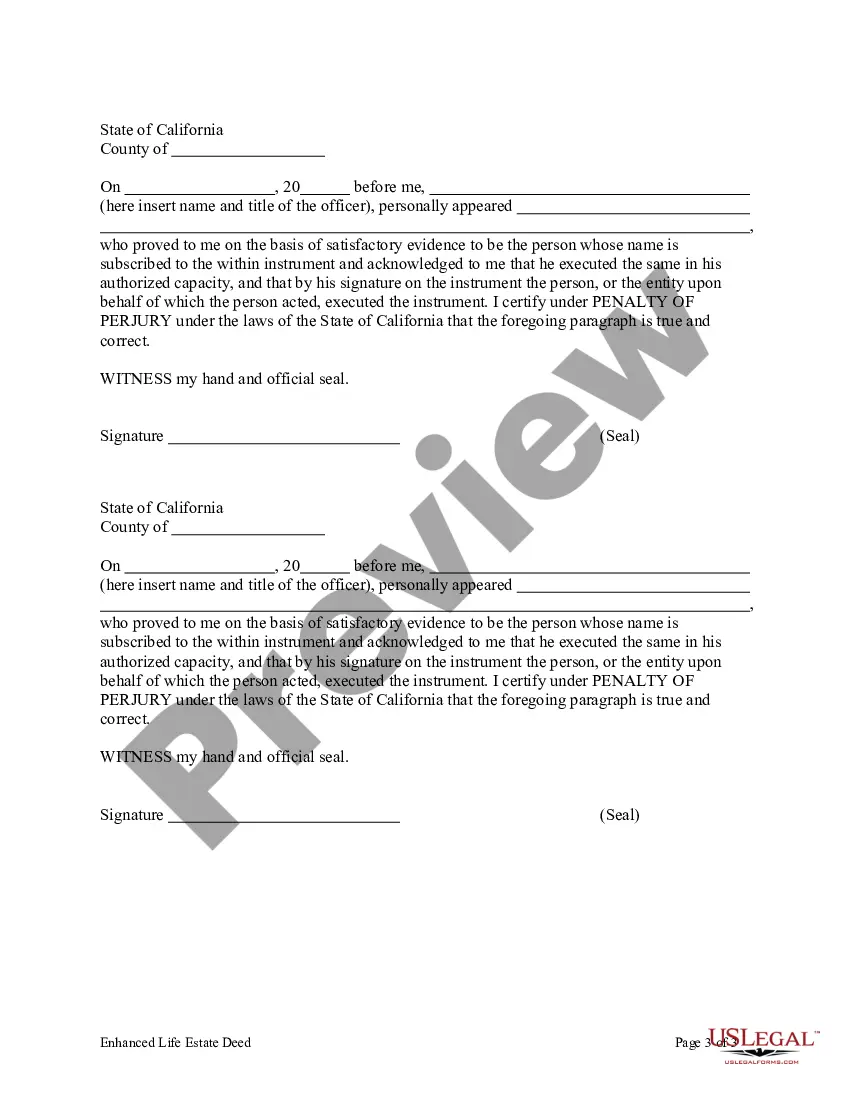
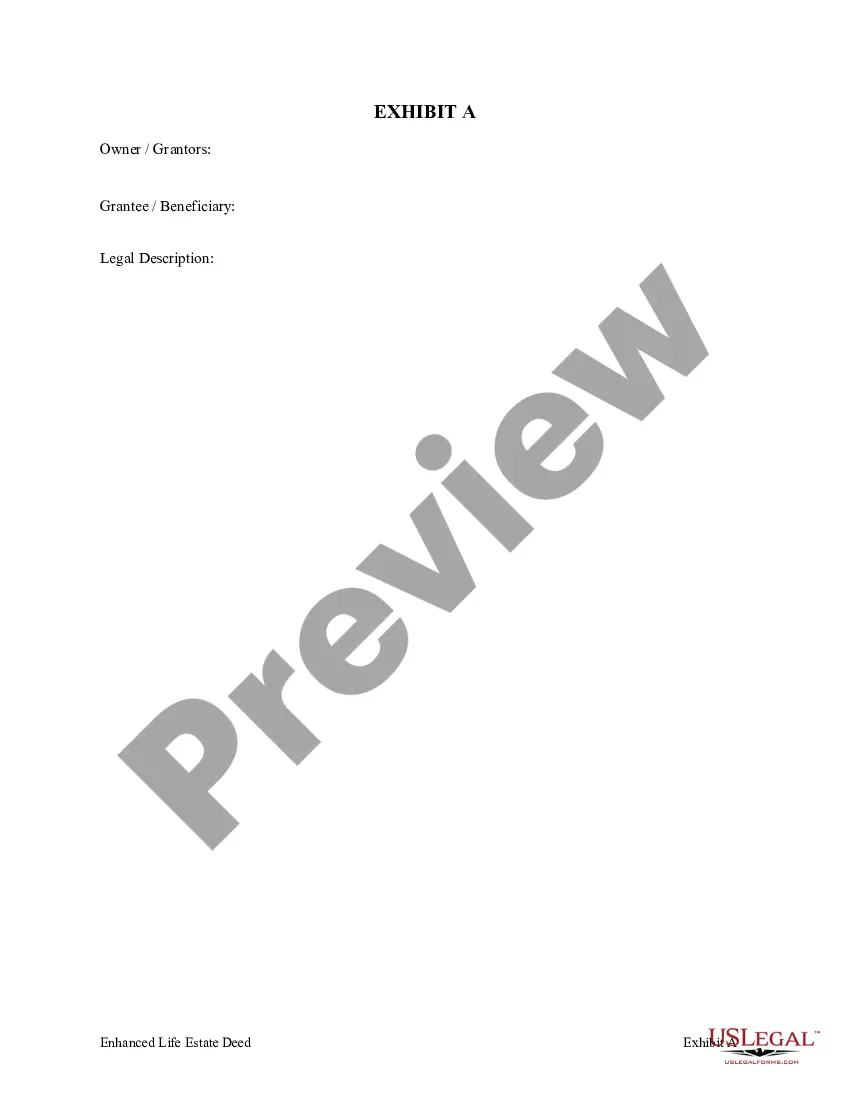
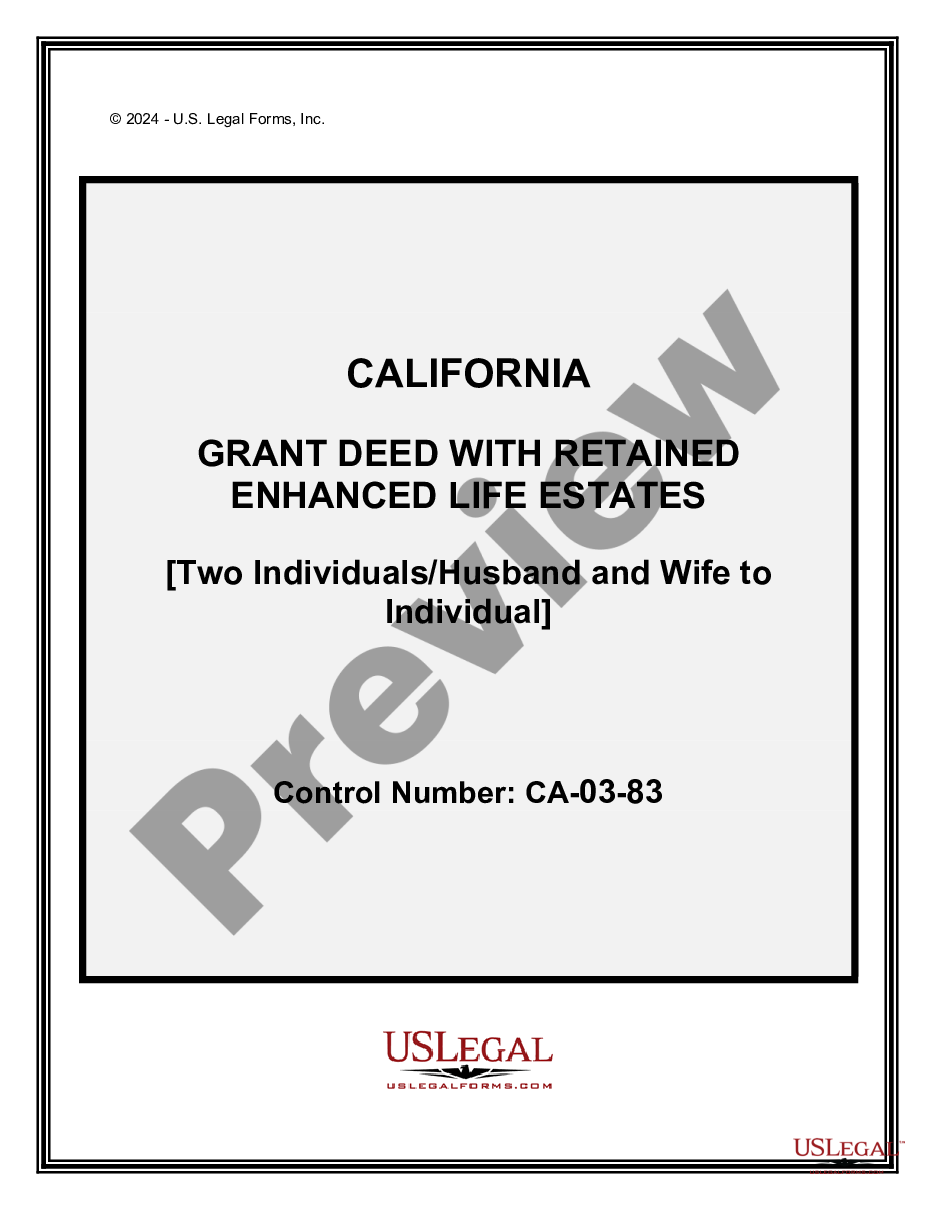
How to fill out California Enhanced Life Estate Deed From Husband And Wife, Or Two Individuals, To A Trust.?
- Log in to your US Legal Forms account if you're a returning user to access and download your needed template.
- If you're new to the service, start by navigating to the Preview mode to review the form description and confirm it meets your local legal requirements.
- If you find a discrepancy, utilize the Search feature to find alternative templates that better fit your situation.
- Purchase your selected document by clicking the Buy Now button and select a suitable subscription plan. You will need to create an account for full access.
- Complete your transaction by entering your payment details via credit card or PayPal.
- Finally, download your form to your device and access it anytime through the My Forms section in your profile.
Following these steps ensures that you have the appropriate legal documents ready for efficient management of a life estate trust.
Take control of your legal needs today by visiting US Legal Forms and access their extensive library of legal documents designed for your convenience.
Form popularity
FAQ
Disability trusts come in several forms, including special needs trusts and life estate trusts for the disabled, each with its purpose and benefits. Special needs trusts ensure that disabled individuals can maintain their eligibility for public benefits while receiving additional financial support. Life estate trusts serve to protect assets and provide for housing needs, helping disabled individuals achieve stability and security. Understanding these types of trusts can empower families to make informed choices.
The four major types of trusts include revocable trusts, irrevocable trusts, testamentary trusts, and life estate trusts for the disabled. Revocable trusts can be altered during the grantor's lifetime, while irrevocable trusts cannot be modified once established. Testamentary trusts are created through a will and take effect after death, whereas life estate trusts offer unique benefits for managing property and assets for individuals with disabilities. Choosing the right trust is crucial for effective estate planning.
For disabled individuals, various types of trusts may provide unique benefits, including special needs trusts and life estate trusts for the disabled. Special needs trusts allow beneficiaries to receive support without jeopardizing their government assistance, while life estate trusts can help preserve assets for current and future needs. Knowing these options can lead to better financial security for disabled individuals.
Establishing a trust for a disabled person involves several key steps, starting with selecting the type of trust that best suits their needs, such as a life estate trust for the disabled. Next, you need to choose a reliable trustee who will manage the trust responsibly. Finally, it’s essential to draft the trust document, considering specific care, support, and financial management needs, which can be efficiently handled through platforms like UsLegalForms.
A life estate provides an individual with the right to live in a property for the duration of their life, while a trust, such as a life estate trust for the disabled, allows assets to be managed for the benefit of another person, often for estate planning purposes. In a life estate, ownership is divided into two parts: the life tenant, who has the right to occupy the property, and the remainderman, who will inherit the property after the life tenant's passing. Understanding this difference can help in making informed decisions regarding estate planning.
The primary purpose of a life estate trust for the disabled is to provide financial stability and security for individuals who may need assistance managing their funds. It allows you to designate how your assets will be used while ensuring that the beneficiaries receive support without jeopardizing their eligibility for government benefits. Furthermore, this trust can protect your assets from mismanagement, ensuring that they serve their intended purpose.
The major downfall of a living trust, particularly a life estate trust for the disabled, is that it may not reduce estate taxes as effectively as other options. While it can help avoid probate, assets in the trust are still considered part of your estate for tax purposes. Additionally, if not managed correctly, the trust can fail to meet the unique needs of the disabled beneficiary, leaving them without adequate support.
A life estate trust for the disabled can have several disadvantages. First, it restricts your ability to make changes once it is established, limiting your flexibility. Additionally, the assets in the trust may not be shielded from creditors, which can pose a risk. Furthermore, the costs associated with setting up and maintaining the trust can be significant.
The best trust for a disabled person is often a special needs trust, which works alongside a life estate trust for the disabled. This combination can provide a strong financial framework, protecting resources without affecting public benefit eligibility. It’s crucial to ensure that the trust aligns with specific needs and goals. Consulting with an expert can help you create a tailored solution that maximizes benefits.
With a family trust, one disadvantage can be the risk of family disputes over asset management and distribution. Additionally, life estate trusts for the disabled may not be as flexible as simple wills, limiting adjustments to beneficiaries or conditions. Families must navigate these challenges carefully to ensure that their intentions are respected. Clear communication and professional guidance can mitigate these issues.