California Divorce Form Fl-142
Description

Get your form ready online
Our built-in tools help you complete, sign, share, and store your documents in one place.
Make edits, fill in missing information, and update formatting in US Legal Forms—just like you would in MS Word.
Download a copy, print it, send it by email, or mail it via USPS—whatever works best for your next step.
Sign and collect signatures with our SignNow integration. Send to multiple recipients, set reminders, and more. Go Premium to unlock E-Sign.
If this form requires notarization, complete it online through a secure video call—no need to meet a notary in person or wait for an appointment.
We protect your documents and personal data by following strict security and privacy standards.

Make edits, fill in missing information, and update formatting in US Legal Forms—just like you would in MS Word.

Download a copy, print it, send it by email, or mail it via USPS—whatever works best for your next step.

Sign and collect signatures with our SignNow integration. Send to multiple recipients, set reminders, and more. Go Premium to unlock E-Sign.

If this form requires notarization, complete it online through a secure video call—no need to meet a notary in person or wait for an appointment.

We protect your documents and personal data by following strict security and privacy standards.
Looking for another form?


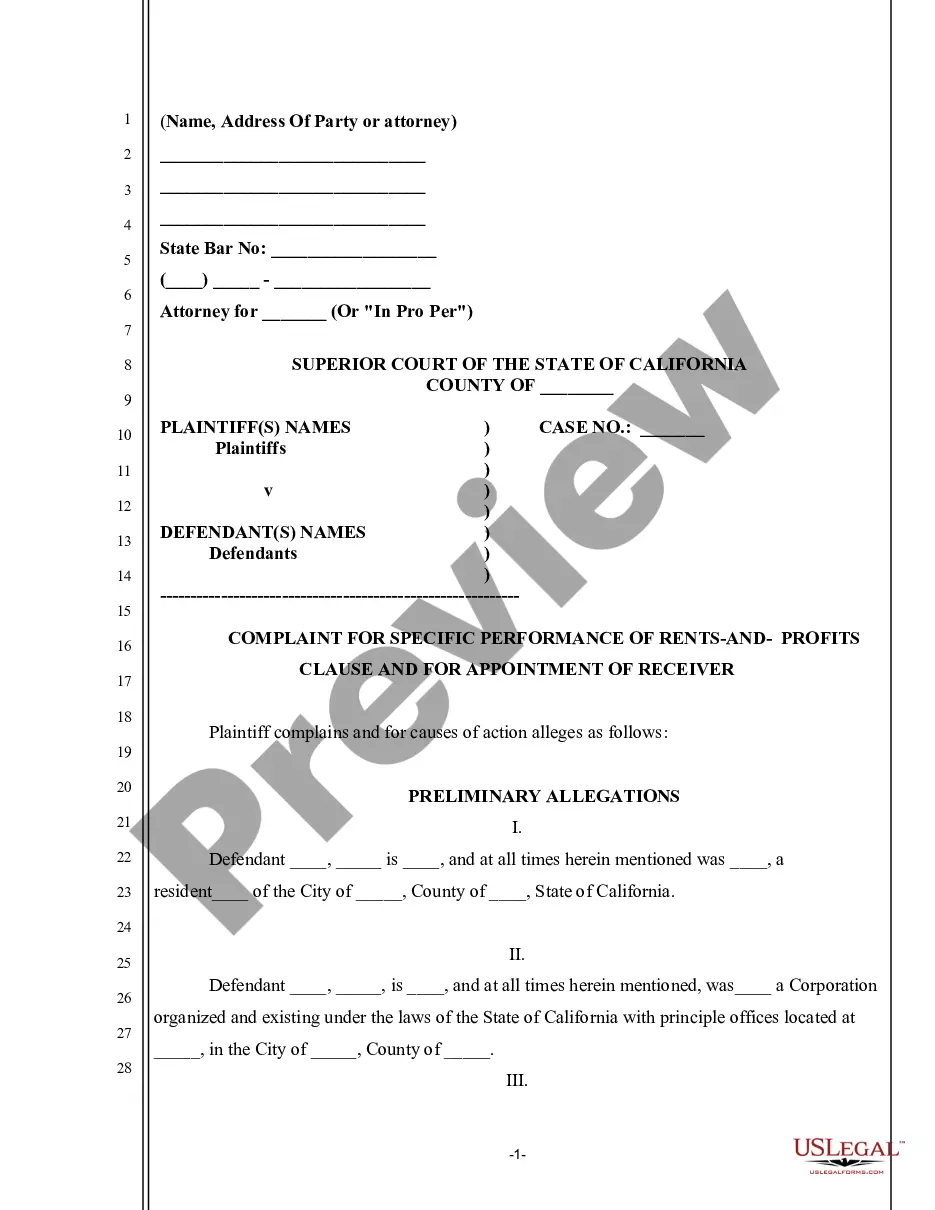






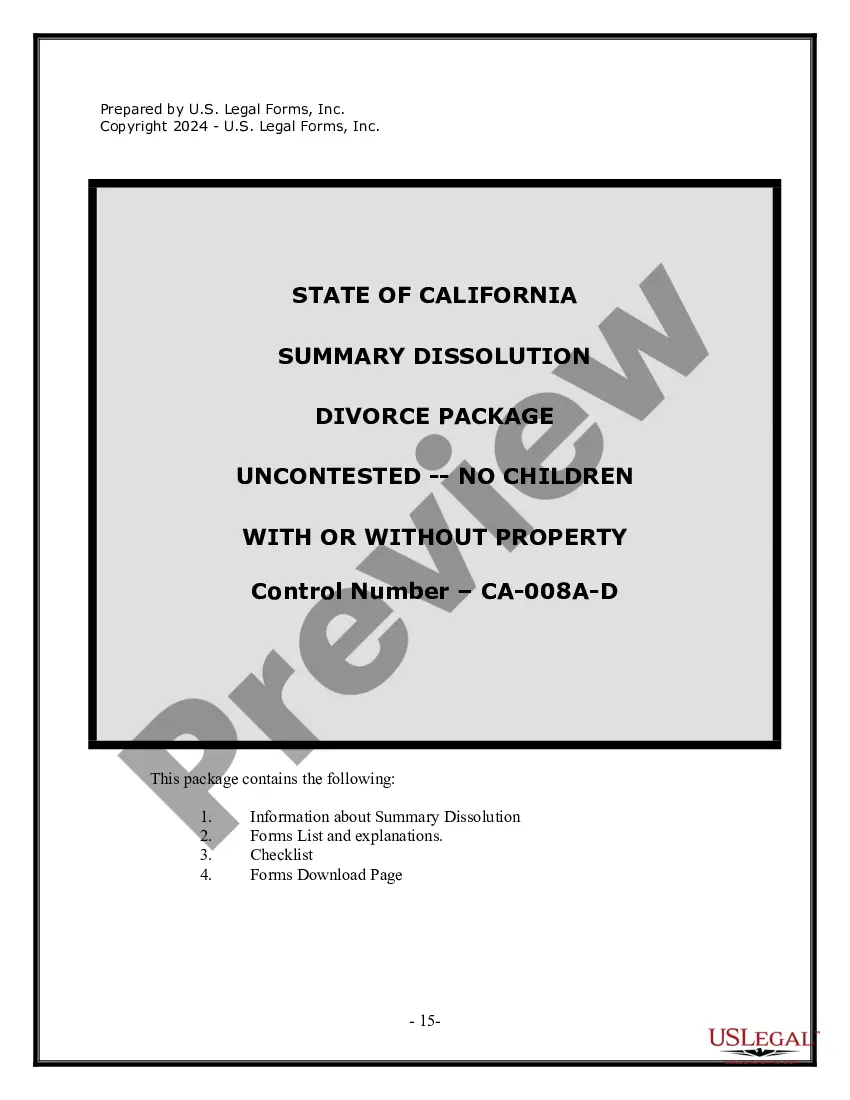
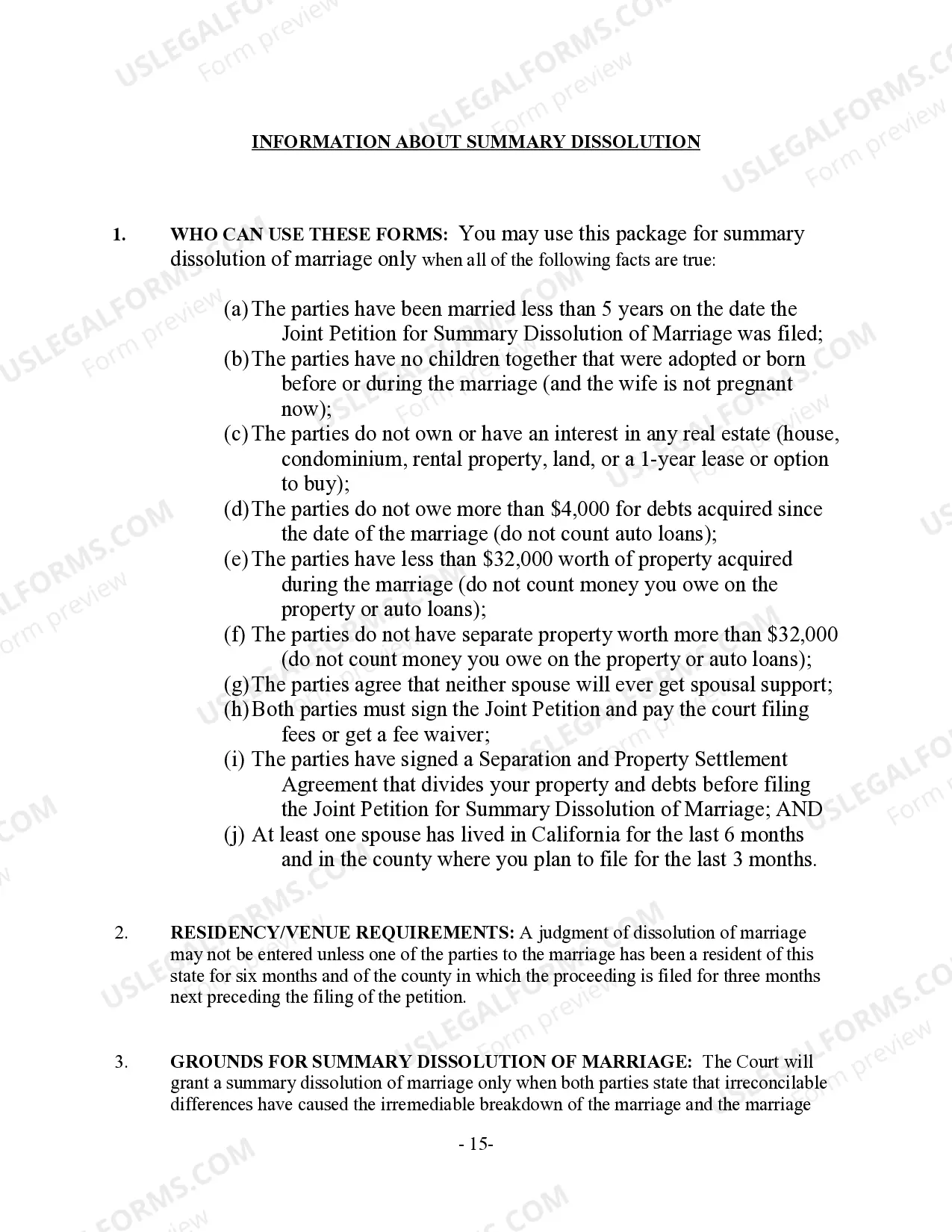
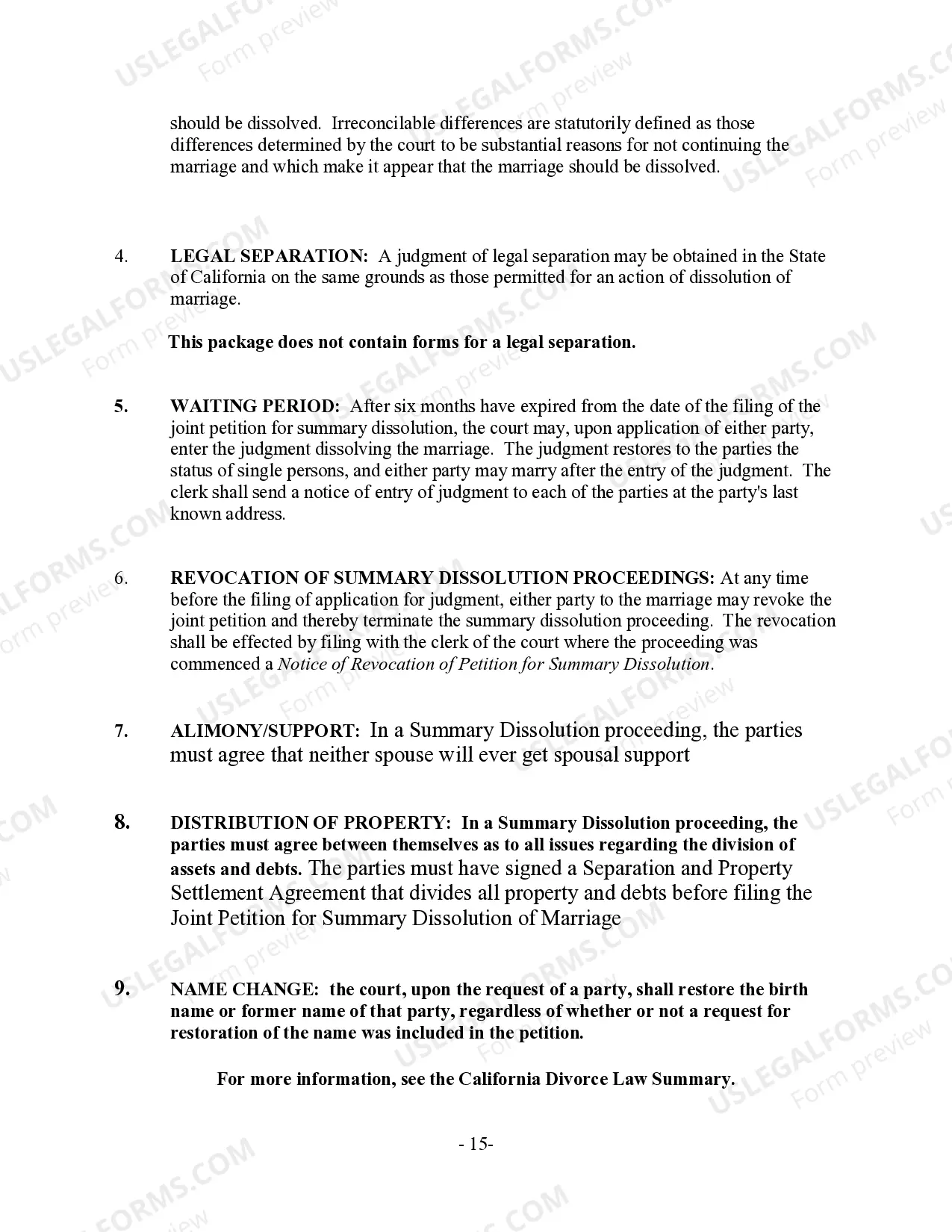
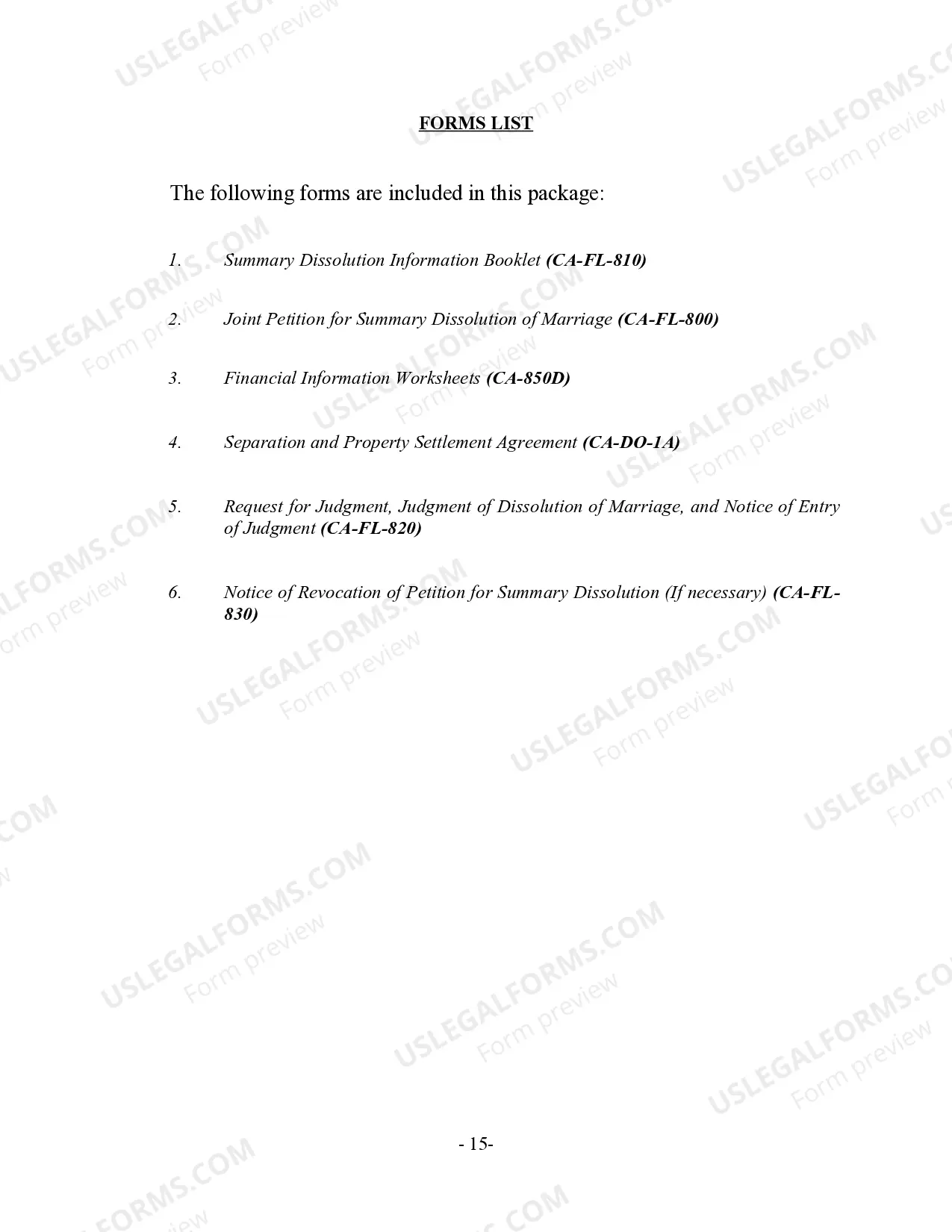
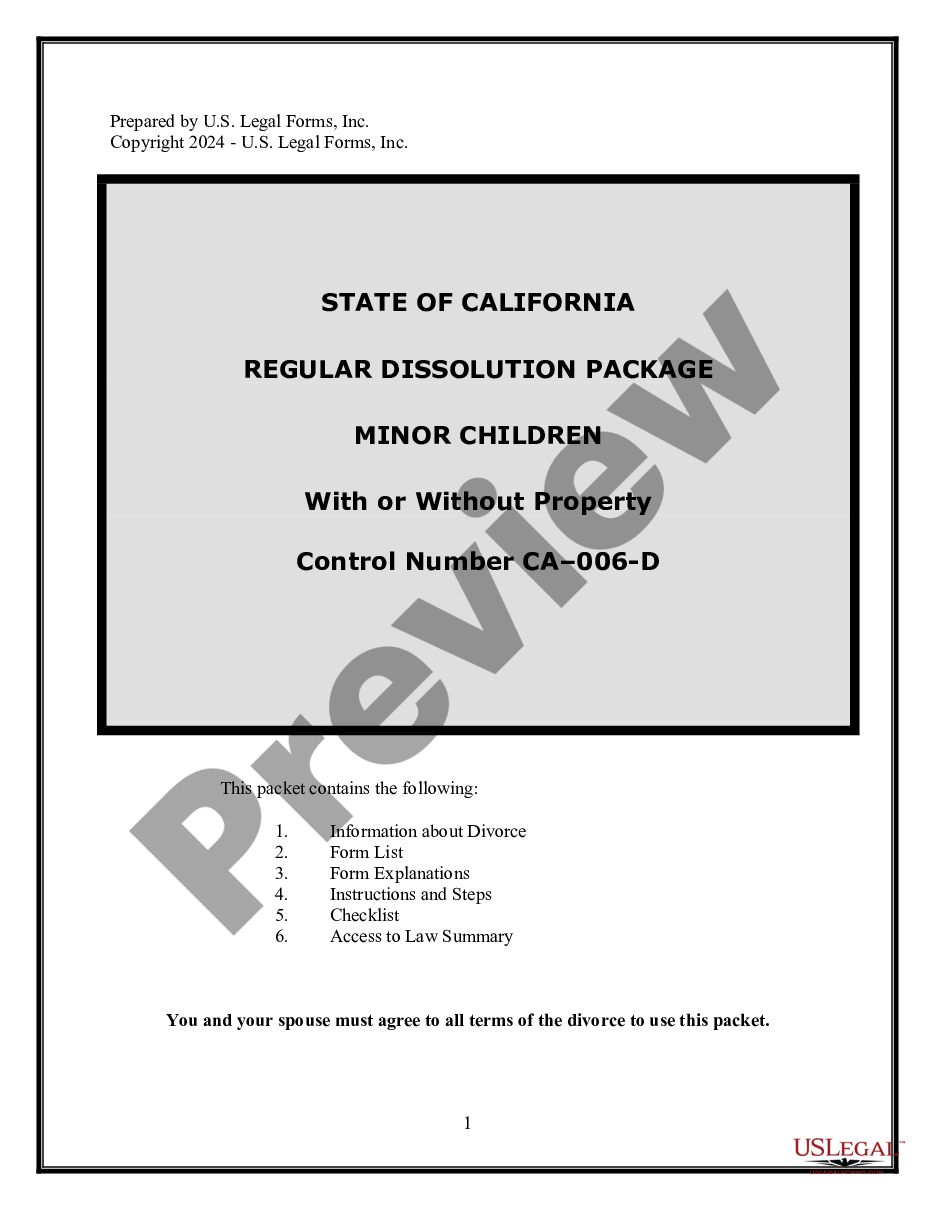
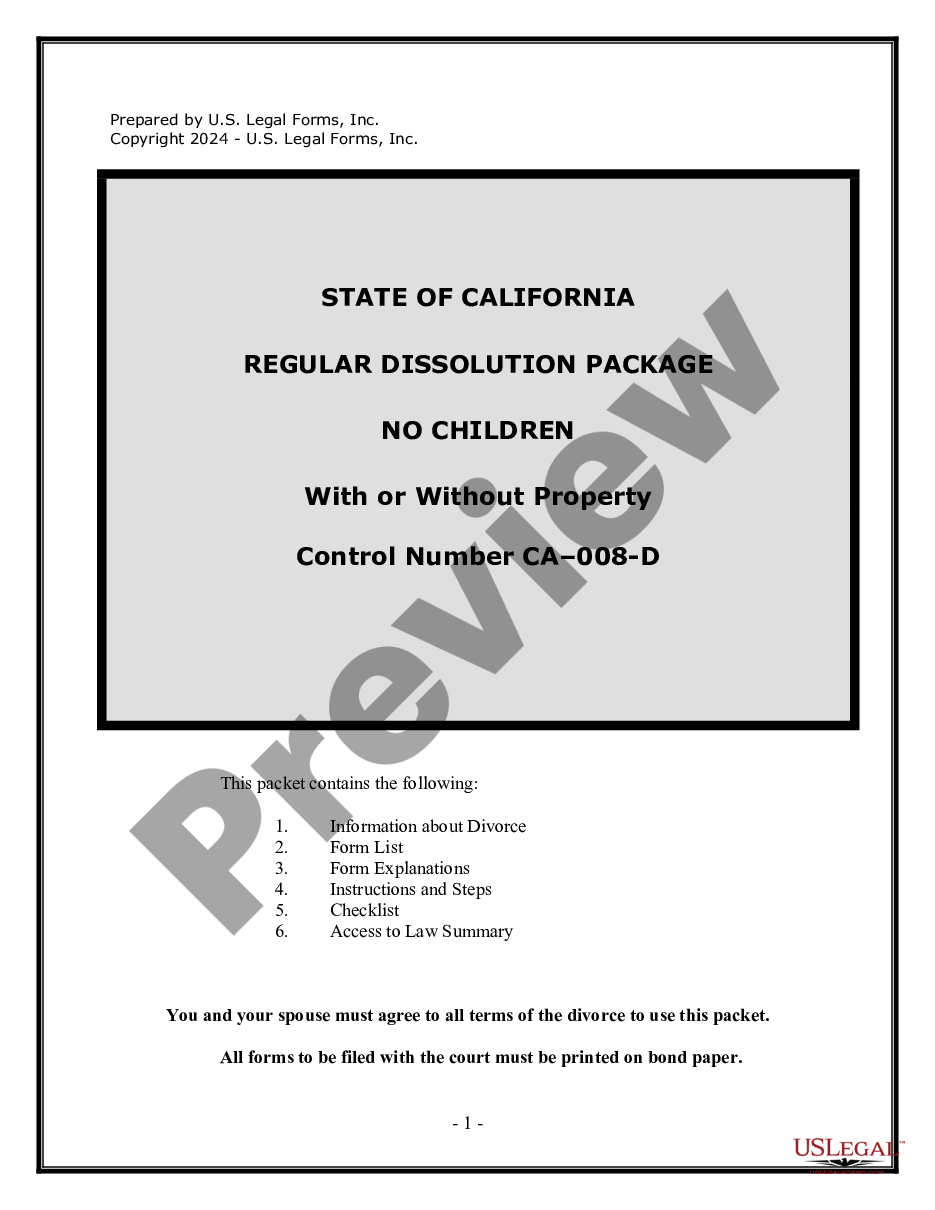
How to fill out California Summary Dissolution Of Marriage Package With No Children - Divorce?
Obtaining legal templates that comply with federal and local regulations is essential, and the web provides countless choices to select from.
However, what is the benefit of spending time searching for the appropriately created California Divorce Form Fl-142 template online when the US Legal Forms digital library already consolidates such documents.
US Legal Forms is the top online legal repository featuring more than 85,000 fillable templates crafted by attorneys for every business and personal situation. They are easy to navigate, with all documents organized by state and intended use. Our experts stay updated on legislative changes, ensuring your form is current and compliant when you acquire a California Divorce Form Fl-142 from our platform.
All templates you find through US Legal Forms are reusable. To download and complete forms you have previously purchased, access the My documents section in your account. Experience the most comprehensive and user-friendly legal documentation service!
- Obtaining a California Divorce Form Fl-142 is quick and straightforward for both existing and new users.
- If you have an account with an active subscription, Log In and download the document sample you require in your preferred format.
- If you are new to our platform, adhere to the following steps.
- Review the template using the Preview feature or through the text description to ensure it meets your requirements.
- Use the search function at the top of the page to find an alternative sample if needed.
- Press Buy Now once you have found the suitable form and choose a subscription plan.
- Create an account or Log In and make a payment with PayPal or a credit card.
- Choose the most suitable format for your California Divorce Form Fl-142 and download it.
Form popularity
FAQ
Filing for divorce by yourself in California is entirely possible. Begin by researching the necessary forms, which will include the California divorce form FL-142, and complete them. After your forms are ready, submit them at your local court, following any specific rules the court may have for self-filing.
To file a divorce response in California, start by obtaining the correct forms from your local court or online resources. Complete the California divorce form FL-142 among others, and provide your answers to the initial divorce petition. Once you fill out the necessary forms, make sure to file them with the court within the specified timeframe.
Yes, you can file for divorce in California without an attorney. Many individuals successfully manage their divorce by handling the paperwork themselves. You will need to complete forms like the California divorce form FL-142 and file them with your local court, ensuring all disclosures are accurate and complete.
Generally, if both parties agree on the divorce terms, you may not have to go to court. However, you must still file the required forms, such as the California divorce form FL-142, to finalize the process. Some couples may choose to attend a court hearing to formalize their agreement, but it is often not mandatory.
To get a divorce in California when both parties agree, you need to complete a few steps. First, fill out the appropriate forms, including the California divorce form FL-142, which is necessary for financial disclosures. After completing the forms, file them at your local courthouse. Ensure both parties sign the necessary documents, and you may be able to bypass a court hearing.
To obtain a copy of your divorce papers in California, you can visit the court where your divorce was finalized. Request the California divorce form FL-142, as it is commonly used for financial disclosures during divorce proceedings. If you can't visit in person, consider checking online for the court's website, where you may find options for requesting copies by mail or online. Additionally, platforms like US Legal Forms can help you access the necessary forms and provide guidance through the process.
The primary forms needed for a California divorce include the Petition (FL-100), the Summons (FL-110), and the Response if applicable. You will also likely need to complete the California divorce form fl-142 for income declarations and possibly FL-160 for assets and liabilities. Assess your specific situation to ensure you have everything required.
You should use FL-160 when required to disclose your financial position during divorce proceedings. This form is often necessary when negotiating asset division or support arrangements. Coupled with the California divorce form fl-142, it provides a full picture of your finances.
FL-160 is the form used in California to disclose your assets and liabilities during a divorce. Providing this information is essential for fair division of property and assessment of debts. Completing this form alongside your California divorce form fl-142 gives the court a comprehensive view of your financial landscape.
The primary difference between FL 142 and FL 160 lies in their purpose. FL-142 is specifically for declaring income and expenses, while FL-160 is a general declaration of assets and liabilities. Both forms are crucial in divorce proceedings to ensure accurate financial representation.