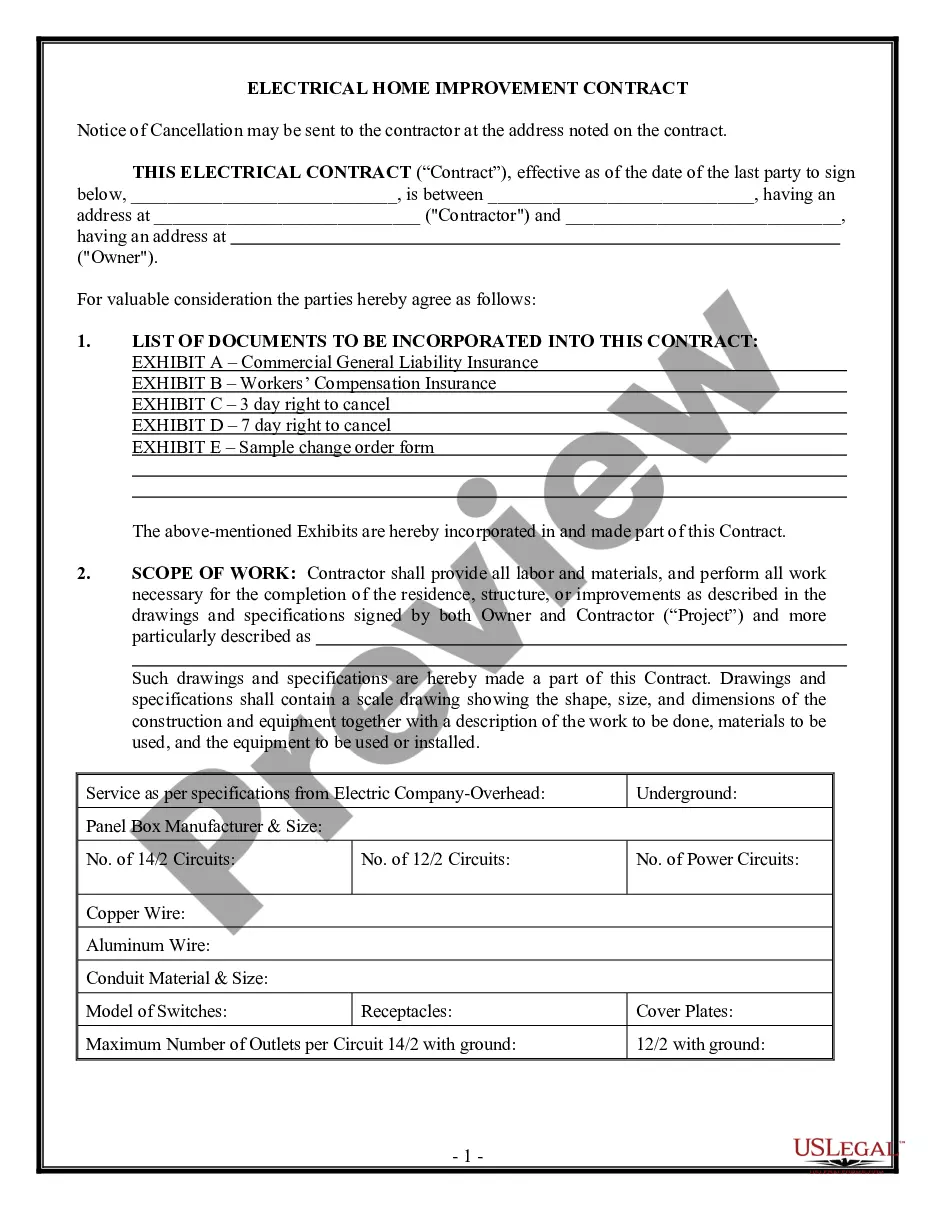
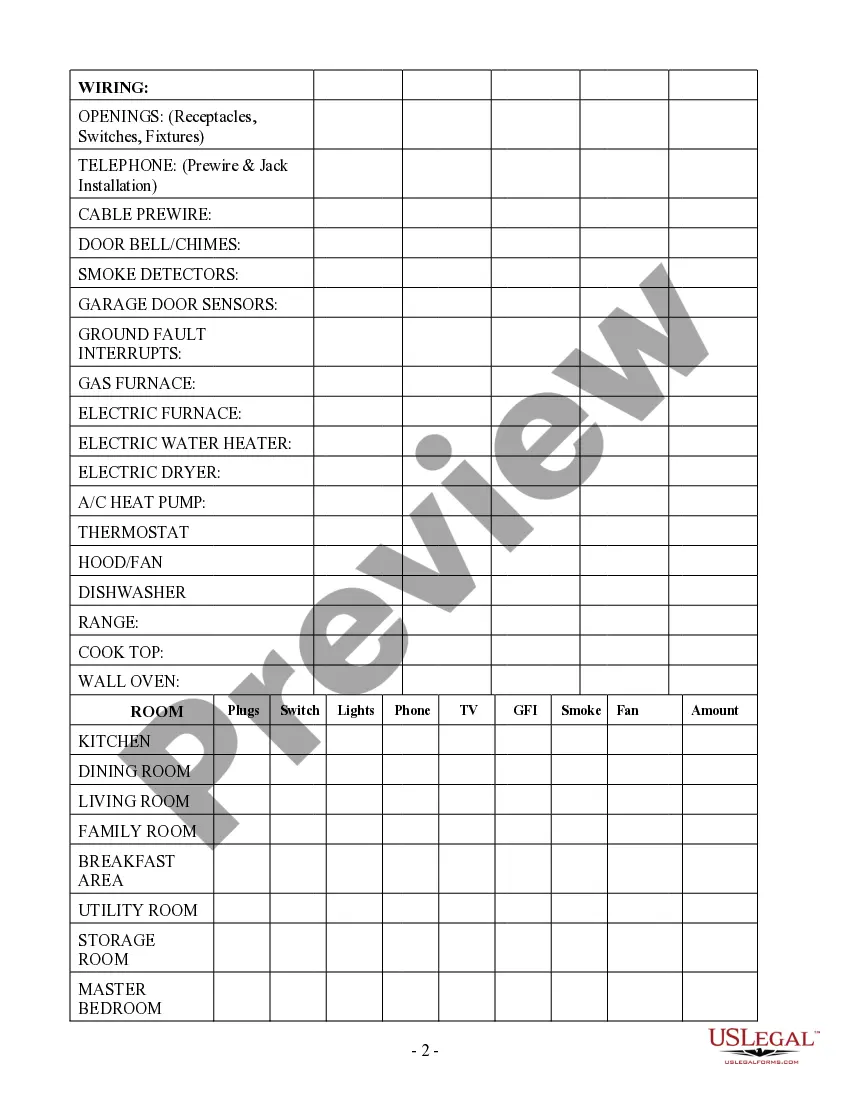
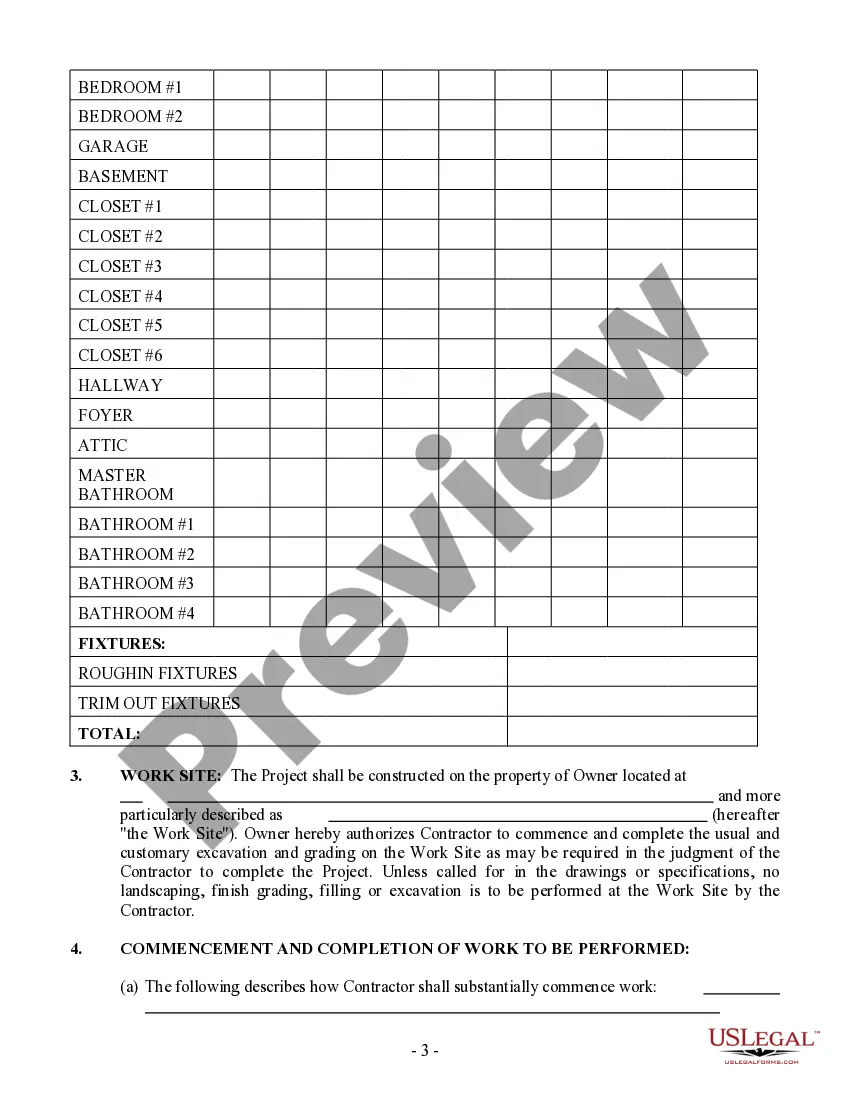
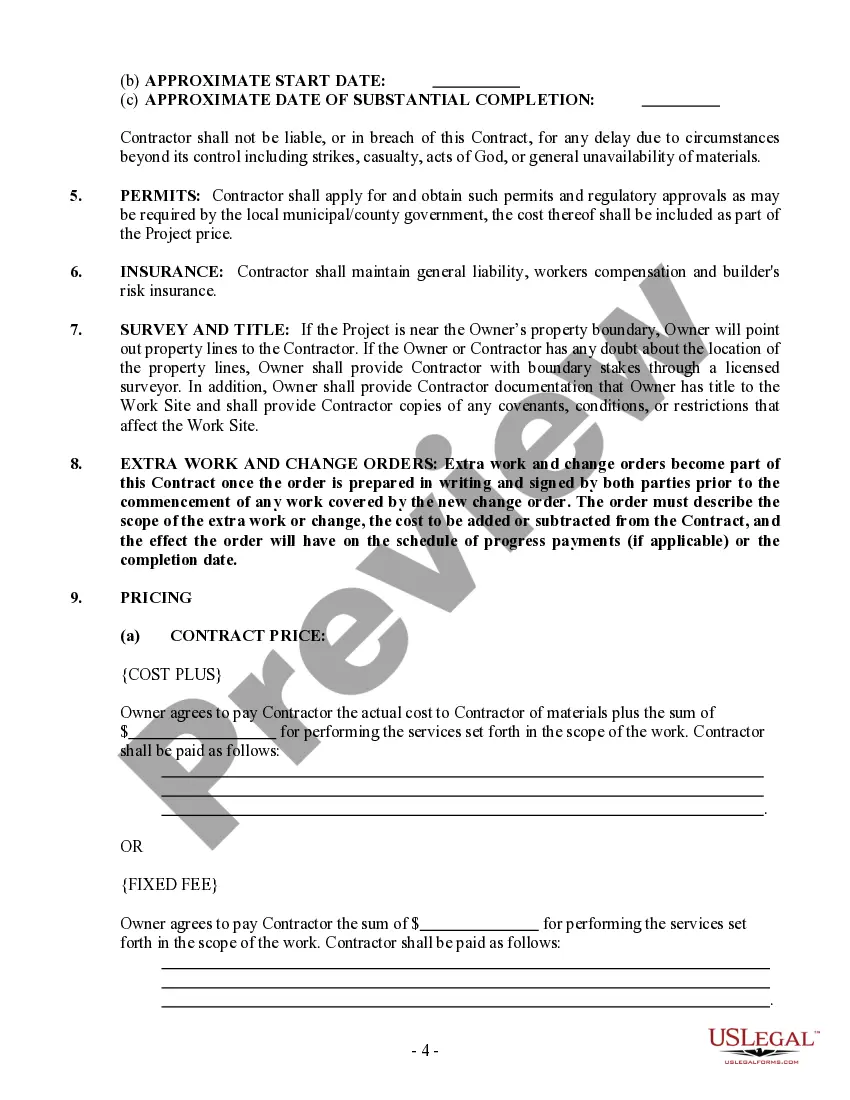
Electrical Service Contract For New Construction
Description

Get your form ready online
Our built-in tools help you complete, sign, share, and store your documents in one place.
Make edits, fill in missing information, and update formatting in US Legal Forms—just like you would in MS Word.
Download a copy, print it, send it by email, or mail it via USPS—whatever works best for your next step.
Sign and collect signatures with our SignNow integration. Send to multiple recipients, set reminders, and more. Go Premium to unlock E-Sign.
If this form requires notarization, complete it online through a secure video call—no need to meet a notary in person or wait for an appointment.
We protect your documents and personal data by following strict security and privacy standards.

Make edits, fill in missing information, and update formatting in US Legal Forms—just like you would in MS Word.

Download a copy, print it, send it by email, or mail it via USPS—whatever works best for your next step.

Sign and collect signatures with our SignNow integration. Send to multiple recipients, set reminders, and more. Go Premium to unlock E-Sign.

If this form requires notarization, complete it online through a secure video call—no need to meet a notary in person or wait for an appointment.

We protect your documents and personal data by following strict security and privacy standards.
Looking for another form?










How to fill out California Electrical Contract For Contractor?
The Electrical Service Agreement For New Development you observe on this page is a versatile formal template crafted by expert lawyers in accordance with federal and regional regulations.
For over 25 years, US Legal Forms has supplied individuals, businesses, and legal practitioners with more than 85,000 authenticated, state-specific forms for any commercial and personal circumstance. It’s the fastest, simplest, and most trustworthy method to obtain the documents you require, as the service ensures bank-level data security and anti-malware safeguards.
Pick the format you want for your Electrical Service Agreement For New Development (PDF, Word, RTF) and download the sample onto your device. Fill out the document and sign it. Print the template to complete it by hand. Alternatively, use an online multi-functional PDF editor to swiftly and accurately fill out and sign your form with a legally-binding electronic signature. Download your paperwork one more time. Use the same document again whenever needed. Open the My documents tab in your profile to redownload any previously purchased forms. Subscribe to US Legal Forms to have validated legal templates for all of life’s situations at your fingertips.
- Explore the document you require and review it.
- Browse through the file you searched and preview it or verify the form description to ensure it meets your requirements. If it does not, utilize the search bar to find the correct one. Click Buy Now once you have located the template you need.
- Select and Log In.
- Choose the pricing plan that fits you and register for an account. Use PayPal or a credit card to make a quick payment. If you already possess an account, Log In and verify your subscription to proceed.
- Acquire the editable template.
Form popularity
FAQ
What is an electrical walk-through? An electrical walk-through is done once your home is framed. At that time the electrician marks the placement of all electrical outlets, light fixtures, and switches. We recommended doing another electrical walk-thought after the electrician has finished.
Cost to wire 3 bedrooms = cost per running foot x square foot of the house. = 115 x 1000 = 1,15,000. So it will cost around Rs. 1,15,000 to wire your 3-bedroom house.
Elements of a construction contract Name of contractor and contact information. ... Name of homeowner and contact information. ... Describe property in legal terms. ... List attachments to the contract. ... The cost. ... Failure of homeowner to obtain financing. ... Description of the work and the completion date. ... Right to stop the project.
Estimate electrical wiring for a house: The basics Step 1: Choose the right jobs. ... Step 2: Confirm the specifications. ... Step 3: Review the drawings. ... Step 4: Perform a material takeoff. ... Step 5: Calculate labor costs. ... Step 6: Create your estimate. ... Step 7: Add overhead and profit. ... Step 8: Build your proposal.
Electrical work can also be done in a home by the homeowner or occupant. (An occupant is someone living in a residence or using the premises, as a tenant or owner; or a person who takes possession of property that has no known owner.) If you choose to do the work yourself, be aware of the responsibilities and risks.